


Your water heater used to work like a charm, but now the shower runs cold too fast. Maybe you spot rusty water, or hear weird noises from the tank. Hot water troubles can turn a simple morning into a real headache.
Did you know most water heaters last between 8 and 12 years? Some can stick around even longer with some care. In this post, you will learn how long your hot water heater might live, what makes it wear out faster, and how to stretch its life.
Stick around if you want those showers piping hot every day!
Average Lifespan of a Water Heater
Traditional tank water heaters typically last around 10-15 years, while tankless water heaters have a longer lifespan of 20+ years. Factors such as water quality, maintenance practices, and frequency of use can influence the longevity of your water heater.
Traditional Tank Water Heaters
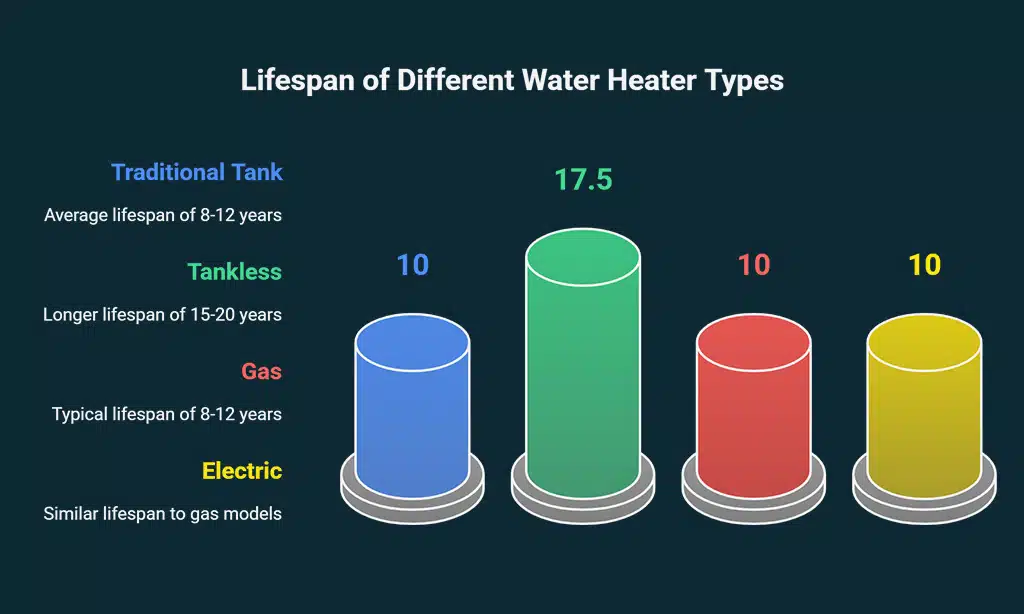
Most homes use tank water heaters. These tanks heat and store gallons of water for showers, dishes, and laundry. Gas models have a lifespan between 8 and 12 years with regular inspection, draining, and flushing.
Electric versions usually last about the same time—between eight and twelve years on average.
Some tanks might work up to 15 years if cared for well, but many need hot water heater replacement after about 10 or 11 years. Hard water can shorten a gallon water heater’s lifespan fast.
The size of your tank makes no big difference in how long it lasts; both small ones or large fifty-gallon units face wear from use each day.
Water heater maintenance like yearly flushes makes these hard-working giants last closer to their limit. Ignore rust spots or leaks and you may find yourself hunting for a new model sooner than planned!
Tankless Water Heaters
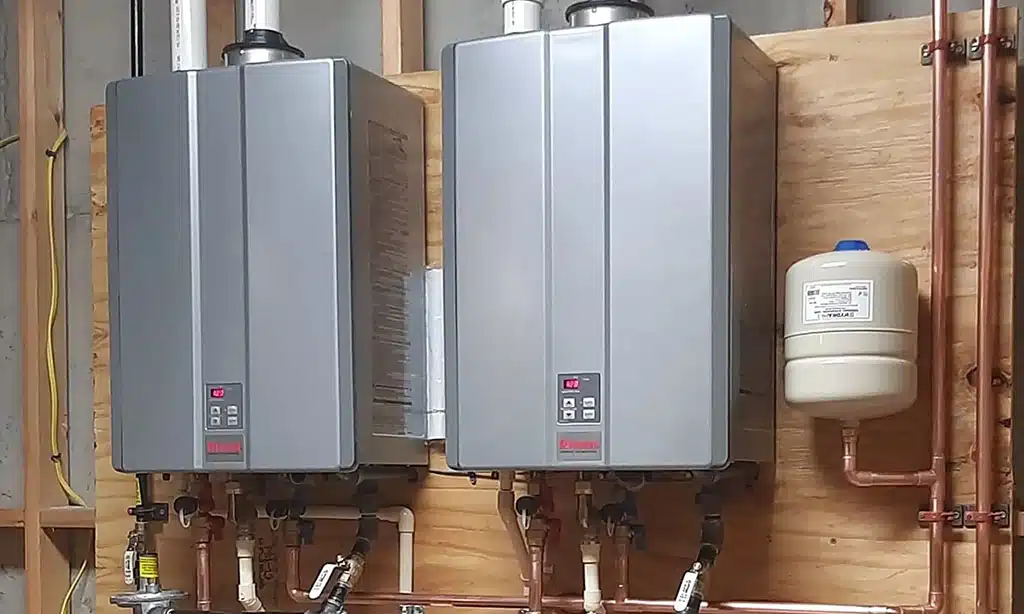
Tankless water heaters outlast most tank styles. Their average lifespan runs 15 to 20 years, giving families double the service of many standard tanks. Some tankless models go even longer with the right care, sometimes hitting a two-decade mark without much fuss.
These units heat water only as needed, dodging the wear that comes from storing gallons day and night. Less rust builds up inside since there’s no big tank holding water around the clock.
A plumber might say these are “set it and forget it” machines, but regular checks still matter for top performance and long life. Tankless water heater lifespan can also depend on hard or soft water in your area; minerals like calcium may sneak in over time if you skip maintenance calls.
While they cost more upfront than a typical gas or electric gallon tank model, their longer average run time puts some money back in your pocket before you know it.
Factors That Affect Water Heater Lifespan
The efficiency and overall longevity of your water heater can be influenced by different factors. Water quality, maintenance practices, and the frequency of use all have a significant impact.
Water Quality and Hardness
Hard water can shave years off your water heater lifespan. Minerals like calcium build up in the tank. Over time, they clog pipes and slow down heating. In fact, if you live where hard water is common, a traditional tank water heater that could last 11 years might only make it to year 8 without proper maintenance or flushing.
Rusty or dirty city water also hurts heaters fast. Corrosion inside the tank leads to leaks and rust-colored hot water—a sure sign of trouble ahead. Even new electric units are not safe from poor-quality tap water; damaged heating elements mean cold showers sooner than expected.
Water quality shapes how long hot showers stick around—no magic potion can stop mineral buildup for good, but simple checks go a long way!
Maintenance Practices
To help your water heater last longer, it’s important to keep up with regular maintenance. Gas and electric water heaters generally have a lifespan of 8-12 years when they’re consistently inspected, drained, and flushed.
Traditional tank water heaters commonly found in homes usually last about 8-12 years. However, the lifespan can vary significantly depending on how well it’s maintained as well as how often it’s used.
For tankless water heaters, which are becoming more popular due to their energy efficiency, they can have an impressive lifespan of 15-20 years or sometimes even longer than that. In general, the average lifespan for most water heaters is estimated at around 11 years but this time frame is heavily influenced by factors like maintenance and usage patterns.
Regular upkeep through inspections and draining the tank can make a significant difference in extending the life of your water heater.
Frequency of Use
Water heaters can last different lengths of time based on how often they’re used. If you use your water heater a lot, it might not last as long compared to if you don’t use it every day.
The more often you need hot water, the harder your water heater has to work. This can make it wear out faster and shorten its lifespan. On average, most water heaters last between 8 and 20 years, with an average of about 11 years; however, this can change depending on how frequently it’s used.
Signs Your Water Heater May Need Replacement
Is your water coming out with a rusty tinge? Is the hot water not as hot as it used to be? Are you hearing strange noises or spotting leaks near your water heater?
Rust-Colored Water
Rust-colored water coming from your faucets could be a sign that your water heater is deteriorating inside. The rusty color comes from corrosion or sediment buildup in the tank, which may mean it’s time to consider a replacement.
This issue can also lead to clogs and damage to your plumbing system over time, highlighting the importance of addressing it promptly. If you notice this discoloration, reach out for professional inspection and evaluation of your water heater’s condition without delay to avoid any further complications.
Insufficient Hot Water
If you’re not getting enough hot water, it could indicate a problem with your water heater. On average, most water heaters last around 11 years, although this can vary based on factors like usage and maintenance.
Traditional tank water heaters typically last between 8 and 12 years, while tankless models can have a lifespan of 15 to 20 years. Gas water heaters and electric ones each usually span from 8 to 12 years for their lifespans.
If you notice consistently insufficient hot water, it may be time to consider the age of your current unit. Keep in mind that overuse or lack of maintenance could also contribute to inadequate hot water production; regular inspections are key here!
Strange Noises or Leaks
Strange noises or leaks coming from your water heater can be signs of potential issues. Rust-colored water, insufficient hot water, strange noises, and leaks are indicators that your water heater may need replacing.
These signs suggest that it might be time to consider a new unit. Regular maintenance is essential to extend the lifespan of your water heater and prevent potential problems arising from strange sounds or leaks.
To maintain the longevity of your unit and avoid these issues, ensure you carry out regular flushing and draining of the tank in addition to scheduled inspections. Being attentive to any unusual sounds or detecting leaks early on can significantly impact the efficiency and lifespan of your water heater by preventing costly repairs or replacements.
How to Extend the Lifespan of Your Water Heater
Regular maintenance and inspections, as well as flushing and draining the tank, can help extend your water heater’s lifespan. Ready to learn more about keeping your water heater in top condition? Read on for expert tips and advice!
Regular Maintenance and Inspections
Regular maintenance and inspections are essential for extending the lifespan of your water heater. Depending on the type and usage, a gas water heater can last 8-12 years with routine draining and flushing, while electric ones typically endure 8-12 years.
Traditional tank heaters commonly last about 11 years. Tankless versions may offer an impressive 15-20 year lifespan.
Executing regular maintenance is crucial in ensuring the longevity of your water heater. Flushing and draining the tank as part of routine inspection can help get rid of sediments that build up over time, preserving the efficiency and functionality of your system; this modest task could help extend its life considerably, meaning you won’t have to replace it prematurely.
Flushing and Draining the Tank
Flushing and draining the tank is crucial for keeping your water heater running smoothly. Sediment buildup can reduce efficiency and shorten the lifespan of your heater, so it’s essential to flush out the tank about once a year.
This process involves turning off the power, connecting a hose to the drain valve, and letting cold water run into the tank while old water flows out. It helps remove sediment that settles at the bottom, ensuring that your water heater operates efficiently and lasts longer.
Regularly flushing out sediment from your water heater is an important step in maintaining its performance. By doing this simple task annually, you can prevent damage caused by sediment build-up, extend your unit’s life, and ensure efficient hot water delivery throughout your home.
Repair or Replace: Making the Right Decision
Repair or replace: making the appropriate decision about your water heater can be challenging. On average, most water heaters last around 11 years. If your water heater is approaching that age and showing signs of trouble like rust-colored water or strange noises, it might be time to consider a replacement.
Nevertheless, if you’ve been diligent with maintenance and inspections, and you haven’t experienced any major issues yet, a repair might suffice for now. Take into account the type of water heater you have too – tankless heaters tend to last longer than traditional tank-style ones.
Ultimately, the decision should be based on factors such as age, condition, maintenance history, and cost-effectiveness in the long run.
Keep in mind that natural gas models typically last 10-12 years while electric units usually make it to 8-10 years; yet certain manufacturers offer warranties extending beyond these averages.
Tankless models generally hold up for 20+ years due to their simpler design with fewer components vulnerable to corrosion.
Takeaways
In conclusion, understanding the expected lifespan of your water heater is crucial for effective home management. By comprehending the typical longevity and the factors influencing it, you can make informed choices.
Consistent maintenance such as flushing can help maintain your water heater’s peak performance and prolong its lifespan. Given that tankless heaters tend to outlast traditional ones, pondering this alternative could prove advantageous in the long term.
It’s crucial to take note of potential warning signs like discolored water or unusual sounds to prevent unforeseen malfunctions. Guaranteeing proper maintenance will not just save you money but also guarantee hot water availability when required.
Keep in mind, a bit of maintenance goes a long way!































