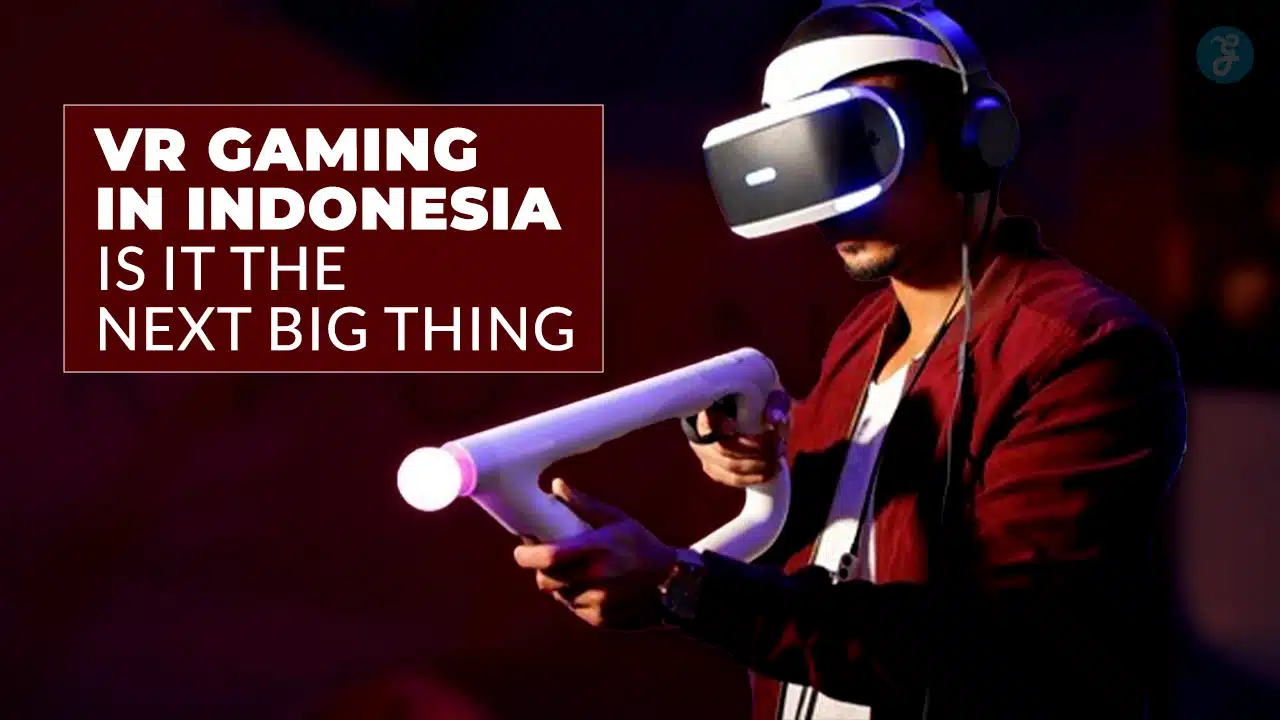
Do you feel lost with all the talk about virtual reality gaming? Maybe you have seen VR headsets in shops, or watched friends try out immersive games. It can be hard to know if this technology is just a passing fad or the next big thing, especially in Indonesia.
Many people want to know if it will change how we play and enjoy digital entertainment.
One fun fact: The number of Indonesian gamers interested in VR is growing fast. In this post, I break down what makes virtual reality so exciting, where you can find VR equipment like PlayStation VR2 and Meta Quest 3, and why motion controllers and haptic feedback are changing the game for players here.
You will learn about costs, new tech like 5G internet, gaming communities, cool arcades popping up across cities, and even some challenges like motion sickness! Want to see if virtual environments could soon be everywhere? Keep reading until the end—you might be surprised at what’s coming next!
Current State of VR Gaming in Indonesia
VR gaming is gaining popularity in Indonesia. Many gamers are excited to explore virtual worlds using VR headsets and motion controllers.
Popularity of VR Gaming Among Indonesian Gamers
Big tech companies like Facebook Technologies LLC and Apple bring lots of attention to virtual reality. Young people in Indonesia talk about immersive gaming almost everywhere, from schools to local coffee shops.
Some gamers even save up for months just to buy a new VR headset or try the latest mixed reality headset at a local arcade. Groups pop up online, filled with fans eager for multiplayer VR games, especially first-person shooters and role-playing titles.
A growing number of Indonesian players seek digital entertainment that feels real. Many want more than flat screens; they crave immersive technology using tactile sensation or motion controllers.
People love exploring virtual worlds together after school or work. One enthusiastic fan said,.
Playing games with a head-mounted display feels like stepping into another universe.
Ever since big names started investing in this space, gamer’s interest has only grown faster each year, bringing new eyes—and hands—to controllers all across Indonesia.
Availability of VR Gaming Equipment and Platforms
VR gaming gear in Indonesia feels a bit out of reach for many. The average Indonesian is expected to own just 0.001 VR headsets by 2025, which makes them as rare as hen’s teeth. Head-mounted displays like HTC Vive and PlayStation’s PS VR2 can cost more than most smartphones.
This puts the brakes on mass adoption right from the starting line.
Standalone virtual reality devices are gaining ground fast, though. These gadgets do not need a powerful computer or extra sensors glued around your room—just pop one on and explore digital worlds instantly.
Still, choices remain slim on local shelves compared to places like Singapore or Japan. Major game consoles touch only a small piece of the market pie here due to price tags and limited supply chains.
Most people stream content through cloud gaming platforms instead of buying expensive hardware outright. Some arcades bring immersive experiences using mixed-reality headsets for multiplayer games and simulated environments—but those aren’t common sights outside big cities either.
Even with all these challenges, technology keeps moving forward; maybe soon that 0.001 will start looking less lonely after all!
Key Features of VR Gaming
VR gaming offers an exciting and immersive experience. Gamers use VR headsets and motion controllers to feel like they’re inside the game.
Immersive Gameplay Experience
Stepping into a virtual reality game feels like entering another world. High-resolution head-mounted displays put you in the center of fast-paced action, while motion controllers let your hands swing swords or cast magic spells.
Haptic feedback brings each punch or explosion to life; you feel every vibration and jolt as if it’s real. New VR headsets give wide fields of view so players get lost in three-dimensional environments for hours.
Motion controls track even small moves, making multiplayer VR games super engaging. Gamers grip their digital gadgets and instantly sense rough walls through haptic tech, not just see them.
Platforms like PlayStation VR2 and Apple Vision Pro use advanced sensors to boost user interaction with digital entertainment. Indonesian gamers love getting pulled deeper into these vivid spaces—kind of like being inside your favorite comic book story.
“You don’t just play the game—you actually feel a part of it,” says Danu, an avid Jakarta gamer who spends most weekends at a local VR gaming cafe.
Use of VR Headsets, Motion Controls, and Haptic Feedback
VR gaming brings a new level of fun. It makes you feel part of the action.
- VR headsets are key to this experience. They let you see and move in a 3D world. The visuals keep getting better with each new model.
- Motion controls track your movements. When you turn your head or move your hands, the game responds instantly. This makes gameplay feel real and exciting.
- Haptic feedback adds to the fun too. Controllers give sensations like touch or pressure during games. You can feel things like a gentle breeze or hard impacts, making it all more immersive.
- These technologies work together to create unforgettable moments in gaming. Getting lost in these immersive experiences keeps players coming back for more.
- With VR headsets, motion controls, and haptic technology, gamers enjoy a richer experience than ever before. Players can truly escape into virtual worlds that feel alive and engaging.
Moving on from these exciting features, let’s explore how VR gaming is growing in Indonesia.
Growth of VR Gaming in Indonesia
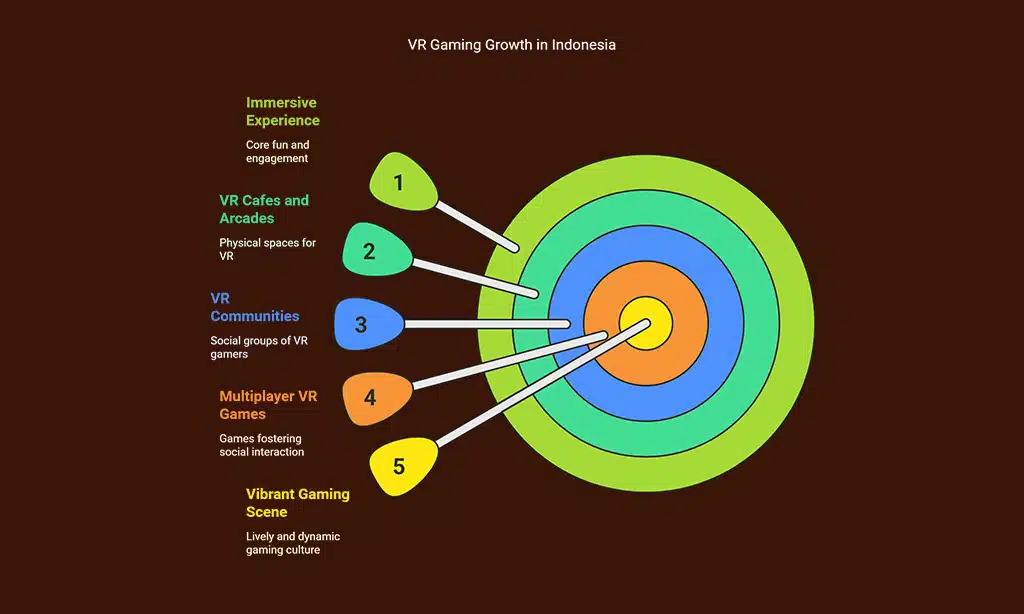
VR gaming is growing fast in Indonesia. More gamers are joining VR communities and visiting VR cafes and arcades. These spaces offer immersive experiences that pull players deep into games, creating more fun.
Exciting multiplayer VR games draw crowds and foster friendships among players, making the gaming scene vibrant and lively.
Rise of VR Gaming Communities
VR gaming communities are growing in Indonesia. Gamers gather to share experiences and compete. The rise of esports is driving this change. More players want to join competitive VR games.
This boosts interest and engagement.
Tech companies are investing heavily in VR ecosystems, which helps build these communities. With more resources, local developers can create innovative games and platforms. This makes it exciting for gamers to connect with one another through immersive experiences like multiplayer VR games or virtual reality software.
Increasing Number of VR Gaming Cafes and Arcades
More VR gaming cafes and arcades are opening in Indonesia. These places offer fun social experiences for gamers. They draw people in with exciting multiplayer VR games. Gamers enjoy sharing these immersive virtual environments together.
The growth of VR gaming communities pushes this trend even further. People like to gather, play, and compete in a lively atmosphere. As more arcades pop up, the appeal of playing virtual reality (VR) games increases among locals.
This shift is changing how many experience digital entertainment, making it more interactive and enjoyable than ever before.
Challenges Facing VR Gaming in Indonesia
VR gaming in Indonesia faces some tough hurdles. The cost of VR gear is high, making it hard for many to join in. Also, not everyone has access to powerful computers or consoles that VR games need.
Motion sickness and tiredness are real worries too. These issues can make people hesitant to try virtual reality gaming.
High Cost of VR Equipment
The high cost of VR equipment is a major hurdle for many gamers in Indonesia. A good VR headset can be quite pricey, often costing hundreds of dollars. This makes it hard for most people to buy one.
Even if they want to enjoy immersive gaming, the price tag stands in the way.
Many gamers turn to VR gaming cafes or arcades to experience virtual reality without buying gear. These places offer access to expensive headsets and motion controllers at a lower cost.
Still, this solution may not reach everyone. Limited access affects how fast VR technology grows in the country. With these barriers, potential fans might miss out on fun experiences and multiplayer games that use haptic feedback and augmented reality features too.
Limited Access to High-Performance Hardware
High-performance hardware is hard to find in Indonesia. Many gamers want to use the latest VR technology, but it costs a lot of money. A good VR headset or motion controller can be expensive, putting them out of reach for many.
This high cost makes it tough for the gaming community to grow.
Moreover, internet issues make things worse. In 2024, internet speed and reliability still need improvement across Indonesia. Gamers often struggle with lag and slow connections while playing multiplayer VR games.
Without better access to these tools, it’s hard for virtual reality (VR) gaming to take off in a big way.
Concerns About Motion Sickness and Physical Fatigue
Motion sickness can be a real problem in VR gaming. It makes players feel dizzy and uncomfortable. This feeling can ruin the fun of immersive experiences. Many gamers experience this after using VR headsets for too long.
Physical fatigue is another issue. Long gaming sessions with motion controllers can make players tired. As they play longer, it becomes harder to enjoy the game. Both these concerns affect how much people want to play VR games in Indonesia.
Opportunities for VR Gaming Expansion
Indonesia has a lot of chances to grow in VR gaming. Local game makers can team up with global studios, creating exciting new games that grab attention.
Collaboration Between Local Developers and International Studios
Local developers in Indonesia team up with big names like Keywords Studios. This helps them improve game localization. They can adapt games for players without needing a full staff on-site.
These partnerships are key to creating better immersive experiences for gamers.
Working together boosts the gaming scene in Indonesia. It brings fresh ideas and skills to the table. Gamers get access to top-notch VR technology, local flavors, and engaging stories through these collaborations.
Everyone wins when local talent joins forces with international studios!
Potential for E-Sports Integration
Collaboration between local developers and international studios can spark new ideas in VR gaming. This growth connects to the rising e-sports scene in Indonesia. Competitive VR gaming is quickly gaining traction.
Players want immersive experiences that challenge their skills.
The strong interest in e-sports drives gamers to join communities. They share tips, strategies, and compete against each other. This engagement makes the experience more exciting. As competitive VR games grow, players will find even greater opportunities for fun and teamwork.
The Role of Technology in Shaping VR Gaming

Technology is changing how we enjoy VR gaming. Fast internet, like 5G, makes experiences smoother and better. New wearable devices and motion controllers add to the fun. Players feel more engaged than ever as they step into these exciting virtual worlds!
Impact of 5G on VR Gaming Experiences
5G can change VR gaming in big ways. Its speed can reach up to 10 Gbps, which is ten times faster than 4G. This means players will experience smooth gameplay and quick downloads. Low latency is another perk.
With just 1 millisecond of delay, gamers can react more quickly than ever before.
These features help improve multiplayer VR games too. Players can connect easily with friends and rivals online, enhancing the fun factor. With these advancements from 5G technology, the future of virtual reality gaming looks bright in Indonesia!
Advancements in Wearable VR Devices
Wearable VR devices are getting better. Smart glasses and headsets are becoming more common. They offer exciting ways to experience virtual reality. The rise of 5G technology helps a lot.
It brings faster speeds and less lag in VR applications. This means smoother gameplay and clearer images.
These advancements make immersive gaming fun for everyone, including players in Indonesia. As these new devices grow, so do the possibilities for gamers there. More options mean more chances to enjoy rich, engaging experiences with friends or solo adventures.
Next up is how this growth shapes the future of VR gaming events and content in Indonesia.
Future Predictions for VR Gaming in Indonesia
VR gaming in Indonesia is set to grow fast. Game libraries will expand, bringing more choices for players. Events like expos will pop up, showcasing new games and tech. Exciting times lie ahead for gamers!
Expected Growth in Game Libraries and Content
Game libraries for VR are set to grow quickly. New games will come out often, which means more choices for players in Indonesia. Local developers are joining forces with big studios worldwide.
This partnership helps create unique and fun gaming experiences.
As the demand rises, many content creators will jump into the scene. They aim to make immersive virtual reality games that capture attention. Multiplayer VR games will attract more players too.
Exciting new stories and challenges await gamers who embrace this change in digital entertainment.
Expansion of VR Gaming Events and Expos
VR gaming events and expos are on the rise in Indonesia. These gatherings showcase the latest VR technology, like headsets and motion controllers. Gamers can try new games, meet developers, and connect with each other.
More people are getting involved thanks to growing interest in immersive experiences.
These events also attract big names in digital entertainment. Companies see potential for growth due to advancements like 5G technology. The future looks bright as these expos help popularize VR gaming even more across the country.
Takeaway
VR gaming in Indonesia is on the rise. Many gamers are excited about the immersive experiences that VR offers. The growth of gaming cafes and communities shows this trend. While challenges like high costs exist, opportunities for developers can lead to great changes.
Engaging with VR holds promise for fun and new adventures in digital entertainment. Keep an eye on this space; exciting times await!