Finding a place to work and travel without red tape can feel like searching for a needle in a haystack. Waiting for visas, filling out forms, and worrying about dates adds stress that doesn’t fit with the easygoing digital nomad lifestyle. Did you know there are visa-free countries for digital nomads where you can stay over 90 days with no visa headache? These places make it simple; just pack your bags, bring your laptop, and show up.
In this post, you will find seven of these countries along with tips on getting settled fast, saving money on paperwork, and making friends abroad.
Keep reading if long stays with less hassle sounds good to you.
What Does Visa-Free Mean for Digital Nomads?
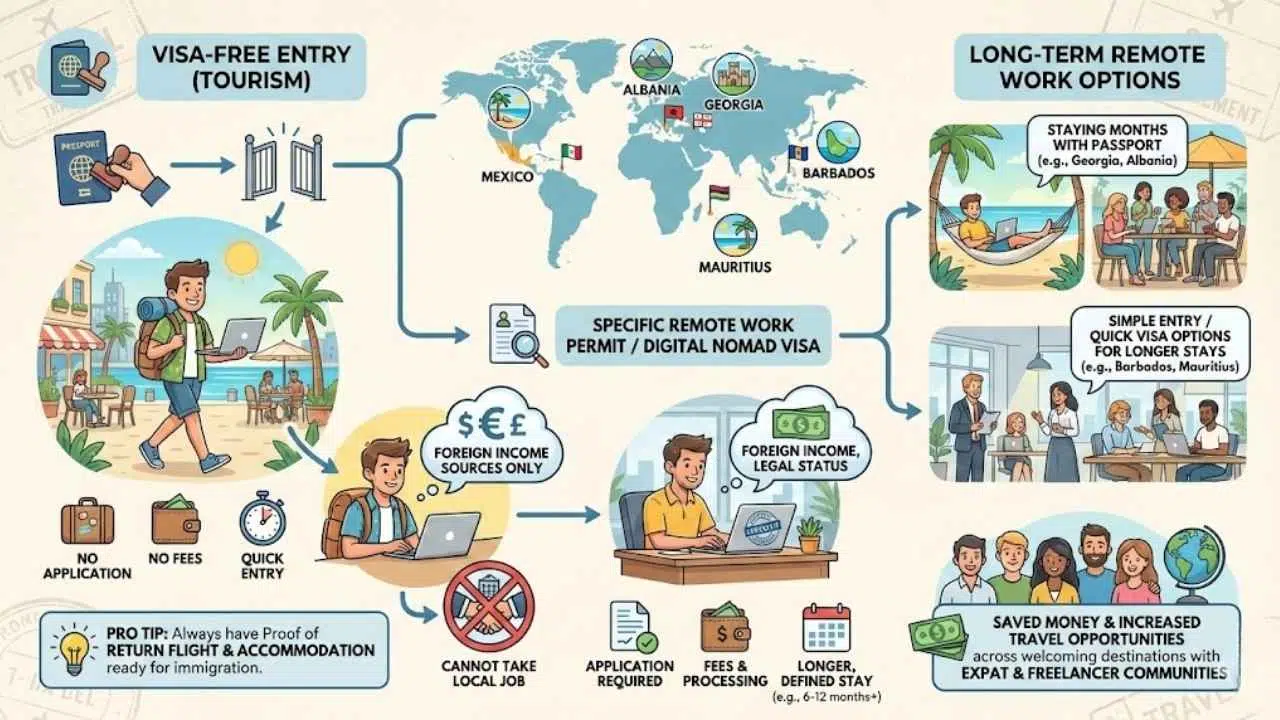
Visa-free means you can enter a country without getting a visa before arrival. You just show your passport at the border, get stamped in, and start living like a local. Many digital nomads love this freedom because it removes paperwork and fees tied to regular long-term visas or work permits.
However, it is vital to understand the difference between a standard tourist entry and a specific remote work permit. Most “visa-free” entries are technically for tourism. While countries like Mexico and Albania are famous for looking the other way when tourists work on their laptops for foreign clients, you strictly cannot take a local job. You must earn your income from outside the country.
Pro Tip: Always have proof of your return flight and accommodation ready at the border. Even in visa-free countries, immigration officers have the final say on whether to grant you the full stay allowance.
Nomads from many countries visit Albania or Georgia, staying months with only their passports. Places like Barbados and Mauritius offer simple tourist entry or quick digital nomad visa options for longer stays by the beach. Travelers save money on application costs while enjoying more travel opportunities across welcoming destinations packed with other expats and freelancers doing remote work.
Benefits of Visa-Free Destinations for Digital Nomads
Visa-free countries open doors to longer adventures, letting you settle in and work without jumping through hoops. You get freedom, save money, and keep your plans flexible.
Here is how a visa-free entry compares to a traditional Digital Nomad Visa (DNV):
| Feature | Visa-Free Entry (Tourist Stamp) | Formal Digital Nomad Visa |
|---|---|---|
| Cost | Usually Free | $200 – $3,000+ |
| Paperwork | None (Just Passport) | Bank statements, insurance, background checks |
| Approval Time | Instant at border | Weeks or Months |
| Tax Status | Gray area (check 183-day rule) | often clearly defined |
Longer stays without visa hassle
Stay 90 days or longer without stacks of paperwork or surprise interviews. In Mexico, you can live and work as a digital nomad for up to 180 days visa-free, far more time than most tourist visas offer.
Georgia rolls out its welcome mat with a one-year stay for many passport holders, opening the door to long-term adventures in the Caucasus. Serbia lets travelers enjoy city life or chilling by the Danube river for up to 90 days at a stretch.
No need to stress about strict deadlines, application fees, or last-minute embassy visits. Barbados and Mauritius both let remote workers apply for long-stay access easily—with island perks included—while Costa Rica hands out an extendable year-long stay after only holding a basic 90-day tourist visa first.
More than fifty countries now support digital nomads with easier entry rules so packing bags for months at a time feels less like planning a moon landing and more like booking your next beach office day.
Flexibility to live and work remotely
Digital nomads enjoy open horizons in places like Mauritius, Cyprus, and Barbados, thanks to long-stay visas for remote work. If you pick Mexico or Thailand, you get a lower cost of living than most big US cities.
Skip expensive commutes; choose where to work each day—on the beach or from a hillside café. Mexico lets many visitors stay up to 180 days visa-free, offering time for slow travel and new routines. In Costa Rica, digital nomads can turn a simple tourist stamp into an entire year abroad, then even renew again.
Reliable Wi-Fi keeps people connected whether they settle in Berlin’s lively expat scene or try out local hubs across Montenegro and Georgia. Flexible location means better work-life balance too: walk barefoot on the sand after meetings or zip off on weekend trips without worry over strict visa rules.
Cost savings on visa applications
Visa-free countries let travelers skip high visa fees and long waits. For example, Georgia lets many tourists from Europe and the US stay up to a year without a visa, saving hundreds of dollars compared to applying for special permits elsewhere.
Consider the savings directly:
- Barbados “Welcome Stamp”: Costs $2,000 for an individual application.
- Anguilla “Work from Anguilla”: Costs roughly $2,000 per year.
- Georgia or Albania: $0 application fee for US citizens.
Mexico allows visitors from the US, Canada, and much of Europe to remain for 180 days with just a passport stamp—no application costs at all.
Lower upfront costs make it easier to test new cities or extend your adventure without financial stress weighing you down.
Top 7 Visa-Free Countries for Digital Nomads (90+ Days Stay)
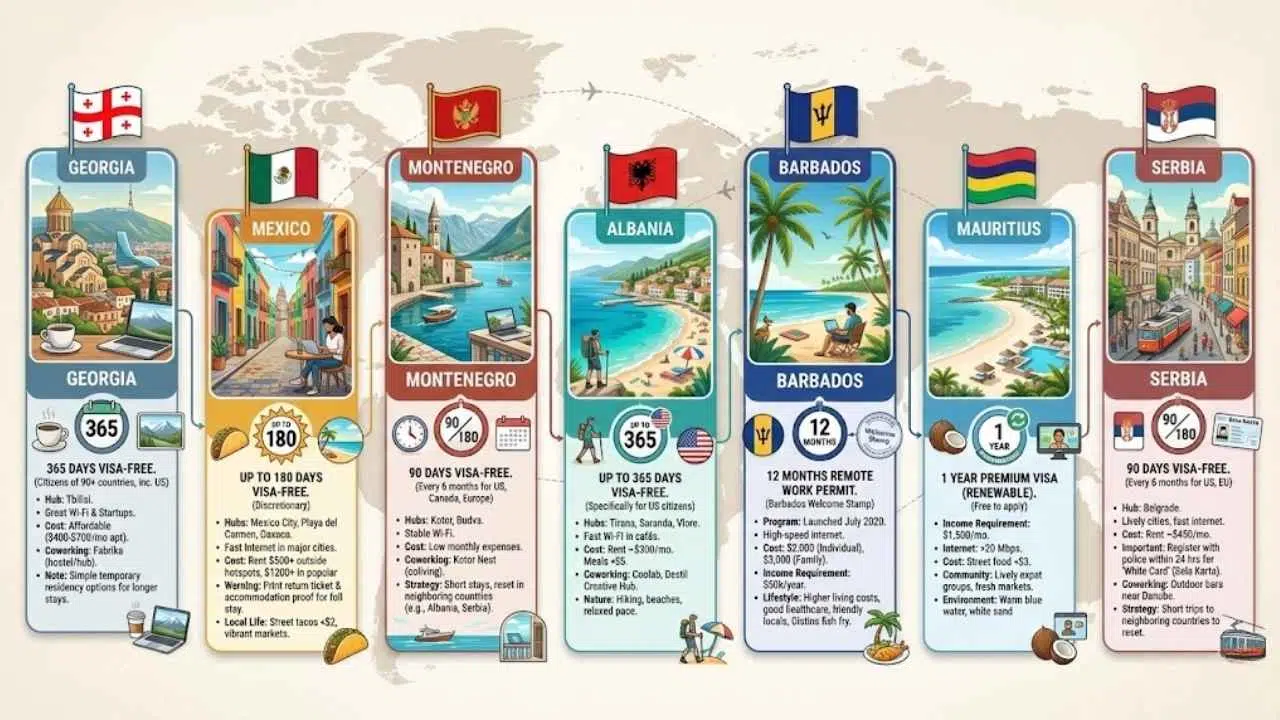
Ready to wander, work, and stay awhile? These seven visa-free hotspots offer digital nomads room to breathe—stick around for the details!
Georgia: A Gateway to the Caucasus
Georgia opens its doors wide to remote workers seeking long-term stay without visa issues. Citizens from over 90 countries, including the US, can visit and work for up to 365 days visa-free.
Tbilisi buzzes with startups, great Wi-Fi, and a growing digital nomad community. The cost of living stays low compared to major US cities, so your dollar stretches further in daily life. You can find a comfortable apartment in Tbilisi for $400–$700 per month.
You get modern city perks like coworking spaces mixed with mountain views and ancient history. Popular spots like Fabrika—a hostel and coworking hub in a former sewing factory—make it easy to meet people. Stays longer than one year often require just a simple application for temporary residency options.
Mexico: Vibrant Culture and Affordable Living
Mexico offers digital nomads a long stay with no visa needed for up to 180 days. Cities like Mexico City, Playa del Carmen, and Oaxaca buzz with life and color.
Fast internet is easy to find in major hubs, so remote work thrives here. Living costs often run far lower than those in big US cities; rent can start at $500 per month outside tourist hot spots, though popular areas like La Condesa in Mexico City now average over $1,200.
Critical Warning: The 180-day allowance is at the immigration officer’s discretion. To ensure you get the full six months, print out your return ticket and proof of a long-term Airbnb or hotel booking to show the officer at the airport.
Street tacos cost less than two dollars, and lively markets sell fresh produce daily. The mix of art, food, music, and sunny weather helps boost work-life balance while cutting expenses—key parts of the digital nomad lifestyle.
Montenegro: A Hidden European Gem
Montenegro gives digital nomads a warm welcome. Most travelers from the U.S., Canada, and Europe enjoy visa-free entry for up to 90 days every six months. The country sits along the sparkling Adriatic Sea with cozy towns like Kotor and Budva offering stable Wi-Fi and affordable living.
Monthly costs drop far below prices in most major U.S. cities, making it easy on your wallet but rich in adventure. Remote workers often choose waterfront cafes or mountain retreats as their daily office. A popular spot for networking is Kotor Nest, a coliving space designed specifically for remote workers.
No fancy paperwork slows you down here if you plan short stays under three months at a time. Many digital nomads pop over to neighboring countries like Albania or Serbia between visits to reset their stay count. You get flexibility for long-term travel without fussing about strict visa rules found elsewhere across Europe.
Albania: A Budget-Friendly Mediterranean Retreat
Albania lets many digital nomads stay up to 365 days without a visa—a rare privilege specifically for US citizens. That means you can work online, explore beach towns like Saranda, and keep an eye on your budget.
Cafés offer fast Wi-Fi for remote work, while rent starts as low as $300 per month in Tirana or Vlore. Affordability rivals major cities such as Berlin and Athens; fresh meals often cost under $5 at local restaurants. In Tirana, check out Coolab or Destil Creative Hub to connect with other workers.
You’ll find friendly locals eager to share their culture or point out spots along the Adriatic coast. Albania’s relaxed pace offers true work-life balance with hiking trails, castles, and sunset views from pebbled shores—no need to break the bank.
Barbados: Tropical Paradise with Remote Work Perks
Barbados hands you warm weather, turquoise seas, and a relaxed digital nomad lifestyle. With the Barbados Welcome Stamp, remote workers can stay for up to 12 months without a visa hassle.
This program launched in July 2020 and keeps attracting freelancers from around the globe. The island’s high-speed internet covers most towns and even some beach cafes—so taking Zoom calls with ocean views becomes just another day at work.
Unlike the free options on this list, this official program comes with a price tag:
- Individual Cost: $2,000
- Family Bundle: $3,000
- Income Requirement: You must prove you earn at least $50,000 per year.
Living costs are higher than other Caribbean places, but healthcare is good and locals are friendly. Enjoy Friday night fish fries in Oistins or take your laptop outside under palm trees; out here, work-life balance isn’t just talk—it’s real life.
Mauritius: Island Living with Modern Connectivity
Warm blue water, white sand, and coconut palms set the stage for remote work magic in Mauritius. Digital nomads grab a long-stay visa made just for them called the Premium Visa.
Best of all, the Premium Visa is free to apply for. It allows you to stay for one year, renewable. You simply need to prove a monthly income of $1,500 to qualify.
Internet speed tops 20 Mbps in most areas, so you can handle video calls from your beach bungalow or city café without breaking a sweat. Local markets brim with fresh fruit, while street food costs less than $3. Join lively ex-pat groups or meet friendly locals who love sharing tips about life on the island.
Serbia: Affordable Living in the Heart of the Balkans
Serbia draws digital nomads with its low cost of living, lively cities, and friendly locals. Belgrade buzzes with remote work cafes, fast internet, and a growing expat community.
For Americans and many EU travelers, Serbia offers visa-free stays for up to 90 days within a six-month period. Monthly rent in central Belgrade starts around $450, keeping your budget healthy while you enjoy Balkan food and strong coffee. Public transport is cheap; trains can take you from city sights to mountain escapes without breaking the bank.
Important Legal Requirement: You must register with the police within 24 hours of arriving in Serbia to get a “White Card” (Bela Karta). If you stay in a hotel, they do it for you. If you stay in an Airbnb, you must go to the police station with your host. Do not skip this step—you will need this card to leave the country without a fine.
Many travelers use coworking spaces or connect at outdoor bars near the Danube River after work. LongTerm Stay options may require leaving for a short trip before returning for another 90-day stretch—simple enough if exploring nearby Montenegro or Albania tempts you!
How to Make the Most of Your Stay in a Visa-Free Country
Settling in for a long stay can feel like jumping into deep water, full of excitement and new routines. Soak up local life, tap into the digital nomad community, and make your stay both productive and fun.
Research local laws and customs
Local laws and customs can trip up even seasoned travelers. In Mexico, for example, rules about alcohol sales on Sundays or dress codes in churches will surprise many visitors.
Georgia welcomes remote workers with open arms but asks all guests to respect religious sites and local traditions. Some countries like Thailand do not allow disrespect for the royal family—punishments can be harsh.
Noise levels matter too; in Barbados or Mauritius, locals may expect quiet nights after a certain hour. The Philippines expects politeness in public spaces while Greece values punctuality at appointments and meetings.
Study these expectations before your 90+ day stay because misunderstanding them could end any long-term visa dreams early. A good grasp of social norms helps digital nomads build friendships, avoid fines, and keep their travels smooth as silk!
Ensure reliable internet and workspace options
Fast internet keeps your remote work smooth, so check speeds before you settle in.
- Speed Tests: Ask your Airbnb host to send a screenshot of a speed test from Ookla before you book.
- Backup Plan: Always buy a local SIM card or an eSIM from a provider like Airalo upon arrival so you can tether if the Wi-Fi drops.
In Mexico, Mauritius, and Barbados, many cafés and coworking spaces cater to digital nomads. Georgia’s Tbilisi offers plenty of shared offices with good Wi-Fi for long-term stay travelers. Some islands like Cape Verde or Cyprus might have blind spots for coverage; always test connection quality first.
Many countries are catching up, rolling out better fiber services even in smaller towns. Berlin draws a huge expat crowd partly thanks to strong connectivity and flexible workspace options all over the city.
Build connections with other digital nomads
Digital nomad communities thrive in places like Berlin, Mexico City, and Mauritius. Over 50 countries now offer visas for remote workers; this means you will meet people from every walk of life.
In Costa Rica, remote workers gather at beachside cafes or coworking spaces to swap stories about the best Wi-Fi spots or affordable housing tricks. Joining groups online or using local apps can make new friendships happen fast.
Coworking spaces in Greece and Thailand throw weekly events with mixers, game nights, and talks on tax obligations or income requirements. Sharing tips on long-term visas saves time and money for everyone involved.
Sometimes a simple hello leads to shared meals or weekend trips exploring travel destinations together. The digital nomad lifestyle feels less lonely when others understand your journey—sometimes all it takes is one chat over coffee to build work-life balance abroad.
Challenges to Consider in Visa-Free Countries
Even with open arms, some countries toss a few curveballs your way—curious about what they are? Keep reading to find out.
Limited residency options
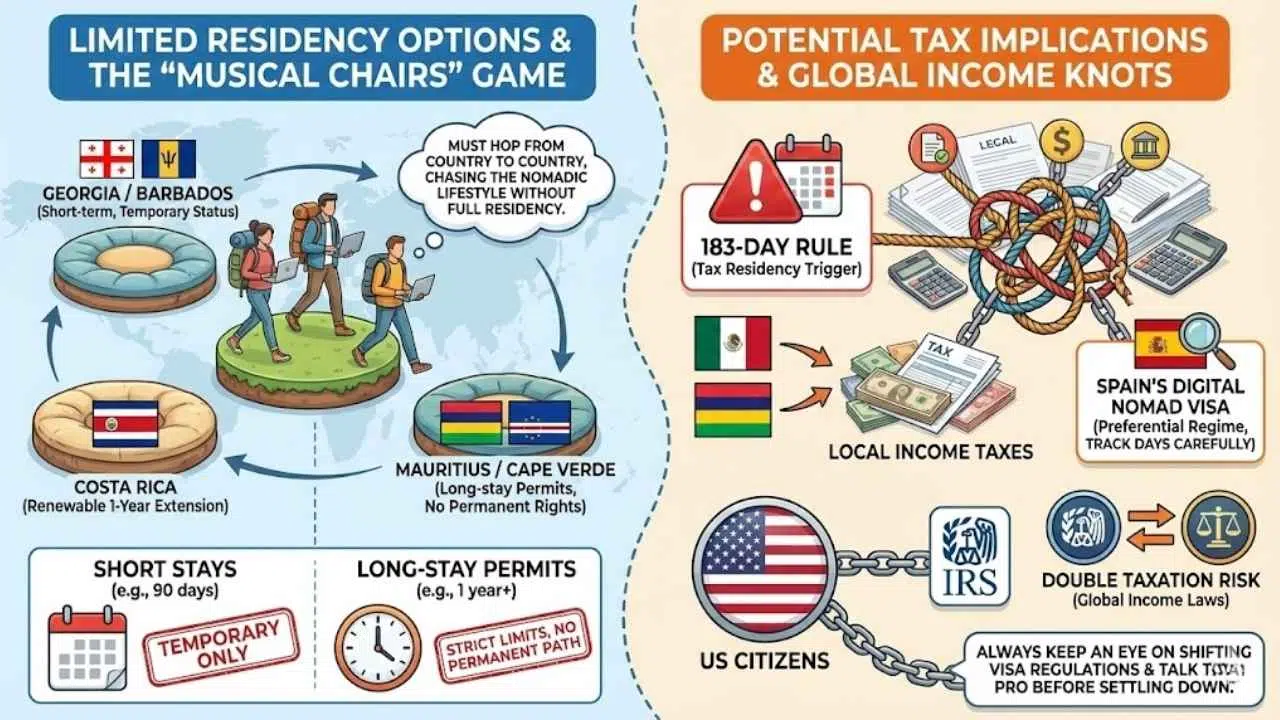
Some visa-free countries let digital nomads stay for 90 days or a bit longer, but do not offer long-term residency. For example, Costa Rica lets remote workers extend their tourist visas to one year, which is renewable for another year, making it easier than most places.
Still, in spots like Georgia or Barbados, you might enjoy months of sunshine and fast internet but face hurdles getting anything beyond temporary status. Most islands such as Mauritius and Cape Verde roll out the carpet with long-stay visas just for digital nomads. Yet these permits do not give you permanent residency rights.
Over 50 countries now provide digital nomad visas or special permits, but these often come with strict rules and set limits on how long you can actually call them home. You may need to hop from country to country at times—call it a modern game of musical chairs—for those chasing the true nomadic lifestyle without full residency options on the table.
Potential tax implications
Tax rules can tie digital nomads in knots. Staying over 183 days in places like Mexico or Mauritius may trigger tax residency, leading to local income taxes. Spain’s Digital Nomad Visa offers a preferential tax regime and lower income requirements, but you must track your days carefully.
Working remotely from countries such as Georgia or Barbados seems simple, yet each place has its own laws about global income. United States citizens still file with the IRS even when living abroad; double taxation lurks if you’re not careful.
Always keep an eye on shifting visa regulations and talk to a pro about your personal situation before settling down for those long-term stays.
Final Thoughts
Seven visa-free countries can change the digital nomad life, offering long stays without the mountain of paperwork or wild costs. These places make living and working from anywhere seem simple and even fun, especially with their friendly communities and low prices. Planning ahead, learning local customs, and finding a good internet spot will give your work-life balance a big boost in these travel destinations.
You’ll find more on remote work tips at sites like Nomad List or Remote Year if curiosity gets you going after this read. Grab your laptop, chase that next sunrise, and write your own adventure—because sometimes all it takes is one bold step into new territory to transform routine days into epic stories worth telling!