
When we think of Uttam Kumar, the word that instantly comes to mind is Mahanayak—the Great Hero. For generations of Bengalis, and indeed Indians, he wasn’t just an actor but a cultural institution. His films carried the dreams, heartbreaks, and aspirations of an entire society.
Born in 1926, Uttam Kumar went on to become the most celebrated star of Bengali cinema, acting in over 200 films across genres—romance, thrillers, comedies, and psychological dramas.
But what if Uttam Kumar’s brilliance had crossed borders at the peak of his stardom? What if he had shared the screen with global icons like Audrey Hepburn, Gregory Peck, or Sophia Loren? And what if he had collaborated with legendary directors like Alfred Hitchcock, Akira Kurosawa, or Martin Scorsese?
This thought experiment allows us to reimagine the timeless actor in worlds he never physically entered, but where his screen presence and charisma would have thrived effortlessly. Read on about Uttam Kumar and global icons.
Uttam Kumar’s Timeless Appeal: Why He Could Cross Borders
Why does imagining Uttam Kumar in Hollywood feel natural? The answer lies in his universality.
-
Natural Acting Style: At a time when melodrama often dominated Indian cinema, Uttam Kumar’s performances carried a subtle, natural rhythm. He could shift from vulnerability to charm in a single glance.
-
Charisma Beyond Language: Whether in the romantic world of Agni Pariksha or the self-reflective journey of Nayak, his magnetism transcended words.
-
Versatility: He wasn’t typecast—he could play the romantic lover, the conflicted anti-hero, or the light-hearted comic with equal ease.
This made him comparable to global actors of the 1950s–70s golden era: Gregory Peck’s gravitas, Cary Grant’s elegance, and Paul Newman’s soulful intensity.
In fact, if Uttam Kumar had been born in Los Angeles or Rome instead of Calcutta, his stardom would likely have been equally dazzling on a global stage.
What If Uttam Kumar Worked with Alfred Hitchcock?
Imagine Alfred Hitchcock’s North by Northwest with Uttam Kumar playing Roger Thornhill—the suave, wrongly accused man caught in a web of mystery.
-
The Hitchcockian Fit: Hitchcock loved “everyman” protagonists who found themselves in extraordinary circumstances. Uttam Kumar, with his mix of sophistication and relatability, would have fit this mold perfectly.
-
Romantic Tension: In Vertigo, James Stewart’s obsession could have been portrayed with even more nuanced subtlety by Uttam, given his ability to express inner turmoil with his eyes alone.
-
Impact: A collaboration with Hitchcock could have positioned Uttam as one of cinema’s global faces of suspense and psychological thrillers.
It’s not difficult to imagine a poster: “Hitchcock Presents Uttam Kumar in The Wrong Man.”
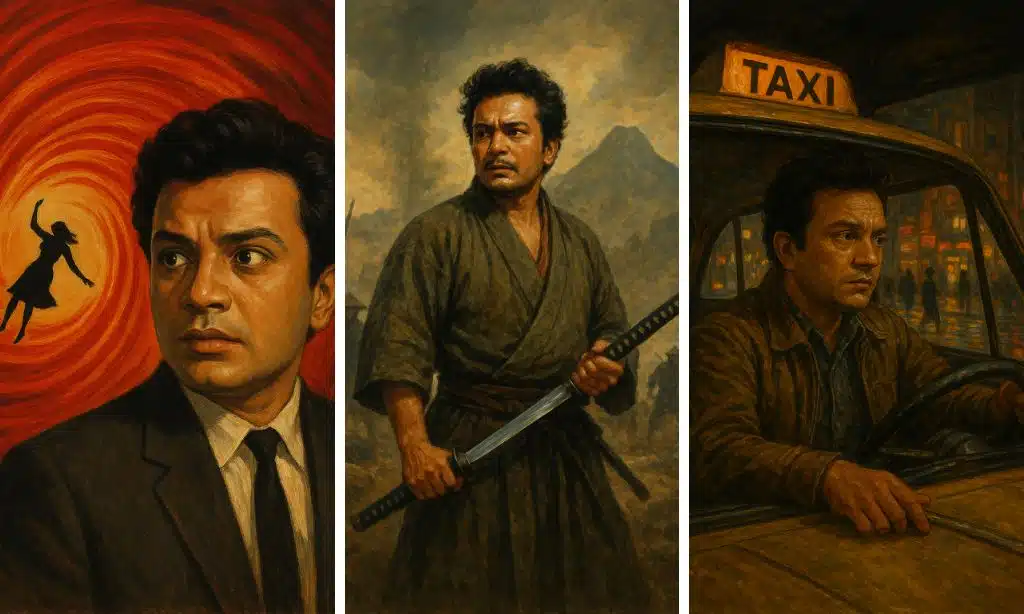
Uttam Kumar in a Kurosawa Epic
If Uttam Kumar had stepped into the cinematic world of Akira Kurosawa, the parallels with Toshiro Mifune would be striking.
-
In Rashomon, Uttam’s ability to portray moral ambiguity would have brought new dimensions to the bandit’s or the woodcutter’s role.
-
In Seven Samurai, his quiet dignity could have embodied the leadership of Kambei or the emotional depth of Katsushiro.
-
Kurosawa’s themes of honor, truth, and humanity match Uttam Kumar’s own strengths in portraying the internal struggles of flawed yet noble men.
Such a pairing could have created a cultural bridge between Japanese and Bengali cinema.
A Scorsese Collaboration: The Bengali Gentleman in Gritty America
Fast-forward to 1970s America: Martin Scorsese’s gritty New York could have offered a very different playground for Uttam Kumar.
-
Taxi Driver: While Robert De Niro defined Travis Bickle with raw intensity, Uttam could have brought an alternative interpretation—quieter, more contemplative, but equally disturbing.
-
The Age of Innocence: Decades later, Uttam’s elegance and sensitivity could have made him perfect for Scorsese’s exploration of repressed desire and social codes.
-
The Appeal: Scorsese loved flawed yet magnetic characters. Uttam Kumar, with his layered performances, would have been an ideal collaborator.
This crossover could have opened up Western audiences to the depth of Indian actors long before globalization.
Woody Allen, Billy Wilder, or Fellini: The Romantic Charmer in World Cinema
Beyond thrillers and epics, Uttam Kumar’s romantic charm would have lit up world cinema.
-
Woody Allen: Imagine Uttam in the intellectual banter of Annie Hall, blending humor with vulnerability.
-
Billy Wilder: In The Apartment or Sabrina, his combination of wit and sophistication could have rivaled Jack Lemmon or Humphrey Bogart.
-
Fellini: In La Dolce Vita, Uttam Kumar could have embodied both spectacle and soul, merging with Fellini’s vision of existential search amidst glamour.
Each of these scenarios underscores how Uttam Kumar and Global Icons of Romance could have created unforgettable screen moments.
Uttam Kumar and Global Icons: Imagined Screen Pairings
The thrill of this thought experiment also lies in pairing Uttam with Hollywood’s greatest leading ladies:
| Uttam Kumar Role | Possible Global Co-Star | Why It Works |
|---|---|---|
| Romantic lover | Audrey Hepburn | Graceful, poetic chemistry |
| Complex anti-hero | Elizabeth Taylor | Intense screen magnetism |
| Gentle hero | Sophia Loren | Elegance meeting charisma |
| Reflective thinker | Ingrid Bergman | Emotional depth and subtlety |
Imagine a Casablanca-style drama where Uttam Kumar, in Humphrey Bogart’s role, says goodbye to Ingrid Bergman under the Paris fog. Cinema history would have added another masterpiece.
Why It Didn’t Happen: Barriers of Time and Industry
Despite his talent, Uttam Kumar never crossed over to Hollywood. Why?
-
Language & Geography: Bengali cinema wasn’t widely translated or distributed internationally in his time.
-
Industry Limitations: Indian cinema, though vast, wasn’t integrated into global film networks.
-
Cold War Context: Cultural exchanges between the East and West were limited during his peak decades.
-
Technology: Unlike today’s OTT-driven world, stars couldn’t transcend borders easily.
Had he been alive in today’s era of Netflix, Amazon Prime, and global film festivals, Uttam Kumar might have become a worldwide name just as easily as Shah Rukh Khan or Amitabh Bachchan.
The Legacy of “What ”If”—Uttam Kumar’s Place Among Global Icons
Even without Hollywood, Uttam Kumar remains a global figure in spirit. His work with Satyajit Ray in Nayak already brought him international acclaim. The film screened at the Berlin International Film Festival in 1966 and remains a timeless exploration of stardom.
In many ways, Uttam Kumar and Global Icons already share the same cinematic league: actors who embodied an era, whose faces and performances defined what stardom means.
Takeaways
On his 99th birth anniversary, reimagining Uttam Kumar in Hollywood is not just a playful thought—it’s a reminder of how truly universal great acting is.
Cinema transcends borders, and Mahanayak Uttam Kumar’s charisma, elegance, and humanity would have shone anywhere in the world. Even without working in Hollywood, he remains in the same breath as global icons—his stardom reaching across generations and continents.
The truth is simple: Uttam Kumar didn’t need Hollywood to be a global icon. He already was one.