
You work hard on your website. I get it. Sometimes, trying to get people to stick around feels like shouting into a void. Maybe you wonder why your pages don’t rank higher or why competitors seem to have all the buzz. You are definitely not alone in that frustration. Here is the thing: there is a “secret weapon” that helps websites shine in search results, and it doesn’t require a massive ad budget. It’s called User Generated Content (UGC).
I found that when you let your customers do the talking, search engines listen. In this article, I’ll walk you through exactly what UGC is and how it supports your Search Engine Optimization goals. Grab a coffee, and let’s go through the simple steps to turn your visitors into your best marketers.
What is User-Generated Content (UGC)?
User-Generated Content is exactly what it sounds like: any form of content, photos, videos, text, or audio, that is created by regular people rather than brands. This could be a customer showing off their new sneakers on TikTok, a detailed review on Reddit, or a star rating left on a product page.
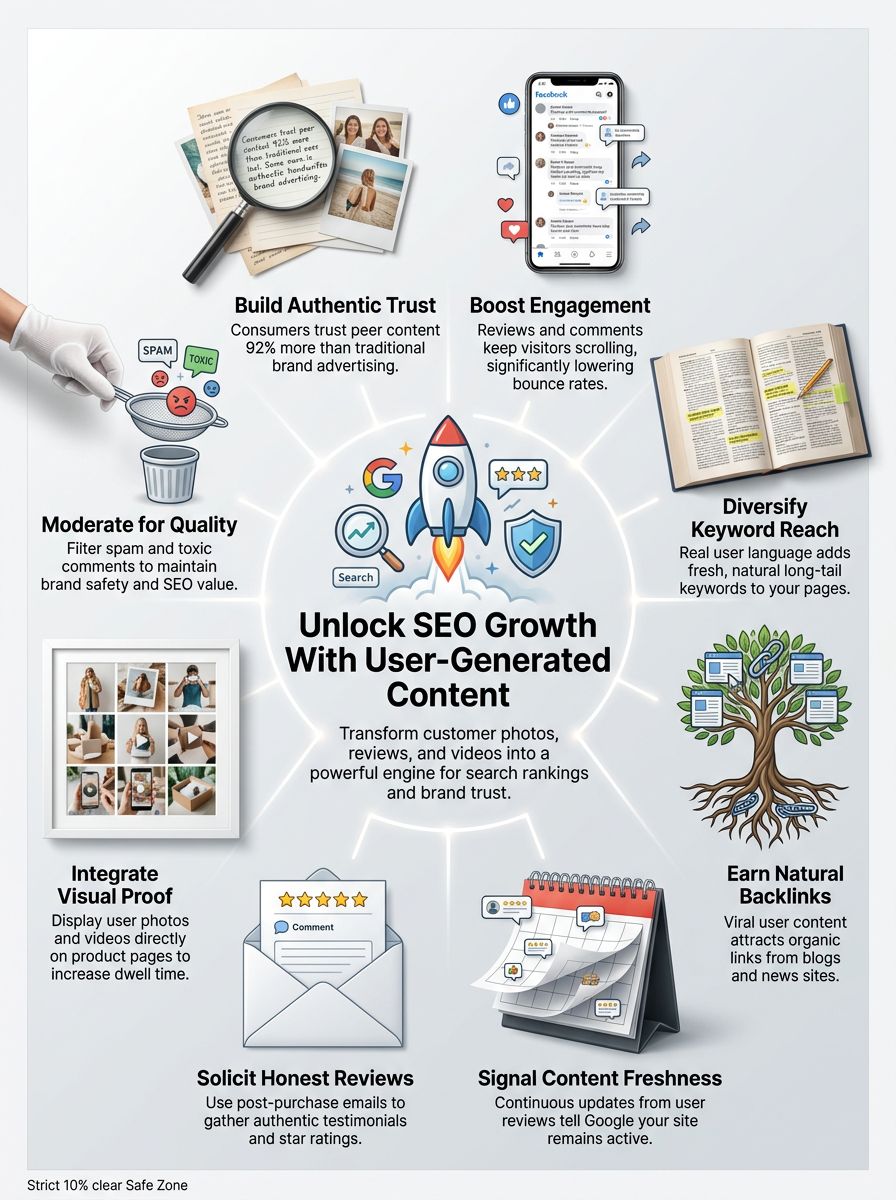
Why does this matter so much right now? Because trust in polished marketing is at an all-time low. A 2024 report from Stackla revealed that 79% of people say UGC highly impacts their purchasing decisions. That is a massive number that you can’t ignore.
When real people share their experiences, it fuels engagement and builds social proof. It sparks the kind of two-way conversations that digital communities thrive on.
Your brand is what other people say about you when you’re not in the room. — Jeff Bezos
Types of User-Generated Content
UGC comes in different flavors. Understanding the difference helps you decide which one fits your content strategy best.
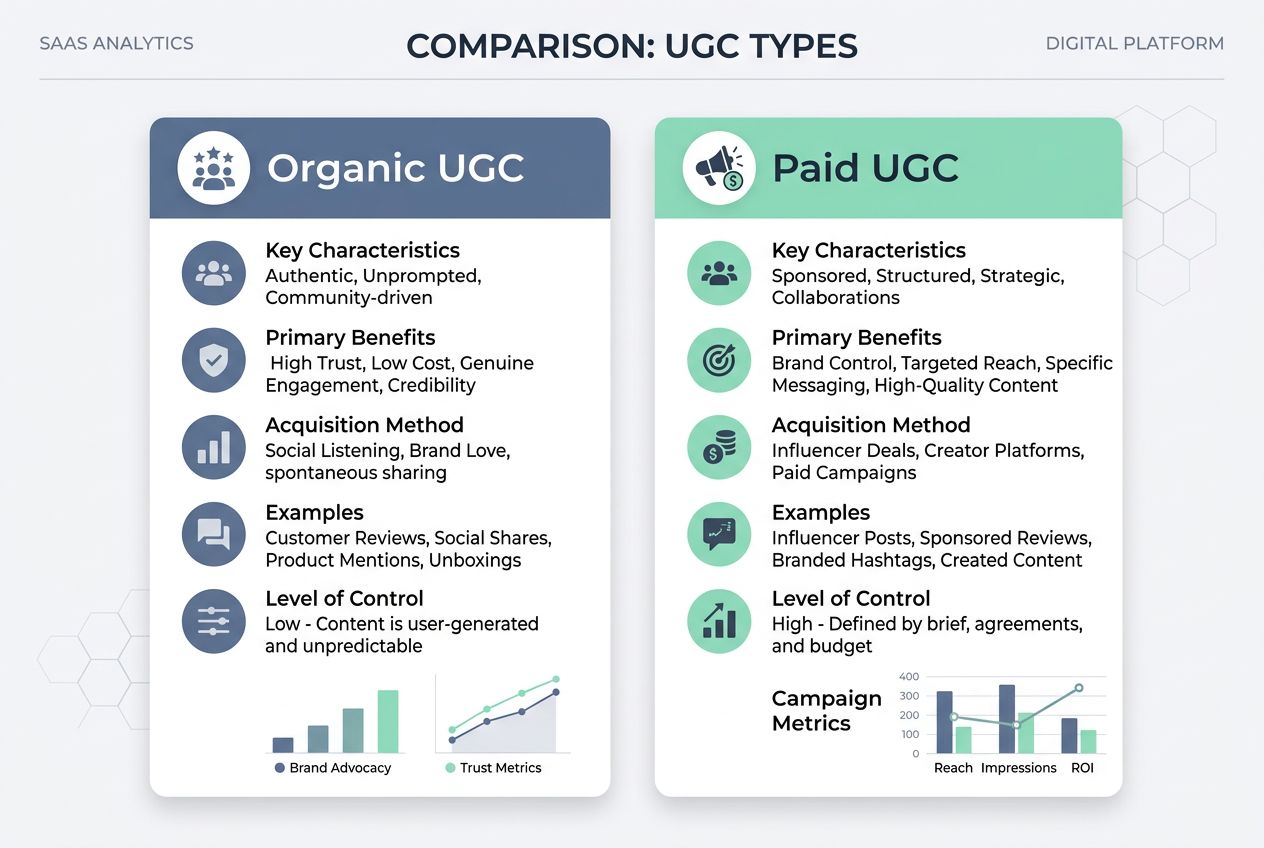
| Type | Who Creates It? | Why It Works |
|---|---|---|
| Organic UGC | Real customers, fans, and everyday users. | It is 100% authentic. When someone posts an unboxing video on Instagram just because they love the product, their followers trust it implicitly. |
| Paid UGC | UGC Creators or Micro-Influencers. | It guarantees high-quality visuals. You pay a creator to make content that looks like organic user content, which you can then use in your ads or on your site. |
Organic UGC
This is the holy grail. Fans share their thoughts or photos without you asking or paying them. Think of a traveler posting a GoPro video of their cliff dive or a coffee lover tweeting about their morning Starbucks run.
Real stories like these trigger serious online engagement. Search engines love this because it signals that your brand is relevant and active. Plus, it brings in “long-tail” keywords that you might never think to use yourself.
Paid UGC
Sometimes you need to prime the pump. Brands often hire “UGC Creators“, a specific role distinct from traditional influencers, to produce content that feels raw and real.
This might be a video testimonial or a “how-to” clip. Nike works closely with athletes and local fans for sponsored posts that feel personal. These paid partnerships blend storytelling with marketing, driving audience engagement while keeping the content quality high.
How UGC Impacts SEO
User content does more than just look good; it actively signals to search engines that your site is a valuable resource.
Boosts website engagement metrics
When visitors see reviews or photos from other people, they stop scrolling. They read. They watch. This behavior increases “Dwell Time”, the amount of time a user spends on your page. A 2025 industry analysis noted that websites featuring user galleries saw up to a 90% increase in time-on-site.
Search engines notice when people stick around. It tells them your page matches the user’s intent, which can lead to better rankings.
Increases keyword diversity
Your customers speak a different language from your marketing team. You might call your product “ergonomic footwear,” but your customer calls them “comfy work shoes for standing all day.”
When users leave reviews or comments, they use these natural phrases. This floods your page with fresh keywords and synonyms.
Insider Tip: I always tell clients to look at the specific words used in 3-star reviews. These often contain specific questions or problems that people type into Google. Use those exact phrases to update your FAQ sections.
Enhances backlink opportunities
Great UGC gets shared. If a customer writes a viral blog post about your product or shares a review that gets picked up by a news site, you earn a backlink.
These natural backlinks are SEO gold. They increase your domain authority and organic traffic without you having to send a single outreach email.
Benefits of UGC for SEO
Beyond the technical metrics, user-generated content changes how the world sees your brand. Here is how it directly lifts your search performance.
- Improves search engine rankings: Google’s “Hidden Gems” update, which rolled out extensively in late 2023 and 2024, explicitly prioritizes content based on first-hand experience. Authentic reviews and forum discussions now have a better chance of ranking because they offer unique, personal perspectives that AI content cannot fake.
- Increases brand trust: People trust people. When a shopper sees a photo of a real person using your product, it removes doubt. This “social proof” is a powerful psychological trigger that turns browsers into buyers.
- Encourages fresh content: Search engines love fresh pages. Every new review or comment is a content update. Brands like Starbucks use this to their advantage, keeping their digital presence lively without constantly writing new articles from scratch.
Best Practices for Leveraging UGC in SEO
You can’t just sit back and hope people post about you. You need a strategy to collect and use this content correctly.
Encourage reviews and testimonials
Ask for the review. It sounds simple, but it is the most missed step. Send a follow-up email 3 days after delivery with a direct link to the review form. Reviews build authority. According to local SEO data, review quantity and recency are top ranking factors for local business searches.
Optimize UGC for relevant keywords
Don’t change your users’ words, but do frame them. If you run a contest, ask participants to use a specific hashtag or answer a specific question like, “What is your favorite hiking trail?”
This guides the content they create to align with the keywords you want to target. It helps search engines understand the context of the images and posts.
Moderate and curate high-quality content
You must protect your brand. Use tools like TINT or Yotpo to filter submissions. These platforms use AI to flag spam or inappropriate images before they hit your site.
Warning: Never fake a review. Platforms like Google and Yelp have strict policies against this, and getting caught can result in a manual penalty that removes your site from search results entirely.
Credit content creators
Always tag the original creator. It is not just polite; it encourages them to share your page with their own audience. When you link back to their social profile, you build a relationship. This often leads to more shares and more organic traffic as their friends come to check it out.
Integrate UGC into your website
Don’t hide reviews on a separate tab. Place them right on the product page or homepage. For the best SEO results, use Schema Markup. Specifically, implementing the AggregateRating schema allows search engines to display those beautiful yellow stars right in the search results. This alone can increase your click-through rate by over 20%.
Great Examples of Brands Using UGC for SEO
Some companies have mastered this art. Let’s look at three brands that use customer content to dominate search results.
GoPro
GoPro is the king of organic UGC. Their “Million Dollar Challenge” is legendary. In the 5th edition of this challenge, they received over 42,000 video submissions from creators hoping to earn a slice of the prize.
By encouraging users to tag their videos, GoPro ensures a constant stream of fresh, exciting content that ranks for thousands of adventure-related keywords.
Nike
Nike uses its apps to build community. On the SNEAKRS app, they encourage fans to post their “Kickcheck.”
This isn’t just a photo; it is a signal of loyalty. Nike creates a loop where user content feeds their product pages, making the shopping experience feel like scrolling through a friend’s feed. This keeps engagement high and bounce rates low.
Starbucks
Starbucks knows how to make a cup of coffee into an event. Their annual #RedCupDay triggers a flood of social media posts every holiday season.
Years ago, their #WhiteCupContest set the standard, but they have kept the momentum going. By giving customers a simple prompt, “share your cup”, they generate millions of brand impressions and searchable images every single year.
Benefits of UGC for Brands
Let’s recap why this strategy is a winner for your business goals.

Builds authenticity and trust
In an era of deepfakes and AI articles, real photos from real people are the ultimate currency. They prove you are a legitimate business serving actual humans.
When a new visitor sees that 50 other people bought and loved an item, the risk of buying disappears. It validates their choice before they even pull out their credit card.
Enhances audience engagement
UGC turns customers into community members. When you feature a user’s photo, you make them feel famous. They will remember that feeling and your brand, forever.
Cost-effective marketing strategy
Content production is expensive. UGC provides you with a library of high-quality assets for free. Instead of hiring a photographer for a studio shoot, you can curate the best shots your customers have already taken.
Case Studies of UGC Success
I want to highlight how specific strategies led to real numbers for these industry giants.
GoPro’s Strategy
GoPro realized early on that its customers lived more interesting lives than any actor could portray. By curating the best user clips for their YouTube channel, they built a subscriber base of millions.
This strategy drives massive organic traffic because people search for “GoPro surfing video” or “GoPro skiing,” and the brand’s own curated user content appears at the top.
Airbnb’s Approach
Airbnb is built entirely on trust. Their review system is the engine of their SEO. With over 7 million listings globally, the constant influx of guest reviews ensures that every property page is constantly updated with fresh text.
This keeps Google’s crawlers coming back, ensuring that Airbnb dominates search results for travel accommodations in almost every city on earth.
Starbucks’ Initiatives
Starbucks uses UGC to create “FOMO” (Fear Of Missing Out). When thousands of people post their red cups on the same day, it creates a viral spike that news outlets cover.
This generates authoritative backlinks from major publishers like CNN or BuzzFeed, which boosts Starbucks’ overall domain authority for the rest of the year.
Challenges of Using UGC for SEO
It is not all smooth sailing. You need to be aware of a few pitfalls to keep your site safe.
- Managing content quality: Not every user photo is a masterpiece. You need a human eye to select the images that match your brand aesthetic. Blurry or dark photos can actually hurt your conversion rate.
- Addressing copyright concerns: This is critical. Just because someone tagged you doesn’t mean you own the photo. In the US, you must ask for permission before using a customer’s photo in an ad. A simple comment like “Love this! Can we feature it? Reply #YesBrandName” usually works.
- Avoiding spam: As platforms grow, so does spam. Automated bots often target comment sections. Using a plugin like Akismet or strict moderation settings is essential to keep your comment section from becoming a link farm for unrelated sites.
The Bottom Line
User Generated Content and SEO are a perfect pair. Brands like GoPro and Nike have proven that when you hand the microphone to your customers, great things happen. Fresh reviews build trust. Real photos increase engagement. And a steady stream of user updates keeps search engines happy.
So, start asking your customers to share their stories today. It is the most authentic way to grow your organic traffic and build a community that lasts.