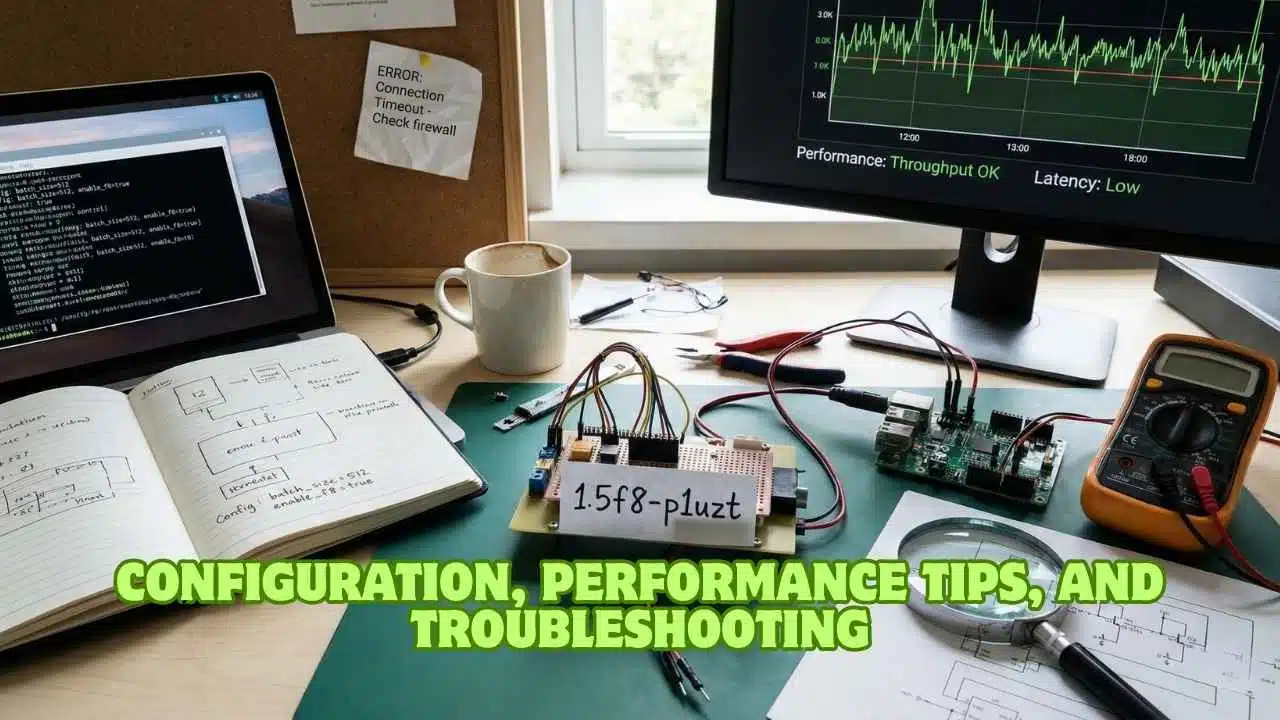
You’ll find that 1.5f8-p1uzt is a compact identifier used to tag a specific texture or data profile that balances quality and performance for graphics and asset pipelines. Use it when you need a standardized, efficient format for textures or feature flags that keeps file sizes small while preserving visual fidelity.
This article walks through what the tag means, the technical details behind the format, where it works best, and how to set it up safely in your workflow. You’ll get practical steps for installation, operational tips, security points, integration notes, and a look at recent changes and alternatives so you can decide if 1.5f8-p1uzt fits your projects.
What Is 1.5f8-p1uzt?
1.5f8-p1uzt is a compact identifier used to label a specific texture format and encoding variant. It signals precision, compression method, and a format variant that you may encounter in 3D rendering, game assets, or rendering pipelines.
Overview of 1.5f8-p1uzt
1.5f8-p1uzt names a texture type that balances precision and file size. The prefix “1.5f8” denotes a precision profile—roughly 1.5 units of fractional precision with an 8-bit component baseline—while “p1uzt” marks a particular encoding and variant family.
You will see this code in asset manifests, shader metadata, or engine logs. It points to textures optimized for scenes where moderate color fidelity matters but full 16- or 32-bit floats are not needed. Developers choose it to reduce memory and bandwidth use while keeping banding and artifacts low enough for real-time use.
Key Characteristics
- Precision and bit layout: The format targets roughly 1.5 fractional precision with 8-bit base channels. That means better than standard 8-bit integer color in mid-tones and highlights, but less than full float formats.
- Compression behavior: It uses a lossy encoding tuned to preserve visual detail where the eye notices it most. Expect lower disk and GPU memory footprints versus 16-bit floats.
- Visual trade-offs: You might see minor banding in extreme gradients and very subtle differences in high dynamic range lighting. However, normal albedo and most normal maps remain visually faithful.
Standard Specifications
- Channel format: Typically encoded as 3 or 4 channels (RGB or RGBA) with an 8-bit baseline and additional fractional encoding to reach the 1.5f8 profile.
- File/container support: Commonly wrapped in engine-specific containers or standard texture containers that allow custom metadata. Look for tags like “1.5f8-p1uzt” in your asset manifest or texture header.
- GPU handling: GPUs read this as a specialized sampled texture; drivers or engine code perform the decode to native shader-friendly formats. Check your engine docs for built-in decoders or provide a shader-based unpack routine.
- Use cases: Real-time engines, VR, and mid-range mobile targets where you need a compromise between quality and performance.
Technical Details Of 1.5f8-p1uzt
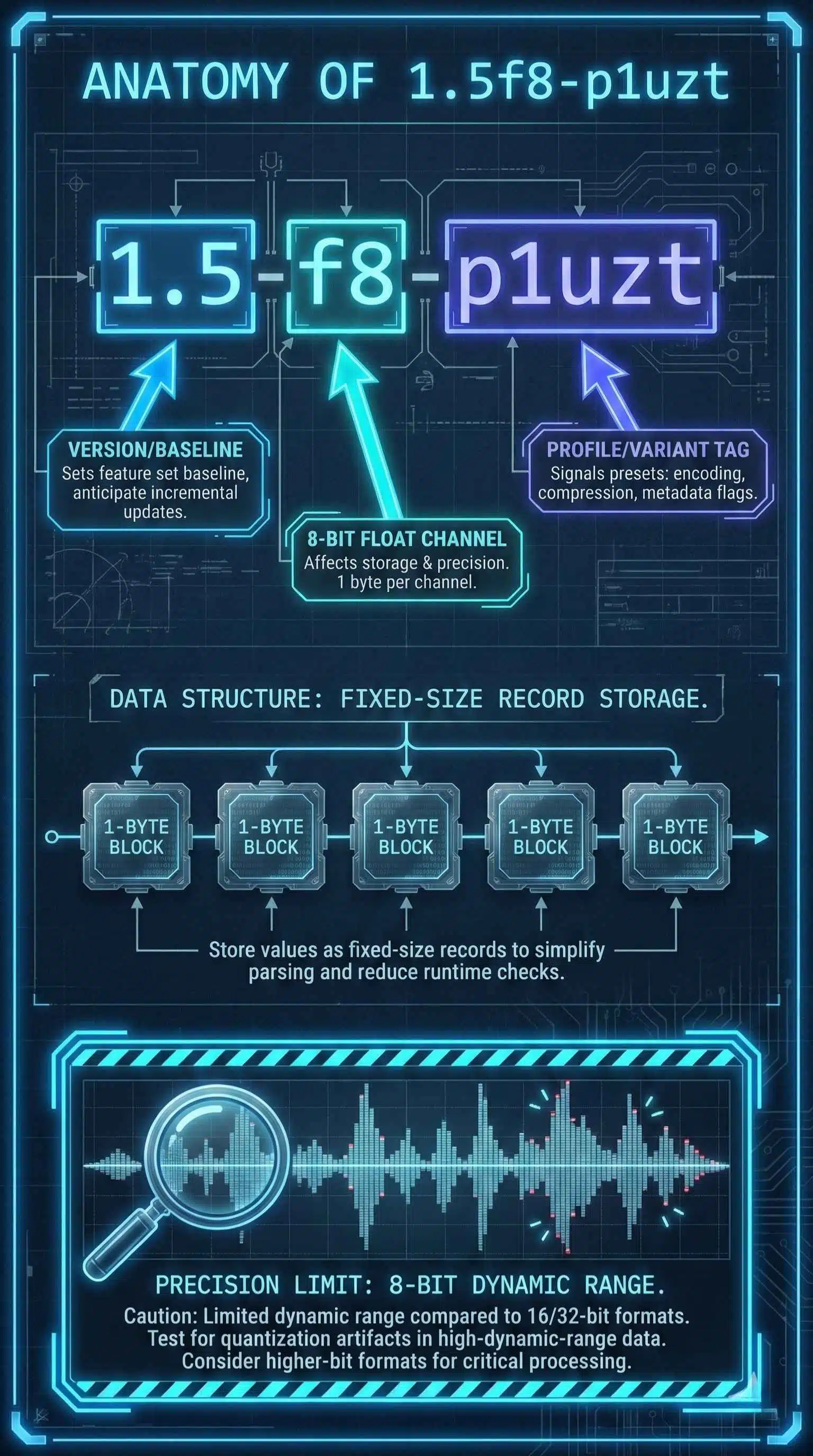
You will find specific information on the format, expected throughput, and the systems that can read or write this identifier. The details below show what each part of the tag means, how it performs in common scenarios, and what your environment must provide to use it reliably.
Core Components
1.5f8-p1uzt breaks into meaningful parts you can map to implementation needs.
- 1.5: A version or revision marker. You must treat this as the baseline feature set and expect incremental changes in future versions.
- f8: Indicates an 8-bit floating-point channel format. This affects storage size and precision. Expect each channel to use one byte and deliver roughly an 8-bit dynamic range per channel.
- p1uzt: A profile or variant tag. It signals presets for encoding parameters, such as compression mode, channel ordering, or metadata flags.
You must store values as fixed-size records when possible. That simplifies parsing and reduces runtime checks.
If you implement writing, include the full tag in headers and validate each component on read. Use unit tests to verify correct interpretation of version, channel format, and profile flags.
Performance Metrics
You should measure throughput, storage, and precision trade-offs when using 1.5f8-p1uzt.
- Throughput: Expect read/write speeds similar to other 8-bit-per-channel formats. CPU-bound systems will parse headers quickly, while I/O-bound setups depend on your storage medium.
- Storage: Each channel consumes one byte, so file size scales linearly with channel count. This leads to predictable disk usage and simpler caching.
- Precision: 8-bit floating point gives limited dynamic range compared with 16- or 32-bit formats. You must test for quantization artifacts in high-dynamic-range data.
Measure latency under your real workload. Use profiling tools to check whether decoding or disk I/O limits performance. If precision matters, consider converting critical data to a higher-bit format before heavy processing.
Compatibility Requirements
You need specific support in both software and hardware to use 1.5f8-p1uzt reliably.
- Software: Your parsers must recognize the version token “1.5”, handle the f8 channel layout, and apply profile rules from p1uzt. Update libraries that assume integer-only channels.
- Hardware: Devices with native 8-bit float math or fast byte operations perform best. On platforms lacking f8 support, you must emulate conversions, which adds CPU overhead.
- Ecosystem: Ensure downstream tools accept the format. Provide an exporter that can output a fallback like 8-bit integer or 16-bit float when needed.
Document the exact header layout and profile flags for integrators. Include sample files and test vectors so others can validate compatibility without guessing your implementation choices.
Applications And Use Cases
1.5f8-p1uzt serves as a high-performance texture and data identifier used to speed rendering, reduce file size, and keep visual detail. You can apply it across design, simulation, and connected-device workflows to save processing time and improve visual fidelity.
Primary Industries
You will find 1.5f8-p1uzt commonly in gaming and real-time 3D. Game studios use it to store packed texture maps that load quickly on consoles and PCs. That reduces level-load times and keeps frame rates stable during complex scenes.
Architecture and product visualization teams use it for photorealistic surface detail on facades, materials, and furniture. It helps you present high-res visuals without huge file transfers to clients.
AR/VR developers rely on the format for layered textures that need low latency on headsets. Industrial simulation and training platforms use it to display accurate material response while minimizing GPU memory use.
Common Scenarios
In your game project, 1.5f8-p1uzt can combine albedo, roughness, and normal data into one optimized asset. This lowers draw calls and simplifies asset pipelines.
For VR, you can stream 1.5f8-p1uzt textures at different quality levels. That lets headsets request smaller tiles for peripheral views and full detail for focal points.
In smart-home or IoT dashboards, the identifier tags texture sets and UI skins so devices sync visuals without heavy downloads. Use cases include remote device previews, AR maintenance guides, and product configurators that swap materials in real time.
Emerging Trends
You may see 1.5f8-p1uzt used with procedural texturing tools to generate variations on the fly. That reduces artist workload and keeps asset libraries compact.
Cloud rendering services are beginning to accept 1.5f8-p1uzt packs for distributed ray tracing. This lets you render high-detail stills or animations in less time and with predictable costs.
Machine-learning pipelines now train on compressed, annotated 1.5f8-p1uzt datasets for material recognition and auto-tagging. In practice, that speeds search, automates LOD selection, and helps you manage large texture catalogs.
Installation And Setup
This section shows what you need, how to install each component, and which settings matter most. Follow the steps in order, and check system compatibility and permissions before you start.
Prerequisites
You need an operating system that supports 1.5f8-p1uzt (Windows 10/11, Ubuntu 20.04+, or macOS 11+). Ensure you have at least 4 GB RAM and 500 MB free disk space for the core files. Administrative or root access is required for system-level changes and driver installs.
Gather these items before you begin:
- The official 1.5f8-p1uzt installer package or signed repository URL.
- Network access for activation and updates.
- A backup of any config files you will replace.
Disable third-party security tools only if they block the installer. Record current system settings so you can restore them if needed.
Step-By-Step Installation
Download the installer from the official source or add the provided repository to your package manager. Verify the package signature with the publisher’s key to ensure integrity.
Installation steps (example):
- Windows: Run the .exe as administrator, accept the license, and choose “Full” or “Custom” install.
- macOS: Open the .dmg, drag the app to Applications, then run and allow system permissions in Security & Privacy.
- Linux: sudo apt update && sudo apt install ./1.5f8-p1uzt_x.y.z.deb or use rpm tools for Red Hat-based systems.
After installation, reboot if prompted. Check logs at:
- Windows: %PROGRAMDATA%\1.5f8-p1uzt\logs
- macOS/Linux: /var/log/1.5f8-p1uzt.log
If installation fails, rerun the installer with verbose logging and collect the last 200 lines of the log for troubleshooting.
Configuration Guidelines
Open the main configuration file or the GUI settings panel to set core parameters. Key settings to set first:
- Activation key or account credentials for licensing.
- Update the channel (stable, beta) to control version updates.
- Resource limits (CPU threads, memory cap) to match your workload.
Use these recommended values as a starting point:
- Update channel: stable
- Max threads: 2 for low-end systems, 4+ for multi-core machines
- Auto-update: enabled for security patches
Apply changes, then restart the 1.5f8-p1uzt service. Verify operation by running a basic task or a built-in self-test. Keep a copy of your configured file and export settings if the tool offers an export/import option.
Operational Best Practices
Maintain a clear schedule, keep configuration records, and monitor key metrics continuously. Prioritize safety checks and version control when you change settings or deploy updates.
Routine Maintenance
You should run a weekly visual inspection of the 1.5f8-p1uzt unit and its wiring or connectors. Check for loose connections, corrosion, and dust buildup. Replace any worn cables and tighten fasteners to the manufacturer torque specs.
Perform firmware and configuration backups before any update. Store backups with timestamped filenames and keep at least two copies: one on-site and one off-site. Test restore procedures quarterly so you can recover quickly.
Follow a monthly calibration routine if your 1.5f8-p1uzt interacts with sensors or timing circuits. Use a calibrated reference tool and record the before/after values in your log. If drift exceeds the allowable tolerance, recalibrate and note corrective actions.
Keep a simple maintenance checklist posted near the unit. Include last inspection date, last firmware version, recent repairs, and next scheduled task. This helps technicians hand off work without missing steps.
Troubleshooting Techniques
Start with a symptom-first approach. Identify the exact behavior (error code, output drop, latency spike), then capture logs for the period around the event. Use timestamps to match logs with operator actions.
Isolate variables by removing nonessential connections and services. Reproduce the problem in a controlled environment if possible. If the issue disappears after isolation, add components back one at a time to find the culprit.
Use these quick checks: power supply voltage, network link status, firmware version, and error code lookup. Refer to the device’s code table and document each step you take. That prevents repeated steps and speeds future fixes.
When you need vendor help, gather the following before contacting support: model and serial number, firmware and config files, log extracts, and a short reproduction procedure. Share screenshots or short recordings to make diagnoses faster.
Performance Optimization
Track three core metrics: throughput (units/sec), latency (ms), and error rate. Log these continuously and baseline them during normal operation. Use the baseline to spot regressions quickly.
Tune configuration parameters incrementally. Change one parameter at a time and run a fixed-duration test to measure impact. Keep a change log that records parameter, prior value, new value, test results, and rollback plan.
If you see sustained high latency, check for buffer saturation and CPU load first. Increase buffer sizes only if CPU and memory headroom permit. For network-related slowdowns, confirm MTU settings, switch port speeds, and any QoS rules.
Automate routine tasks where possible: scheduled reboots at low-use windows, log rotation, and alerting for metric thresholds. Automation reduces human error and keeps the 1.5f8-p1uzt running predictably.
Security Considerations
Recognize where 1.5f8-p1uzt can expose systems and what controls reduce risk. Focus on authentication gaps, firmware integrity, and access policies that most often cause incidents.
Potential Vulnerabilities
1.5f8-p1uzt often appears as a firmware or build identifier tied to devices and automation tags. That link means attackers can target outdated firmware, mismatched builds, or exposed metadata endpoints to gain access.
Unauthorized access can occur when default credentials or weak API keys remain in use. Metadata tags or build identifiers may leak sensitive info in logs, URLs, or public repositories. Tampered firmware images and corrupted checksums can brick devices or introduce backdoors.
Supply-chain risks matter too. If you accept images from unverified sources, malicious code can enter before deployment. Network-level exposures include open management ports and unsecured OTA update paths.
Mitigation Strategies
Authenticate all management access with multi-factor authentication and unique keys per device. Use role-based access control so users only have the permissions they need.
Verify firmware and images with strong checksums and signed updates. Reject any update that fails signature verification. Maintain an allowlist of approved build identifiers like 1.5f8-p1uzt variants to avoid accidental installs.
Harden logging and metadata handling. Strip build IDs from public endpoints and rotate API keys regularly. Limit debug and console access to secure maintenance windows and monitor for unusual build-tag queries.
Apply timely patches and automate update checks. Use network segmentation to separate device management from general user traffic. Keep an inventory of devices and their approved builds to speed incident response.
Integration With Other Systems
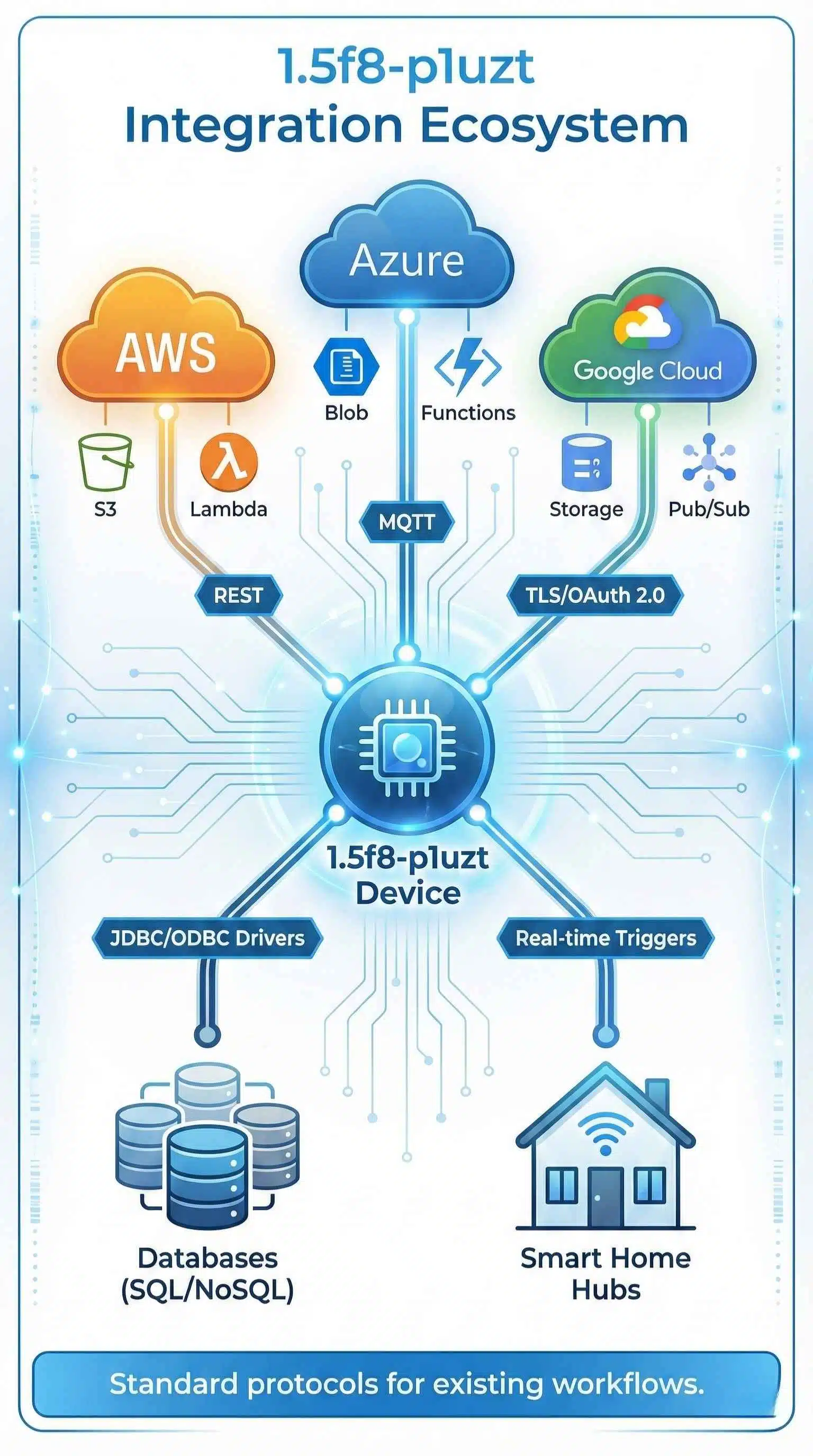
You can connect 1.5f8-p1uzt to common cloud services, databases, and home automation hubs. The device uses standard protocols and offers options for field mapping and custom scripts so you can fit it into existing workflows without major changes.
Supported Platforms
1.5f8-p1uzt works with major cloud providers and common local systems. It supports:
- AWS (S3, Lambda) for storage and serverless tasks.
- Azure (Blob, Functions) for data pipelines.
- Google Cloud (Cloud Storage, Pub/Sub) for messaging and archives. It also connects to SQL and NoSQL databases via JDBC/ODBC drivers and supports REST and MQTT for device and message integration.
Use the built-in adapters to map fields and transform payload formats. Authentication options include API keys, OAuth 2.0, and certificate-based TLS. If you run a smart home setup, it integrates with hubs that accept MQTT or REST, letting you trigger automations or report sensor data in real time.
Customization Options
You can change how 1.5f8-p1uzt formats and routes data through configuration files and a small scripting engine. Supported script languages include JavaScript (for inline transforms) and Python (for heavier logic). Create custom adapters when you need unique protocol support or replace default parsers to match your data shape.
For scaling, set routing rules and batch sizes in the config UI or via CLI. Use templates to standardize metadata and tag records for downstream systems. You can also add webhooks and custom error handlers to control retry logic, alerting, and downstream fallbacks.
Recent Developments In 1.5f8-p1uzt
You can expect improvements in file efficiency, rendering fidelity, and cross-platform support. New tools and community work are speeding up adoption and adding real-world use cases.
Latest Features
The format now supports compact multi-layer encoding that stores color, normal, and roughness maps in a single container. This reduces file count and simplifies asset pipelines for games and VR. You get smaller downloads and fewer texture binds at runtime.
Security and integrity checks were added. Files include a lightweight checksum and optional cryptographic signature so you can detect tampering or corruption during distribution. That matters for online stores and shared asset libraries.
Rendering tools added built-in tone mapping presets and GPU-friendly decompression paths. Those let you keep high detail on mid-range hardware. You also gain metadata fields for provenance and usage rights that travel with each texture.
Community Contributions
Developers released open-source converters that turn common formats like PNG, EXR, and KTX into 1.5f8-p1uzt. You can batch-convert entire art libraries with command-line tools available on major repositories.
Artists shared shader snippets and sample scenes that show best practices for streaming and LOD (level of detail). These examples highlight how to keep visual quality while cutting memory use.
Several plugins integrate 1.5f8-p1uzt with popular engines. You can drop textures into Unreal and Unity with minimal setup. Community tests and benchmarks are helping refine performance guidelines you can follow.
Comparisons And Alternatives
This section compares 1.5f8-p1uzt with other texture and material options. It highlights performance, file size, compatibility, and when you might choose a different format.
Competitive Solutions
You can choose common texture formats like PNG, JPEG, and DDS, or advanced ones like KTX2 and WebP. PNG and JPEG work well for simple color maps and are widely supported. They keep file pipelines simple but lack depth and normal data.
DDS and KTX2 store compressed mipmaps and GPU-ready data. Use DDS for DirectX workflows and KTX2 for Vulkan or modern engines. Both reduce VRAM use and improve load times compared with raw image files.
For PBR workflows, consider packed HDR formats such as EXR for high dynamic range and normal/detail maps. EXR keeps full-range lighting data but increases storage needs. Choose based on engine support, memory limits, and whether you need physically correct lighting.
Pros And Cons
1.5f8-p1uzt can offer layered surface info and efficient rendering in certain pipelines. You may gain surface depth and reflectance data in a single asset, reducing shader complexity and artist effort.
Drawbacks include limited tooling and inconsistent support across engines. You might face conversion steps, vendor lock-in, or unclear licensing when moving between projects. Those issues raise development time and integration risk.
Alternatives trade off these points: PNG/JPEG for simplicity, DDS/KTX2 for GPU performance, and EXR for quality. Match your choice to your target engine, memory budget, and whether you need HDR or packed surface channels.
Future Prospects And Innovations
This section describes concrete upgrades you can expect and the research paths that will shape 1.5f8-p1uzt. It highlights specific improvements to performance, compatibility, and toolchains, plus active research goals that will enable new uses.
Upcoming Enhancements
You will see faster real-time rendering and smaller file sizes from codec and pipeline updates. Developers plan to add GPU-accelerated compression and streaming support so large textures load with less latency on VR and game engines.
Expect broader format support in popular engines and design tools. UI plugins and import/export modules are already in development to make 1.5f8-p1uzt work natively in Blender, Unity, and Unreal Engine without manual conversion steps.
Tooling will include automated seam repair and AI-driven upscaling. That will reduce manual cleanup and let you generate high-resolution assets from moderate-resolution scans. Security patches will tighten handling of embedded metadata to prevent leakage during asset sharing.
Research Directions
Researchers focus on perceptual compression that preserves visual detail where the eye is most sensitive. Studies measure where to allocate bits across roughness, normal, and albedo channels to cut data size while keeping fidelity.
Materials scientists are testing adaptive surface variants that change microtexture based on lighting or touch. Prototypes use responsive coatings and metadata hooks so digital shaders can mimic physical changes in AR and product visualization.
AI teams explore procedural synthesis tied to semantic labels. That would let you request a “worn concrete, low specular” texture and receive a consistent, editable 1.5f8-p1uzt asset. Standardization working groups aim to publish an interoperable spec to ease cross-tool adoption.