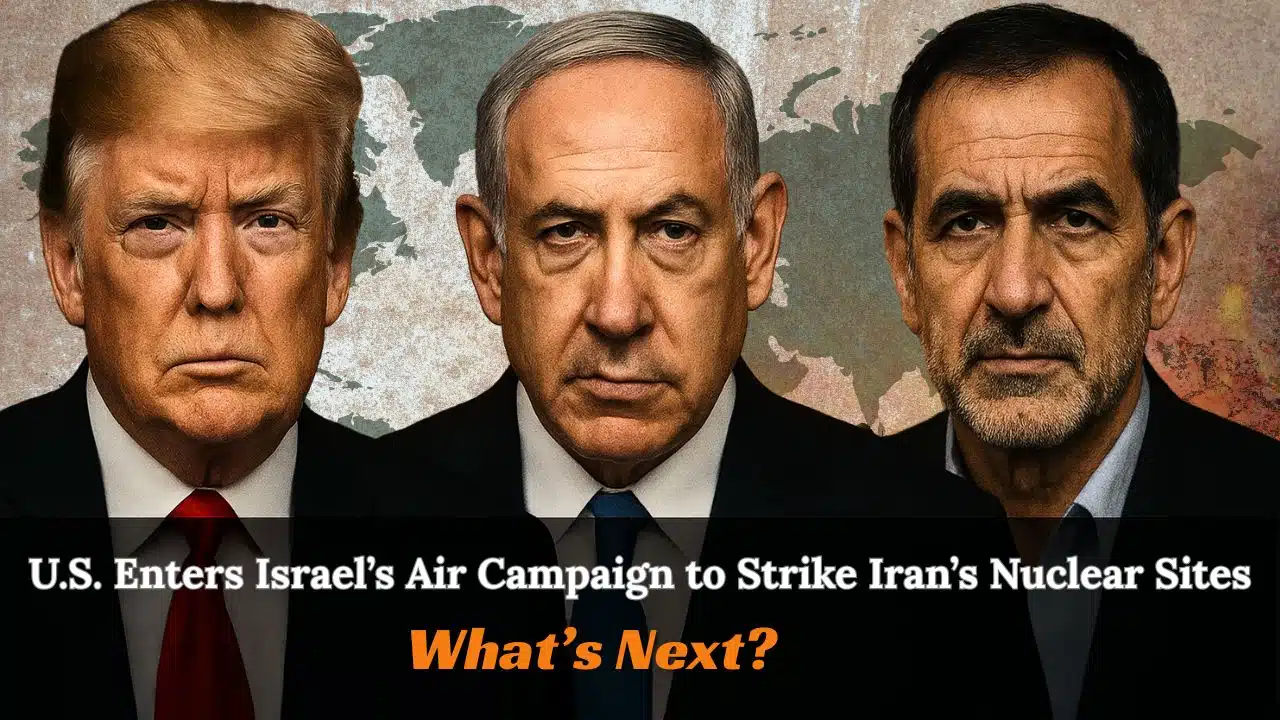
In a dramatic escalation of the Middle East conflict, the United States has officially joined Israel’s military campaign against Iran, launching coordinated airstrikes targeting three of Iran’s most critical nuclear facilities: Fordow, Natanz, and Isfahan/Esvahan.
What We Know
-
Joint Strikes: U.S. warplanes, including B‑2 bombers and fighter jets, struck underground and above-ground Iranian nuclear sites simultaneously with Israeli forces.
-
Radiation Safety: The International Atomic Energy Agency (IAEA) and Iran’s nuclear safety agency confirm “no increase” in off-site radiation near these facilities.
-
Presidential Statement: President Donald Trump vowed the nukes were “completely and totally obliterated” and warned of further strikes if Iran fails to pursue peace.
-
Immediate Retaliation: Iran launched ballistic missiles and drones at Israel, resulting in civilian injuries—at least 10 in central Israel and one direct hit on Soroka Hospital in Beersheba, with around 240 injured.
Global Responses & Fallout
-
Iran’s Reaction: Tehran condemned the strikes as a violation of international law and the UN Charter, warning of “everlasting consequences” and reserving the right to full retaliation.
-
U.N. Alert: Secretary-General António Guterres called the actions a “dangerous escalation” that threatens regional peace.
-
Allied Caution: The UK, the EU, Turkey, China, and Russia have urged restraint, with some calling for renewed diplomacy and others deeming the strikes actionable for collective security nations.
-
Domestic U.S. Split: President Trump, previously advocating diplomacy, now appears ready to order more strikes. But the U.S. faces internal opposition: MAGA members and Congress are debating approval for military escalation.
Strategic Context
-
Israeli Air Campaign: This marks a coordinated phase under “Operation Rising Lion,” in which Israel focused on disabling Iran’s air defenses ahead of nuclear strikes.
-
Military Toll: Iranian air defenses have reportedly shot down or evaded over 70 SAM batteries, while casualties exceed 430 dead and thousands injured in Iran; Israeli military reports 24 civilian deaths.
What’s Next?
President Trump has set a two-week deadline to decide on further U.S. engagement—ranging from additional strikes to an abrupt shift toward diplomacy. Tehran’s leadership has pledged to “respond with full force,” including potential strikes on U.S. facilities or regional allies.
With missile exchanges and airstrikes intensifying, civilian casualties, mass evacuations, and a refugee spike appear unavoidable. While European-led talks in Geneva seek de-escalation, success remains doubtful as long as military strikes continue.
Humanitarian Toll and Civilian Casualties Mount
As the U.S. joins Israel in the escalating campaign against Iran, the human cost is becoming alarmingly clear.
-
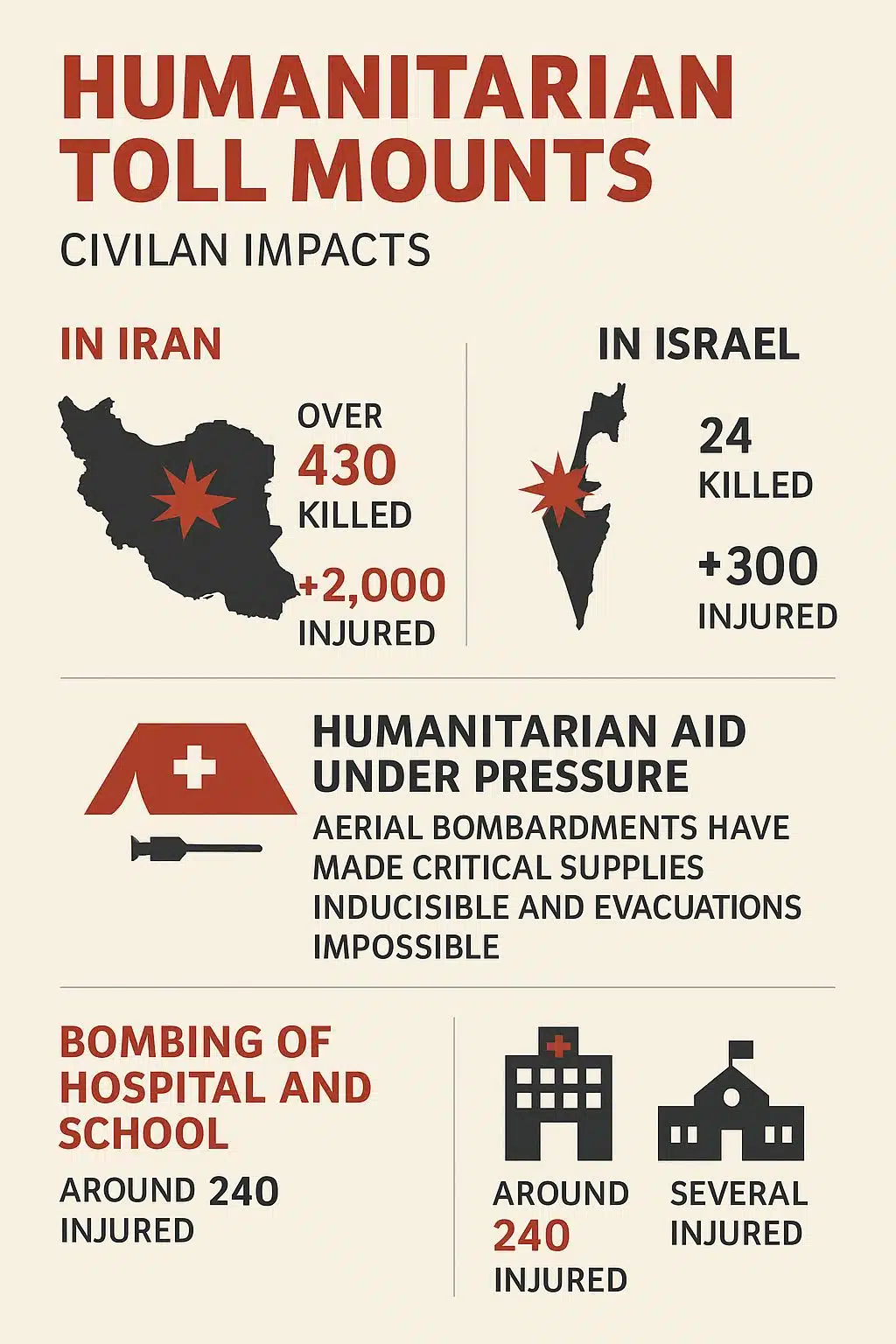
In Iran, over 430 civilians and military personnel have reportedly been killed, according to unverified figures from local hospitals and rescue agencies. More than 2,000 people are injured, with emergency rooms overwhelmed in Isfahan and Natanz, where many nuclear facility workers lived nearby.
-
In Israel, retaliatory missile strikes by Iran hit urban centers, causing at least 24 civilian deaths and over 300 injuries, including damage to critical infrastructure like schools, hospitals, and public transit stations.
-
The strike on Soroka Hospital in Beersheba, one of southern Israel’s largest trauma centers, has drawn global condemnation. At least 240 patients and staff were treated for injuries, burns, and psychological trauma.
-
A school in central Israel was also reportedly hit, injuring several children and teachers—escalating fears that Iran’s counterstrikes are expanding beyond military targets.
Humanitarian Aid Under Pressure
Humanitarian groups, including the Red Crescent and Doctors Without Borders, have urged both countries to create “de-escalation corridors” for medical evacuations and aid. However, continued aerial bombardments have made it impossible to deliver critical supplies in many areas of Iran’s Isfahan province.
Political Repercussions: Global Diplomacy on Edge
The geopolitical fallout from the strikes is quickly becoming just as severe as the military impact.
In Washington:
-
President Donald Trump’s decision to authorize direct strikes has drawn bipartisan scrutiny. While some lawmakers praise the “decisive blow to Iran’s nuclear ambition,” others warn this risks “dragging the U.S. into another long-term conflict in the Middle East.”
-
Congress is divided over whether formal approval is needed for expanding U.S. military involvement, reviving memories of past undeclared wars.
In Tehran:
-
Iranian Supreme Leader Ayatollah Khamenei has declared a “state of maximum resistance,” and hardliners in parliament are demanding unrestricted retaliatory action.
-
Iran has also cut diplomatic channels with several European states that supported the Israeli position, heightening fears of wider regional fallout.
Across the Region:
-
Hezbollah and Houthi leaders have threatened to join Iran’s retaliatory efforts if attacks continue, raising concerns about a multi-front conflict.
-
Arab League countries like Qatar, Jordan, and the UAE have called for emergency talks, fearing that the situation may ignite internal unrest or lead to a refugee crisis across borders.
Global Calls for De-escalation:
-
UN Secretary-General António Guterres has called for an immediate ceasefire and warned that “the world stands at the brink of uncontrollable escalation.”
-
The European Union is preparing a diplomatic task force to attempt shuttle diplomacy, while China and Russia have begun talks to mediate a peace framework—though both have condemned the U.S.-Israeli strikes as “unilateral aggression.”
What began as Israel’s preemptive strikes on Iranian nuclear facilities has escalated into a broader war involving direct U.S. participation. The world watches warily as the conflict inches toward potential regional conflagration—or a fragile peace brokered by diplomacy in the coming days.
The joint U.S.-Israel airstrike campaign has not only destabilized Iran’s nuclear infrastructure—it has set the stage for a broader humanitarian and geopolitical crisis.
With mounting casualties, strained diplomacy, and possible new players entering the battlefield, the next 72 hours may be pivotal in determining whether the region slips into a full-scale war or is pulled back toward a fragile ceasefire and negotiation.