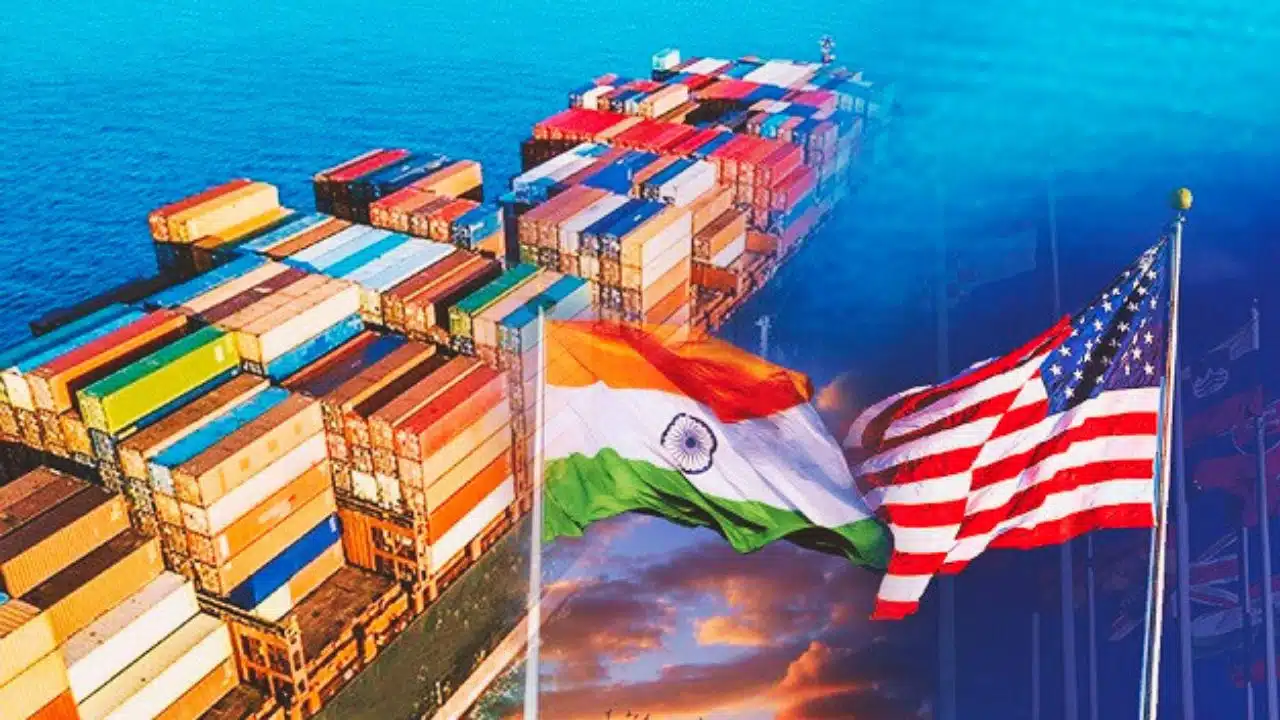
Senior US officials are expected in New Delhi next week for fresh trade talks, marking the second high-level visit since Washington slapped punitive 50% tariffs on Indian exports earlier this year.
The US trade delegation is likely to arrive in India in mid-December for in‑person negotiations aimed at easing a bitter tariff dispute and moving forward on a long‑planned bilateral trade deal. The visit comes after President Donald Trump’s administration imposed combined duties of around 50% on a wide range of Indian goods, citing New Delhi’s continued purchases of Russian oil and broader disagreements over market access.
High-stakes visit next week
According to Indian government and industry sources, a team of US trade officials is expected in New Delhi “next week”, with final dates being worked out for meetings at the Commerce Ministry. This will be the second such visit by US negotiators since the steep tariffs were put in place in August 2025.
The US side is again expected to be led by Brendan Lynch, an assistant US Trade Representative responsible for South and Central Asia, while Commerce Secretary Rajesh Agrawal is likely to head the Indian team. Talks are set to focus on an interim framework trade arrangement that could cushion the impact of the tariff shock on Indian exporters, alongside work on a broader bilateral trade agreement (BTA) that both sides hope to conclude in stages.
The new round follows a marathon seven-hour negotiating session held in New Delhi in September and a separate visit by Commerce and Industry Minister Piyush Goyal to Washington later that month to maintain momentum. Officials in both capitals have recently described the discussions as positive and forward‑looking, while acknowledging that several sensitive issues remain unresolved.
Key details of the upcoming US visit
| Item | Detail |
| Expected timing | Mid-December 2025, next week from early December reports |
| Location | New Delhi, meetings at India’s Commerce Ministry |
| US lead negotiator | Brendan Lynch, Assistant USTR for South and Central Asia |
| Indian lead negotiator | Commerce Secretary Rajesh Agrawal |
| Main agenda | Interim framework on tariffs; progress on wider bilateral trade agreement |
| Visit sequence | Second US negotiating trip since punitive tariffs imposed in 2025 |
Tariffs that triggered the dispute
The current stand‑off dates back to August 2025, when the Trump administration first imposed a 25% reciprocal tariff on most Indian exports to the United States. Later that month, Washington announced an additional 25% penalty duty linked to India’s continued imports of Russian crude oil, effectively doubling the overall tariff burden to about 50%.
Analysts say the move was one of the harshest tariff actions taken against any key US trading partner, and it came on top of wider geopolitical frictions over India’s role in the Ukraine war and its participation in groupings such as BRICS. Indian officials have argued that New Delhi is being unfairly targeted over Russian oil, pointing out that several Western economies continue to maintain various forms of trade with Moscow.
The dispute intensified when an earlier US delegation visit planned for late August was abruptly cancelled, even as the second 25% penalty duty was about to take effect. That cancellation froze formal talks for several weeks until both sides agreed to resume negotiations in September, beginning with in‑person meetings in New Delhi.
Timeline of US tariff actions on India in 2025
| Date (2025) | Measure | Notes |
| 1 August | First 25% reciprocal tariff on Indian exports | Announced as part of a broader push to rebalance US trade; covered a wide basket of Indian goods |
| Late August | Additional 25% penalty duty on Indian goods | Linked by US officials to India’s continued purchases of Russian crude oil |
| 25–29 August (planned) | US delegation visit to New Delhi cancelled | Trip postponed amid escalating tensions as total tariff rate reached about 50% |
| September | First post‑tariff in‑person talks held in New Delhi | Both sides agreed to intensify work toward a phased trade deal despite continuing duties |
Impact on trade, rupee and exporters
The tariff shock has added strain to an already large and complex trade relationship. US goods imports from India were worth about 87.3 billion dollars in 2024, while the US goods trade deficit with India stood near 45.8 billion dollars that year. India–US trade in goods and services combined was previously estimated at roughly 191 billion dollars annually, with leaders on both sides setting an ambition to push that figure toward 500 billion dollars by 2030.
More recent data suggest the dispute is beginning to bite. Indian exports to the United States in October fell by around 8.6% year‑on‑year to roughly 6.3 billion dollars, while imports from the US rose by nearly 14% to about 4.46 billion dollars in the same month, according to figures cited in Indian media reports. Sectors heavily dependent on access to the US market, including textiles, engineering goods and some consumer products, are seen as particularly vulnerable to a prolonged period of 50% tariffs, trade analysts say.
Financial markets have also reacted. The Indian rupee has hovered near record lows in recent months, with foreign investors pulling an estimated 17 billion dollars out of local equities this year, a shift that economists partly link to uncertainty around the US tariff regime and the broader trade outlook. Market strategists quoted in recent reports say a credible path toward a US–India trade deal is now seen as one of the key conditions for a more sustained rupee recovery.
Selected India–US trade and market indicators
| Indicator | Latest reported figure | Context |
| US goods imports from India (2024) | 87.3 billion USD | Up 4.5% from 2023, showing strong pre‑tariff trade growth |
| US goods trade deficit with India (2024) | 45.8 billion USD | Reflects India’s export surplus in goods trade with the US |
| India–US total trade (goods & services) | About 191 billion USD annually | Leaders set goal to reach 500 billion USD by 2030 |
| India’s exports to US in October 2025 | About 6.3 billion USD, down 8.58% YoY | Early sign of tariff pressure on Indian exporters |
| India’s imports from US in October 2025 | About 4.46 billion USD, up 13.89% YoY | Indicates resilient Indian demand despite tensions |
| Foreign investor equity outflows (2025) | Around 17 billion USD | Partly attributed to tariff shock and policy uncertainty |
What is on the negotiating table
Negotiations are unfolding on two parallel tracks: a limited framework trade arrangement aimed at addressing the immediate tariff hit, and a more comprehensive bilateral trade agreement covering a wide range of sectors and rules. Officials had earlier indicated that the first tranche of the broader pact was targeted for completion by the fall of 2025, but that deadline has slipped, even as both sides publicly maintain a goal of clinching a deal by the end of the year.
Core sticking points include the pace and scope of tariff rollbacks, market access in agriculture and dairy, digital trade rules, and India’s insistence on retaining policy space for sensitive areas such as public stockholding and energy procurement. The United States has pushed for stronger commitments on issues such as data flows, intellectual property, and access for US farm and dairy products, while India has highlighted the need to protect small farmers, maintain its current duties on certain imports, and preserve autonomy over crude oil sourcing.
Energy trade has become one of the most politically charged topics. Washington has linked part of the additional 25% penalty duty to India’s continued purchases of discounted Russian crude, arguing that these flows undermine efforts to pressure Moscow over the war in Ukraine. New Delhi counters that its energy policy is driven by affordability and security needs, and points out that it is gradually diversifying supplies even as it resists direct pressure to cut off Russian barrels entirely.
Main issues in current US–India trade talks
| Issue area | India’s stance | US concerns/asks |
| Tariff rollback | Seeks phased reduction or waiver of 50% duties on key exports | Wants assurances on future market access and alignment with broader trade goals |
| Agriculture & dairy | Firm on protecting small farmers and current import duties | Pushes for greater access for US farm and dairy products |
| Digital trade & data | Emphasizes regulatory space and data protection | Seeks clearer rules on cross‑border data flows and digital services |
| Energy & Russian oil | Defends right to buy affordable crude while gradually diversifying | Links part of penalty tariffs to India’s Russian oil imports and calls for reductions |
| Long-term trade deal | Backs multi‑chapter BTA but says it will take time | Presses for faster progress while keeping leverage via tariffs |
What happens next
Officials and analysts say the December visit will be closely watched for signs of whether both sides are ready to move from exploratory talks to concrete give‑and‑take on tariffs and market access. One scenario discussed in policy circles is a limited package that offers targeted tariff relief for some Indian export sectors, in exchange for specific Indian commitments on regulatory issues or a roadmap on energy sourcing, while leaving more contentious matters to later rounds.
Domestic politics and legal uncertainty further complicate the picture. In Washington, a case before the US Supreme Court on the legality of President Trump’s reciprocal tariff authority could reshape the legal basis for some of the duties imposed on India and other partners, depending on how the judges rule. In India, policymakers face mounting pressure from exporters and industry groups to secure at least partial relief before planning cycles for 2026 contracts lock in the new, higher cost structure.
Despite the tensions, both governments continue to describe the relationship as strategically important, with trade policy framed as one pillar of a broader partnership that spans defense, technology and regional security. The arrival of the US trade delegation in New Delhi amid an unresolved tariff dispute underlines how much is at stake for businesses, workers and investors on both sides, and how difficult it will be to balance geopolitical pressures with commercial pragmatism.