US officials describe major progress on a US-authored peace framework in Berlin, but Ukraine and its partners signal the hardest decisions—territory and enforceable guarantees—are still unsettled.
The US says 90 percent of Ukraine peace issues resolved after two days of talks in Berlin, according to senior US officials who briefed reporters on the negotiations.
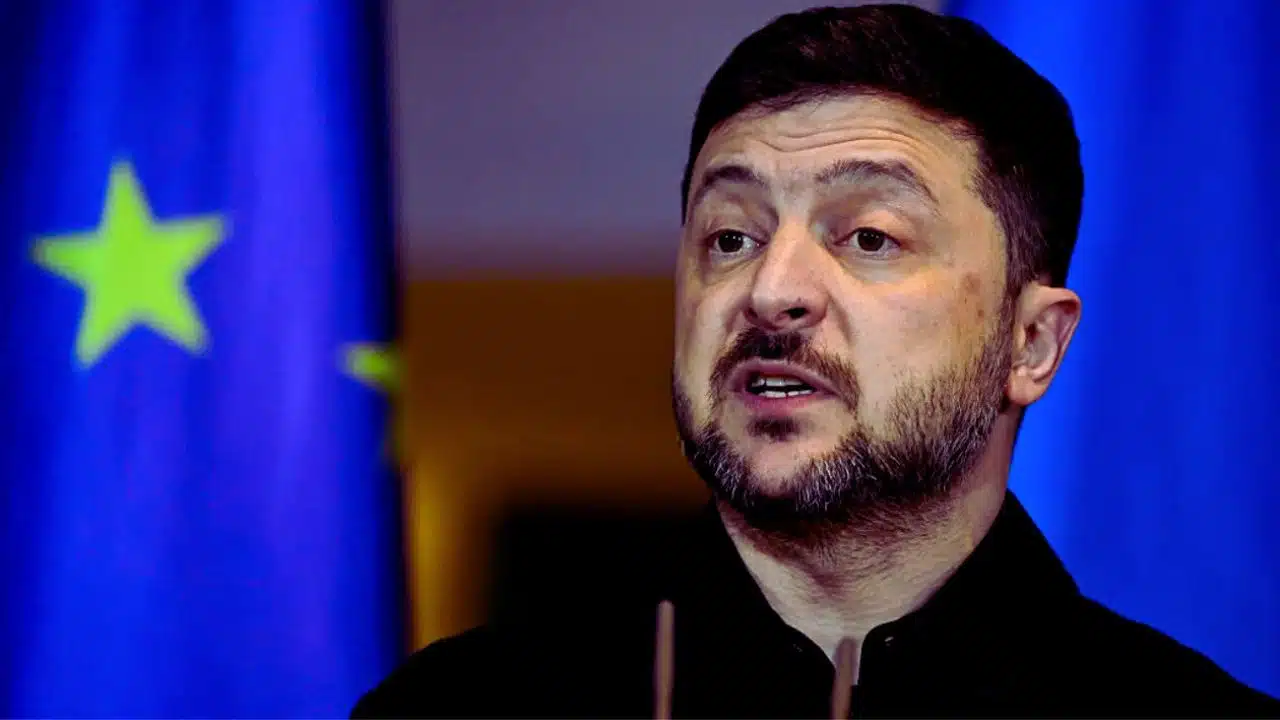
The discussions involved US special envoy Steve Witkoff and Jared Kushner, President Donald Trump’s son-in-law, alongside Ukrainian President Volodymyr Zelenskyy and European leaders.
Even as Washington projects optimism, Ukrainian and European statements point to unresolved disputes over territory and the exact shape of postwar security guarantees.
What happened in Berlin
The Berlin meetings took place Sunday and Monday and included nearly eight hours of behind-closed-doors negotiations, US officials said.
The summit concluded with a dinner in Berlin attended by US negotiators, Zelenskyy and European leaders, and Trump phoned into the gathering from Washington, according to reports of the event.
After the dinner, Trump told reporters the talks were very long and very good, and said he believes the parties are closer than at any prior point in the process.
US officials said they had worked through a revised 20-point peace plan and reached consensus on several areas they consider critical to a deal.
They described the Berlin round as really, really positive, while acknowledging some more things still must be worked out.
Zelenskyy described the talks as not easy but productive, while also emphasizing that territorial issues remain painful and politically sensitive for Ukraine.
What the US says is 90% resolved
In a phone briefing with reporters, a US official said negotiators had literally 90% of issues between Ukraine and Russia solved, framing Berlin as a major narrowing of gaps.
US officials linked that assessment to progress on multiple pillars: security guarantees, deterrence and penalties for future aggression, reconstruction, and mechanisms to verify and respond to violations.
They also said Russia has indicated it is open to Ukraine joining the European Union, an element US officials portrayed as compatible with a settlement framework.
However, US officials made clear that final approval would still be needed from leadership in Washington, Kyiv and Moscow, meaning the Berlin outcomes remain a working level set of understandings rather than a signed agreement.
European and Ukrainian leaders have been more cautious in public, highlighting remaining disagreements rather than endorsing the 90% framing outright.
Zelenskyy said the US and Ukraine still hold different positions on territorial disputes, and he stressed the need for open discussion of those differences.
Security guarantees: the central pillar
Security guarantees dominated the Berlin round, with negotiators focusing on how to deter any renewed Russian attack after a ceasefire or settlement.
US officials described an Article 5-like security arrangement—referencing NATO’s collective defense clause—as a key concept under discussion.
They also said boots on the ground by US forces in Ukraine were not part of the talks, signaling a preference for guarantees that rely on commitments and mechanisms short of a US troop deployment.
European leaders circulated a joint statement describing a proposed multinational force that would operate inside Ukraine and support tasks such as regenerating Ukraine’s forces, securing Ukraine’s skies and supporting safer seas.
The same framework described a ceasefire monitoring and verification mechanism with international participation, plus a deconfliction mechanism intended to help prevent escalation and manage incidents.
European leaders also said Ukraine’s forces should remain at a peacetime level of 800,000 under the concept being discussed.
US officials said the Trump administration plans to seek Senate approval for the security guarantees, while not specifying the exact form or voting threshold that would apply.
They also warned that the offer of guarantees would not remain available indefinitely, underscoring Washington’s push to close gaps quickly.
As talks became more technical, Witkoff and Kushner were joined by US Air Force Gen. Alexus Grynkewich, who leads NATO military operations and US European Command, according to reporting on the meeting participants.
Territory: the biggest unresolved issue
Despite reported convergence on security architecture, the fate of occupied and contested territory remains the hardest unresolved question, participants said.
Russian demands include Ukraine conceding land in the Donbas and withdrawing forces from parts of Donetsk still under Ukrainian control, according to reporting on negotiating positions.
Ukraine continues to reject ceding territory under pressure, and Zelenskyy has emphasized that the territorial issue is a painful red line for Ukrainian society.
US officials said they provided Zelenskyy with thought-provoking ideas on territory and that he planned to review them with his team before responding.
They also said they felt progress had been made including on territories, but did not publicly detail proposed lines, sequencing, or any referendum concepts.
Zelenskyy publicly noted that positions differ on territory and said those differences must be acknowledged and discussed openly, signaling that any compromise remains politically fraught.
Other issues on the table
US officials said reconstruction and rebuilding plans were part of the broader package, alongside governance and transparency concepts aimed at supporting Ukraine after years of war.
One US official also said the US is close to having Russia and Ukraine agree to a 50-50 split of the Zaporizhzhia power plant, presenting it as a possible technical compromise area.
US officials additionally said deterrence tools and punishments for renewed Russian incursions were part of the framework being discussed.
Key timeline from the talks
| Date | Location | What happened | Why it matters |
| Dec. 14–15, 2025 | Berlin | US envoys Steve Witkoff and Jared Kushner met Zelenskyy and European leaders; US officials said nearly eight hours of negotiations covered a revised 20-point plan. | Shows an accelerated push to narrow terms, with US officials claiming about 90% agreement on issues. |
| Dec. 15, 2025 (evening) | Berlin | Talks culminated in a leaders’ dinner; Trump dialed in and later said talks were very long and very good. | Highlights direct White House engagement and pressure to move toward a final package. |
| Upcoming weekend (expected) | United States (possible Miami) | US officials said further meetings may occur in the US, focusing on maps and next steps. | Suggests negotiations are shifting from principles to technical territorial and security implementation. |
What comes next—and what to watch
US officials said further meetings are likely this weekend in the United States, potentially in Miami, as negotiators move into more detailed discussions.
The next stage is expected to focus on territorial maps, implementation mechanisms and the precise contours of external security commitments—areas where Ukraine, Russia and European partners still have significant differences.
Public messaging also remains a constraint: US officials are projecting near-closure, while Zelenskyy and European leaders are signaling that the final trade-offs are not yet settled.
Even as diplomacy accelerates, fighting has continued, with reports of large-scale drone attacks overnight into Monday on both sides, underscoring the urgency and fragility of any near-term ceasefire effort.
Ukraine’s Air Force reported 153 Russian drones launched overnight Sunday into Monday, with 133 neutralized and 17 hitting targets, while Russia’s Defense Ministry reported downing 130 Ukrainian drones overnight, according to published accounts.
The war began with Russia’s full-scale invasion in February 2022, and the Berlin talks come as the conflict approaches a fourth year with major territorial and security disputes still unresolved.