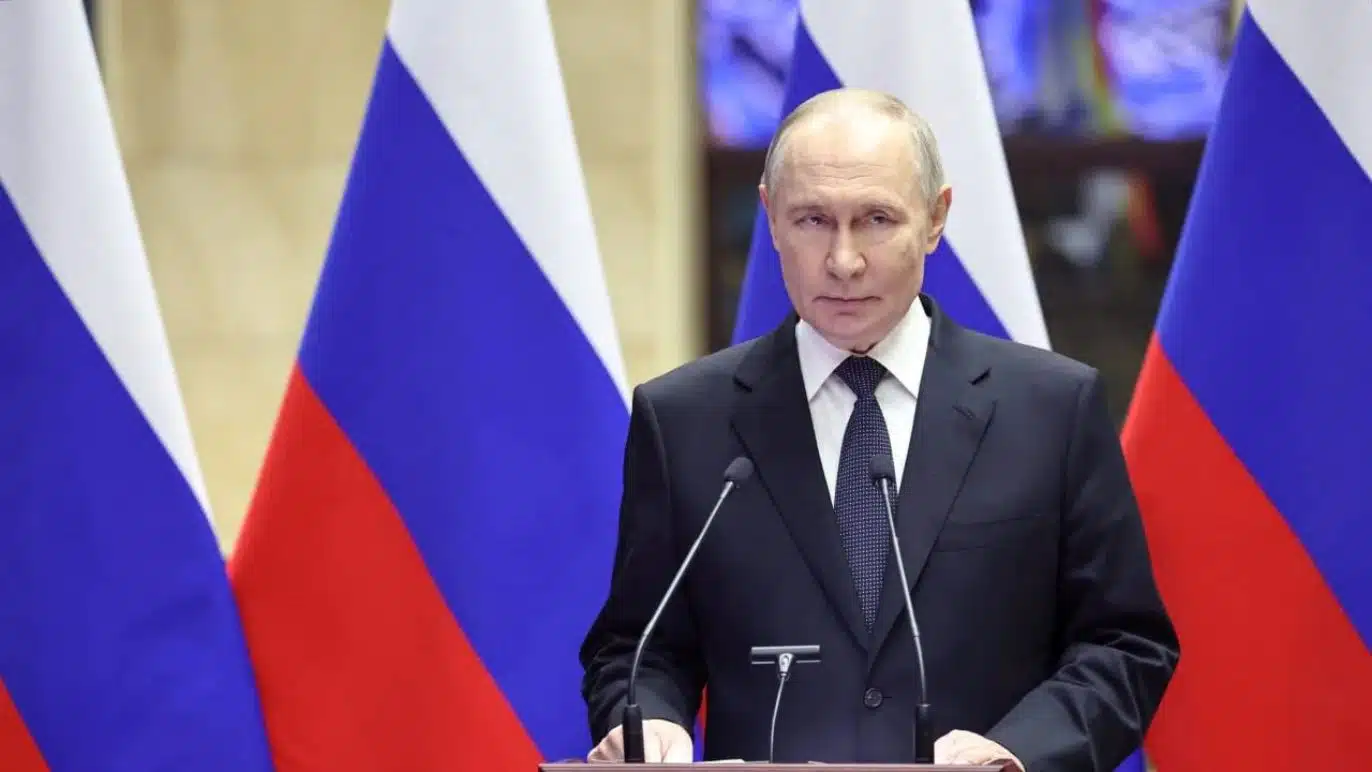
US intelligence agencies are sharply divided over President Vladimir Putin’s true aims in Ukraine, as the war enters its fourth year with no clear end in sight. While some analysts see signs of a potential diplomatic opening, others warn that Putin remains committed to his maximalist goals of subduing Ukraine and expanding Russian influence across Europe.
The Intelligence Divide
The rift within the US intelligence community centers on whether Putin is genuinely open to negotiations or is simply biding time to regroup and reassert his dominance. According to recent reports, the CIA has suggested that Putin may be seeking a diplomatic solution, especially given mounting pressure from the Trump administration and the economic strain on Russia. CIA analysts believe that Putin could be considering a tactical pause to reassess his position, possibly leading to a short-term compromise that would allow Russia to consolidate its gains and rebuild its military capacity.
However, the State Department’s Bureau of Intelligence and Research (INR) takes a much more skeptical view. INR analysts argue that Putin’s public statements—emphasizing the “demilitarization” and “denazification” of Ukraine—indicate that Russia has not abandoned its long-term ambitions of capturing all of Ukraine and reclaiming parts of the former Soviet Union. INR’s assessment is based on Putin’s continued military build-up, his refusal to compromise on territorial demands, and his efforts to undermine Ukraine’s sovereignty through political, economic, and informational means.
Putin’s Stated Goals and Actions
Putin has repeatedly stated that Russia’s war aims have not changed. In his annual Q&A session, Putin emphasized that Russia will not negotiate on territory and remains committed to its demands for the “demilitarization” and “denazification” of Ukraine. US intelligence reports continue to warn that Putin intends to seize all of Ukraine and potentially expand into other former Soviet republics. These maximalist goals are reflected in Russia’s ongoing military campaigns, including efforts to capture key cities like Kharkiv and Odesa, and its attempts to destabilize Ukraine’s political leadership.
At the same time, Putin has also sought to project an image of confidence and inevitability, aiming to induce “Ukraine fatigue” among Western voters and politicians. By portraying Russia as a resilient and determined power, Putin hopes to weaken Western support for Ukraine and create space for a negotiated settlement that favors Russia’s interests.
The Role of the Trump Administration
The Trump administration’s approach to the Ukraine war has added another layer of complexity to the intelligence debate. President Trump has made ending the war a top priority, threatening additional sanctions and pressuring both Russia and Ukraine to make concessions. The administration has also signaled a willingness to provide Ukraine with more sensitive intelligence, including information to strike deep inside Russia’s energy infrastructure. This move is seen as an attempt to increase pressure on Moscow and encourage Putin to negotiate.
However, Trump’s approach has also raised concerns among some US officials. Democratic Congressman Jason Crow, a member of the House intelligence committee, warned that Putin may be exploiting the Trump administration’s desire for a quick settlement, using negotiations as a tactic to buy time and consolidate his gains. Crow and others believe that any change in Putin’s perspective is driven by his assessment of the new US administration, rather than a genuine desire for peace.
The Broader Strategic Context
The intelligence split reflects broader uncertainties about Russia’s strategic calculus. While US and Western officials acknowledge that Russia faces significant challenges—including a struggling economy, international isolation, and battlefield setbacks—there is no consensus on how these factors will shape Putin’s long-term strategy. Some analysts believe that Russia’s inability to achieve a decisive military victory may force Putin to seek a negotiated settlement, even if it falls short of his maximalist goals. Others argue that Putin remains committed to his broader ambitions, viewing any compromise as a temporary setback rather than a permanent change in direction.
The debate is further complicated by Russia’s efforts to exploit divisions within the West. Putin has sought to undermine NATO unity, using disinformation campaigns and diplomatic pressure to weaken Western resolve. At the same time, Russia has sought to deepen its ties with non-Western powers, including China and Iran, in an effort to counterbalance Western influence.
Implications for Ukraine and the West
The intelligence divide has significant implications for Ukraine and its Western allies. If Putin is genuinely open to negotiations, there may be an opportunity to achieve a short-term ceasefire and begin the process of rebuilding Ukraine’s shattered economy and infrastructure. However, if Putin remains committed to his maximalist goals, any diplomatic opening is likely to be short-lived, and the war could drag on for years to come.
Western officials are also grappling with the challenge of maintaining unity in the face of divergent intelligence assessments. The US, Ukraine, and European negotiators recently reached a broad consensus on robust security guarantees for Ukraine, but major differences remain on the issue of territory. These differences reflect the broader uncertainty about Putin’s intentions and the difficulty of crafting a diplomatic solution that satisfies all parties.
Final Words
The split within US intelligence agencies over Putin’s aims in Ukraine underscores the complexity and uncertainty of the war’s trajectory. While some analysts see signs of a potential diplomatic opening, others warn that Putin remains committed to his maximalist goals and is unlikely to abandon his ambitions for Ukraine. The Trump administration’s approach adds another layer of uncertainty, as Putin seeks to exploit divisions within the West and maintain pressure on Ukraine. As the war enters its fourth year, the outcome remains deeply uncertain, with far-reaching implications for Ukraine, Russia, and the broader international order.