US GDP Increased Faster than Expected in The First Quarter

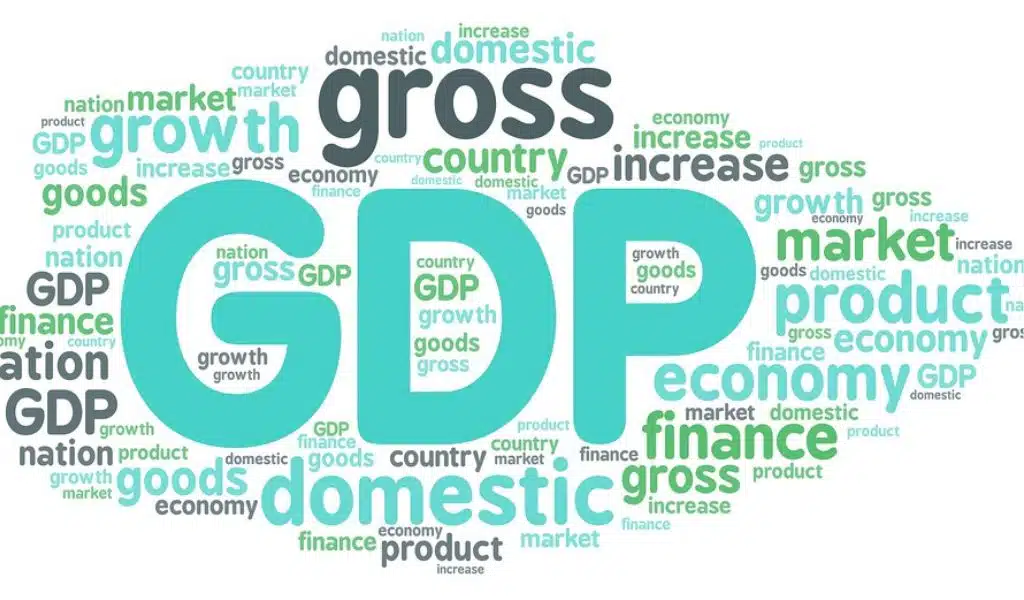
US GDP

The US economy grew faster than was thought in the first three months of the year, the Commerce Department said Thursday.

Gross domestic product, the largest measure of economic output, grew at an annualized rate of 1.3% in the first quarter, which was higher than the initial estimate of 1.1% reported last month. GDP is changed to take inflation and trends into account.

The change was mostly caused by an upward revision to private inventory investment, which includes finished goods, materials, and works in progress that are being saved for later use. This means that investments in goods had less of a negative effect on GDP earlier this year.

The January through March period of GDP growth was below economists’ predictions and was slower than the prior quarter. Along with solid government spending, the first quarter’s growth was fueled by robust consumer spending, which makes up around two-thirds of total economic activity. During that time, businesses decreased their expenditures on equipment.

The economy appears to be holding up thus far. After two months of losses, retail sales increased in April, increasing by a seasonally adjusted 0.4% from the previous month. In April, employers created 253,000 new positions, a significant increase, and hourly wages increased by 0.5%.

According to preliminary survey data provided by S&P Global on Tuesday, private-sector business activity increased at a rapid rate in May, largely due to the services sector. Businesses that offer services reported greater demand, less difficulty finding employees, and increased optimism for commercial activity in the coming year. As a result of significantly reduced demand, firms in the US manufacturing sector saw another contraction in May.

The US economy continued to grow in May, but there is a growing duality, according to Chris Williamson, chief business economist at S&P Global Market Intelligence. “As consumers shift their spending from goods to services, manufacturers are struggling with overcrowded warehouses and a lack of new orders, while service sector companies are benefiting from a surge in post-pandemic demand, especially for travel and leisure.”

Consumer Spending Remains a Force

Consumers are likely to open their wallets for in-person experiences like travel and dining out in the next summer months, which will result in strong leisure spending. That might also support employment numbers in the leisure and hospitality sectors by implying strong business.
On Friday, the Commerce Department releases data for April on personal income, household spending, and the Fed’s favored inflation indicator.

According to Luke Tilley, chief economist of Wilmington Trust, “it looks like consumers are still in good shape and we attribute that to low debt levels, strong balance sheets in terms of high levels of savings, so we expect spending to stay positive in the second quarter.” “I believe that the economy will remain strong, and the labor market is the best indicator of this.”

However, later in the year, Federal Reserve experts predict a modest recession. The labor market must cool in order to lower inflation to the central bank’s 2% target, according to economists, including former Fed Chair Ben Bernanke.

It’s not yet clear how much the economy will be impacted by tighter lending criteria and the lag effects of monetary policy. According to the minutes from the Fed’s May policymaking meeting that were posted on Wednesday, officials at the Fed opined that those factors might have a more significant impact than expected.

The possibility that the gradual tightening of monetary policy could affect economic activity more than anticipated and that additional strains in the banking sector could prove more significant than anticipated were mentioned as sources of downside risk to economic activity, according to the minutes.


Subscribe to Our Newsletter

Related Articles

Top Trending

social media loneliness
The Loneliness Epidemic: Is Social Media Making Us Less Social?
Iran regime weakness
Why Tehran is Silent: The Absence of 'All-Out War' Threats Signals Regime Weakness
The End of the Seat-Based License How AI Agents are Changing Pricing
The End of the "Seat-Based" License: How AI Agents are Changing Pricing
the Great AI Collapse
The Great AI Collapse: What the GPT-5.2 and Grokipedia Incident Actually Proves
Republic Day Padma Awards
Republic Day 2026: From Bus Conductors to Tribal Artists, Padma Shri Honours India’s Quiet Heroes

Fintech & Finance

cryptocurrencies to watch in January 2026
10 Top Cryptocurrencies to Watch in January 2026
best travel credit cards for 2026
10 Best Travel Credit Cards for 2026 Adventures
Understanding Credit Utilization in the Algorithmic Age
What Is Credit Utilization: How Credit Utilization Is Calculated [Real Examples]
St Kitts vs Grenada citizenship for business
Caribbean Showdown: St. Kitts vs. Grenada – Which Citizenship is Better for Business in 2026?
Blockchain gas fees explained
Blockchain Gas Fees Explained: Why You Pay Them and How to Lower Transaction Costs

Sustainability & Living

Renewable Energy Trends
Top 10 Renewable Energy Trends Transforming the Power Sector in 2026
Eco-Friendly Building Materials
10 Top Trending Eco-Friendly Building Materials in 2026
Plastic Free Bathroom Swaps for 2026
10 Swaps to Make Your Bathroom Plastic-Free in 2026
Micro-Wind Turbines Are They Worth It for Urban Homes
Micro-Wind Turbines: Are They Worth It for Urban Homes?
Sustainable Parenting Eco-Friendly Diapers and Toys
Sustainable Parenting: Eco-Friendly Diapers and Toys

GAMING

Exploring the Future of Online Gaming How New Platforms Are Innovating
Exploring the Future of Online Gaming: How New Platforms Are Innovating
The Economics of Play-to-Own How Blockchain Gaming Pivoted After the Crash
The Economics of "Play-to-Own": How Blockchain Gaming Pivoted After the Crash
Why AA Games Are Outperforming AAA Titles in Player Retention jpg
Why AA Games Are Outperforming AAA Titles in Player Retention
Sustainable Web3 Gaming Economics
Web3 Gaming Economics: Moving Beyond Ponzi Tokenomics
VR Haptic Suit
VR Haptic Suit: Is VR Finally Ready For Mass Adoption?

Business & Marketing

The End of the Seat-Based License How AI Agents are Changing Pricing
The End of the "Seat-Based" License: How AI Agents are Changing Pricing
Best Citizenship by Investment Programs
The "Paper Ceiling": Why a Second Passport is No Longer a Luxury, But an Economic Survival Kit for the Global South
cryptocurrencies to watch in January 2026
10 Top Cryptocurrencies to Watch in January 2026
Dominica vs Vanuatu citizenship processing time
The "Fast-Track" Myth: The Real Processing Times for Vanuatu and Dominica in 2026
St Kitts vs Grenada citizenship for business
Caribbean Showdown: St. Kitts vs. Grenada – Which Citizenship is Better for Business in 2026?

Technology & AI

The End of the Seat-Based License How AI Agents are Changing Pricing
The End of the "Seat-Based" License: How AI Agents are Changing Pricing
the Great AI Collapse
The Great AI Collapse: What the GPT-5.2 and Grokipedia Incident Actually Proves
green web hosting providers
10 Best Green Web Hosting Providers for 2026
Blockchain gas fees explained
Blockchain Gas Fees Explained: Why You Pay Them and How to Lower Transaction Costs
Cybersecurity at the Server Level What Hosts Must Provide in 2026
Cybersecurity at the Server Level: What Hosts Must Provide in 2026

Fitness & Wellness

Mental Health First Aid for Managers
Mental Health First Aid: A Mandatory Skill for 2026 Managers
The Quiet Wellness Movement Reclaiming Mental Focus in the Hyper-Digital Era
The “Quiet Wellness” Movement: Reclaiming Mental Focus in the Hyper-Digital Era
Cognitive Optimization
Brain Health is the New Weight Loss: The Rise of Cognitive Optimization
The Analogue January Trend Why Gen Z is Ditching Screens for 30 Days
The "Analogue January" Trend: Why Gen Z is Ditching Screens for 30 Days
Gut Health Revolution The Smart Probiotic Tech Winning CES
Gut Health Revolution: The "Smart Probiotic" Tech Winning CES