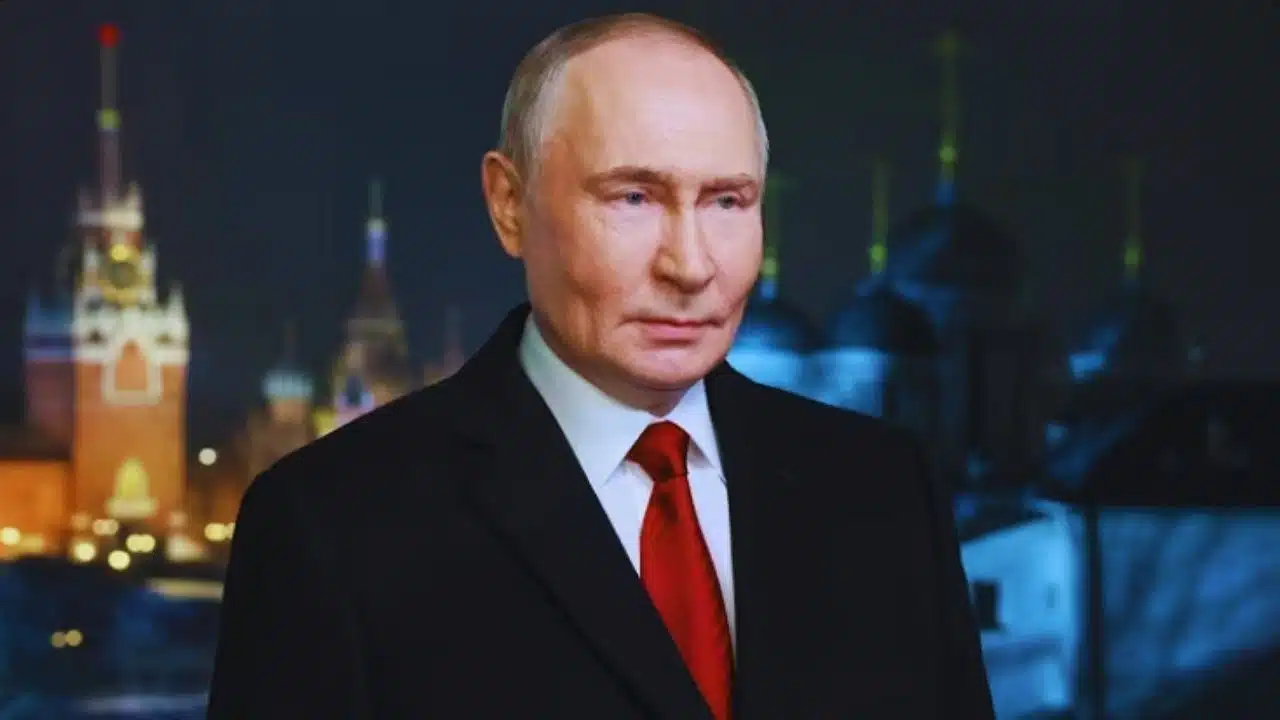
US finds Ukraine did not target Putin in drone strike after Russia alleged a mass drone attack near a presidential residence. The claim has sparked denials, counter-claims, and fresh tension around peace talks.
What Russia Alleged Happened?
Russia’s officials said that over the weekend of December 28–29, 2025, Ukraine launched a major long-range drone operation that threatened a presidential residence in Russia’s Novgorod region. Moscow framed the episode as a major escalation and suggested it could reshape Russia’s approach to talks being encouraged by Washington.
In public remarks, Russia’s foreign minister Sergei Lavrov portrayed the allegation as a deliberate attempt to raise the stakes. The messaging was clear: if the incident was accepted as an attack on Putin’s property, Russia could argue it was facing an expanded threat—one that would justify a harder line.
Russia’s defense ministry later amplified the narrative by releasing video footage it claimed showed the remains of a downed Ukrainian drone. A senior Russian officer said 91 drones had been launched from Ukrainian territory in what he described as a coordinated operation. Russia also claimed one drone carried an unexploded 6-kilogram payload.
Russia’s claims matter because they combine two sensitive elements at once: deep strikes and leadership symbolism. Long-range drone attacks have become a regular part of the conflict, but tying a strike to a head of state—or a residence associated with that head of state—turns a military narrative into a political one.
Timeline of Public Claims and Responses
| Date (2025) | Public Development | Main Parties Involved |
| Dec 28–29 | Russia alleges drones threatened a presidential residence in Novgorod region | Russia, Ukraine |
| Dec 31 | Russia releases video and says 91 drones were launched; mentions 6-kg device | Russia |
| Dec 31 | U.S. officials assess Ukraine did not target Putin or his residences | United States |
| Dec 31 | Ukraine and EU officials publicly dismiss Russia’s allegation | Ukraine, EU |
What The U.S. Assessment Concluded?
U.S. officials concluded that Ukraine did not target President Vladimir Putin and did not aim at his residences in the alleged drone incident. That assessment directly challenges the core of Russia’s allegation—specifically the question of intent and targeting.
This point is crucial: the U.S. finding is not simply an argument about whether drones were in the air. It is about whether the operation—if it occurred as Russia described—was designed as an attempt to strike a head of state or a symbolically charged location tied to him.
Why would the U.S. focus on intent? Because intent is what shifts an incident from a contested strike claim into something that could be framed internationally as an assassination attempt, a change in rules of engagement, or grounds for retaliation. In modern conflicts, especially ones involving advanced surveillance and intelligence-sharing, allies often treat targeting intent as the hinge factor for escalation risk.
The U.S. assessment also matters because Washington remains one of Ukraine’s most important partners—and a central actor in any negotiated pathway to end the war. If the U.S. were to accept Russia’s claim as stated, it could fuel political pressure to constrain Ukrainian operations. If it rejects that claim, it can blunt Moscow’s attempt to shape the diplomatic narrative.
Why Ukraine, The EU, And Russia Are Pushing Competing Narratives?
Ukraine denied the allegation and dismissed Russia’s video and claims. Ukrainian officials portrayed the story as an effort to distort events and undermine Kyiv’s relationships with partners—especially at a time when diplomacy is unusually active.
European officials also pushed back. The EU’s top diplomat, Kaja Kallas, publicly rejected the allegation as a distraction and urged focus on the broader reality of the war. Her stance fits a wider EU approach: increasing pressure on Moscow while sustaining military and political support for Ukraine.
The structure of the messaging is telling:
- Russia’s framing: a dramatic allegation involving a presidential residence, paired with warnings about negotiations.
- Ukraine’s framing: a denial plus a suggestion that the allegation is designed to damage diplomacy and split partners.
- EU framing: skepticism toward Russia’s narrative and a call to keep attention on ongoing aggression and support needs.
In the background is the core problem of drone warfare: even when drones are intercepted, debris is often hard to verify independently, technical details are contested, and public evidence rarely includes the kind of radar tracks, communications intercepts, or forensic analysis that intelligence agencies rely on. That gap creates space for information warfare.
What Each Side Is Arguing?
| Question | Russia’s Public Claim | Ukraine’s Public Response | U.S./EU-Aligned Public Position |
| Was Putin or a residence targeted? | Yes | No | U.S. says Ukraine did not target Putin/residences |
| How large was the incident? | 91 drones | Denies the alleged operation | Scale not independently confirmed publicly |
| What proof is offered publicly? | Drone-debris footage and technical claims | Calls the footage unconvincing | Public proof remains disputed |
Why This Dispute Hits Peace Talks So Hard?
The timing is not incidental. The incident became public as Washington pressed forward with a peace track and as political leaders weighed how to frame responsibility and restraint.
When a claim is connected—rightly or wrongly—to a head of state, it can be used to argue that the conflict has entered a more dangerous phase. That kind of narrative can serve multiple purposes at once:
- Domestic mobilization: portraying the leadership as under direct threat can rally public support.
- Justifying retaliation: it can provide a political rationale for expanding strikes or hardening policy.
- Shaping negotiations: it can pressure the U.S. and European governments to change their approach or to lean on Ukraine.
Diplomacy, especially under public scrutiny, is also vulnerable to sudden narratives that force leaders to react before details are settled. This is one reason intelligence findings become so important: they can stabilize or destabilize diplomatic trajectories depending on what they show.
At the same time, diplomatic talks on Ukraine increasingly revolve around specifics—not slogans—including what any ceasefire would require, how violations would be handled, and what kinds of security arrangements could deter renewed aggression.
EU officials have also emphasized that support for Ukraine remains a priority, including large-scale military assistance and ammunition commitments. Those statements shape the context in which Russia’s claims are received: European leaders are signaling they will not let sudden allegations derail long-term policy.
What To Watch Next And What Comes Next?
Even if the U.S. assessment remains the most credible public indicator of intent, several practical questions will continue to shape what happens next. First, watch whether Russia introduces additional “evidence” or expands its description of the alleged incident. When governments escalate allegations publicly, they often attempt follow-up disclosures to keep the story alive and to lock in a narrative.
Second, watch whether the incident is used to justify new Russian military actions. Moscow could frame strikes as retaliation linked to the claim, even if the targeting allegation remains disputed internationally. In past phases of the war, major narrative moments have sometimes preceded shifts in operational tempo.
Third, watch for signals from Washington and European capitals about how they want Ukraine to use long-range capabilities. Governments can influence conflict behavior indirectly—through support packages, restrictions, intelligence-sharing practices, and public messaging—without announcing dramatic policy changes.
Finally, watch what Ukraine emphasizes in its diplomacy. Kyiv will likely keep focusing on two needs: continued air defense and long-term guarantees that help prevent the war from simply restarting after any pause. This emphasis is consistent with Ukraine’s broader position that a durable end requires credible deterrence.
In the near term, the most likely outcome is continued public disagreement, with limited independent verification. But the longer-term outcome depends on whether the claim becomes a persistent diplomatic obstacle—or fades as intelligence assessments, allied coordination, and battlefield realities reassert themselves.