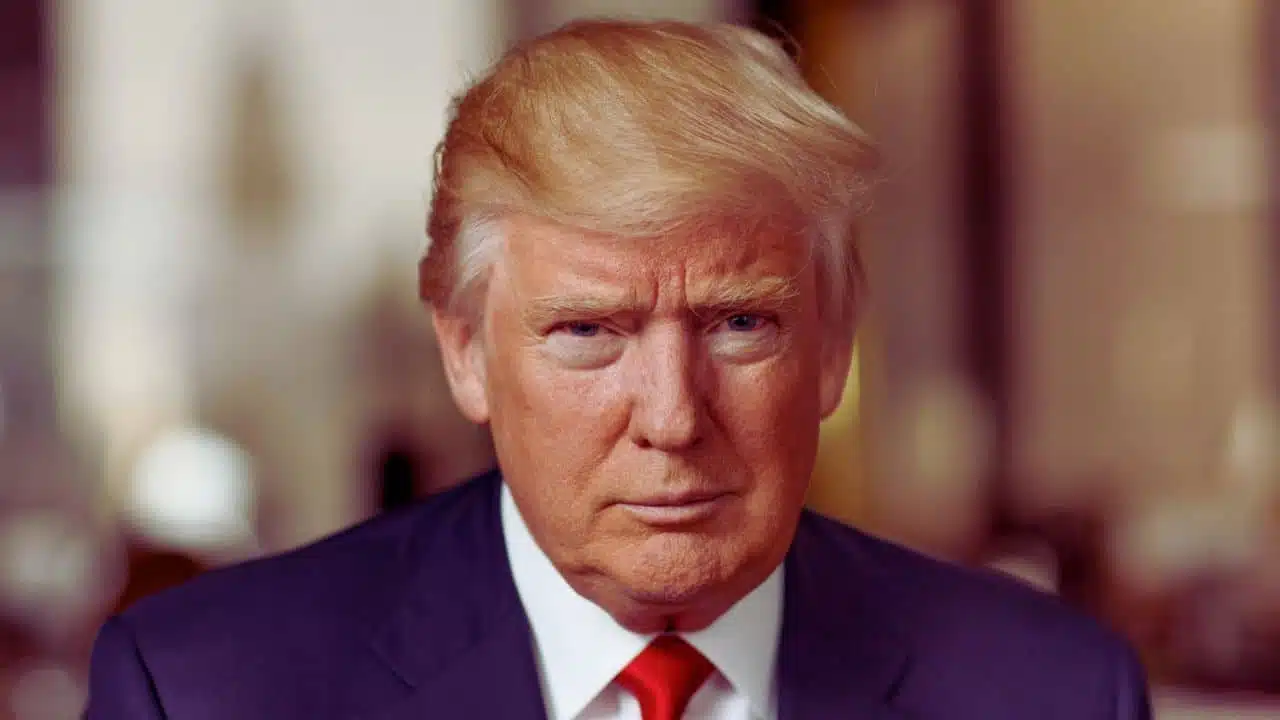
The U.S. and European Union may be heading toward a historic trade breakthrough—or a dramatic rupture—as President Donald Trump and EU Commission President Ursula von der Leyen meet for decisive talks in Scotland.
The high-stakes negotiations, held at Trump’s luxury Turnberry golf resort on Scotland’s southwest coast, could determine the future of nearly $1.9 trillion in annual transatlantic trade. The talks aim to resolve a growing standoff over tariffs that has escalated tensions between Washington and Brussels over recent months.
President Trump has made it clear that unless a deal is struck by August 1, the European Union will face a sweeping 30% tariff on its exports to the United States. Washington has warned that there will be no deadline extensions, making this round of talks a defining moment for U.S.-EU trade relations.
EU Desperate to Avoid New Tariffs as Talks Go Down to the Wire
Brussels is racing against time to finalize a deal that would protect European exporters from heavy new levies, especially as the continent continues to struggle with sluggish economic recovery. A team of EU negotiators, acting on behalf of the 27 member states, has been working around the clock to hash out a political framework that would satisfy both sides.
Late-night talks on Saturday reportedly brought progress. European diplomats say a rough outline of a trade agreement is already on the table. However, several unresolved issues remain, and the final go-ahead depends entirely on President Trump’s approval.
EU Commission President von der Leyen traveled to Scotland Sunday afternoon for a face-to-face meeting with Trump, scheduled for 4:30 p.m. local time (1530 GMT). While the commission and diplomats remain optimistic, the atmosphere is tense, as Trump has insisted on managing the fine details personally until the final moment.
What the Proposed Deal Looks Like: Tariffs, Exemptions, LNG, and More
The emerging deal suggests that the European Union would agree to a baseline tariff of approximately 15% on its exports to the U.S. While this is significantly higher than the average current rate of 4.8%, it is lower than the looming 30% tariff the U.S. is threatening to impose in the absence of an agreement. This rate mirrors the terms of a recent U.S.-Japan trade deal, which has become a reference point in the negotiations.
The proposed structure includes sector-specific carve-outs that would spare certain European industries. For example:
-
Aircraft and spirits would be exempt from the baseline tariffs.
-
European wine would not receive an exemption, a point of contention for countries like France and Italy.
-
A quota system for steel exports would be introduced, allowing a limited volume of European steel to enter the U.S. duty-free. Any shipments exceeding that quota would be subject to the new tariff.
Additionally, the EU would commit to increased purchases of U.S. liquefied natural gas (LNG). This aligns with Washington’s broader energy strategy to reduce Europe’s reliance on Russian gas and boost American energy exports.
The deal also outlines that pharmaceuticals and semiconductors, both critical sectors—particularly for Ireland, Germany, and the Netherlands—would fall under the 15% tariff. These levies could have a significant impact on European tech and medical companies exporting to the U.S.
The Auto Industry Still Faces Uncertainty
One of the most politically sensitive sectors—automobiles—has not been fully resolved in the current proposal. As of now, European car manufacturers face a 25% U.S. tariff. There’s no clarity yet on whether this rate would be reduced under the new deal.
France and Germany, home to major carmakers like Renault, Peugeot, BMW, Mercedes-Benz, and Volkswagen, have pushed for relief on this front. However, Washington has maintained a hardline stance due to its emphasis on reshoring auto manufacturing and reducing imports.
Without clear changes, automakers will likely continue to pay combined tariffs of around 15%, keeping pressure on an already struggling industry grappling with inflation, EV transitions, and supply chain bottlenecks.
How EU Member States Are Reacting
EU ambassadors were in Greenland for an official trip when they received a briefing from the European Commission on the state of negotiations. According to diplomatic sources, the 27 EU countries gave broad support to the current deal structure, while still reinforcing their “red lines”—mainly concerning fairness, WTO compliance, and strategic industries.
Member states are expected to hold a follow-up meeting after the Trump-von der Leyen session to finalize approval if a political agreement is reached.
While some smaller EU nations have raised concerns over the long-term effects of increased tariffs on sectors like agriculture, most members appear to favor concluding a deal to prevent further economic damage from a full-fledged trade war.
What Happens If the Talks Fail?
If Sunday’s talks do not lead to a signed agreement, the EU is ready to launch retaliatory measures. European officials have prepared counter-tariffs targeting $109 billion (around €93 billion) worth of American goods. These duties would be introduced in stages, beginning as early as August 7.
Goods that could be targeted include U.S. aircraft, automobiles, agricultural produce, and machinery. The EU is also drafting a list of U.S.-based service sectors—such as digital services and financial products—that may be hit with regulatory barriers or additional taxes.
Additionally, France and other countries are urging Brussels to activate the EU’s Anti-Coercion Instrument—a powerful trade defense tool that allows the bloc to restrict foreign access to public contracts and EU markets if coercion or economic bullying is suspected.
If deployed, this tool could dramatically escalate tensions and disrupt U.S. corporate operations in Europe.
Trump’s Trade Campaign: ‘No Deal, No Grace Period’
President Trump has aggressively pursued a restructuring of U.S. trade relationships, vowing to apply punitive tariffs to any country unwilling to renegotiate trade terms by his self-imposed August 1 deadline.
Commerce Secretary Howard Lutnick confirmed on Sunday that this deadline is final. The U.S. government will not allow any extensions, emphasizing that countries must agree to new terms or face immediate economic consequences.
Trump has long argued that legacy trade agreements disadvantage the U.S. and has sought to recalibrate them in America’s favor. He previously secured trade pacts with Britain, Japan, and the Philippines, and is pursuing similar talks with countries across Asia and Latin America.
Despite the hardline approach, the administration has only completed five trade agreements so far, far below its initial promise of finalizing 90 deals in 90 days.
U.S. Public Opinion Turns Against Trade War Strategy
While Trump continues to double down on tariff threats, recent polls suggest many Americans are skeptical of the administration’s trade tactics.
According to a July 2025 Gallup survey, Trump’s approval rating has fallen to 37%, a sharp 10-point drop since January. The decline is partly attributed to concerns over inflation, supply chain disruptions, and fears that retaliatory tariffs could hurt American farmers and manufacturers.
Economic analysts have also raised alarms about the broader risks. A full-scale trade war with the EU could shrink global trade volumes, depress investment confidence, and trigger retaliatory cycles similar to the U.S.-China tariff conflict of 2018–2020.
What’s Next: Deal or Breakdown?
The next 24 to 48 hours are crucial. A successful agreement between Trump and von der Leyen could restore stability to transatlantic trade and strengthen cooperation between two of the world’s largest economies. It could also send a signal to other countries negotiating with Washington that deals are still possible despite Trump’s combative rhetoric.
However, failure to reach consensus will almost certainly ignite a fresh trade war, one with widespread consequences for global markets, supply chains, and diplomatic relations.
With over $550 billion in bilateral trade and the fate of multiple industries hanging in the balance, the world now waits for the outcome of one of the most consequential U.S.-EU summits in recent history.