You sign a contract, expecting your website to stay up 24/7. One day, your site goes down, and customers start calling. You check the contract for help, but the fine print feels like a puzzle you cannot solve. Did you know many companies in 2026 promise high uptime guarantees, yet hide limits deep in their Service Level Agreement (SLA) terms? These details can affect whether you get help or lose money during outages.
This post will break down how uptime works in contracts, highlight what to watch out for, and show simple tips to read the fine print with confidence. Stay tuned, your business may depend on it!
Understanding Uptime Guarantees
Uptime promises sound simple, but the details often hide surprises. Contracts use specific words, so reading carefully can save you from headaches later.
What is a Uptime Guarantee?
A service provider promises that their system or website will be working for a set percentage of time each month. Think of it like your electricity service. You expect the lights to turn on every time you flip the switch, but the power company knows storms happen.
For example, web hosting companies may offer an uptime guarantee of 99.9%. This means the site should not go down for more than about 44 minutes each month. Service Level Agreements, often called SLAs, spell out these performance guarantees in clear numbers.
If your site goes offline more than allowed in the contract, you may get credits or refunds as outlined in the fine print. These agreements help protect users from long outages by holding providers accountable and ensuring support teams act fast during problems. They are important parts of any technology agreement made in 2026 and beyond.
How Uptime Relates to Service Level Agreements (SLAs)
After learning what an uptime guarantee is, it is time to see how this ties to a Service Level Agreement, or SLA. The SLA acts as the contract glue. It states exactly what level of service you get from your provider.
For example, a web hosting company might promise 99.9% uptime in its SLA for 2026 contracts. This means your website should not be down for more than eight hours and forty-five minutes across the whole year.
If downtime goes over that limit, certain penalties kick in based on the agreement’s fine print. You may get credits or even money back, depending on the contract terms. Providers use SLAs to make clear promises about performance guarantees and support services, too. These are written proof of accountability if things go sideways.
“An SLA keeps both sides honest, just like a scoreboard at a ball game.”
Key Components of Uptime Guarantees
Not every contract is as clear as crystal. Some hide surprises in the fine print. These hidden details can change how much support you actually get if things go wrong.
Uptime Percentage and Measurement Period
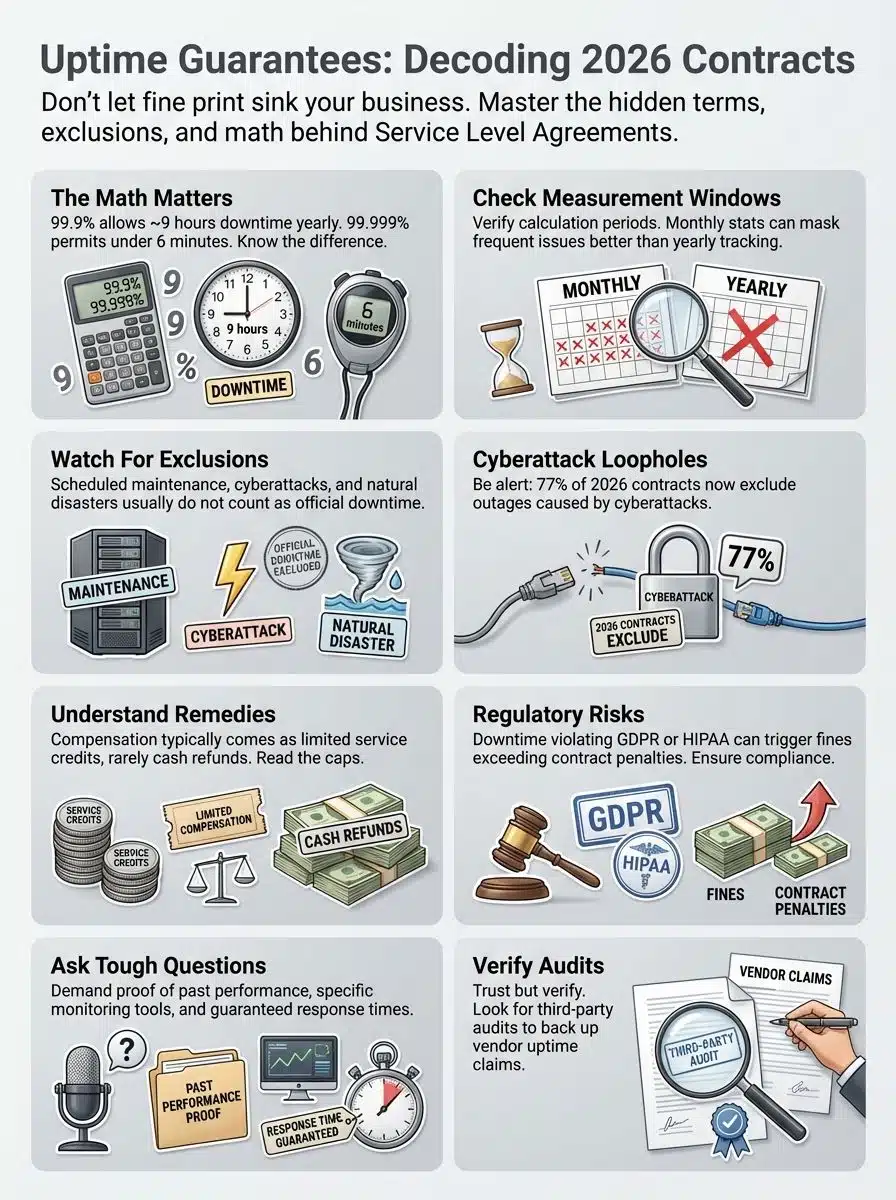
Uptime in a Service Level Agreement SLA shows how often a service works without interruptions. Providers may promise 99.9% uptime, which means only around 8 hours and 45 minutes of downtime each year.
Always check how long the provider measures this number. Some use monthly stats, while others stick to yearly periods. A web hosting company might brag about high numbers but could hide short maintenance breaks inside small print.
Measurement periods matter for Performance Guarantees since they change how much downtime counts against the contract. Shorter windows can mask frequent issues, while longer ones show patterns over time.
Many contracts will exclude planned maintenance from these numbers, too, so always dig into every detail before signing anything with your name on it. Next up are the common exclusions companies use to limit their accountability for outages.
Exclusions in Uptime Guarantees
After you check the uptime percentage and see how it’s measured, take a close look at what providers do not count as downtime. Many Service Level Agreements (SLAs) list certain cases that slip through the cracks.
These are called exclusions. Scheduled maintenance almost always counts as an exclusion, so your web hosting can go offline during updates and still keep its performance guarantees.
Power failures caused by natural disasters, like earthquakes or floods, get left out, too. Cyberattacks became a major exclusion topic after the massive 2024 CrowdStrike incident cost Fortune 500 companies over $5.4 billion.
Providers in 2026 often dodge responsibility if hackers knock their services out of action. For instance, during the Google Cloud identity outage in June 2025, some services were technically “up,” but users could not log in. This gray area is often excluded from standard uptime calculations.
Internet backbone issues outside a provider’s network? Not covered either, so do not expect credit if some big-name carrier stumbles along the way. The fine print is full of little traps like this.
“The difference between a contract that works for you and one that doesn’t usually hides somewhere in the exclusions, said Alex Martin, tech compliance expert at SLA Solutions Group.”
Remedies and Penalties for Downtime
Miss one too many hours of uptime, and most contracts promise a remedy. Service Level Agreements (SLAs) often include credits for lost time. These are like gift cards that cover part of your next bill.
For example, if your web hosting provider fails to meet the 99.9% uptime guarantee in March 2026, you could get credit worth one week or more of service fees. Some companies cap this amount, so read those fine lines closely.
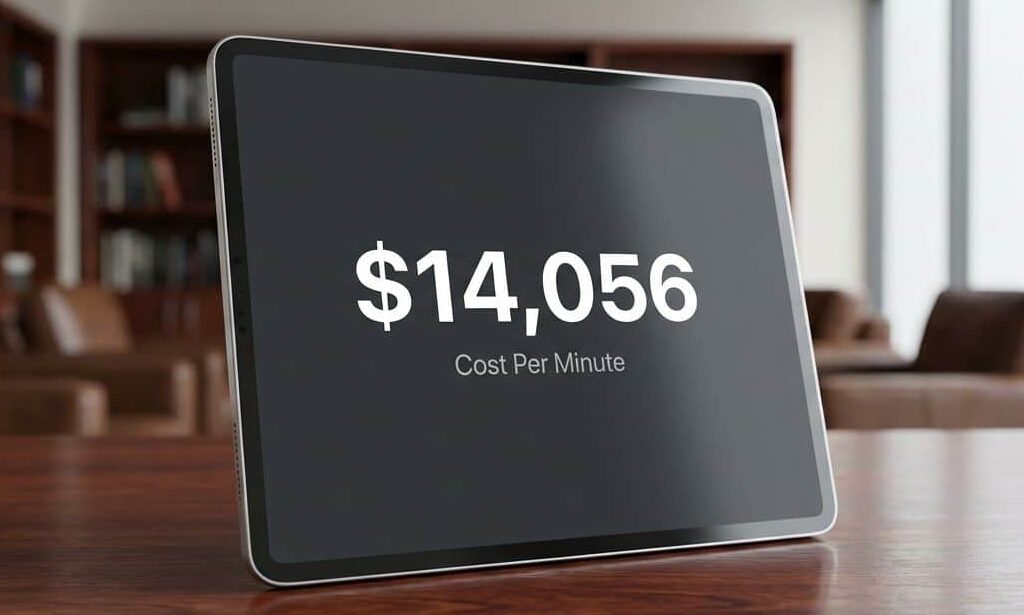
Penalties can sting both small startups and big brands. A 2024 EMA Research report found that downtime costs small and midsize businesses an average of $14,056 per minute. Losses add up fast when an outage disrupts business activity or support services.
Regulatory bodies might step in if downtime breaches key compliance rules set out in technology agreements by June 2024. This leads to even bigger headaches than discounts on monthly bills.
Demand clear performance metrics written right into the contract negotiation before you sign on the dotted line. Vague promises offer little help during real-world outages.
Levels of Uptime Guarantees
Not all uptime promises carry the same weight. Some are far stricter than others. Small changes in these levels can make a big impact on your website’s reliability and peace of mind.
99.9% Uptime (Three Nines)
A 99.9% uptime guarantee means your service can only be down for about 8 hours and 45 minutes each year. Many web hosting contracts use this standard in their Service Level Agreements, or SLAs. This number sounds high, but it still allows for a few hiccups every month. For example, if you run an online shop, even short periods of downtime can cost money and trust.
You will often see “three nines” listed as the minimum promise from providers in tech agreements for small business websites or basic cloud support services. Always check the fine print to spot any exclusions or hidden loopholes that might excuse extra downtime without penalty on their end.
Small print matters. Ask clear questions during contract negotiation to avoid unpleasant surprises later.
99.99% Uptime (Four Nines)
99.99% uptime, called “four nines,” means a service can only be down for about 52 minutes each year. Many web hosting companies use this number in their Service Level Agreements (SLAs).
You get almost round-the-clock availability, but even that small amount of downtime could affect busy online businesses or critical work. Web hosts often point to 99.99% as a sign of strong reliability and support services.
Still, read the fine print closely. Some contracts might exclude planned maintenance or events beyond the provider’s control from their performance guarantees. If you depend on your site running non-stop, compare this level with the higher standards next.
99.999% Uptime (Five Nines)
Taking a step up from four nines, 99.999% uptime stands as the gold standard in technology agreements. This figure means less than 5 and a half minutes of downtime each year. Major banks, hospitals, and even big companies aim for this kind of reliability in their contracts.
Web hosting providers who offer five-nines availability must have strong servers, backup systems, and constant customer support. Any small hiccup can break this promise fast.
Service level agreements (SLAs) with these guarantees demand tight performance metrics and clear warranty terms. Clients expect smooth operations around the clock. Think about life-support monitors or stock trading platforms that cannot afford to blink offline.
Scrutinize legal provisions to know if planned upgrades or natural disasters count toward allowable downtime or get hidden in fine print exclusions that shrink accountability for tech support obligations.
Importance of Uptime Guarantees
Choosing the right uptime guarantee keeps your business running smoothly, so keep reading to spot smart contract choices for 2026.

Ensuring Service Reliability
Service reliability keeps your business moving without sudden stops. Strong uptime guarantees in a Service Level Agreement, or SLA, show the provider promises to keep things running smoothly.
If you run an online store or process payments, even five minutes of downtime can cost real money and trust from customers. Most providers use numbers like 99.9% or 99.99% uptime as performance metrics.
For example, 99.9% means less than nine hours of downtime each year, while 99.999%, known as “five nines,” drops annual outages to about five minutes total. These figures matter for web hosting contracts signed in 2026 because every second counts in today’s busy world.
Lost access hurts sales and reputation faster than ever before. Some SLAs list events that don’t count against their uptime record, such as scheduled maintenance or natural disasters. Read that fine print closely during contract negotiation!
Reliable support services also come with good performance guarantees and accountability clauses, so you know help is quick if problems hit out of the blue.
Reducing Financial Losses
Downtime can drain your wallet fast. Every minute counts, especially if you run an online store or manage payments. If a provider promises 99.9% uptime in the Service Level Agreement SLA, that means about 8 hours and 45 minutes of downtime per year.
That sounds small until you add up lost sales, unhappy customers, and overtime pay for your team to fix issues. A 2024 ITIC survey found that 90% of small and midsize businesses estimate one hour of downtime costs them over $300,000.
By reading the fine print on performance guarantees and penalties for downtime, you get more control over your bottom line. Some contracts offer credits or refunds if they miss targets. These help make up for lost income during outages.
Always check what is excluded from the agreement, so hidden loopholes do not leave you footing the bill while waiting for support services to step in.
Compliance and Risk Management
Government rules get stricter each year. Services must follow laws like GDPR or HIPAA, which protect your data and privacy. Contracts in 2026 spell out what happens if those standards are missed.
Fines for breaking these Service Level Agreements (SLAs) can reach thousands of dollars per minute of downtime. Clear performance metrics help spot problems fast and keep companies honest.
Risk grows with every outage or mistake, so strong uptime guarantees lower that risk for all sides. Legal provisions protect you from bad surprises down the road, making sure support teams react quickly to any slip-up.
Good contract negotiation helps catch risks early and puts accountability front and center before signing on the dotted line.
Evaluating Uptime Clauses in 2026 Contracts
Small details can spell big trouble, or land you a good deal, so pay close attention to every word. Sometimes, the real story hides in plain sight and could save your shirt, or cost you one.
Essential Questions to Ask Providers
Finding the right uptime guarantee takes sharp eyes and a few gutsy questions. Before signing any contract in 2026, be sure to ask your provider these important points.
- What is your uptime percentage, and how is it calculated? Ask for clear math based on real hours, not just pretty numbers.
- Which outages count as downtime under this Service Level Agreement (SLA)? Some providers may exclude planned maintenance or acts of God.
- What monitoring tools do you use to track performance metrics? Reliable services should share data from trusted tools like Datadog or UptimeRobot.
- How fast do you report downtime events to clients? Fast alerts mean quicker fixes for your business.
- Are there penalties or credits if you miss the promised availability? Make sure the contract spells out remedies without hidden loopholes.
- How often has your service missed stated uptime levels in the last year? Request hard data, not guesses or vague claims.
- Who can I call for support during downtime, and what’s the response time? Fast, friendly customer support changes everything during a crisis.
- Do you comply with industry standards for web hosting reliability? Watch out if their answer sounds like smoke and mirrors.
- Will third-party audits back up your uptime guarantees? Some vendors may offer proof from outside experts. This builds trust and accountability.
- Can I break the contract early if performance guarantees fail repeatedly? This is called a “Chronic Failure” clause, and it gives you a safe exit strategy.
Each question peels back another layer of fine print, helping lower risk and boost confidence in any technology agreement.
Comparing Industry Standards
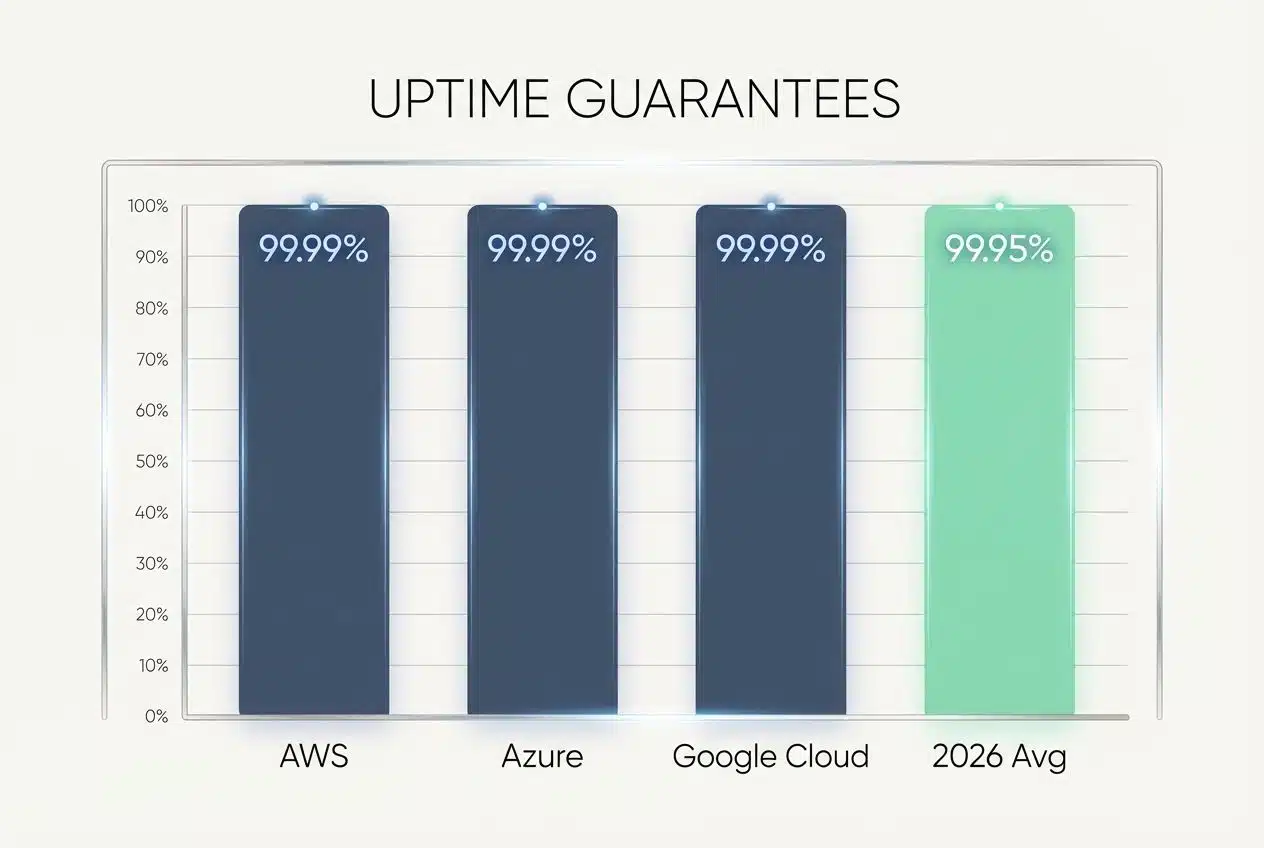
Every provider brags about uptime, but the numbers don’t always tell the full story. Here is a quick peek at how major providers stack up, AWS vs Azure, and what these percentages really mean, especially as we look at 2026 contract language.
| Provider/Type | Stated Uptime Guarantee | Measurement Period | Exclusions (Common) | Penalties | Fact Check (2026) |
|---|---|---|---|---|---|
| AWS | 99.99% | Monthly | Maintenance, Force Majeure, Outside Attacks | Service Credits | Major US-East-1 outage in Oct 2025 affected 1,000+ apps. Credits were limited to specific regions. |
| Microsoft Azure | 99.95% – 99.99% | Monthly | Pre-announced Maintenance, DDoS, and Regional Failures | Service Credits | Hit by outages in Jan and Oct 2025. Standard credits are often capped at 25-100% of monthly fees. |
| Google Cloud | 99.95% – 99.99% | Monthly | Force Majeure, Scheduled Downtime, Third-party Attacks | Service Credits | June 2025 IAM outage showed how “partial” downtime (login failure) can complicate credit claims. |
| Typical SaaS Vendor | 99.9% (“Three Nines”) | Monthly | Maintenance, Upgrades, Internet Issues | Credits or Fee Reductions | 0.1% downtime equals up to 43 minutes per month. Credits often require timely claims. |
| 2026 Industry Average | 99.95% | Monthly | Maintenance, Cyberattacks, Regional Outages | Pro-rated Credits | 77% of providers exclude cyberattacks as of 2026. Only 12% offer 99.999% uptime in contracts. |
Recognizing Overpromises and Gaps
After weighing industry standards, it helps to spot areas where contracts stretch the truth. Some providers wave big numbers, like 100% uptime, but the fine print tells a different story.
Check if “uptime” counts planned maintenance or only covers unexpected outages. Many web hosting agreements play hide and seek with definitions and exclusions.
If a Service Level Agreement promises huge performance guarantees yet slips in long lists of legal provisions or loopholes, proceed carefully. Sometimes support services vanish during critical hours, even if uptime looks perfect on paper.
If possible, ask for real downtime records from past customers. You can also search online reviews for complaints about empty promises. Often, the gap between written guarantees and actual reliability can affect your business risk management far more than any bold claim ever could.
Wrapping Up
Reading the fine print on uptime guarantees gives you more control and fewer headaches. You have learned what counts as real uptime, how to spot gaps or risks in contracts, and why a few numbers can change everything for your business. These tips are clear-cut and simple.
Anyone can use them when picking web hosting or service partners in 2026. Paying attention saves money, avoids stress, and keeps systems running smoothly even when trouble comes knocking.
If you want deeper insights or contract support, seek trusted advisors or online guides before making big choices. Stay sharp, peace of mind starts with reading every word. No small print left behind!