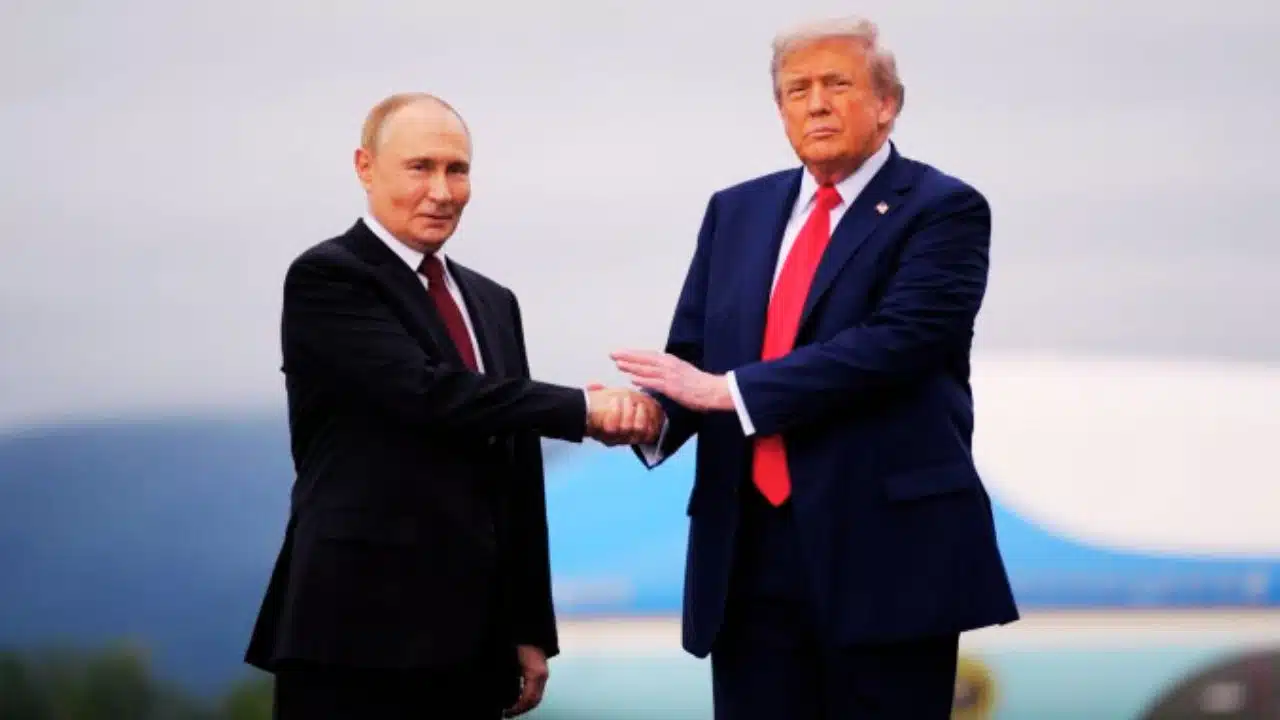
Russia has welcomed the updated US security strategy unveiled by President Donald Trump, saying the new doctrine closely matches Moscow’s worldview and departs sharply from earlier US policy.
Kremlin officials argue that the updated US security strategy reflects Russia’s worldview and could create openings for cooperation on Ukraine and broader global security, even as critics in Washington and Europe warn it may weaken traditional alliances.
What the updated strategy changes
The new National Security Strategy (NSS), a roughly 30‑plus page document released by the Trump administration in early December, sets out the White House’s overarching defense and foreign policy priorities for the coming years. It replaces earlier post‑Cold War doctrines that defined Russia as a primary strategic adversary and instead emphasizes an America First approach focused on borders, domestic resilience and selective engagement abroad.
Rather than foregrounding Russia and China as core threats, the strategy devotes significant space to warning that Europe is over‑regulated, internally divided and facing the risk of cultural and demographic strain from migration. It urges European states to assume primary responsibility for their own defense and suggests that US support will increasingly depend on higher military spending and stronger border controls in allied countries.
The document also calls for a geographic and operational shift in US military posture, proposing to move some focus and capabilities toward the Western Hemisphere to counter drug trafficking and state collapse in parts of Latin America. At the same time, it presses US allies in the Indo‑Pacific, including Japan, South Korea, Australia and Taiwan, to increase defense budgets and share more of the cost of deterring China.
Key themes of the new US strategy vs Moscow’s reading
| Theme | What the updated US strategy does | How Moscow interprets it |
| Russia’s role | Drops earlier language describing Russia as a central security threat and instead notes that many Europeans see Moscow as an existential concern, without echoing that framing. | The Kremlin sees removal of threat language as a political win and evidence that Washington now treats Russia more as a negotiating partner than a primary foe. |
| Europe and NATO | Criticizes European allies as over‑regulated, lacking confidence and too dependent on US security guarantees, while pushing them to take the lead on their own defense. | Moscow views tougher US rhetoric toward Europe as weakening Western unity and aligning with its long‑standing goal of driving wedges inside NATO and the EU. |
| Ukraine war | Defines a rapid, negotiated end to the Russia‑Ukraine war as a core US interest, linking it to stabilizing Europe’s economy and restoring strategic stability with Moscow. | Russian officials welcome the stated priority on negotiations and hope it signals US willingness to accept a settlement closer to Russia’s preferred terms. |
| Western Hemisphere | Calls for reviving elements of the Monroe Doctrine by asserting a stronger US role in the Americas, including against drug trafficking networks and hostile regimes. | Moscow interprets this as Washington reallocating attention away from Eastern Europe, potentially easing pressure on Russia’s immediate neighborhood. |
| China & Indo‑Pacific | Stresses the need for Indo‑Pacific allies to boost defense spending and align more closely with US posture toward China and Taiwan. | Russian analysts see this as confirmation that US strategy is pivoting primarily toward containing China, leaving more room for tactical engagement with Moscow. |
Moscow’s reaction and motives
Kremlin spokesman Dmitry Peskov has led Moscow’s public response, calling the updated US security strategy largely consistent with Russia’s own vision of the international order. In interviews with Russian state media, he argued that Trump’s domestic political strength after his re‑election has allowed the White House to reshape national security doctrine in line with the president’s personal worldview.
Peskov said the Kremlin especially welcomed language that avoids branding Russia as a direct threat and instead emphasizes dialogue, strategic stability and the search for a negotiated end to the Ukraine war. Russian officials have framed the document as a positive step compared with previous US administrations and signaled that they plan to study it closely for opportunities to expand cooperation in areas such as arms control and regional conflict management.
At the same time, Moscow is using the strategy to reinforce its own narrative that Western elites are divided and that US‑European relations are fraying. Russian commentators on state television and pro‑Kremlin outlets have highlighted the document’s criticism of Europe and its focus on migration and cultural issues, presenting this as proof that Washington increasingly shares Moscow’s skepticism toward liberal European institutions.
Timeline: from strategy release to Russia’s response
| Date (Dec 2025) | Event |
| 4–5 December | Trump administration releases the updated National Security Strategy, outlining a shift in US priorities toward border control, alliance burden‑sharing and a rebalanced global military posture. |
| 5–6 December | Think‑tanks and media publish first analyses, noting softer language on Russia, harsher rhetoric toward Europe and a stronger focus on the Western Hemisphere and migration. |
| 6–7 December | Kremlin spokesman Dmitry Peskov and other Russian officials publicly welcome the document, saying it accords largely with Russia’s perspective and could support efforts to negotiate an end to the Ukraine war. |
| 6–8 December | US lawmakers and European officials voice concern that the strategy undercuts allies and sends mixed signals about America’s stance toward Russia and China. |
Reactions in Washington and Europe
In Washington, reaction has been sharply divided along party and institutional lines. Several Democratic members of Congress, including lawmakers on intelligence and armed services committees, warned that the new security strategy could damage America’s global standing by appearing to downplay Russian aggression while attacking long‑time European allies.
Foreign policy experts at major US think‑tanks have also expressed unease about the document’s treatment of alliances, even when they welcome a clearer articulation of priorities. Analysts note that while the text acknowledges that many Europeans still see Russia as an existential threat, it offers little detailed guidance on deterring Moscow or reinforcing NATO’s eastern flank, beyond urging Europeans to spend more on defense.
European governments and EU officials have reacted with alarm to language portraying Europe as over‑regulated, lacking self‑confidence and vulnerable to cultural decline due to migration. Commentators in major European newspapers argue that by rhetorically distancing itself from Europe and avoiding strong condemnations of Russia, Washington risks validating key elements of the Kremlin’s narrative about a decadent and divided West.
For Ukraine, the implications are mixed. On one hand, the strategy names a negotiated, rapid end to the war as a core US interest and links this to economic and security stability across Europe, which Kyiv may see as support for sustained engagement. On the other hand, Ukrainian officials and sympathetic lawmakers in the US and EU worry that a strong focus on ending the war expeditiously could translate into pressure on Kyiv to accept a compromise that locks in Russian territorial gains.
Future outlook and what comes next
The coming months will test whether the updated US security strategy remains largely a political signal or is quickly translated into concrete policy shifts. Key markers will include any moves to reduce or redeploy US forces in Europe, new directives for military and intelligence cooperation with Russia, and changes in US positions during ongoing talks over Ukraine.
Diplomats and analysts say Moscow is likely to probe how far Washington is willing to go in redefining its relationship with Russia while simultaneously ramping up pressure on China and demanding more from allies in Europe and Asia. For European capitals, the challenge will be to respond to sharper US rhetoric by increasing their own defense and resilience without allowing internal divisions to deepen, something Russian strategists have long sought to exploit.
How the updated US security strategy is implemented will also shape domestic politics in the United States. Supporters of Trump’s approach argue that it restores a hard‑headed realism centered on US interests, while critics warn that aligning too closely with Russia’s worldview could erode the values‑based leadership that has underpinned the Western alliance since the end of the Second World War.