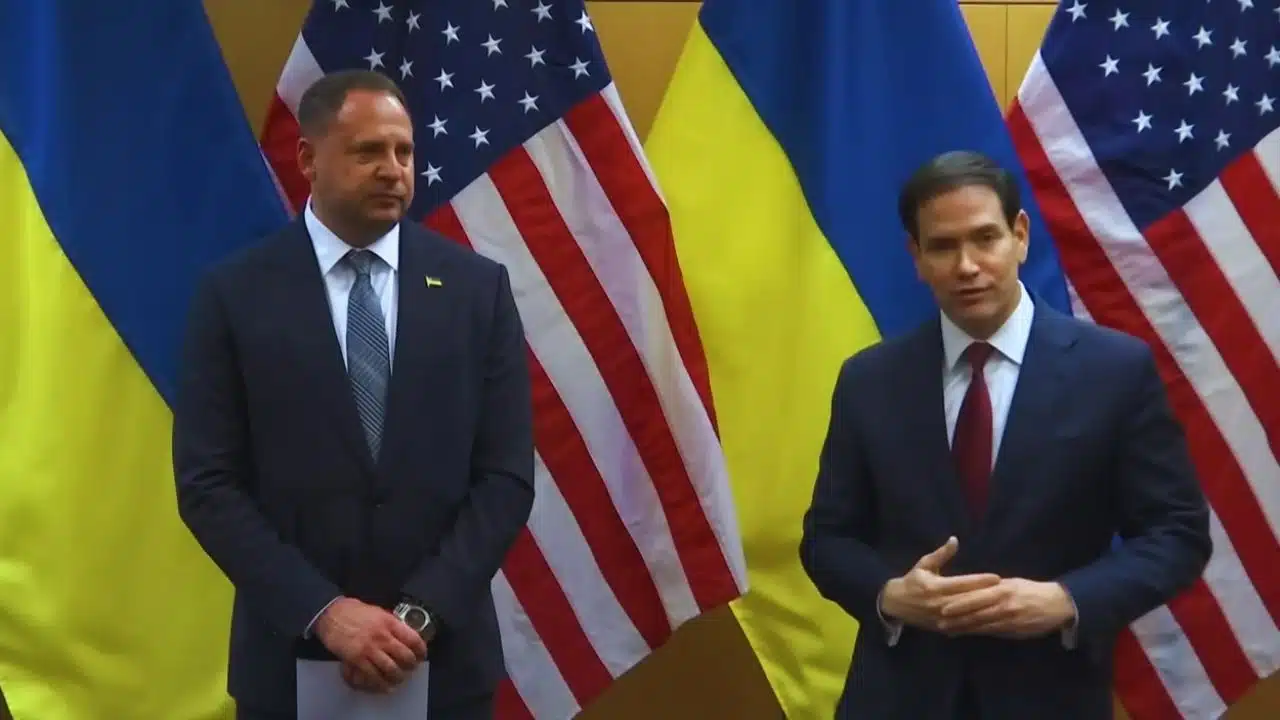
Ukraine has reportedly agreed to a revised version of a U.S.-proposed peace plan aimed at ending the long and devastating war with Russia. According to high-level diplomatic accounts shared with major Western media outlets, including the BBC and CBS, a senior U.S. government official stated that Kyiv has accepted the updated plan and that “only a few minor details” remain unresolved before it can be formally finalized by both sides.
This development marks one of the most significant steps toward a potential ceasefire since the full-scale invasion began. The announcement followed intensive U.S.-led negotiations with Ukraine in Geneva, where both nations met on November 23 to refine a new 19-article framework. This updated proposal incorporates multiple adjustments requested by Kyiv after criticism that the original 28-point draft leaned too heavily toward Russian demands. Both sides agreed that U.S. President Donald Trump and Ukrainian President Volodymyr Zelenskyy would hold a face-to-face meeting to settle the final terms, potentially before the end of November.
Even so, cautious assessments remain widespread. Russia has not yet issued an official response, and several major stumbling blocks—including territorial boundaries and Ukraine’s future relationship with NATO—are expected to provoke strong Russian resistance. Observers warn that the diplomatic path ahead is likely to remain complex and highly sensitive.
Tension heightened further when news emerged that U.S. Army Secretary Dan Driscoll, acting as Trump’s special envoy, was simultaneously conducting secret negotiations with a Russian delegation in Abu Dhabi. Driscoll had been in back-and-forth meetings with Russian and Ukrainian representatives for two days, alongside Ukraine’s respected intelligence chief Kyrylo Budanov. Reports described Driscoll moving constantly in and out of meeting rooms, signaling intense and fast-paced discussions. U.S. officials expressed optimism, hinting that meaningful progress had been made.
Ukraine’s leadership also acknowledged momentum in the talks. National Security Advisor Rustem Umerov publicly stated that both sides had reached a shared understanding on the “core conditions” discussed earlier in Geneva with American and European negotiators. He added that President Zelenskyy is preparing to travel to Washington before November ends to directly finalize outstanding issues with President Trump.
The Geneva meeting brought together high-level delegations led by U.S. Secretary of State Marco Rubio and Andriy Yermak, the Ukrainian Presidential Chief of Staff. Their goal was to reshape the earlier peace plan, which had drawn widespread criticism for appearing to reflect Russian positions too closely. According to diplomatic insiders, the revised proposal now expands the limit on Ukraine’s military personnel from 600,000 to 800,000—addressing one of Kyiv’s major concerns about national defense capacity.
Equally important, several controversial clauses have been toned down or removed. The original draft included an explicit requirement that Ukraine formally hand over all Russian-occupied regions in the Donbas—territory seized after the invasion. That clause has reportedly been eliminated. Another earlier provision required Ukraine to renounce NATO membership permanently and for NATO to codify this restriction in its founding documents. In the revised text, this has been softened to a statement that the decision regarding NATO membership “should be made by Ukraine itself,” though the issue remains a central point for final discussions between Trump and Zelenskyy.
Other sensitive items have also been adjusted. Provisions concerning amnesty for Russian war crimes were reworded, and the earlier idea that the United States would take half of the profits from investing frozen Russian assets into Ukrainian reconstruction was significantly modified. Diplomats say these changes were made in direct response to Ukrainian objections, as well as concerns raised by European partners.
Ukrainian Deputy Foreign Minister Serhiy Kyslytsya noted that the updated plan is dramatically different from the original. He stated that “compared to the initial 28 articles, almost nothing remains the same,” underscoring that many of the most contentious elements had been eased or restructured to better reflect Ukraine’s positions. President Zelenskyy echoed this sentiment in a video address, confirming that the number of articles had been reduced and that “many parts have changed.” He emphasized that the most sensitive issues—territory and NATO—would be resolved directly with the U.S. president in upcoming talks.
Despite the forward movement, major uncertainties still overshadow the process. Russia’s stance will likely determine whether the peace plan can move toward implementation. Analysts predict Moscow will strongly oppose the removal of earlier territorial concessions and the softening of Ukraine’s NATO-related obligations. Meanwhile, European involvement has grown more visible. Reports indicate that a European delegation participated in the Geneva discussions—an unusual step, given that early U.S. efforts were largely bilateral. This suggests Europe may play a more hands-on role in shaping the final agreement, possibly complicating Washington’s original timeline.
This added complexity makes President Trump’s self-imposed deadline—that the U.S. and Ukraine should finalize a peace agreement by Thanksgiving—difficult to achieve. With Russia silent, European partners asserting stronger influence, and unresolved disputes still on the table, the coming days are expected to be critical. Diplomats caution that while the revised 19-point plan represents real progress, successfully concluding it will require delicate coordination among all parties and a willingness to make difficult compromises.