
The Ultimate Fighting Championship (UFC) has officially entered one of the most significant media partnerships in combat sports history. In a landmark move, the UFC’s parent company, TKO Group Holdings, signed a seven-year broadcast and streaming deal worth $7.7 billion with Paramount Skydance. The agreement is set to begin on January 1, 2026, and will dramatically change how fans watch the sport—and how fighters get paid.
How the Surprise Deal Came Together
Even UFC CEO Dana White admits he didn’t expect the final outcome. Speaking on The Pat McAfee Show shortly after the announcement, White said the deal’s scope caught him off guard, describing the last-minute negotiations as both unexpected and exciting.
The inside story comes from Mark Shapiro, TKO’s President and Chief Operating Officer. Initially, TKO’s negotiating team aimed for a smaller package—selling only the UFC Fight Night events (around 30 per year) to Paramount+. But in early August 2025, Skydance Media finalized its acquisition of a controlling stake in Paramount Global, creating a new corporate powerhouse with a renewed appetite for bold sports investments.
Within just 48 hours of that merger’s completion, Shapiro and the Paramount Skydance team expanded the talks. Instead of acquiring rights to only a portion of UFC programming, they agreed on exclusive U.S. broadcast and streaming rights for all UFC content—both Fight Nights and the 13 major “numbered” events each year.
Shapiro said Paramount recognized the UFC brand’s global reach, loyal fan base, and year-round event schedule as key assets that could drive Paramount+ subscriber growth and enhance CBS’s sports portfolio.
What’s Included in the Deal
Under the agreement, starting in 2026:
- Paramount+ will host all 43 UFC events each year—30 Fight Nights and 13 numbered cards.
- The numbered events, which are currently pay-per-view (PPV) exclusives, will be included in the monthly Paramount+ subscription price.
- CBS will simulcast many of the major events, including likely all numbered cards, giving the UFC wider exposure through free-to-air television.
- UFC’s archived fight library and related programming could also be integrated into Paramount+ to boost on-demand content offerings.
The End of UFC’s Pay-Per-View Era
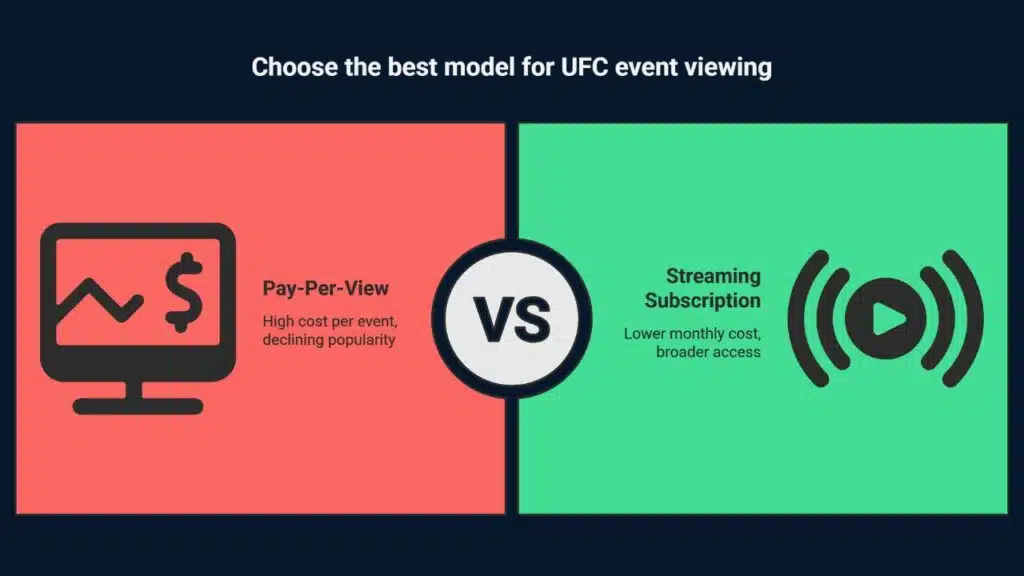
One of the most dramatic shifts is the complete elimination of the pay-per-view model in the U.S..
For decades, PPV was central to UFC’s revenue strategy. The first UFC event in 1993 was a PPV broadcast, and the model grew to charge as much as $79.99 per event under the UFC’s current deal with ESPN—on top of an ESPN+ subscription.
But industry trends have shifted. PPV sales for combat sports have seen gradual declines as streaming services dominate viewing habits and younger audiences resist paying premium prices for individual events. Shapiro bluntly described PPV as “an outdated, antiquated model” and argued that “one-stop shopping” on a single subscription platform makes more sense for fans.
With Paramount+, fans will be able to watch every major fight, including title bouts, for as little as $7.99 per month (ad-supported) or $12.99 per month (ad-free). Live broadcasts will still carry advertising, even for ad-free subscribers, to maximize revenue potential for both the UFC and Paramount.
Why Paramount Won the Rights Battle
The UFC’s media rights were one of the most coveted properties in sports streaming. Industry insiders had speculated for months that either Netflix—which has recently ventured into live sports—or ESPN, the UFC’s long-time broadcast partner, would secure the deal.
Paramount’s victory was surprising to many, given that Paramount+ is better known for scripted series like Yellowstone and Star Trek: Strange New Worlds rather than live sports.
However, the strategic reasoning is clear:
- Live sports drive subscriber growth and retention better than nearly any other content type.
- UFC provides a consistent, year-round schedule—unlike seasonal sports—that keeps subscribers engaged.
- Paramount gains exclusive premium sports content to differentiate itself in a crowded streaming market.
- CBS offers a powerful broadcast partner for big events, boosting mainstream visibility for the UFC.
Shapiro emphasized that the combination of Paramount+ streaming and CBS broadcasting offers both reach and flexibility. White echoed that sentiment, noting that every streaming platform now sees live sports as essential because fans want to watch sports live, not on delay.
Implications for Fighters: Pay Changes Ahead
While the deal is a win for fans in terms of cost and accessibility, it introduces uncertainty for fighters.
Under the PPV model, many top-tier UFC athletes earn a significant portion of their income through PPV revenue shares (known as “PPV points”). With that model disappearing in 2026, those earnings will need to be replaced through new contract structures.
- Potential negatives: Fighters may lose the high bonuses from blockbuster PPV sales, reducing incentive payouts for marquee stars.
- Potential positives: Dana White has promised that the new deal will allow for larger fight bonuses—which have been stuck at $50,000 for years—and better promotional exposure through CBS and Paramount+.
Former UFC champion Georges St-Pierre and other fighters have publicly cautioned that removing PPV revenue could weaken fighter bargaining power unless the UFC adjusts base pay and incentives accordingly. TKO executives, however, have stated that fighter compensation will remain a priority.
Financial Scope of the Agreement
The $7.7 billion deal breaks down to roughly $1.1 billion per year, almost double the $550 million annually UFC earns from its current ESPN rights deal.
The UFC will benefit not only from this immediate revenue boost but also from the broader reach of Paramount’s combined streaming and broadcast ecosystem—something ESPN could not match without comparable broadcast distribution.
Looking Ahead: A White House UFC Event?
Adding a symbolic twist to the deal’s rollout, Dana White confirmed discussions are underway for a UFC event to take place on the White House lawn on July 4, 2026. This would coincide with the United States’ 250th anniversary celebrations.
If finalized, it would mark the first time a professional mixed martial arts event has been held at such a historic location, and it would serve as a showcase for the UFC’s new era under the Paramount partnership.
Summary Table: Key Facts About the UFC–Paramount Deal
| Category | Details |
| Deal Value | $7.7 billion over 7 years |
| Annual Value | ~$1.1 billion |
| Start Date | January 1, 2026 |
| Events Covered | All 43 annual UFC events (13 numbered, 30 Fight Nights) |
| Streaming Platform | Paramount+ |
| Broadcast Partner | CBS (simulcasting many major events) |
| PPV Model | Eliminated in the U.S. |
| Fan Cost | $7.99/month (ads) or $12.99/month (no ads) |
| Fighter Impact | No PPV points; bonuses expected to increase |
| Special Event | Planned July 4, 2026 UFC card at the White House |
The UFC–Paramount deal marks a turning point not just for MMA but for sports broadcasting in general. By ending the pay-per-view era in the U.S. and fully embracing a subscription-streaming model, the UFC is betting that mass accessibility will drive long-term growth for the brand, expand its fan base, and ultimately generate more revenue than the old system.
Paramount gains a premium sports property that can help define its streaming identity, while CBS can bring UFC action to millions of homes that may never have paid for a fight before. For fighters, the new landscape presents both risks and opportunities—but the promise of greater exposure and higher base pay could offset the loss of PPV windfalls.
As 2026 approaches, all eyes will be on how this bold shift reshapes the UFC’s place in the sports and entertainment world.
The Information is Collected from Yahoo and CNBC.