

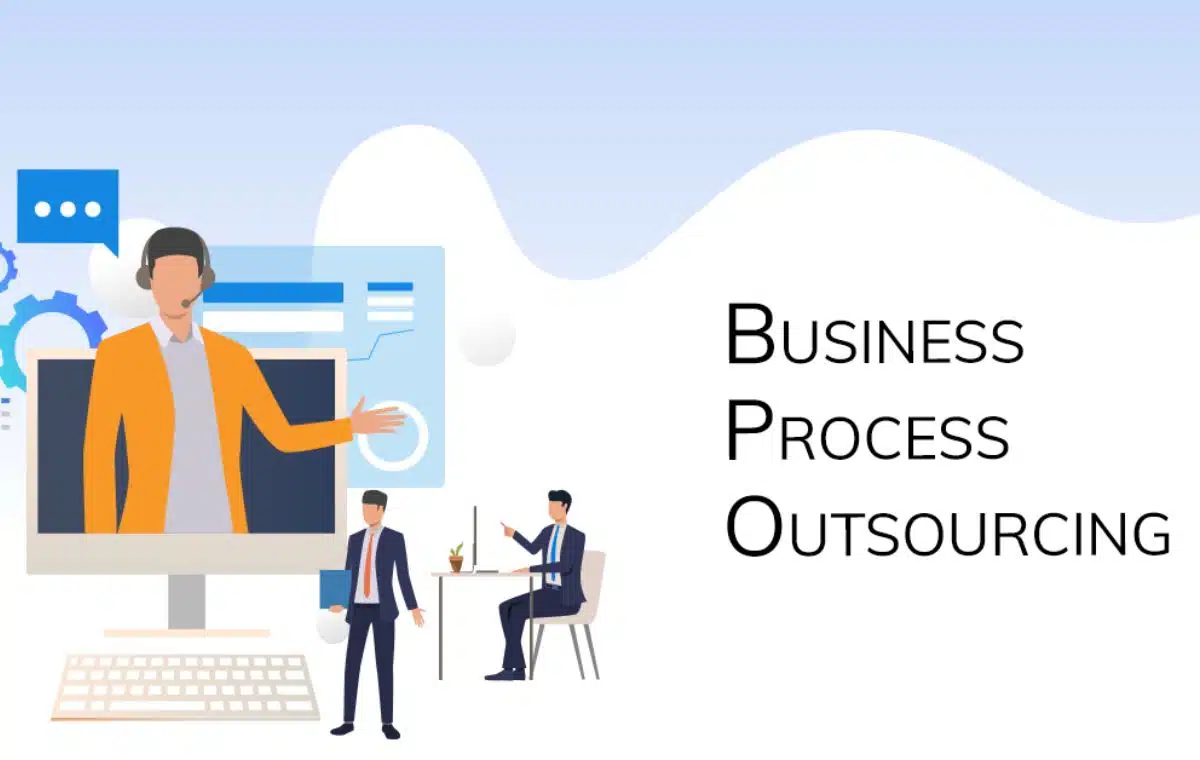
Most companies choose BPOs for supporting roles in their company so that they can have more time to focus on the core aspects of building their business.
What does BPO Stand for in Business?
Basically, under Business process outsourcing, or BPO, we understand a business service that involves contracting with an external provider to deal with certain business tasks or processes. Typically, business objectives for BPO include enhancing customer service, accounting, human resources, and data entry. Business process outsourcing (BPO) may help companies cut expenses and increase efficiency. Businesses might opt to outsource all or just some of their business operations when outsourcing business processes. Businesses can also choose whether to outsource BPO providers to other continents or to find the solution on their own land. Since its inception as a cost-cutting tactic for multinational organizations, business process outsourcing has gone a long way. Nowadays, business process outsourcing is becoming a more strategic instrument for driving corporate success. Location-based outsourcing and service-based outsourcing are the two key forms of BPO that may help your company achieve new heights. Let’s consider both of them to see what business bpo stands for.
Location-Based Outsourcing
In the corporate sector, location-based outsourcing is becoming more popular. Location-based outsourcing, as the name implies, is employing personnel in a different territory other than the company’s own. Companies opt to outsource their personnel for a variety of reasons, but one of the most prevalent is to save money. Companies can economize on labor expenditures by employing personnel in places with cheaper pay. Furthermore, location-based outsourcing may assist businesses in expanding their markets and gaining access to a bigger pool of talent. While location-based outsourcing has numerous advantages, it is not without its drawbacks. Communication and collaboration might be challenging due to language difficulties and cultural differences, for example. Managing a remote staff may sometimes be difficult and time-consuming. Despite these obstacles, location-based outsourcing remains a popular choice for companies trying to save costs and expand their market reach.
Offshore BPO is a sort of business process outsourcing in which a firm in another nation is partnered to handle customer care and other business operations. This might be a low-cost solution to ensure that your consumers can always get in touch with someone if they need assistance. And because offshore BPO providers are typically located in countries with low labor costs, it can help a business looking for BPO save money. When done right, offshore BPO can be a win-win for both businesses and customers. The Philippines is an excellent example of an offshore BPO. The Philippines has established itself as a top destination for offshore business process outsourcing, thanks to an ever-growing pool of college graduates. In 2016, the country’s BPO business is predicted to provide 1.8 million jobs, making it the country’s largest source of employment. The great majority of BPO employees are young, well-educated women who are drawn to the sector by the promise of excellent pay and possibilities for promotion. While the Philippines has long been recognized for its low-cost labor, the BPO business has also benefited from a big English-speaking population, a convenient time zone, and strong government backing. The Philippines will continue to develop as the BPO sector expands.
The onshore business process outsourcing advantages are many and impactful. Onshore outsourcing may help you enhance customer service, save operating expenses, and boost efficiency, among other things. When you outsource your business activities to an onshore supplier, you can be certain that your information will be kept safe and secure, and that you will receive the best possible service. Because onshore outsourcing companies are bound by the same rules and regulations as your company, you can be certain that rigorous privacy and security standards will be followed. Furthermore, onshore BPO providers have a thorough grasp of your industry and clients, allowing them to develop customized solutions that fit your unique requirements. When you choose an onshore BPO provider, you can rest certain that you are choosing the finest choice possible.
Speaking of the service-based BPOs, here are the most common types of them.
BPO for sales and marketing: BPO for sales and marketing can assist you in entering new markets and reaching new consumer groups. BPO companies may help you fine-tune your marketing initiatives by providing expertise and insights. Lead generation, client relationship management, market research, market analysis, and product promotion are common sales and marketing BPO services. Some companies prefer to outsource all of their sales and marketing efforts, while others choose to outsource only some functions or services. For instance, a corporation could opt to outsource lead generation yet keep customer relationship management in-house. Outsourcing sales and marketing tasks have a number of pluses, including enhanced efficiency, cost savings, and access to competent staff. However, before selecting whether or not sales and marketing BPO is ideal for your company, you need thoroughly analyze all variables.
- Financial BPO: Financial BPO may assist you in increasing financial efficiency and making better decisions. You can obtain access to best-in-class technology and procedures by outsourcing finance-related operations. Furthermore, during periods of fast expansion or change, financial BPO can give much-needed flexibility. Invoicing, accounts receivable, accounts payable, and bookkeeping is among the services that financial BPOs may perform. Other services that financial BPOs might provide include tax preparation, financial analysis, and financial planning. Financial BPOs may typically deliver these services at a lesser cost than firms could on their own, making them an appealing alternative for companies trying to save expenses. Financial BPOs are often situated in low-cost nations like India, or the Philippines.
- Human resources BPO: Human resources BPO: Human resources BPO: Human resources BPO: Human BPO can aid in the recruitment, development, and retention of elite personnel. You may free up internal resources to focus on strategic projects by outsourcing HR operations. Human resources (HR) services are typically outsourced when a firm lacks the knowledge or resources to do them in-house. Payroll processing, employee benefits administration, and recruiting and selection are the most frequent HR outsourcing services. Human resources BPO, when done effectively, may result in considerable cost reductions and process improvements. However, in order to avoid any bad results, it is critical to carefully pick a reliable and skilled service provider.
- Knowledge Process Outsourcing (KPO) is a form of outsourcing in which knowledge-intensive tasks are delegated to a third party. In areas including research & development, marketing, and customer service, KPO is often employed. Businesses may save money and focus on their core skills by outsourcing these sorts of services. Furthermore, KPOs may assist firms in gaining access to knowledge that they would not otherwise have.
Collaboration in business process outsourcing (BPO) may be a wonderful approach to boost efficiency and cut expenses. It’s critical, though, to pick the proper partner and set clear expectations from the outset. Here are some pointers on how to make the most of a BPO partnership:
- Define your objectives. What are your goals for outsourcing your business processes? Make your statement as detailed as possible. Make sure you provide a clear and concise business plan for the bpo company.
- Do your research. Remember, not all BPO providers are created equal. Spend some time researching potential partners to find one that’s a good fit for your needs.
- Set specific goals for yourself. Once you’ve picked a partner, make sure you have clear expectations about what you want from them. This will assist to avoid future misunderstandings.
- Communicate regularly. regular communication is essential for any successful partnership. Make sure you touch base with your BPO provider on a regular basis to discuss how things are going.






















