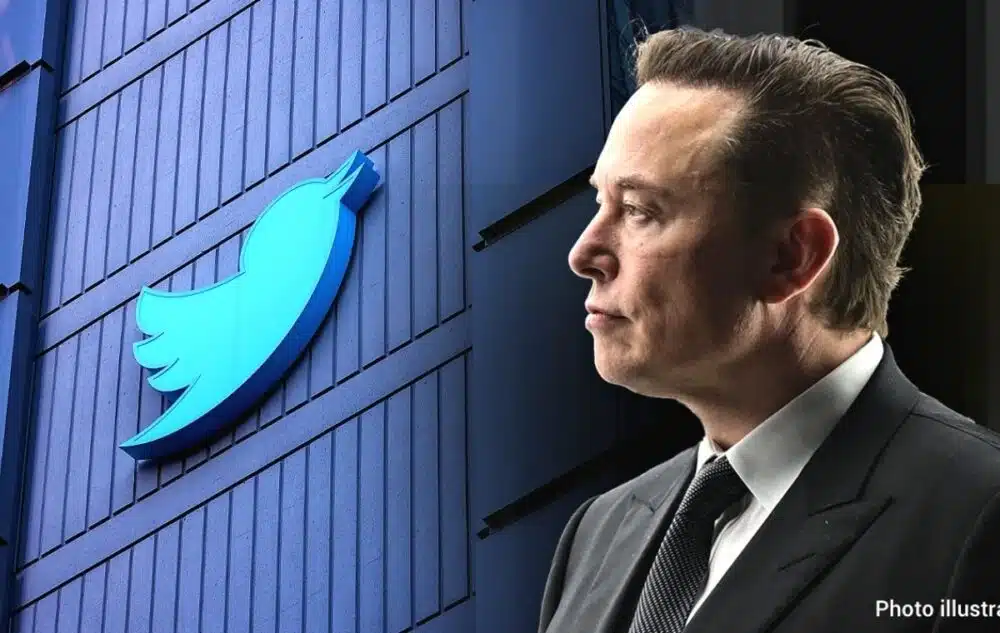
Legal experts say that Twitter (TWTR.N) has a strong case against Elon Musk for backing out of his $44 billion deal to buy the U.S. social media company. However, instead of a long court battle, Twitter could choose to renegotiate or settle with Musk instead of going to court.
The case between the two sides is going to be heard in Delaware courts, which have made it hard for acquirers to back out of deals. But three corporate law professors who were interviewed by Reuters said that target companies often choose the certainty of a renegotiated deal at a lower price or financial compensation over a messy court battle that can last for many months.
Adam Badawi, a law professor at UC Berkeley, said, “The reason to settle for less is that going to court is expensive.” “This is so complicated that it might not be worth it,” she said.
When asked for a comment, Twitter and Musk did not respond right away.
Musk’s main claim against Twitter is that the San Francisco-based company broke its contract by not giving him enough information to back up its claim that less than 5 percent of its active users are spam or fake accounts. Twitter has said that they stand by this estimate, but it’s possible that the number of accounts is higher.
Musk also said in a letter to Twitter on Friday that the company’s lie about the number of spam accounts could be a “material adverse effect (MAE)” that would let him back out of the deal.
But legal experts said that Delaware courts see MAEs as big, unexpected things that hurt a company’s performance in the long run. Deal contracts like the one between Musk and Twitter are so specific that a judge has ruled that an MAE has only been legally triggered once in the history of such cases when the German healthcare group Fresenius Kabi AG ended its deal to buy the U.S. generic drugmaker Akorn Inc. in 2018.
In that case, a court said that Akorn lied when it told Fresenius that it was meeting all of its regulatory requirements. It also found that Akorn had kept facts about how its performance was getting worse from whistleblowers.
Legal experts didn’t think that having wrong numbers for spam accounts would be an MAE for Twitter on the same level as the problems that plagued Akorn.
Ann Lipton, associate dean for faculty research at Tulane Law School, said, “If it goes to court, Musk has to prove more likely than not that the spam account numbers were not only false but so false that it will have a big effect on Twitter’s earnings in the future.”
Musk also said that Twitter broke their contract by firing two key high-ranking employees, its revenue product lead and general manager of consumers, without his permission, which was required by their contract.
Brian Quinn, a professor at Boston College Law School, said, “That’s probably the only claim that has any weight,” but he added that he didn’t think the firings were big enough to hurt Twitter’s business.
In 2020, a Delaware court let South Korea’s Mirae Asset Capital Co. back out of a $5.8 billion luxury hotel deal because the pandemic forced the seller, China’s Anbang Insurance Group, to change how it usually ran its hotels.
Settling Rather Than Litigating to the End
Most of the time, the courts rule in favor of the target company and order the acquirer to finish the deal. This is called “specific performance,” and it is a legal remedy.
In 2001, Tyson Foods, the biggest chicken processor in the United States, decided it no longer wanted to buy IBP Inc., the biggest meatpacker. A judge said that the deal had to go through.
But many companies choose to settle with their acquirers so that their employees, customers, and suppliers don’t have to worry about what will happen to them in the future.
When the COVID-19 pandemic broke out in 2020 and shook the world economy, this happened more often. In one case, the French store LVMH (LVMH.PA) threatened to stop doing business with Tiffany & Co. The U.S. jewellery store agreed to cut the price of the deal by $425 million, bringing it down to $15.8 billion.
Simon Property Group Inc. (SPG.N), which runs the most malls in the U.S., was able to get a controlling stake in a competitor, Taubman Centers Inc., for 18% less, or $2.65 billion.
Other companies paid the people who wanted to buy the money to let them go. This includes Channel Medsystems Inc, a company that makes medical technology. It sued Boston Scientific Corp (BSX.N) for trying to back out of a $275 million deal. In 2019, a judge said that the deal should go through, and Boston Scientific paid Channel Medsystems a settlement that was not made public.