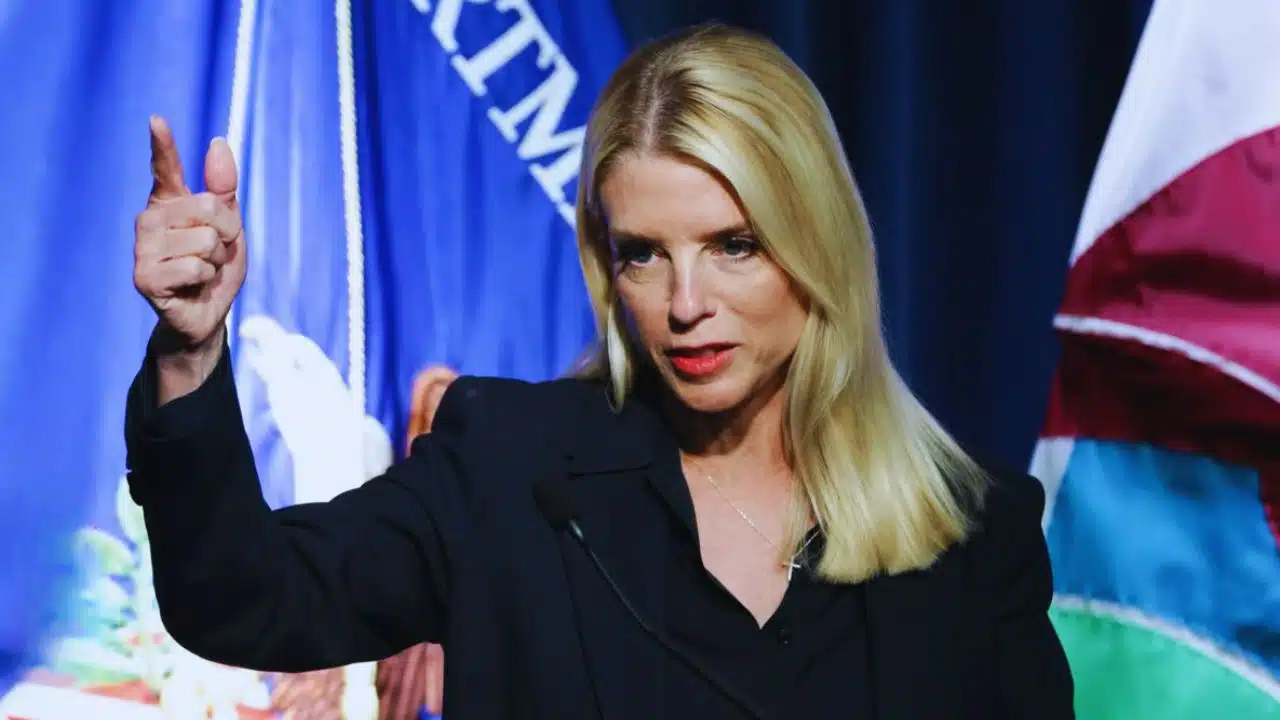
U.S. Attorney General Pam Bondi has directed federal prosecutors to begin grand jury proceedings in a new legal phase aimed at examining whether Donald Trump was wrongfully accused of colluding with Russia during the 2016 presidential election. This significant development could potentially reshape the public’s understanding of one of the most contentious political stories of the last decade.
The move comes years after the original Trump–Russia investigation led by Special Counsel Robert Mueller, and it suggests a reversal of focus—placing scrutiny on Trump’s political opponents and top Obama-era intelligence officials rather than on Trump himself.
According to CBS News, prosecutors are now preparing to present evidence to a grand jury, which is composed of everyday American citizens. Their role is to examine the evidence and determine whether formal criminal charges should be filed. But at this stage, the public does not know what the potential charges are or which individuals could be indicted.
Trump’s 2016 Win and the Origins of “Russiagate”
In November 2016, Republican candidate Donald Trump won the presidency by defeating Democratic nominee Hillary Clinton in one of the most polarizing elections in U.S. history. Almost immediately, questions surfaced about whether Russian interference played a role in the election outcome.
By January 2017, a joint report from the CIA, FBI, and NSA concluded that Russia had interfered in the election with the intent to harm Clinton and help Trump. These conclusions were backed by both Democratic and Republican officials.
That led to the opening of an investigation by the Justice Department, culminating in the appointment of Robert Mueller as Special Counsel. Mueller’s probe explored whether Trump or his campaign had conspired with Russian operatives.
The Mueller Report Findings
Published in April 2019, the Mueller Report confirmed that Russia did interfere in the 2016 election, mainly by hacking emails and spreading propaganda online through bot farms and troll accounts. However, it found no sufficient evidence to prove that Trump or his campaign colluded with Russia.
Several individuals were charged with crimes, but none of those charges directly related to a conspiracy between Trump’s team and the Russian government. The report did not exonerate Trump on obstruction of justice but declined to make a prosecutorial decision.
Tulsi Gabbard Accuses Obama Officials of Coup Attempt
In a dramatic escalation last month, Tulsi Gabbard, the Director of National Intelligence, publicly accused former President Barack Obama and his top national security officials of attempting a “years-long coup” to undermine Trump.
According to Gabbard, intelligence reports on Russian election interference were manipulated by Obama’s team to create a false narrative linking Trump to the Kremlin. She suggested that this politicization was not just an error in judgment but a deliberate attempt to remove Trump from power.
Trump’s Response: Accusations of Treason
Former President Trump quickly responded to Gabbard’s comments by accusing Barack Obama of treason—a charge considered extremely serious and historically rare in U.S. political discourse. An Obama spokesperson dismissed the accusation, calling it “bizarre” and unfounded.
Despite the harsh rhetoric, no direct evidence has emerged tying Obama or his senior advisors to criminal wrongdoing. Still, Trump and his supporters argue that the damage to his presidency, image, and political momentum was already done.
Senate and Intelligence Community Confirm Russian Interference
While Trump has always denied wrongdoing, multiple official bodies have confirmed Russian interference:
- A January 2017 assessment from the U.S. intelligence community concluded that Russia meddled to hurt Clinton and help Trump.
- A bipartisan Senate Intelligence Committee report released in 2020 supported these findings. The report also detailed Russia’s extensive disinformation efforts and contact with members of the Trump campaign.
These conclusions have been central to the ongoing dispute: Did Russia interfere? Yes. But did Trump collude? Investigations have failed to prove it.
Brennan and Comey Under Scrutiny
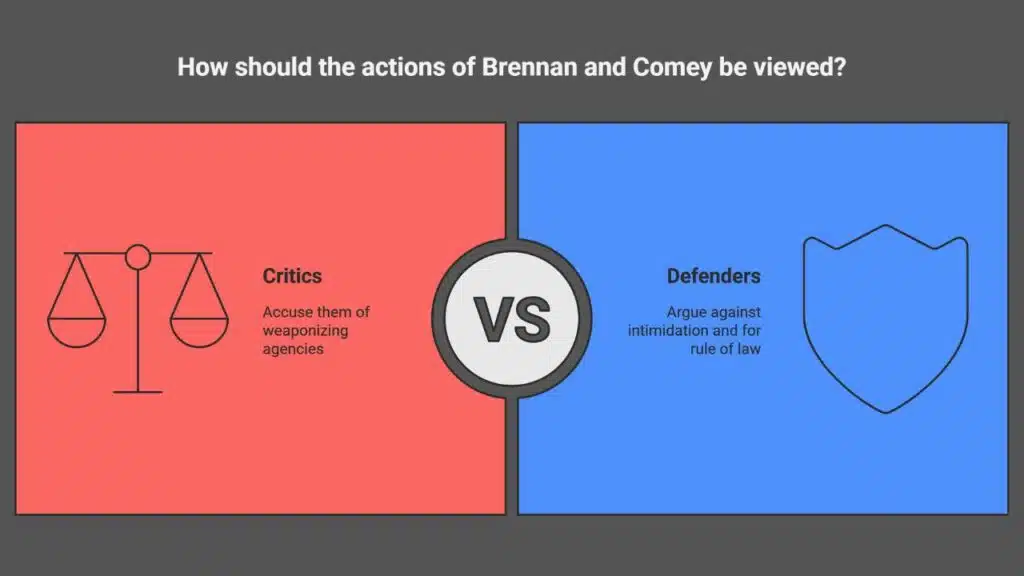
In a new twist, former CIA Director John Brennan and former FBI Director James Comey are now reportedly under criminal investigation, according to Fox News.
Both men played key roles in initiating the Trump–Russia probe and have long stood by their actions. However, critics accuse them of weaponizing federal agencies against a sitting president.
They have denied any misconduct and argue that the Trump administration is trying to intimidate former officials and undermine the rule of law.
Durham’s Declassified Appendix Reignites Debate
The Russiagate conversation was revived recently when a newly declassified appendix from Special Counsel John Durham’s 2023 report was released. This appendix includes information that hadn’t been previously available to the public.
Durham cited a March 2016 memo from a U.S. intelligence source that stated Hillary Clinton had approved a plan to associate Trump with Russia for political advantage. This was reportedly done to distract from her email controversy and damage Trump’s public image.
The memo did not confirm the plan was carried out or that laws were broken, but its existence has fueled allegations of a deliberate political smear campaign.
Soros Foundation Emails Raise New Questions
Further complicating the matter, Durham’s appendix references emails allegedly obtained by Russian hackers. The messages appear to be from an employee of the Open Society Foundations, run by billionaire donor George Soros.
One email, reportedly from Leonard Benardo, a senior VP at Soros’ foundation, refers to a Clinton adviser named Julianna Smith. The email, dated July 26, 2016, allegedly reads:
“Julie says it will be a long-term affair to demonize Putin and Trump. Now it is good for a post-convention bounce. Later the FBI will put more oil into the fire.”
Durham stated that Benardo denied drafting the email, although he admitted that some of the phrasing “sounded like him.” Smith, for her part, said she didn’t remember ever receiving it.
Are the Emails Real? Durham Leaves It Open
The authenticity of these emails remains uncertain. Durham did not confirm whether they were genuine or altered, noting that they may have been doctored by Russian intelligence.
Despite lacking hard proof, some Trump allies say these messages—if authentic—suggest a possible connection between political actors and federal law enforcement. But Durham himself found no direct evidence of a conspiracy involving the FBI or DOJ to falsely target Trump.
Durham’s Core Findings: FBI Acted Recklessly
Durham’s main report, stretching over 306 pages, was sharply critical of the FBI and its handling of the original Trump–Russia investigation.
He concluded that the FBI acted with “confirmation bias” and had launched its inquiry based on “uncorroborated intelligence.” The report said the agency failed to uphold its own standards and did not conduct a proper evaluation before moving forward.
While Durham didn’t call for widespread indictments, his findings triggered internal reforms within the FBI and ignited political debates about oversight and accountability.
Political Smears vs. Criminal Acts
It’s important to clarify that political smears, while ethically questionable, are not necessarily illegal. Only if they involve:
- Fraud
- Bribery
- Fabricated evidence
- Misuse of federal resources
would they rise to the level of criminal prosecution.
Legal experts note that grand jury proceedings could help determine whether any of these thresholds were crossed during the anti-Trump campaign and investigation process.
What the Grand Jury Could Mean
The formation of a grand jury now puts Pam Bondi’s Justice Department in the spotlight. The public can expect:
- Testimony from intelligence officials
- Review of Clinton campaign communications
- Possible subpoenas of ex-Obama administration staff
- Determination of whether to issue criminal indictments
It may take months for the grand jury to finish its work, but the outcome could significantly reshape narratives around the 2016 election and Trump’s first term.
A Turning Point in a Politicized Era
The decision to open grand jury hearings into the Trump–Russia narrative marks a critical moment in American political and legal history. While earlier investigations largely cleared Trump of collusion, this new phase focuses on whether there was misuse of power to accuse him in the first place.
Regardless of the outcome, the grand jury could set a new precedent for transparency, accountability, and political conduct in the digital age—where leaks, hacked emails, and misinformation often blur the lines between truth and narrative.
As the 2024 election approaches, these findings are likely to influence not only public opinion but also future policy on election interference, intelligence oversight, and political campaigning in the United States.
The Information is Collected from BBC and CBS News.