
United States President Donald Trump has confirmed that he will meet Russian President Vladimir Putin on August 15, 2025, in Alaska for direct talks on ending the war in Ukraine. This will be the first face-to-face meeting between the two leaders since 2019, during Trump’s first term, and one of the most closely watched diplomatic events since Russia’s full-scale invasion of Ukraine began in February 2022.
The announcement came during a White House event hosting the leaders of Armenia and Azerbaijan. Trump said the Alaska meeting will be the starting point for his next round of negotiations aimed at reaching a ceasefire and eventual peace deal.
Territorial Swaps at the Center of the Proposal
Trump signaled that any potential peace arrangement would likely involve territorial adjustments between Russia and Ukraine. He indicated that the plan under discussion would return some territories to Ukraine while formally transferring others to Russian control. He framed this approach as a practical solution that could bring mutual benefit to both sides, although he did not provide specifics on which areas might be involved.
This idea is controversial and has been met with strong resistance from Ukrainian President Volodymyr Zelenskyy and European allies. Ukraine’s leadership has repeatedly stated that the country will not agree to any peace settlement that involves giving up territories Russia has occupied since 2014, including Crimea, Donetsk, Luhansk, Kherson, and Zaporizhzhia. Ukraine’s constitution explicitly prohibits ceding sovereign territory.
From Moscow’s perspective, Putin has made clear that any deal must recognize Russian control over territories it currently occupies, and that Kyiv must end its bid to join the NATO alliance. The Kremlin also wants a halt to all Western military and financial aid to Ukraine.
Why Alaska Was Chosen
The decision to hold the summit in Alaska carries both symbolic and logistical significance. Alaska is geographically the closest U.S. state to Russia, separated by only 55 miles across the Bering Strait at its narrowest point. The proximity underscores the historical and strategic links between the two nations’ territories.
More importantly, Alaska was chosen in part to navigate legal complications arising from the International Criminal Court’s (ICC) arrest warrant for Vladimir Putin over alleged war crimes in Ukraine. Since the United States is not a member of the ICC and does not recognize its jurisdiction, Putin would not face the risk of arrest while on U.S. soil. Previous suggestions had included the United Arab Emirates, another non-ICC member, but Trump opted for a U.S.-based location to emphasize American leadership in the negotiations.
Deadline Pressure and Growing Frustration
The Alaska summit announcement came on the same day a deadline set by Trump for Russia to agree to a ceasefire expired without any breakthrough. In recent weeks, Trump had expressed increasing frustration with Russia over continued attacks on Ukrainian cities and what he sees as Moscow’s reluctance to make concessions.
The president had warned Russia that failure to pause its offensive would result in heightened economic measures, including new sanctions and punitive tariffs against nations conducting trade that aids Russia’s war effort. Earlier this week, the U.S. raised tariffs on Indian goods to 50 percent in response to New Delhi’s purchases of Russian oil — a move seen as a signal to other countries maintaining strong trade links with Moscow.
Role of the U.S. Special Envoy
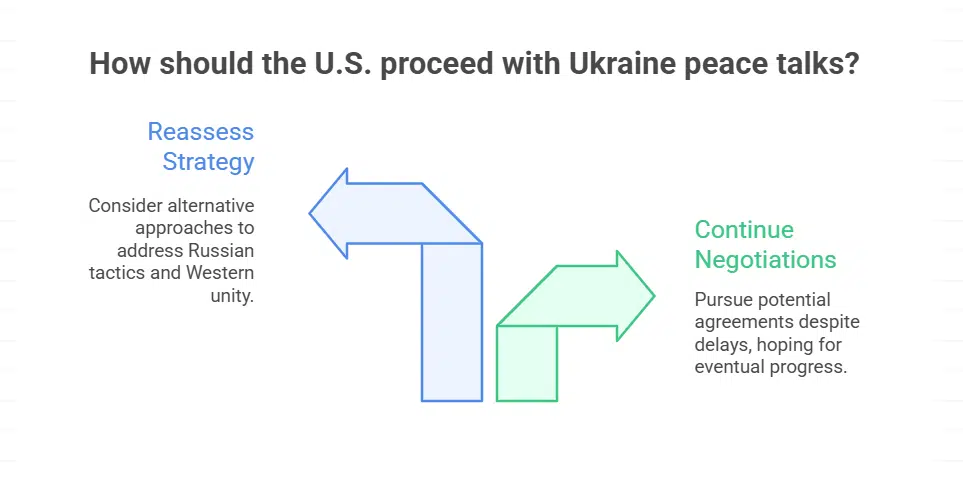
Trump’s special envoy for the Ukraine peace process, Steve Witkoff, visited Moscow in early August for direct talks with Putin. According to sources familiar with the discussions, the talks covered the territorial swap concept, security guarantees, and phased withdrawal timelines. While Trump later claimed “great progress” was being made, no concrete agreements or concessions were announced before the August 8 deadline.
Analysts have suggested that Putin may be deliberately prolonging negotiations to strengthen Russia’s position on the battlefield, knowing that prolonged conflict could wear down Western unity and weaken Ukraine’s resources.
International and Domestic Reactions
The prospect of a territorial swap has stirred debate among international observers. European Union leaders have voiced concern that such an arrangement could undermine international law by rewarding aggression, setting a precedent that might embolden other nations to seize territory by force. NATO officials have reiterated their stance that any peace deal must respect Ukraine’s territorial integrity.
Within the United States, reactions have been divided. Supporters of Trump’s approach argue that a pragmatic deal — even one involving concessions — could stop the bloodshed and reduce the financial and political costs of supporting Ukraine. Critics counter that bypassing Ukraine in direct negotiations with Russia risks producing a settlement that lacks legitimacy and may not hold in the long term.
Legal and Security Considerations
Putin’s travel to Alaska has also prompted questions about security and protocol. Although the U.S. is not an ICC member, the Russian president’s movements are heavily restricted internationally due to the arrest warrant. Security agencies in both countries are coordinating to ensure the summit can proceed without incident, with special attention to potential protests and cyber threats during the event.
What’s Next
The Alaska summit represents a critical moment in the effort to end the war in Ukraine, but expectations are tempered by the deep divide between Ukrainian and Russian positions. Even if Trump and Putin reach a preliminary framework, the absence of Ukraine’s direct participation could make implementation difficult or impossible.
With just a week until the meeting, attention is focused on whether either side will show flexibility — or if this summit will join a long list of failed attempts to resolve one of the most dangerous conflicts in Europe since World War II.