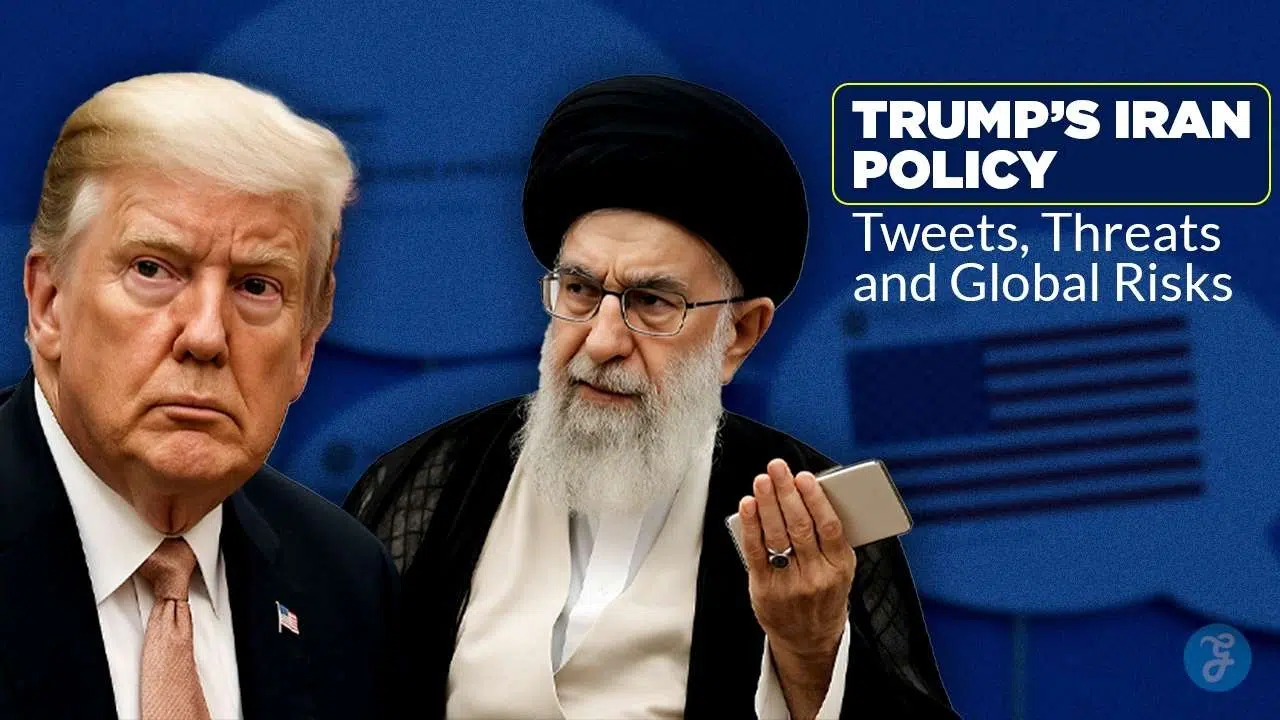
The cornerstone of the Trump Iran Tariff Strategy 2026 was laid not with a bang, but with the quiet scratch of a pen in the Oval Office. On February 6, 2026, while the world’s media was distracted by the Super Bowl lead-up, President Donald Trump signed Executive Order 14112, titled “Addressing Threats to the United States by the Government of Iran.” To the casual observer, it looked like standard bureaucratic maneuvering, another sanctions package to throw onto the pile.
But a closer reading of the text reveals a fundamental shift in American foreign policy: a move from targeting the adversary to blackmailing the audience. This Executive Order does not merely sanction Iranian entities, which are already isolated from the U.S. financial system. Instead, it weaponizes the American consumer market against the rest of the world.
By invoking the International Emergency Economic Powers Act (IEEPA), the President has authorized a blanket 25% tariff on imports from any nation that “directly or indirectly purchases, imports, or otherwise acquires any goods or services from Iran.” It is an ultimatum delivered not to Tehran, but to Beijing, Brussels, Ankara, and New Delhi: choose Iran’s oil or America’s market. You cannot have both.
The Escalation: From Military Stalemates to Trade Wars
This dramatic escalation comes in the wake of the inconclusive “12-Day War” of June 2025, a conflict that saw U.S. and Israeli airstrikes batter Iran’s nuclear infrastructure without dismantling the regime’s core capabilities. That brief but intense conflict proved the limitations of kinetic warfare; while the strikes damaged facilities, they failed to yield the political concessions the White House demanded. Now, frustrated by the stalemate of direct military action, the President has pivoted to a strategy of total economic siege.
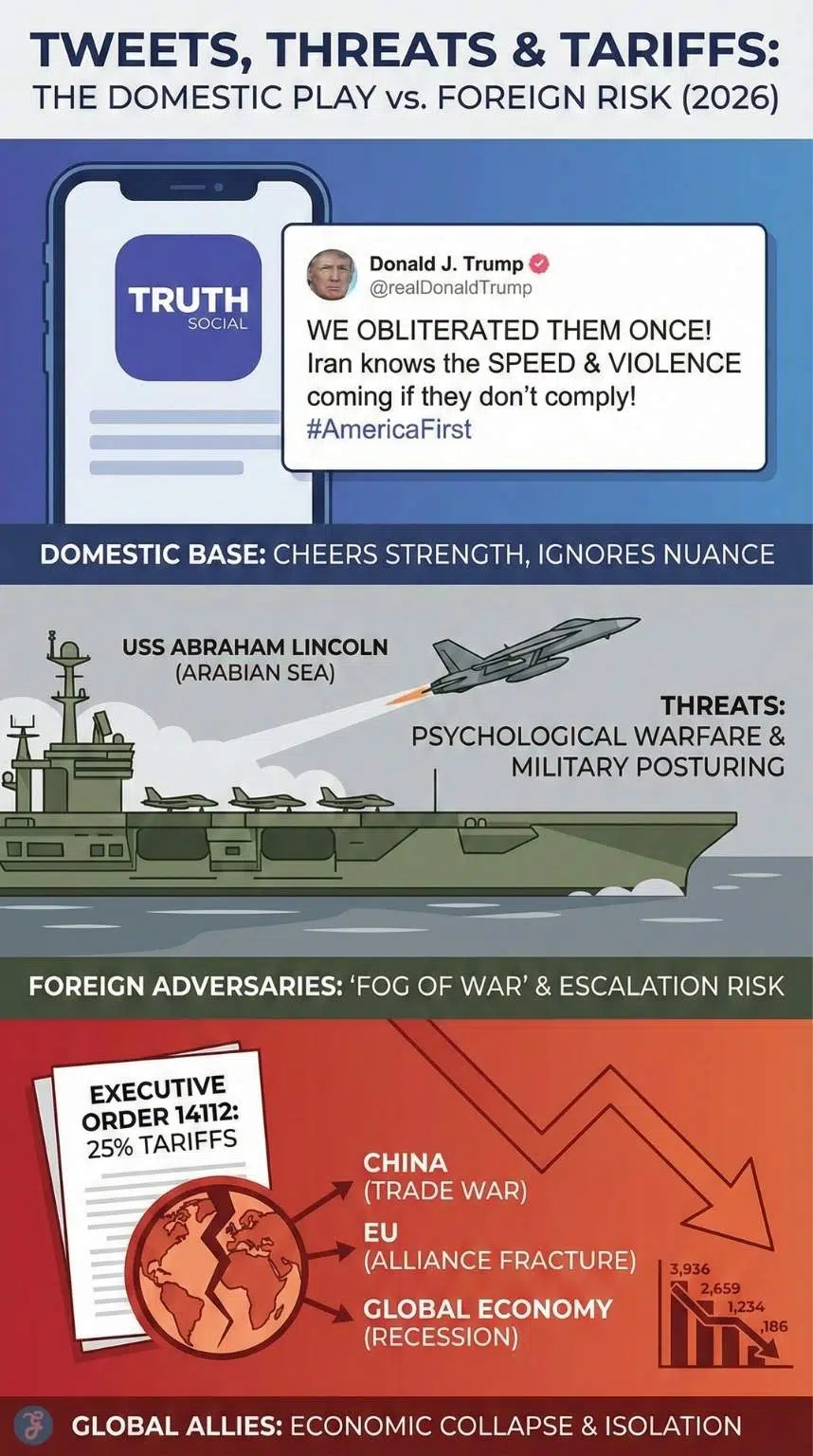
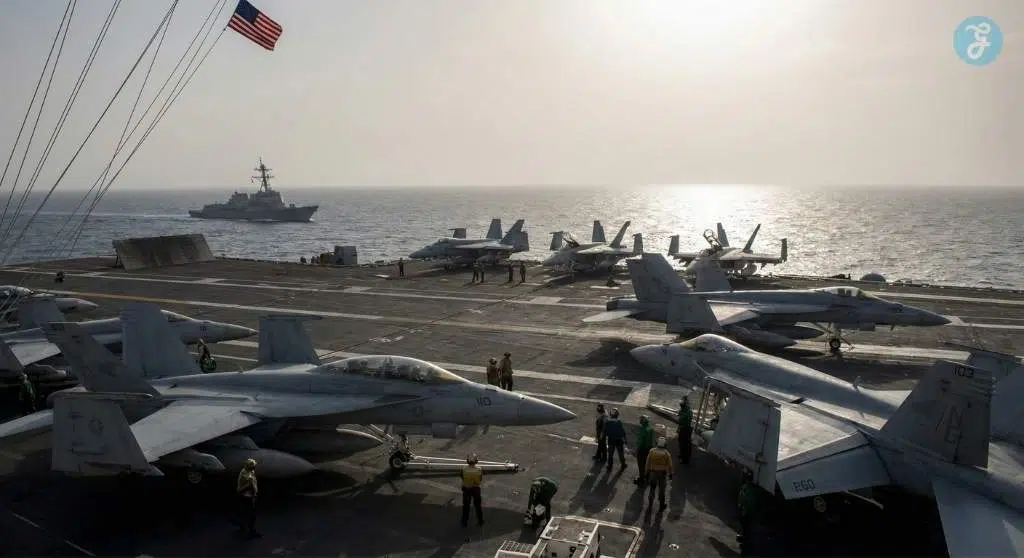
It is a policy that plays beautifully to the domestic gallery, projecting strength and “America First” dominance without risking American lives. But as the USS Abraham Lincoln carrier strike group patrols the Arabian Sea and European capitals scramble to respond, the risks of a foreign policy disaster are mounting. We are witnessing a high-stakes game of chicken where the domestic applause is loud, but the coming crash could be silent, sudden, and catastrophic. By shifting the battlefield from the Strait of Hormuz to the global stock markets, the administration has raised the stakes for everyone, allies included.
The Digital Pulpit: “Tweets” as Policy
To understand the mechanics of this new Trump Iran Tariff Strategy 2026, one must look past the official State Department briefings and turn to the President’s preferred pulpit: Truth Social. Throughout January 2026, the administration’s policy has been broadcast not through diplomatic cables, but via a series of late-night posts that oscillate between invitations for dialogue and promises of “obliteration.”
On January 24, following renewed protests in Isfahan, the President posted that the U.S. military was ready to act with “speed and violence” if the Iranian regime cracked down on demonstrators. “They know what we did last June,” he wrote, referring to the 2025 strikes. “We obliterated them once; we can do it again. But I prefer Peace!” This shift from traditional diplomacy to digital edicts allows the President to bypass the bureaucracy, speaking directly to both his base and the Iranian leadership. It creates a dynamic where U.S. foreign policy is seemingly decided in real-time, often catching even his own Cabinet off guard.
The “Madman Theory” 2.0: The Risks of Rhetoric
This rhetorical volatility is not accidental; it is a calculated feature of the “Madman Theory” 2.0. By keeping adversaries and allies off balance, the administration hopes to create a “fog of war” where the only certainty is American unpredictability. Analysts call this “governing by psychological operation.” The goal is to induce paralysis in Tehran. If Supreme Leader Khamenei believes the U.S. President is irrational enough to bomb nuclear sites one day and offer a summit the next, he may be too terrified to escalate.
However, there is a dangerous downside to this digital diplomacy. The disconnect between the President’s online threats and the Pentagon’s operational reality creates a vacuum of credibility. When the President claims Iran’s capabilities were “obliterated” in 2025, a claim contradicted by the IAEA’s January 2026 report showing enrichment at Fordow has resumed, he risks believing his own propaganda. As Chatham House noted in a recent analysis, “The President’s strategy is less about engineering change in Iran and more about forcing the world to bend the knee to American economic power.” When the tweets stop being seen as strategy and start being seen as noise, the deterrence value collapses, leaving the administration with fewer options when a real crisis emerges.
The “Threats”: The Shadow of the 12-Day War
To fully grasp the stakes of the current tariff escalation, we must revisit the “12-Day War” of June 2025. It was sold as the decisive blow to Iran’s nuclear ambitions, a joint U.S.-Israeli air campaign targeting the centrifuge halls of Natanz and the command centers of the IRGC.
The Balance Sheet of the June 2025 Conflict
| Objective | Outcome | Strategic Impact |
| Degrade Nuclear Program | Partial Success | Enrichment slowed by est. 18 months, but the knowledge base remains intact. |
| Deter Proxy Groups | Failure | Hezbollah and Houthi forces dispersed but retained 70% of their missile stockpiles. |
| Regime Change | Failure | External attack rallied nationalist sentiment; the regime tightened internal control. |
| Global Oil Stability | Failure | Oil prices spiked to $115/barrel; insurance premiums for Gulf transit tripled. |
The war proved that while American airpower is unmatched, it is not a magic wand. The strikes set the nuclear program back, but they did not end it. More importantly, they left the Iranian regime wounded but alive, and arguably more dangerous. Intelligence reports from early 2026 suggest that Tehran, feeling cornered, has accelerated its weaponization research, calculating that only a functional nuclear deterrent can prevent a second, more lethal war.
This is the context for the current military posture. The USS Abraham Lincoln is not merely floating in the Gulf for show; it is the steel behind the tariff threat. But military planners worry about the “Cornered Rat” scenario. If the new tariffs succeed in cutting off Iran’s last economic lifelines, principally oil sales to China, the regime may decide it has nothing left to lose. In such a scenario, the threat of “speed and violence” might not deter an adversary who views conflict as inevitable.
The “Tariffs”: Weaponizing the Dollar
If the “tweets” are the psychological warfare and the “threats” are the military backdrop, the tariffs are the primary weapon. The February 6 Executive Order is a profound evolution in sanctions warfare. Traditional sanctions (primary sanctions) stop U.S. companies from trading with Iran. Secondary sanctions target foreign banks. But these tertiary tariffs target entire national economies.
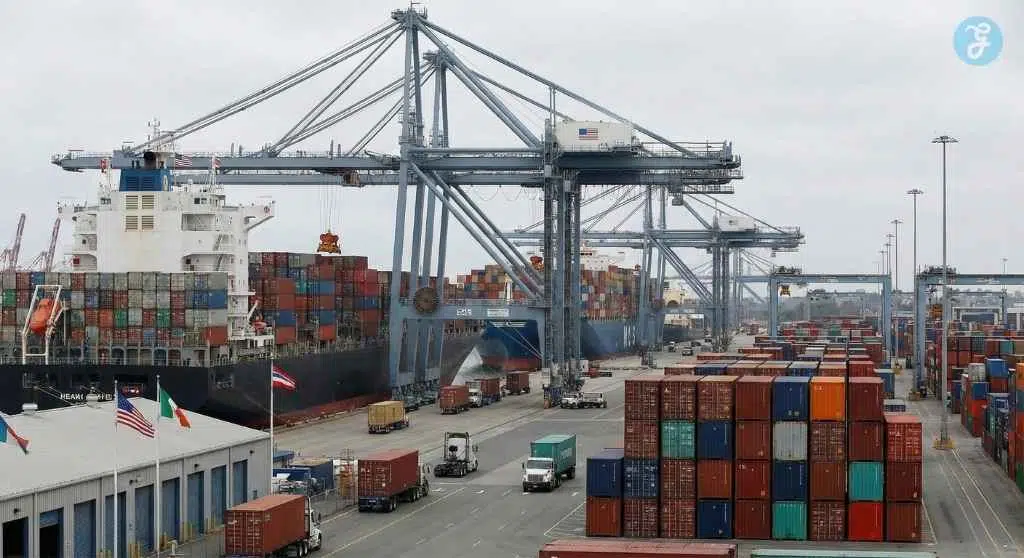
The mechanism is brutally simple: The 25% Access Fee.
The administration is effectively telling the world that access to the $29 trillion U.S. economy is a privilege, not a right. If a country chooses to buy oil from Iran, it must pay a 25% premium on everything it sells to the United States.
The Primary Targets:
- China: As the largest purchaser of Iranian oil (approx. 1.2 million barrels per day in late 2025), Beijing is the main target. A 25% tariff on Chinese goods would effectively reignite the trade war of the first term, but with higher stakes.
- Turkey: A NATO ally that relies on Iranian natural gas. The “Daily Sabah” has already published editorials calling the EO a “stab in the back.”
- The European Union: While the E3 (France, Germany, UK) have minimal oil trade with Iran, they maintain “humanitarian” financial channels (INSTEX successors) that could technically fall under the “indirect support” clause of the EO.
The economic logic is aggressive. The administration is betting that the pain of losing U.S. market access will far outweigh the benefits of cheap Iranian oil. As the IMF warned in its January 2026 outlook, this “weaponization of trade rules” risks fragmenting the global economy into rival blocs. It forces neutral nations to pick a side, destroying the illusion of free trade.
Global Shockwaves: The World Blinks
The reaction to Executive Order 14112 has been swift and furious, revealing just how isolated the United States has become on this issue.
- Brussels: The European Union, having just extended a tariff suspension on U.S. goods in early February, was blindsided. Trade Commissioner Valdis Dombrovskis called the move “economic vandalism,” warning that the EU is preparing a “comprehensive retaliation package” targeting U.S. bourbon, motorcycles, and tech services if the 25% levy is enforced.
- Beijing: The Chinese Foreign Ministry’s response on February 14 was deceptively calm. Spokeswoman Mao Ning stated China would “resolutely protect its legitimate rights,” but intelligence suggests a sharper edge: Beijing is reportedly instructing state-owned refineries to ignore the U.S. order, effectively daring President Trump to enforce the penalty.
- The Energy Markets: The mere signing of the order spiked Brent Crude futures to $98/barrel. Energy traders are pricing in a disruption not just of Iranian oil, but of global shipping lanes if Tehran retaliates by mining the Strait of Hormuz.
Playing to the “Domestic Gallery”
Why take such a radical step? The answer lies in domestic American politics. For the President’s base, the “Tweets, Threats, and Tariffs” strategy is a winner.
The “Freeloader” Narrative
President Trump has long argued that foreign nations are “ripping us off.” By framing the Iran issue as a trade dispute, he taps into deep-seated economic populism. At a rally in Pennsylvania on February 10, he declared, “Why should we protect the shipping lanes for China to buy oil from our enemies? If they want to fund terror, they can pay a 25% tax to the American people!” This line was met with thunderous applause. It reframes a complex geopolitical crisis as a simple transaction: We are making them pay.
Strength Without Coffins
The “12-Day War” was popular initially, but as gas prices rose and images of damaged tankers flooded the news, war-weariness set in. Tariffs offer the sensation of warfare, crushing the enemy, asserting dominance, without the visual of flag-draped coffins returning to Dover Air Force Base. It allows the President to look like a “Strongman” who can bankrupt an enemy with a signature, fulfilling his promise to keep America out of “endless wars” while still destroying its enemies.
The Distraction
Politically, the timing is impeccable. The administration has been dogged by the “Greenland Purchase” diplomatic spat with Denmark and a contentious tariff fight with Canada that led to a House vote in early February. By escalating the Iran crisis, the White House successfully pivots the news cycle. The Iran tariffs rally the party around the flag, drowning out the noise of other diplomatic blunders.
The Foreign Disaster: Three Points of Failure
While the strategy plays well in Pennsylvania, it is sowing the seeds of disaster abroad. There are three critical risks that could turn this “victory” into a catastrophe.
Risk A: The Transatlantic Fracture
The European Union is arguably more threatened by these tariffs than Iran is. Europe has spent years trying to salvage the remnants of nuclear diplomacy to prevent a war on its doorstep. By threatening 25% tariffs on European goods if they maintain even humanitarian trade with Tehran, Trump risks a trade war with his own allies.
This comes at a moment when Western unity is essential to counter Russian aggression in Eastern Europe. If Brussels retaliates with counter-tariffs, the Transatlantic alliance could fracture, leaving the U.S. isolated and Europe drifting toward strategic autonomy, or worse, neutrality.
Risk B: The China Trade War
The assumption that China will simply fold is dangerous. Beijing views Iranian oil as a strategic asset, essential for its energy security in the event of a blockade. If the U.S. imposes 25% tariffs on Chinese electronics and manufacturing over the Iran issue, China will likely retaliate, not by stopping oil purchases, but by dumping U.S. treasuries or restricting rare earth mineral exports.
J.P. Morgan’s January 2026 note on “market volatility” warned that a renewed U.S.-China trade war could shave 1.5% off global GDP. The administration might be willing to pay that price to squeeze Iran, but is the American consumer?
Risk C: The Nuclear Breakout
The ultimate irony of the “Maximum Pressure” strategy is that it removes the adversary’s incentive to restrain itself. If Iran is facing “obliteration” by military threats and “starvation” by economic siege, what do they have to lose?
Intelligence analysts fear that the Supreme Leader may decide that the only way to guarantee regime survival against a President who rules by tariff and tweet is to possess a nuclear weapon. If Iran sprints for the bomb, the U.S. will be faced with the binary choice it has tried to avoid for decades: accept a nuclear-armed Iran, or launch a full-scale invasion that makes the “12-Day War” look like a skirmish.
The 30-Day Outlook: A Timeline of Escalation
If the administration does not walk back the tariff threat, the next month could reshape the geopolitical map.
- Days 1-10: U.S. Customs and Border Protection begins issuing tariff notices to European and Asian importers. Market volatility increases; the S&P 500 likely dips 5-8%.
- Days 11-20: Iran, feeling the squeeze, may conduct a “deniable” cyberattack on U.S. financial infrastructure or seize a commercial tanker in the Gulf.
- Days 21-30: The “Breakout.” Intelligence estimates suggest Iran could expel all IAEA inspectors and announce a withdrawal from the Nuclear Non-Proliferation Treaty (NPT), triggering the very war the tariffs were supposedly designed to prevent.
Final Words: The Trap of Maximum Pressure
The “Tweets, Threats and Tariffs” doctrine is a masterclass in tactical disruption, but a failure in strategic planning. It leverages the immense power of the United States, its military, its economy, and its media dominance to corner a mid-sized regional power.
Domestically, it is a triumph. It satisfies the urge for action, validates the “America First” worldview, and creates a spectacle of strength. But foreign policy is not a reality TV show; the ratings don’t matter if the studio burns down. We stand on a precipice. The administration has lit a fuse on global trade and cornered a desperate adversary, all while alienating the allies needed to manage the fallout.
The President may believe he is playing a savvy hand of poker, bluffing the world into submission. But he is playing with live ammunition, and the table he is pounding on is set to collapse. Congress must reclaim its oversight on war powers and trade authorities before the “Art of the Deal” becomes the prelude to a war the American people and the world cannot afford.