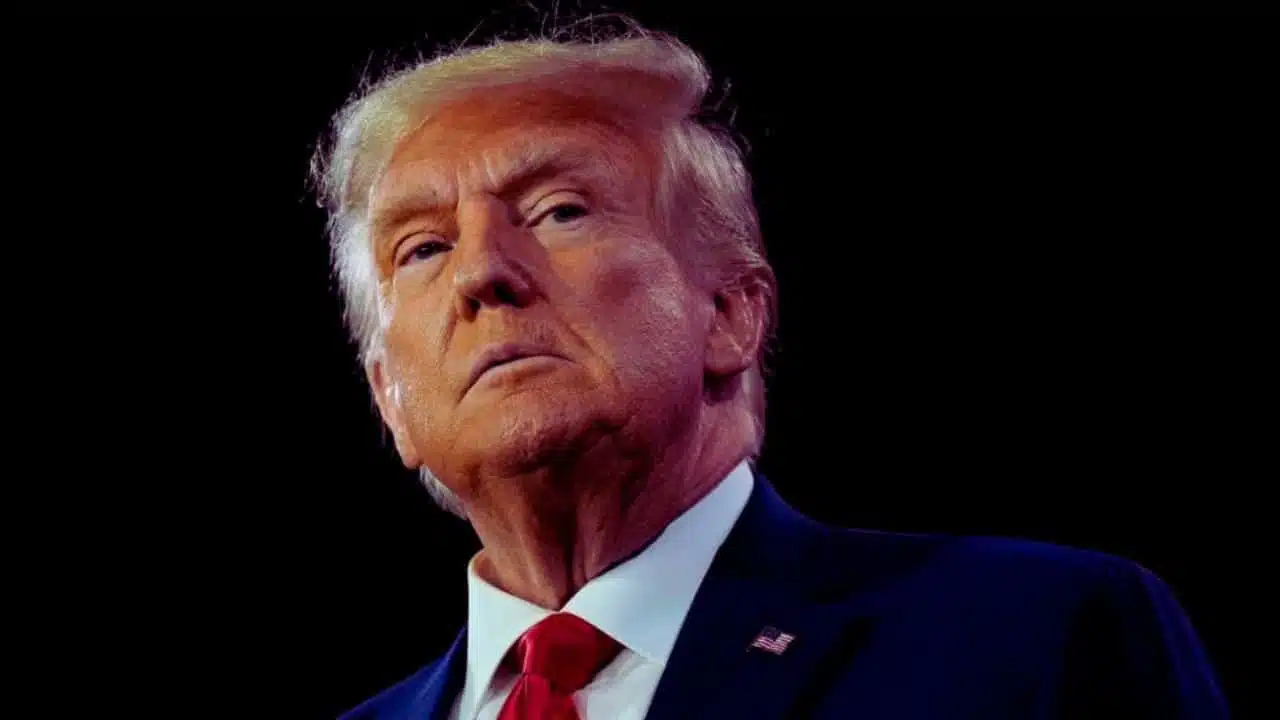
In a surprising development, former United States President Donald Trump announced that Iran and Israel have agreed to a complete and total ceasefire. This declaration follows nearly two weeks of escalating violence, including deadly airstrikes, missile attacks, and retaliatory strikes across the region. Trump described the conflict as the “12-Day War” and credited both nations for their resilience and willingness to step back from the brink of a wider Middle Eastern war.
Ceasefire Announcement Amid Escalation
Trump’s statement came shortly after Iran launched a missile attack targeting the Al Udeid Air Base in Qatar, a strategic site that houses U.S. forces. The attack appeared to be a response to U.S. airstrikes days earlier on Iranian nuclear facilities.
Despite the announcement, no official confirmation has been issued by either the Iranian or Israeli governments. Trump stated that Iran had agreed to stop its missile launches first, and that Israeli forces would halt their operations a few hours later. However, reports from Tehran indicated that air defense systems were still active and intercepting incoming threats, suggesting that the ceasefire had yet to take effect on the ground.
12 Days of Conflict: A Timeline of Events
The crisis began on June 13, when Israel launched a series of large-scale airstrikes on Iran’s nuclear and missile facilities. The Israeli government said the attacks were preemptive, targeting sites they claimed posed an imminent threat to national and regional security. The strikes reportedly killed multiple high-ranking Iranian commanders and destroyed key parts of Iran’s nuclear infrastructure.
In response, Iran launched hundreds of ballistic and cruise missiles targeting Israeli cities and military installations. These retaliatory attacks caused widespread destruction and heightened fears of a broader regional war. Several Israeli military bases and infrastructure were damaged, and casualties were reported on both sides.
The situation further escalated when the United States, under Trump’s leadership, authorized precision strikes on three of Iran’s most significant nuclear sites: Fordow, Natanz, and Isfahan. These facilities have long been central to Iran’s controversial uranium enrichment program. While the U.S. claimed the strikes were successful, Iranian officials maintained that their nuclear program remains intact and that no radioactive leaks occurred.
Iran retaliated again, this time directing missile fire at U.S. military sites in the Middle East, including the heavily fortified Al Udeid Air Base in Qatar. This marked one of the most direct confrontations between Iran and the U.S. in years. While U.S. forces reportedly intercepted most of the missiles, one managed to hit inside the base, though no casualties were reported.
Conflicting Signals and Ongoing Military Activity
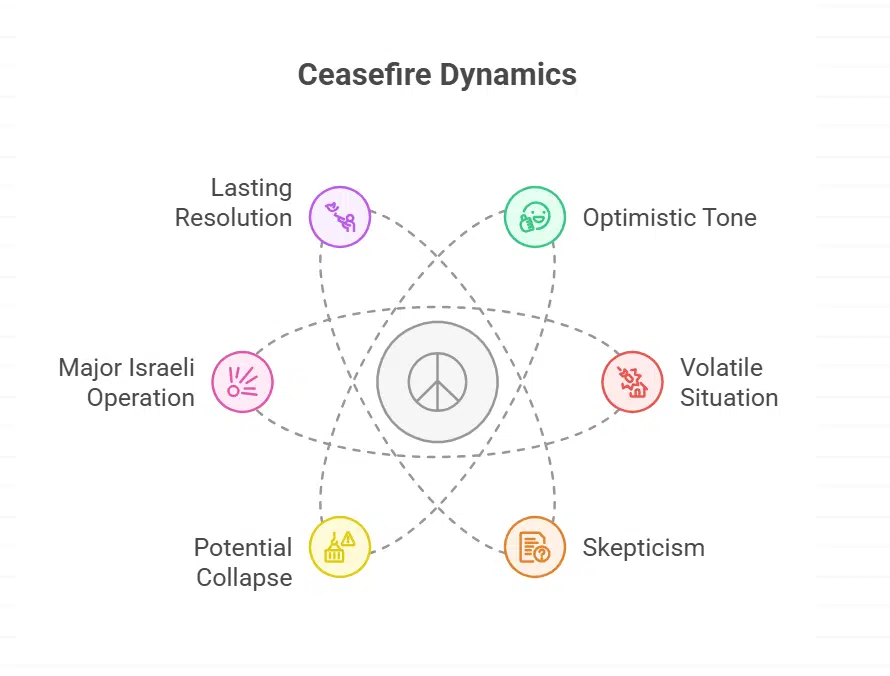
Despite Trump’s optimistic tone, the situation on the ground remains volatile. Explosions were still being heard in Tehran shortly after the ceasefire announcement, with the Iranian military continuing to activate its missile defense systems. This suggests that either the ceasefire had not been coordinated effectively or that some parties involved had not yet fully committed to the agreement.
Analysts monitoring the situation remain cautious. Some experts have expressed skepticism over Trump’s announcement, pointing out a lack of formal documentation or third-party verification. Others worry that the ceasefire could collapse if either side resumes military operations, especially if provoked by further attacks or political pressure.
One analyst warned that any major Israeli operation—such as a potential assassination attempt on Iran’s Supreme Leader, Ayatollah Ali Khamenei—could completely derail the ceasefire effort. He emphasized that while a temporary pause in hostilities might occur, a lasting resolution would require extensive negotiations, diplomatic oversight, and trust-building between the parties.
Geopolitical Stakes and Nuclear Concerns
A central issue behind the conflict is the status of Iran’s nuclear program. The U.S. and Israel have long accused Tehran of secretly pursuing nuclear weapons, despite Iran’s repeated denials. While Israel is widely believed to possess an undeclared nuclear arsenal, Iran has consistently maintained that its nuclear ambitions are for peaceful energy purposes.
Following the U.S. strikes, Iran’s ability to resume its nuclear enrichment activities remains uncertain. Although damage assessments are ongoing, Iranian officials have indicated that the country retains enough technical knowledge and enriched uranium stockpiles to restart its program within two to three years. Analysts warn that without international inspections, Iran could potentially produce a nuclear weapon without detection.
This possibility raises serious security concerns for Israel, neighboring Arab states, and the broader international community. Some fear that unless a comprehensive agreement is reached to limit Iran’s nuclear activities, another cycle of escalation could erupt in the near future.
International Reaction and Regional Impact
The broader Middle East and international actors have responded with a mixture of alarm and calls for restraint. Qatar, which hosts the Al Udeid base that came under Iranian fire, condemned the missile attack as a violation of its sovereignty and has demanded accountability. Other Gulf states, including Saudi Arabia, the UAE, and Bahrain, have urged all sides to prioritize de-escalation and return to diplomacy.
The European Union, the United Nations, and global powers such as China and Russia have also expressed concern, emphasizing the need to avoid a broader conflict that could destabilize global energy markets and disrupt international trade.
While Trump’s announcement has momentarily shifted the narrative from confrontation to diplomacy, much remains uncertain. There is no clear roadmap for peace, and the mechanisms for enforcing the ceasefire—if it indeed has been agreed upon—are still unclear.
What’s Next?
If the ceasefire holds, it could create an opportunity for renewed negotiations around Iran’s nuclear program and regional security arrangements. However, without formal commitments and international monitoring, the ceasefire may be fragile and temporary.
For now, the region remains on high alert. While diplomatic statements are being exchanged, the reality on the ground shows continued military activity, reflecting the deep mistrust and unresolved tensions that still define the Iran-Israel-U.S. triangle.
The coming hours and days will be critical in determining whether this potential ceasefire marks the beginning of de-escalation or is merely a pause before a new round of conflict.