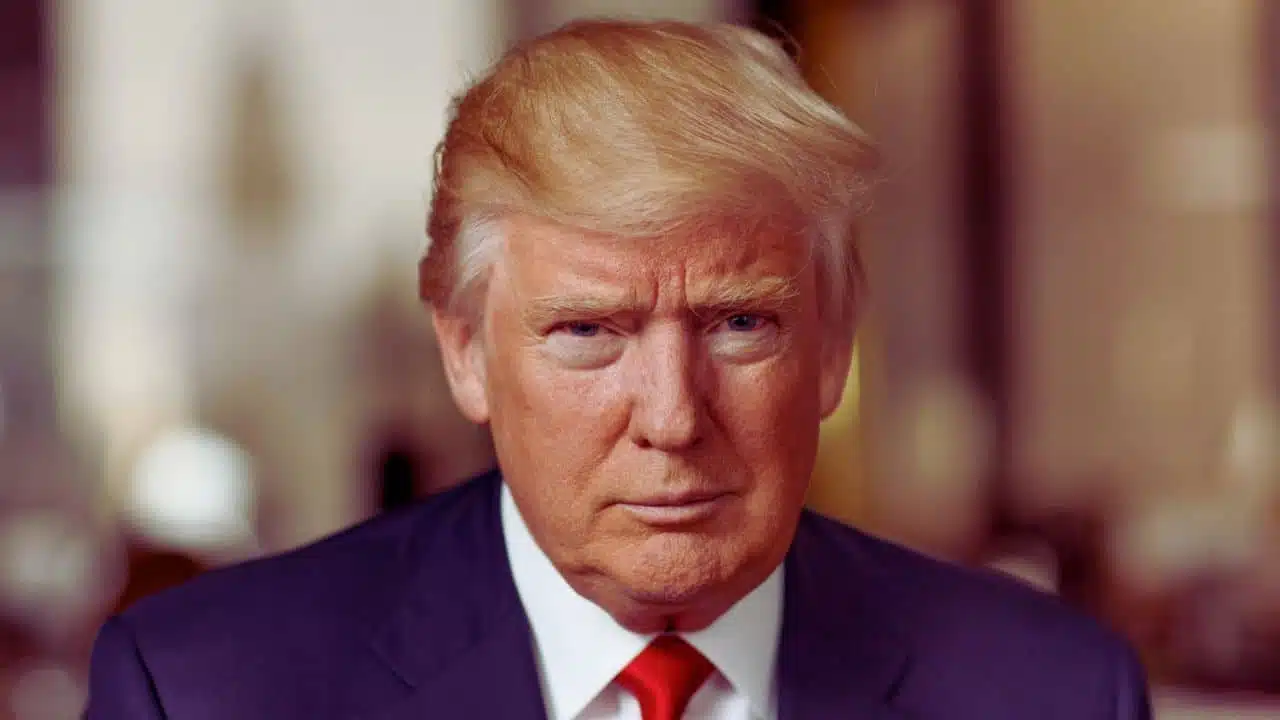
U.S. President Donald Trump unveiled a comprehensive new initiative titled the AI Action Plan, marking a strategic effort to position the United States as the global leader in artificial intelligence development. The plan was introduced during a high-profile event in Washington D.C., at the “Winning the AI Race” summit, organized by the All-In Podcast and the Hill and Valley Forum.
Trump’s address to tech leaders and policymakers outlined his administration’s vision for American dominance in the fast-evolving AI sector. He emphasized the need for deregulation, unified federal standards, and aggressive infrastructure development to allow the U.S. to outpace international competitors, especially China.
Copyright Enforcement Viewed as Barrier to Innovation
A key theme of Trump’s remarks was his criticism of current copyright laws and their application in the AI space. While the official 28-page AI Action Plan does not contain a section dedicated to copyright, Trump used the summit to raise concerns that strict enforcement of intellectual property rights could significantly hinder the growth and competitiveness of U.S.-based AI companies.
He argued that expecting AI developers and researchers to pay for access to every piece of content—such as books, academic journals, articles, and datasets—would create an unsustainable burden. According to Trump, such restrictions would slow down innovation and create an uneven playing field, especially when comparing American companies with their Chinese counterparts, who operate under far more permissive data use environments.
Although the plan avoids taking a formal stance on copyright disputes, White House officials later clarified that these matters should remain within the purview of the judicial system. This approach allows the administration to distance itself from contentious copyright reform debates while supporting industry calls for more flexible data access rules.
Executive Orders Aim to Speed Up AI Development and Block Ideological Bias
In addition to releasing the action plan, Trump signed three executive orders intended to immediately advance the goals of the initiative:
1. Fast-Tracking AI Infrastructure Projects
The first executive order focuses on streamlining the approval and permitting process for large-scale AI infrastructure developments across the country. It mandates federal agencies to expedite environmental reviews, land use assessments, and construction permits. The goal is to eliminate bureaucratic delays that could obstruct the construction of critical facilities such as AI data centers, supercomputing labs, and advanced semiconductor plants.
This move is aligned with the broader belief within the tech sector that infrastructure expansion is vital to maintaining the U.S. edge in AI research and deployment. With countries like China investing heavily in national AI infrastructure, the U.S. strategy appears focused on catching up quickly and removing red tape that slows innovation.
2. Expanding American AI Exports
The second executive order lifts barriers to the international export of U.S.-made AI hardware and software. The order encourages trade partnerships and accelerates licensing procedures to enable American firms to ship high-performance computing tools, AI chips, machine learning models, and software platforms to global markets more efficiently.
Export expansion is seen as critical for both economic and geopolitical reasons. By growing its influence in global AI markets, the U.S. not only boosts its economy but also strengthens diplomatic and strategic ties with partner nations that depend on American AI technology.
3. Restricting Use of Politically Biased AI in Government
The third executive order introduces strict restrictions on the procurement and use of AI systems by federal agencies. Specifically, it bans the use of any AI tools that are believed to contain ideological or partisan bias. The order requires agencies to certify that AI solutions used in government functions—such as public service automation, data analysis, and policy implementation—adhere to strict neutrality and transparency standards.
This move caters to growing conservative concerns about bias in algorithms, particularly in areas like content moderation, predictive policing, and government decision-making systems. It also reflects broader political tensions over how AI may influence public opinion and policy enforcement.
Leading Tech CEOs Show Strong Support for the Plan
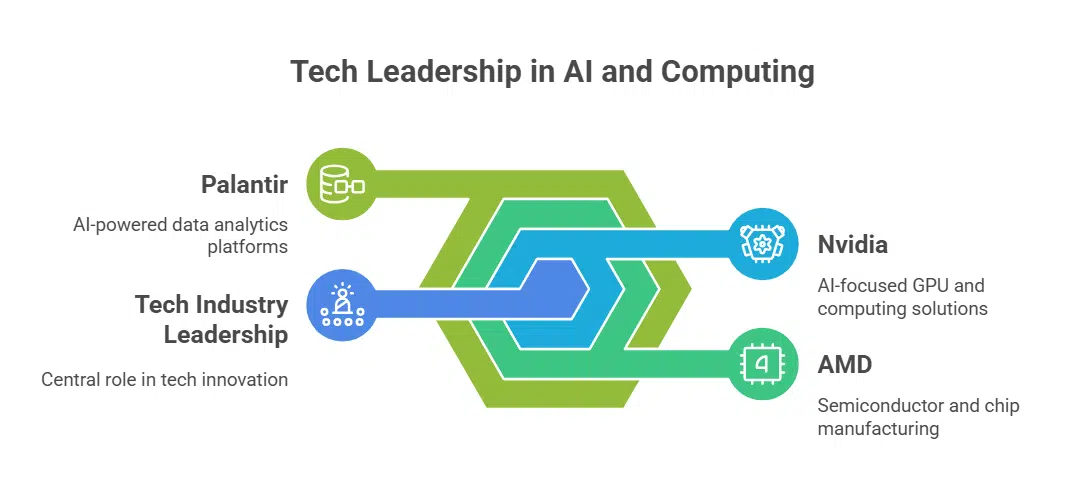
The summit was attended by a number of influential figures from the technology and AI industries, highlighting the strong interest the private sector has in shaping federal AI policy.
Among the most prominent attendees were:
-
Jensen Huang, CEO of Nvidia, a global leader in AI-focused graphics processing units (GPUs) and high-performance computing
-
Lisa Su, CEO of Advanced Micro Devices (AMD), a major semiconductor and chip manufacturer
-
Shyam Sankar, Chief Technology Officer of Palantir Technologies, known for its AI-powered data analytics platforms used by both governments and private firms
Their participation underscored the alignment between the government’s AI goals and the priorities of American tech giants. These companies are at the forefront of AI development and stand to benefit significantly from policies that favor deregulation, infrastructure support, and increased international trade opportunities.
Push for Federal Control Over AI Regulations
One of the most forceful components of Trump’s speech was his condemnation of state-level AI regulations, which he described as fragmented and detrimental to national progress. He argued that having multiple states impose their own unique AI laws creates confusion and compliance challenges for companies operating across the country.
To address this issue, the AI Action Plan proposes the establishment of a single, nationwide federal standard that would override all state-level regulations related to artificial intelligence. This federal supremacy approach aims to simplify the legal environment for AI development and eliminate regulatory conflicts that slow innovation.
In addition, the plan contains directives for the Office of Management and Budget (OMB) to restrict federal AI-related funding to states that enact laws seen as obstructive or counterproductive. This clause is designed to discourage states from imposing rules that diverge from national objectives, by tying financial incentives to policy alignment.
The Federal Communications Commission (FCC) is also instructed to assess whether any state-level AI legislation interferes with its authority under the Communications Act of 1934, particularly regarding the regulation of AI systems used in telecommunications and broadcasting.
Concerns Raised by Civil Liberties Groups and Policy Experts
Despite strong support from industry leaders, the AI Action Plan has drawn criticism from civil rights organizations, consumer advocacy groups, and technology ethics experts. Many are concerned that the administration’s emphasis on deregulation and infrastructure acceleration may come at the expense of public safety, privacy, and accountability.
Organizations such as the Electronic Frontier Foundation (EFF) and the Center for Democracy & Technology (CDT) have expressed alarm over the potential consequences of reducing oversight and fast-tracking infrastructure without thorough impact assessments. They argue that vulnerable communities could be disproportionately affected by poorly regulated AI tools, especially in areas such as facial recognition, predictive policing, surveillance, and automated decision-making.
Critics are also wary of the executive order banning “partisan bias” in AI used by the government. They point out that defining and proving bias is inherently complex and could be used as a political tool to suppress certain technologies or academic work that are seen as ideologically opposed to the administration’s views.
Implications for the Future of U.S. AI Policy
The unveiling of the AI Action Plan signals a clear policy direction focused on removing barriers for AI development while centralizing regulatory authority under federal agencies. The approach mirrors broader trends in global AI strategy, where governments increasingly treat artificial intelligence as a matter of national security and economic competitiveness.
Key goals of the plan include:
-
Accelerating physical infrastructure for AI research and production
-
Promoting export of U.S. AI products to gain international market share
-
Ensuring government AI tools are ideologically neutral
-
Streamlining and unifying regulation to reduce compliance friction
-
Pressuring states to conform to a federal regulatory model
By aligning closely with industry demands and focusing on international competition—particularly with China—the plan reinforces the view that AI is now a central battleground in global technological leadership. However, without detailed provisions for ethical oversight, data privacy, or public engagement, the plan leaves open significant areas of concern that will likely spark continued debate in the coming months.