On Monday, July 7, President Donald Trump escalated his trade offensive by sending formal letters to 14 nations, warning them of incoming tariff increases unless reciprocal trade deals are made. While the new tariffs were originally set to take effect on July 9, Trump also signed an executive action delaying their implementation to August 1, giving countries a narrow window to negotiate and possibly avert the punitive measures.
These new levies, dubbed “reciprocal tariffs,” are being positioned as a response to trade imbalances and policies that the U.S. government believes disadvantage American companies. The tariff rates outlined in the letters range from 25% to as high as 40%, depending on the country.
Although China is excluded from this round of extension and will still be subjected to separate, ongoing measures, other key trade partners now face intense pressure to cooperate or suffer economic consequences.
First Round of Letters: Japan and South Korea Hit With 25% Tariffs
The first two countries to receive the letters were Japan and South Korea, both significant U.S. trade partners and sources of high-tech goods like cars, semiconductors, and electronic components. Trump informed both governments that effective August 1, their exports to the U.S. would face a 25% tariff rate unless trade terms were rebalanced to reduce the large deficits America runs with them.
Japan and South Korea were previously informed in April about potential tariffs but had been operating under a temporary suspension. The resumption and reassertion of these tariffs now places over $280 billion in bilateral trade at risk, with both countries accounting for 60% of total imports from the 14 nations named on Monday, according to the U.S. Department of Commerce.
More Countries Notified: A Wave of Tariff Threats
In addition to Japan and South Korea, 12 other countries were also served letters from the White House. These include:
-
Malaysia
-
Thailand
-
Indonesia
-
Bangladesh
-
Cambodia
-
Laos
-
Myanmar
-
Kazakhstan
-
South Africa
-
Tunisia
-
Bosnia and Herzegovina
-
Serbia
Some of these countries, like Thailand and Cambodia, were warned of tariffs as high as 36%, while Laos and Kazakhstan could see rates spike up to 40%. South Africa, a major supplier of raw materials like platinum, was told to expect a 30% tariff, sparking concerns over resource flows and commodity prices in global markets.
Each letter specified that tariff levels were calculated in relation to the U.S. trade deficit with the respective country and the extent to which non-tariff barriers allegedly obstruct American exports.
Trump’s Message: Manufacture in the U.S. or Face Higher Costs
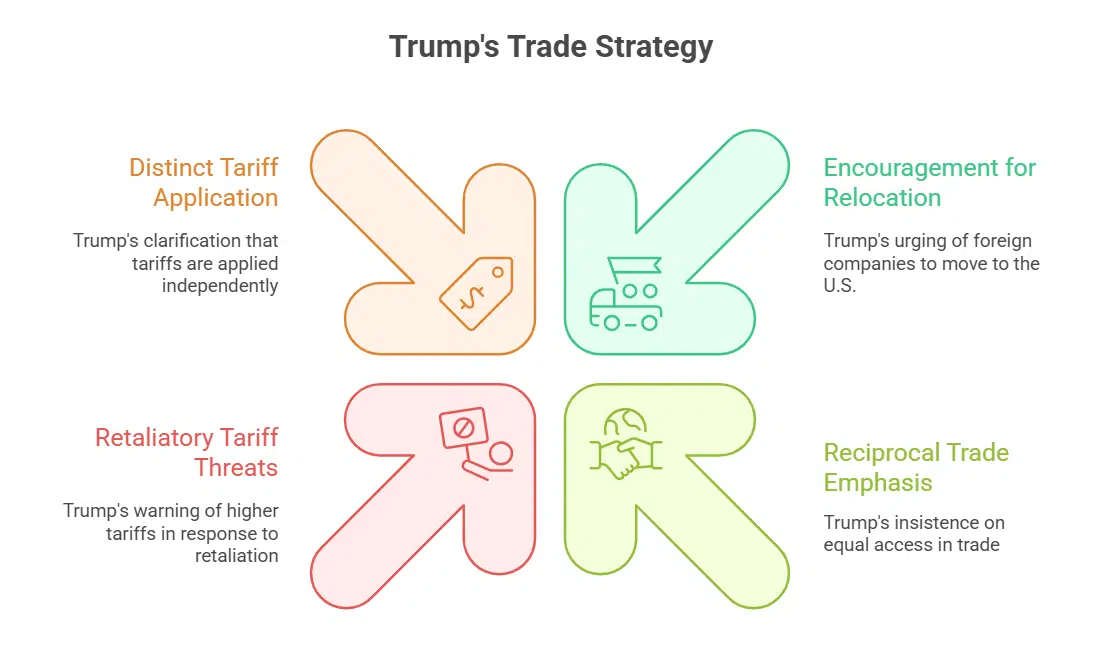
A common thread in all 14 letters was Trump’s encouragement for foreign leaders to have their companies relocate manufacturing operations to the United States to avoid these tariffs. He emphasized that reciprocal trade must mean equal access, and that American companies and workers were being unfairly disadvantaged by the current structures of international trade.
Trump made clear that any retaliatory tariffs imposed on U.S. goods by these countries would prompt even higher tariffs in response. He also stated that these tariffs are distinct from sector-specific tariffs, such as the existing 25% duty on automobiles, meaning they would be applied independently and not cumulatively.
The European Union Avoids the Latest Tariff Letter Round—for Now
Interestingly, despite repeated threats and past frictions between Washington and the European Union (EU) over trade issues, no EU member state received a letter in this latest wave. A spokesperson for the European Commission stated they had not received any official communication regarding new U.S. tariffs.
Irish Foreign Minister Simon Harris interpreted this omission as a sign that the U.S. and EU are likely working toward a separate framework to resolve trade disputes, noting the hope for a “mutually beneficial” agreement before August.
Global Reactions: Countries Scramble to Respond
Japan
Prime Minister Shigeru Ishiba convened an emergency cabinet meeting in Tokyo to address the letter. He expressed the government’s strong objection to the sudden imposition of tariffs and reiterated Japan’s intention to engage in negotiations to establish a bilateral trade deal that aligns with both nations’ interests.
South Korea
South Korea’s Ministry of Finance responded with caution, indicating that it would monitor market reactions and prepare contingency plans to counteract any potential economic fallout. While no specific actions were detailed, officials emphasized the need to maintain stability and economic cooperation with the U.S.
Thailand
Thailand’s Finance Minister Pichai Chunhavajira told reporters that while the proposed 36% tariff poses a challenge, the country is optimistic about reaching a compromise. Bangkok has already submitted a counterproposal and is actively seeking a resolution.
Malaysia
The Malaysian Trade Ministry confirmed its intent to pursue further discussions with Washington to achieve a balanced and fair agreement, noting the U.S. remains a key economic partner.
South Africa
President Cyril Ramaphosa took a firmer stance, publicly disputing the accuracy of U.S. trade data used to justify the 30% tariff. He urged domestic industries to diversify export markets and reduce reliance on any single trading partner.
Officials from Indonesia, Cambodia, Myanmar, Kazakhstan, and Bangladesh have not publicly responded as of this writing, though diplomatic and economic channels are reportedly active behind the scenes.
What’s at Stake: Economic and Political Impact
The potential consequences of these tariffs are significant. Collectively, the 14 countries named in Trump’s letters exported $465 billion worth of goods to the United States in 2024. A large portion of these exports includes:
-
Cars and Auto Parts (Japan, South Korea)
-
Semiconductors and Electronics (Malaysia, South Korea)
-
Pharmaceuticals and Machinery (Japan, Indonesia)
-
Apparel and Accessories (Bangladesh, Cambodia, Thailand)
-
Raw Materials and Minerals (South Africa, Kazakhstan)
Experts warn that the tariffs could trigger higher consumer prices in the U.S., especially for vehicles, electronics, and imported clothing. Additionally, global supply chains—already under pressure from geopolitical tensions and inflation—may face further disruptions.
Stock Market Reaction: Investors Hit the Brakes
The financial markets did not respond favorably to the announcement. Wall Street saw significant losses across all major indexes:
-
Dow Jones Industrial Average: Fell 422 points (−0.94%)
-
S&P 500: Dropped 0.79%
-
Nasdaq Composite: Declined 0.92%
Auto manufacturers with heavy operations in Japan and South Korea were especially affected. Toyota fell by 4%, Nissan by 7.16%, and Honda by 3.86% on U.S. stock exchanges. These declines reflect investor concerns about the potential for rising vehicle prices, reduced profit margins, and possible retaliatory tariffs from affected countries.
Trump’s Final Warning: Tariffs Can Rise or Fall Based on Cooperation
President Trump concluded his communications with a clear message: The proposed tariffs are not final. They may be modified upward or downward depending on how each country responds. Nations that demonstrate willingness to negotiate or comply with U.S. trade expectations may be rewarded with reduced tariff levels, while those who resist may face even tougher economic penalties.
A Critical Month Ahead
As the world watches closely, the countdown to the August 1 tariff deadline has begun. For now, diplomacy remains active, but the global trade landscape is facing another round of uncertainty. Whether Trump’s hardball tactics will yield new trade agreements or ignite broader economic tensions remains to be seen.
One thing is certain: With so much at stake—from global supply chains to consumer pricing and international diplomacy—the outcome of this standoff could significantly reshape America’s trade relationships in the months ahead.