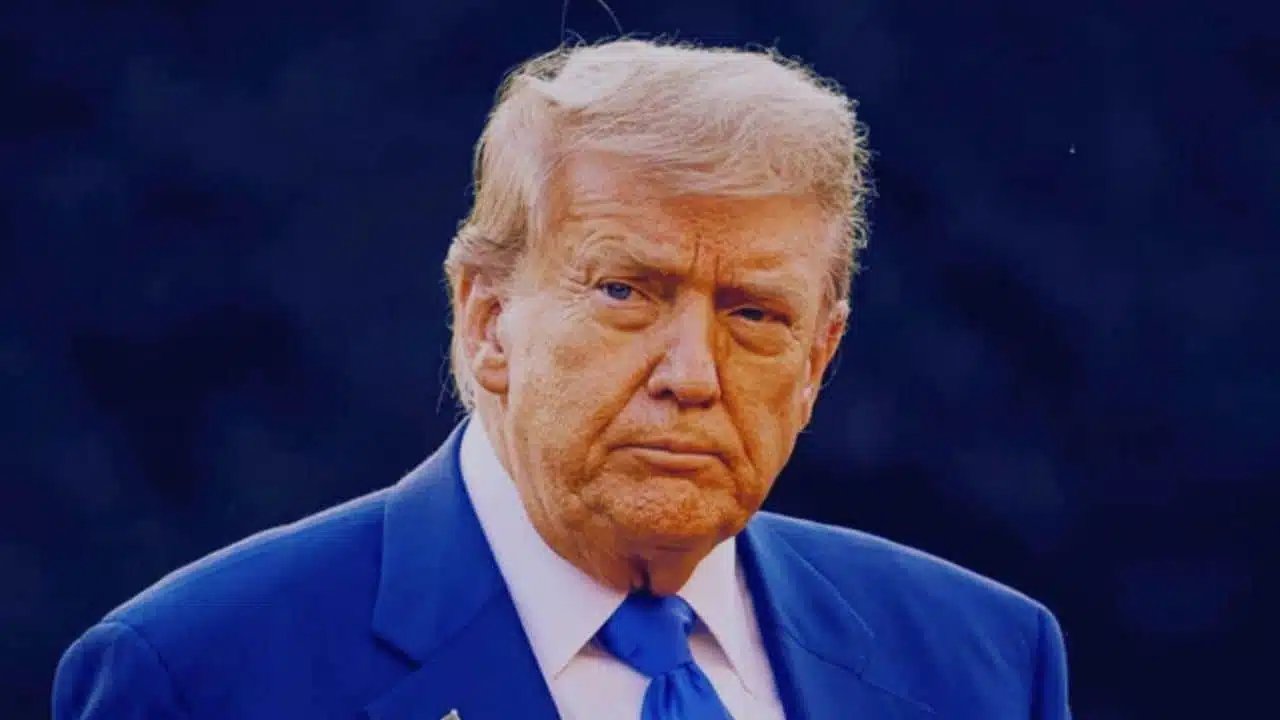
The war in Gaza continues to dominate global headlines, with relentless violence bringing unprecedented humanitarian suffering. In a high-stakes attempt to broker peace, U.S. President Donald Trump met with leaders of eight Muslim-majority countries last Wednesday in New York, on the sidelines of the United Nations General Assembly. At the meeting, Trump presented a 21-point proposal intended to end the fighting, secure the release of hostages, facilitate reconstruction, and lay out a pathway toward long-term stability in Gaza.
While initial discussions were described as constructive, many of the plan’s elements remained unclear to the public. On September 27, the Times of Israel published the full set of 21 clauses, revealing in detail the conditions the United States is pushing forward. The plan combines immediate ceasefire mechanisms with a broad vision for governance, economic renewal, and regional security.
The Structure of the 21-Point Proposal
The U.S. proposal is built around five central pillars: ending violence, returning hostages, enabling humanitarian relief, reshaping governance, and creating a foundation for eventual Palestinian statehood. The details show a mix of humanitarian commitments, political transitions, and international oversight measures designed to reassure both Palestinians and Israelis.
-
Demilitarized Gaza
Gaza would become an area free from extremism and terrorism, posing no threat to neighboring states. -
Reconstruction for Civilians
A comprehensive rebuilding effort would restore infrastructure and public services for Gaza’s residents. -
Immediate Ceasefire Condition
If both sides accept the 21 points, hostilities would halt. Israeli forces would gradually withdraw from Gaza. -
Hostage Return and Prisoner Exchanges
Within 48 hours of a formal declaration by Israel that it will honor the agreement, all living and deceased hostages would be returned. -
Release of Detainees and Return of Remains
Following the hostages’ return, Israel would free several hundred Palestinians serving life sentences. It would also hand over the bodies of Palestinians who died in custody and around 1,000 Gaza residents detained since the conflict began. -
Amnesty and Safe Passage for Fighters
Hamas fighters who commit to peaceful coexistence could receive pardons. Those unwilling to remain would be allowed safe exit to other countries. -
Mass Humanitarian Aid Access
At least 600 trucks of humanitarian aid would enter Gaza daily, along with rebuilding and debris removal equipment. -
Neutral Aid Distribution
Aid would be distributed through the United Nations, the Red Crescent, or nonaligned organizations to ensure fairness and impartiality. -
Interim Gaza Governance
A temporary government, composed of Palestinian technocrats (nonpartisan experts), would manage civil services and daily life in Gaza. An international body (U.S., Arab, European nations) would oversee this government until longer-term reform is completed. -
Economic Development Plan
Global urban planners would help design an economic blueprint to attract investment and create jobs across Gaza. -
Special Economic Zone
Gaza would host an economic zone with low tariffs and easier trade access, negotiated with participating countries. -
Freedom of Movement & Right to Return
No one would be forced to leave Gaza. Those who depart could return freely. Residents would be encouraged to stay and rebuild. -
Hamas Exclusion
Hamas must relinquish all political and military roles. Tunnel networks and military infrastructure would be dismantled. Gaza’s leadership would commit to peaceful relations with neighbors. -
Security Guarantees via Regional Partners
Arab and regional allies would help enforce compliance, ensuring factions in Gaza adhere to the agreement. -
International Force Deployment
A multinational security force (from the U.S., Arab states, and others) would be deployed immediately to enforce order, assist training of a new police force, and monitor compliance. -
Israel’s Non-Occupation Commitment
Israel would not annex or permanently occupy Gaza. Once stability is achieved, Israeli forces would retreat. -
Contingency Mechanism
If Hamas rejects or delays the agreement, its enforcement mechanisms would apply to areas outside its control. -
Non-Aggression Pledge
Israel would commit not to launch future attacks on Qatar. -
De-radicalization Strategy
A program would begin to help Gaza’s population disengage from extremist ideology, including interfaith dialogue efforts. -
Pathway to Recognizing Palestinian Statehood
Once Gaza is rehabilitated and Palestinian Authority reforms are complete, formal recognition of a Palestinian state would be considered. -
U.S. as Mediator for Israeli-Palestinian Dialogue
The United States would facilitate ongoing peace talks between Israelis and Palestinians to support coexistence.
Reactions and Challenges
Muslim Leaders’ Reactions
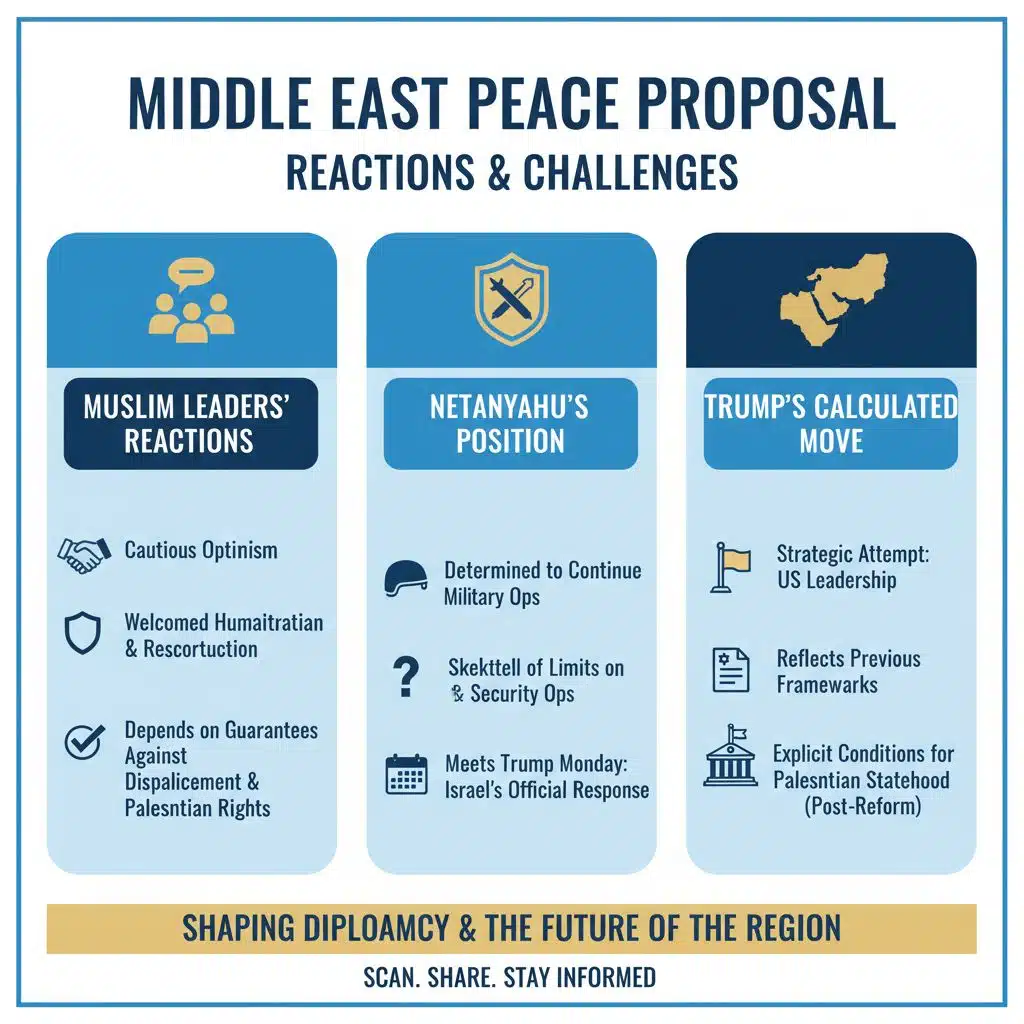
Muslim leaders who met Trump signaled cautious optimism. They welcomed the humanitarian and reconstruction commitments but highlighted that successful implementation would depend on guarantees against displacement and on meaningful recognition of Palestinian rights.
Netanyahu’s Position
Israeli Prime Minister Benjamin Netanyahu, speaking at the United Nations, reiterated his determination to continue military operations. His government remains skeptical of any arrangement that could limit Israel’s security operations against Hamas. Netanyahu is scheduled to meet Trump in Washington on Monday, where Israel’s official response to the 21-point plan will be revealed.
Trump’s Calculated Move
For Trump, the proposal is a strategic attempt to demonstrate U.S. leadership in Middle East diplomacy. It reflects elements of previous frameworks, including plans advanced by Tony Blair, but goes further by explicitly creating conditions for Palestinian statehood once governance reforms are complete.
Why the 21-Point Plan Matters
The U.S. plan is one of the most comprehensive proposals yet to address both the immediate humanitarian disaster and the long-term political question of Gaza. By linking ceasefire terms to economic development, governance reforms, and security guarantees, it seeks to create a sustainable framework rather than a temporary pause.
However, enormous challenges remain. Hamas may reject clauses demanding its exclusion from governance. Israel’s leadership appears unwilling to halt operations in the short term. Regional players will need to provide significant funding and political backing for reconstruction.
The success of this proposal depends not just on signatures but on political will, trust-building, and the capacity to enforce agreements in one of the world’s most volatile conflict zones.