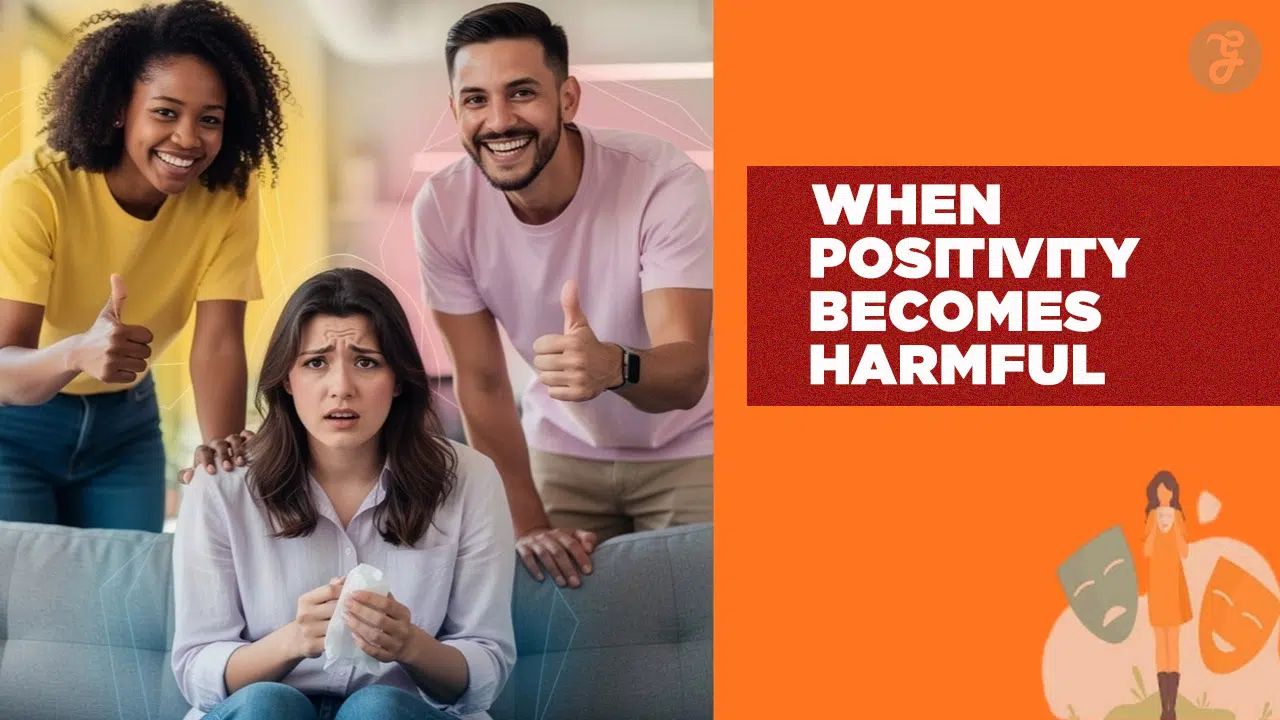
Ever hear someone say, “Good vibes only,” right when you are feeling down? It sounds cheerful at first. But for many of us, it feels more like a tight lid on a boiling pot. You might start to wonder if your emotions are “bad” or if you are doing something wrong by feeling them. Many people force smiles and hide stress just to fit in with this idea of constant happiness.
But here is the truth. Research shows that toxic positivity, or pretending to feel happy all the time, can actually hurt your mental health instead of helping it. It pushes away true feelings and makes hard times even harder.
What Is Toxic Positivity?
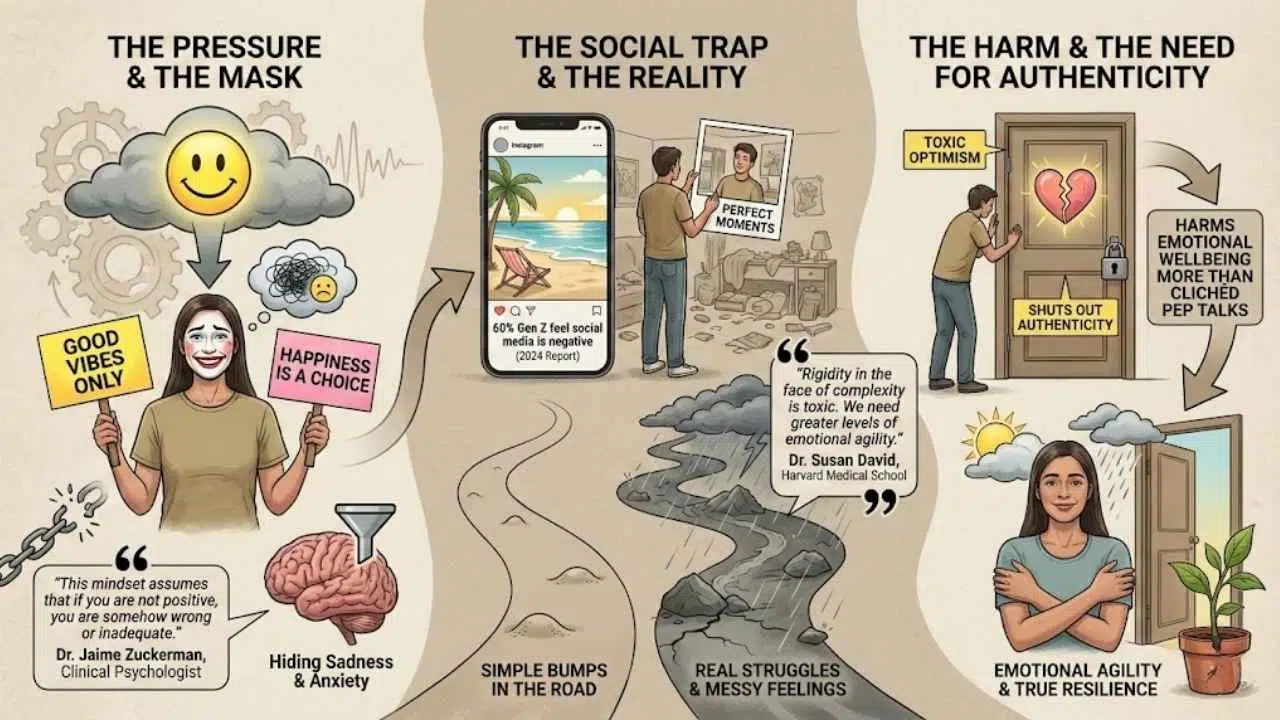
Toxic positivity is the pressure to stay upbeat no matter how dire your situation is. It is the belief that you should always look on the bright side, even if your life feels like a total mess.
People often use phrases like “good vibes only” or “happiness is a choice” as if having negative emotions is a failure. Dr. Jaime Zuckerman, a clinical psychologist, explains that this mindset assumes that if you are not positive, you are somehow wrong or inadequate.
This attitude makes things worse for anyone struggling with mental health. Instead of helping, it tells you to hide sadness, stress, or anxiety behind a fake smile. It invalidates your experience.
Expert Insight: “Rigidity in the face of complexity is toxic. We need greater levels of emotional agility for true resilience and thriving.” — Dr. Susan David, Psychologist at Harvard Medical School
Social media makes this trap even stickier. A 2024 report found that 60% of Gen Z users feel social media is more negative than positive, partly due to the pressure to post perfect, happy moments. When you cannot match those unrealistic expectations, shame sets in.
Real struggles get dismissed as simple bumps in the road. But that is not real life. Everybody has tough days and messy feelings. Toxic optimism shuts out authenticity and leaves real pain unspoken, which harms emotional wellbeing more than most clichéd pep talks ever could.
Examples of Toxic Positivity
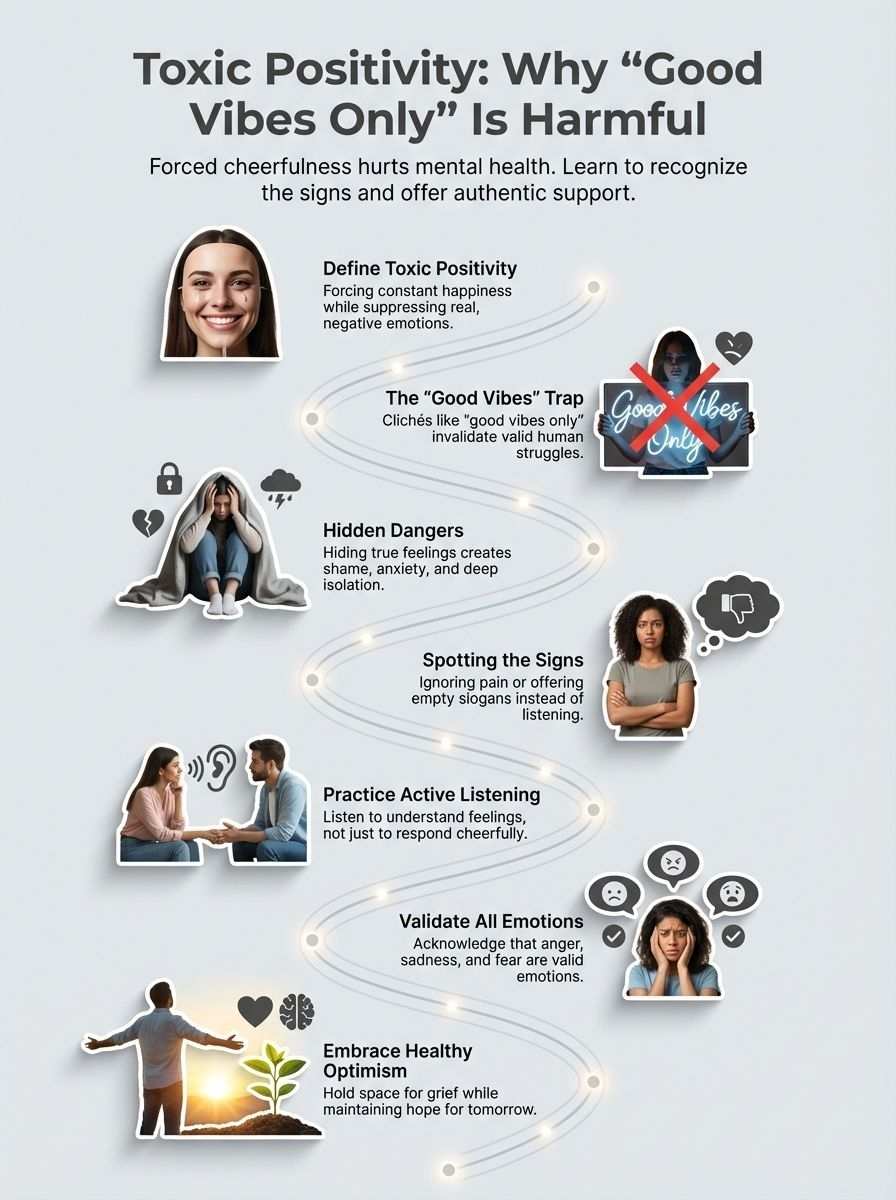
Sometimes, people push cheerfulness even when things feel hard or sad. These moments may leave you feeling unheard, like your struggles are getting swept under the rug. Let’s look at how this shows up in daily life.
The “Good Vibes Only” Trap
Phrases like “good vibes only” or “stay positive” pop up everywhere. They sound warm and sunny but often leave storm clouds behind. In recent years, experts have warned that insisting on constant positivity is a form of emotional avoidance.
It sweeps real struggles under the rug and brushes off anyone dealing with negative emotions, anxiety, or mental health disorders. Telling someone to keep their chin up may seem caring at first. But it soon turns sour for those needing true support.
Using these phrases too much makes it harder for people to share sadness, anger, or fear without feeling guilty or weak. Influencers and brands often jump on this bandwagon, spreading unrealistic expectations about perfect moods.
Instead of helping others grow stronger through tough times, this trend just pressures everyone to hide anything less than happy faces. Constant talk of “good vibes only” turns valid feelings into secrets no one wants to reveal. Shame and isolation soon follow right after the hashtag fades away.
Dismissing Negative Emotions
Brushing off sadness or worry with phrases like “just stay positive” can make someone feel invisible. It tells a person that their pain does not matter here. Only smiles are allowed.
Social media has fueled this trend since 2015, flooding feeds with toxic positivity memes and shiny images that ignore real feelings. A 2024 study highlights that while only 3% of social media users are considered “toxic,” they generate 33% of the content we see. This creates a loud, false reality.
Many folks struggling with anxiety or stress start to hide their true selves instead of getting help. People may think they are supporting others by sharing common sayings, but it often harms mental health and increases shame.
Using empty words such as “look on the bright side” shuts down honest talk about tough moments. Instead of helping, these clichés put up a wall between friends or family members who want support and those repeating unhelpful platitudes.
Forcing Positivity in Hard Times
Telling someone to “just stay positive” during a hard time feels like slapping a smiley sticker on a cracked window. Toxic positivity sweeps real pain under the rug. It makes people with stress or mental health struggles feel invisible or weak.
Recent data from 2025 suggests that emotional suppression is linked to higher rates of anxiety among teens who feel they cannot express distress online. Support means saying, “It’s okay not to be okay,” instead of forcing cheerfulness.
No one grows by pretending sadness does not exist. Real empathy sees struggle as part of life and honors each emotion. Anger, fear, and even heartbreak have value in healing. By refusing honest talks about tough feelings, toxic optimism adds insult to injury rather than helping anyone cope for real.
| Toxic Phrase to Avoid | Helpful Alternative |
| “Good vibes only!” | “All vibes are welcome here.” |
| “Everything happens for a reason.” | “It’s okay that this feels unfair right now.” |
| “Just stop being so negative.” | “It sounds like you are carrying a lot.” |
How Toxic Positivity Affects Mental Health
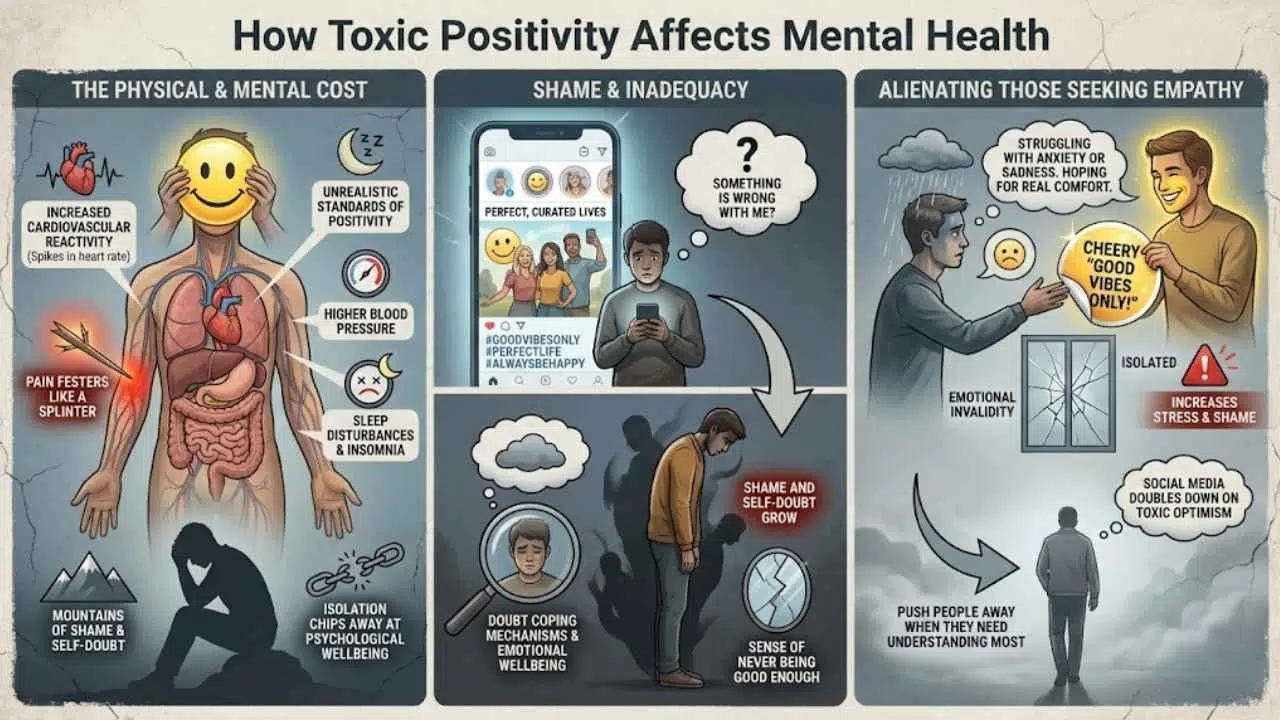
Toxic positivity can make people hide their true feelings. This leaves them feeling lonely and worse. Stick around to find out why facing all emotions matters for your health.
The Physical and Mental Cost
Bottling up negative emotions can wreak havoc on mental health. Stuffing down sadness or stress just to fit a “good vibes only” mindset rarely fixes the problem. Instead, pain festers like a splinter left under the skin.
Studies from 2024 and 2025 link chronic emotional suppression with serious physical issues. It is not just about feeling sad. It can lead to:
- Increased cardiovascular reactivity (spikes in heart rate).
- Higher blood pressure over time.
- Sleep disturbances and insomnia.
Ignoring real feelings often builds mountains of shame and self-doubt. Many people stop reaching out for help because they fear judgment or more empty cheerleading phrases like “just think positive.” This isolation chips away at psychological wellbeing over time.
Shame and Inadequacy
Toxic positivity often sends the message that only happiness is allowed. People facing stress or emotional struggles can feel pushed aside.
If someone feels sad but hears “Just stay positive,” they may start to think something is wrong with them for feeling down. This makes shame and self-doubt grow. Research shows insisting on constant cheerfulness can harm mental health by making people doubt their coping mechanisms and emotional wellbeing.
Social media adds fuel to this fire by promoting unrealistic standards of positivity every day. Folks compare their real lives to these polished posts and end up feeling even worse about themselves. Mental health experts warn this pressure leads not just to anxiety but also a sense of never being good enough.
Alienating Those Seeking Empathy
A person struggling with anxiety or sadness reaches out, hoping for real comfort. Instead of support, they get a cheery “Good vibes only!” plastered on their pain like a shiny sticker over a broken window.
This creates emotional invalidity and makes them feel even more isolated. Mental health experts warn that dismissing someone’s negative emotions in this way actually increases stress and shame.
Social media often doubles down on this toxic optimism. It makes it look like everyone should be able to snap out of feeling low with just positive thinking. In reality, being met with forced smiles can push people away right when they need understanding the most.
Toxic Positivity vs Healthy Optimism
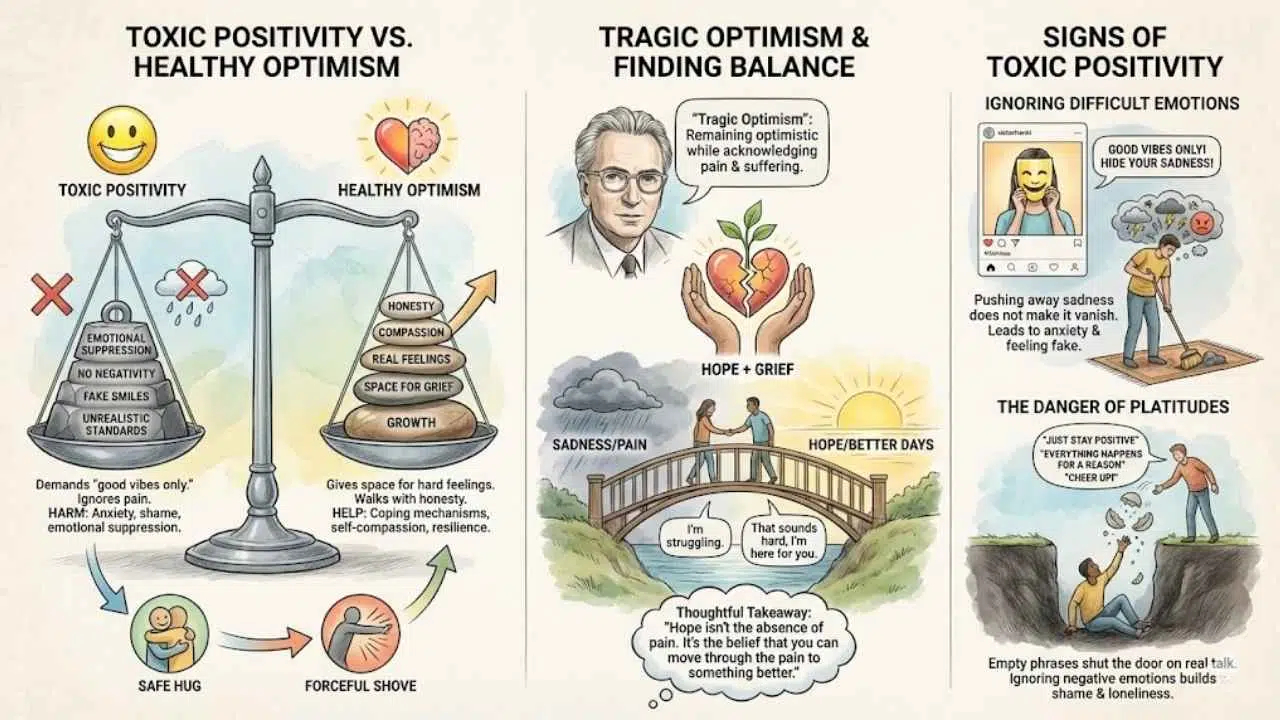
True optimism gives space for real feelings, even the hard ones. Healthy hope can walk hand in hand with honesty and compassion.
Tragic Optimism vs. Toxic Positivity
Toxic positivity demands “good vibes only,” no matter what. This thinking pushes people to ignore sadness, anger, or fear. Healthy optimism feels much more like a safe hug than a forceful shove.
Psychologists often refer to a healthier alternative called “Tragic Optimism.” This concept, popularized by Viktor Frankl, means remaining optimistic while still acknowledging the reality of pain and suffering. It supports hope but still makes space for grief.
Insisting on endless cheer creates pressure and unrealistic standards. It can even harm mental health by making someone feel broken if they cannot smile through pain. Healthy optimism helps growth by offering encouragement during tough times while not dismissing negative emotions or real struggles.
Finding the Balance
Blanket statements like “good vibes only” can make people feel unseen. True emotional wellbeing means letting yourself and others sit with negative emotions sometimes. If a friend says, “I’m struggling,” it helps more to say, “That sounds hard, I’m here for you,” instead of rushing into advice.
Healthy optimism does not mean ignoring pain or stress. Even positive psychology experts warn that forced smiles harm mental health, especially in tough times. Validating feelings fosters coping mechanisms and self-compassion. It gives space for real talk about anxiety and setbacks while still holding on to hope for better days ahead.
Thoughtful Takeaway: “Hope isn’t the absence of pain. It’s the belief that you can move through the pain to something better.”
Signs of Toxic Positivity
You might spot toxic positivity by how people respond, not just what they say. Sometimes, a quick “cheer up” can feel more like ignoring pain than offering support.
Ignoring Difficult Emotions
Pushing away sadness, stress, or anger does not make them vanish. Toxic positivity messages like “good vibes only” often tell people to ignore how they truly feel. This can cause emotional suppression and may lead to anxiety, shame, or even worse mental health over time.
For example, social media in 2023 was full of posts insisting on smiles while real struggles were swept under the rug. Acting happy all the time is like trying to sweep dirt under a bright rug. It hides problems instead of fixing them.
People who avoid negative emotions might start feeling fake or alone because their true feelings are not welcome. Ignoring hard feelings blocks coping mechanisms and makes seeking support seem wrong. It harms both emotional wellbeing and authenticity.
The Danger of Platitudes
Saying things like “just stay positive” or “everything happens for a reason” can feel empty to someone in pain. These phrases might sound cheerful, but they shut the door on real talk about feelings and struggles.
People dealing with mental health challenges often need understanding, not quick fixes or slogans. Social media spreads these simple catchphrases fast, turning them into pressure rather than comfort.
Overusing clichés like “good vibes only” ignores real emotions and teaches people to keep quiet about their problems. This habit can push folks deeper into emotional suppression, harming their psychological wellbeing over time. Studies show that ignoring negative emotions does not build resilience. It builds shame and loneliness instead.
How to Avoid Toxic Positivity
Start by listening with your full attention and an open heart. Show real care for all feelings, even the tough ones.
Practice Active Listening
Active listening means giving someone your full attention. It goes beyond just hearing words. You need to listen for feelings as well as facts. Nod or say small things like “I hear you” to show you care.
Allow room for silence. People need time to gather their thoughts, especially with tough topics like emotional suppression and mental health struggles. Interrupting or jumping in with “good vibes only” can shut down real conversations about stress and anxiety.
Instead, reflect back what you understand: “That sounds really hard.” This helps others feel seen instead of dismissed by toxic positivity. People want their pain recognized, not swept under a rug labeled “Positivity Only Zone.”
The 3-Step Validation Method
Toxic positivity pushes phrases like “good vibes only,” but real life is messier. Stress, sadness, and worry are part of being human. Brushing these feelings aside can leave people feeling alone or ashamed.
Here is a simple way to validate someone effectively:
- Acknowledge the Event: “I see that you are going through a breakup.”
- Normalize the Feeling: “It makes total sense that you feel crushed right now.”
- Offer Presence: “I don’t have the answers, but I am sitting right here with you.”
People need empathy instead of empty words or forced optimism. A friend having a bad day does not want a smiley face sticker; they want someone who listens without judgment. Allowing room for negative emotions helps build better coping mechanisms and supports long-term wellbeing.
Offer Genuine Empathy
Listening with care helps others feel seen. It is not about fixing things or making pain disappear, but showing you understand their struggle. For example, if someone shares they lost their job, avoid saying “just look on the bright side.”
Instead, say things like, “That sounds really tough,” or “I’m here for you.” This approach supports mental health and validation of all emotions. “Good vibes only” talk often pushes people away when they seek comfort most.
A study in 2020 found that emotional invalidity can increase anxiety and stress levels. By offering true empathy instead of empty phrases, you build trust and encourage honest conversations about fears or sadness. People need a space to show real feelings without shame or judgment to protect psychological wellbeing and authenticity.
Embracing Non-Toxic Positivity
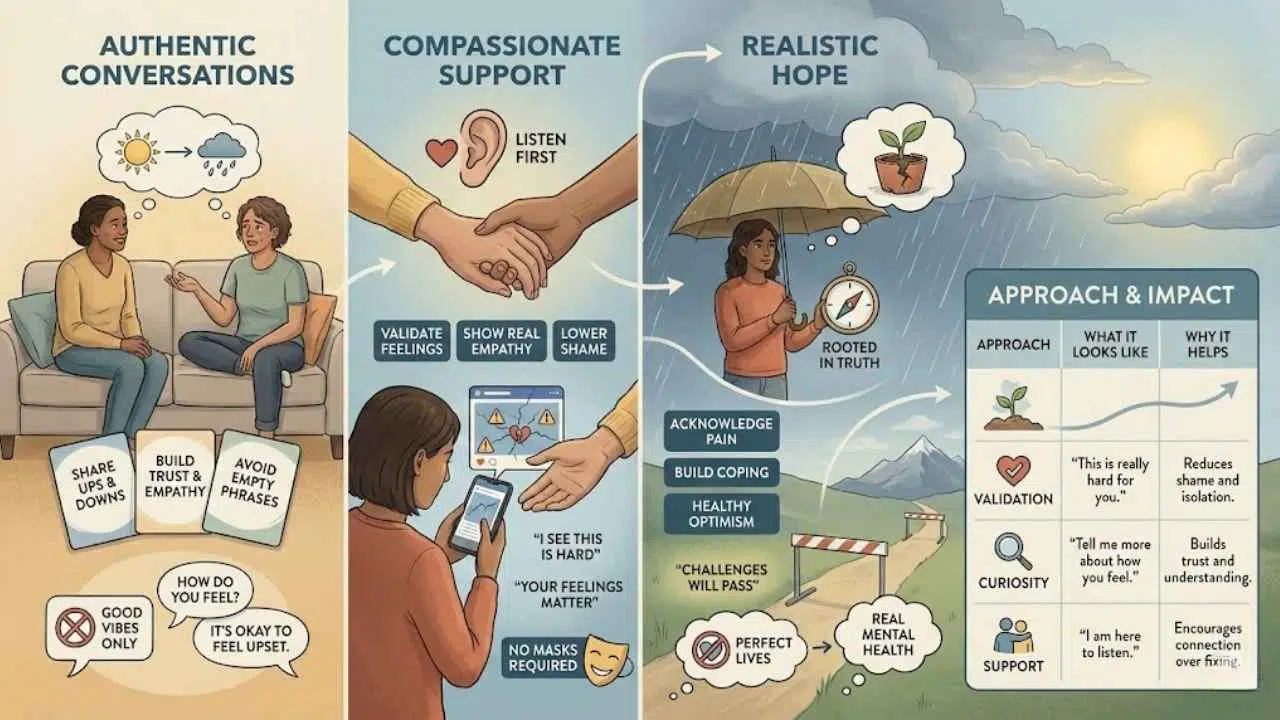
Real support feels warm, honest, and full of heart. Find out how to be uplifting without ignoring real feelings right here.
Encouraging Authentic Conversations
People crave real talk, not just “good vibes only.” The truth is, life gets messy. Toxic positivity sweeps struggles under the rug and pushes everyone to hide pain with fake smiles.
Sharing both ups and downs helps build trust, empathy, and stronger friendships. Instead of tossing out empty phrases like “stay positive,” ask how someone feels or simply listen for a while. Give space for every emotion—anger, sadness, even fear.
Saying things like “That sounds tough” or “It’s okay to feel upset” can open doors to healing conversations. This kind of honesty supports emotional wellbeing and mental health far better than forcing toxic optimism ever could.
Supporting Others with Compassion
Offering support with compassion means listening first. Active listening helps someone feel heard and valued, not judged or brushed aside. Instead of saying “good vibes only,” try words like, “I see this is hard for you,” or “Your feelings matter.”
These simple phrases provide validation and remind people that their emotional well-being counts. Instead of flooding conversations with forced optimism, show real empathy. For example, a friend struggling might feel pressure from social media’s endless push for positivity.
A gentle response like, “It’s okay to feel upset,” can be far more helpful than plastering on a fake smile. This approach lowers shame and encourages honesty about struggles with anxiety or stress. No masks required.
Being Realistic While Staying Hopeful
Hope does not mean ignoring your pain or pretending bad days do not exist. Storms come, and sometimes you just need an umbrella. Facing negative emotions with honesty helps you build strong coping mechanisms, supporting real mental health.
The idea of “good vibes only” can pressure people to hide their struggles, which leads to emotional suppression and more anxiety. Social media often shows perfect lives, but research highlights that this creates stress and makes many feel like they are always falling short.
You can allow yourself to feel sad yet still keep a spark of optimism for tomorrow. Healthy optimism roots itself in truth. It says things may be tough now but also reminds you challenges will pass.
| Approach | What It Looks Like | Why It Helps |
| Validation | “This is really hard for you.” | Reduces shame and isolation. |
| Curiosity | “Tell me more about how you feel.” | Builds trust and understanding. |
| Support | “I am here to listen.” | Encourages connection over fixing. |
Final Thoughts
Toxic positivity may sound warm and fuzzy, but it can hurt more than heal. Listening, showing empathy, and giving space for every emotion is doable for anyone. These are easy ways to support real mental health.
Being honest about feelings helps us connect better with others and ourselves. Let’s aim for encouragement that uplifts yet never pushes problems under the rug. For more tips or stories about handling tough emotions, plenty of reliable mental health resources exist online.
You deserve support that allows both laughter and tears because being real is always stronger than just “good vibes only.” Check them out if you need extra help.