Hey there, are you dreaming of buying your first home but feeling a bit lost? It’s a big step, and the whole process can seem like a giant puzzle with pieces like credit scores, down payments, and mortgage rates scattered everywhere.
Here’s a neat fact to chew on: Bankrate, a trusted site for over 40 years, says taking it step by step can make this journey smoother. Stick with us, and we’ll break down the home buying process into 10 clear factors.
From checking your credit report to picking the right spot, we’ve got tips to help you snag that dream house. Keep reading, folks!
Key Takeaways
- Check your credit score first; a higher score gets better mortgage rates, and free reports are at AnnualCreditReport.com from Experian, Equifax, and TransUnion.
- Save for a down payment and closing costs; for a $300,000 home, aim for $9,000 (3%) down and $6,000 to $18,000 in closing fees.
- Compare at least three mortgage lenders like Wells Fargo or Quicken Loans using tools from Bankrate or LendingTree to save on interest rates.
- Budget 1 to 3 percent of your home’s value yearly for maintenance and repairs to cover unexpected costs like leaks.
- Research local market trends; a TD Bank survey shows 64% of first-time buyers worry about affordability due to high mortgage rates.
Assess Your Financial Readiness
Hey, buying your first home is a big step, and you gotta check if your wallet’s ready for the ride! Let’s chat about getting your money matters in order, so you can step into this adventure with confidence.
Review your credit score and history
Checking your credit score and history is a big first step in buying your first home. A higher credit score can snag you better interest rates on a mortgage loan, saving you tons of cash over time.
You can grab free credit reports weekly from Experian, Equifax, and TransUnion at AnnualCreditReport.com, so take a peek and spot any errors.
Keep your credit utilization ratio below 30 percent, folks. That means if your credit card limit is $1,000, don’t owe more than $300. A clean credit report and good score show mortgage lenders you’re a safe bet for a home loan, paving the way to your dream place with less hassle.
Determine your budget, including additional costs
Figuring out your budget is a big step in buying your first home. Start by looking at more than just the purchase price. Factor in the principal, interest, property taxes, and home insurance costs.
Don’t forget about homeowner association (HOA) fees if they apply. These extras can add up fast, so crunch the numbers with care.
Also, think about ongoing home maintenance and repairs. Set aside 1 to 3 percent of the home’s value each year for these costs. That way, you’re ready for surprises like leaky pipes or needed upgrades.
Use tools like budget calculators from places like Bank of America to map out your monthly mortgage payments. Stay on top of this, and you’ll avoid financial stress down the road.
Start saving for a down payment and closing costs
Saving for a down payment and closing costs is a big first step in buying your first home. On a $300,000 house, a 3% down payment means stashing away $9,000. Plus, closing costs can hit between 2% and 6% of the loan, so that’s $6,000 to $18,000 more to save.
It’s a hefty chunk, right?
Nearly half of folks surveyed are already squirreling away cash for this goal. You can join them by cutting small expenses, like that daily coffee, and tossing the extra into a savings account.
Think of it as planting seeds for your future nest. Keep at it with grit, and watch those dollars grow for your big homebuying process moment.
Explore Mortgage Options
Hey, wanna get a jump on buying your first home? Start by checking out different mortgage deals, like fixed-rate loans or FHA options, to find the best fit for your wallet!
Compare mortgage lenders and interest rates
Let’s chat about a critical step in your home-buying journey, comparing mortgage lenders and interest rates, to help you snag the best deal possible. I’ve put together a handy table to break this down, so you can see why shopping around is your best bet for saving money and stress.
|
Key Step |
Why It Matters |
Action to Take |
|---|---|---|
| Shop at least three lenders | Different banks, credit unions, and online mortgage providers offer varying rates and terms. You could save thousands over the life of your loan! | Reach out to at least three options, like Wells Fargo, Quicken Loans, or a local credit union, for quotes. |
| Compare interest rates closely | Even a small difference, say 3.5% versus 4%, can mean a big gap in monthly payments on a 30-year mortgage. | Use tools like Bankrate or LendingTree to stack up current rates side by side. |
| Check reviews and responsiveness | A lender with poor service can turn your dream into a nightmare, leaving you stuck mid-process. | Look at feedback on sites like Zillow or Google Reviews to gauge their reliability and speed. |
| Study the terms offered | Some deals might lure you with low rates but hit you with hidden fees or stiff penalties down the road. | Read the fine print on closing costs, prepayment rules, and adjustable-rate mortgage (ARM) conditions. |
| Know financial compensation impacts | Some lenders pay to appear at the top of comparison lists, but that doesn’t mean they’re the best fit for you. | Cross-check promoted options against independent reviews to stay in the driver’s seat. |
Dig into this process with a clear head, my friend. Think of it like dating, you wouldn’t settle for the first person who smiles at you, right? Take your time, weigh the pros and cons, and chat with lenders to get a feel for who’s got your back. Use mortgage calculators to play around with numbers, and don’t shy away from asking tough questions about fees or rate locks. You’ve got this!
Get preapproved for a loan
Hey there, getting preapproved for a mortgage is a big step in buying your first home. It shows sellers you’re serious and ready to roll. Plus, a preapproval letter spells out the loan amount you qualify for, which helps you shop within your means.
Just a heads up, these letters expire in 90 days, so don’t sit on it too long.
Now, start by reaching out to mortgage lenders or a loan officer for that preapproval. They’ll check your credit score, debts, and income to figure out your monthly mortgage payments.
This step, much like getting a sneak peek before the big show, saves you from falling for a house outside your budget. So, grab that mortgage preapproval and step into the real estate market with confidence.
Look into first-time homebuyer assistance programs
Buying your first home is a big step. Let’s chat about a key part of the journey, like finding help through first-time homebuyer assistance programs.
- First off, know that these programs exist at local, regional, and national levels to give you a boost. They often help with down payment assistance or lower mortgage rates, making that dream home closer than you think.
- Check out options like those from the Federal Housing Administration, which offers FHA loans with smaller down payments. These are a lifeline for many first-time buyers who can’t save a huge lump sum right away.
- Don’t miss programs tied to the U.S. Department of Agriculture, often called USDA loans. They focus on rural areas and can cover buyers with low income, sometimes even offering zero down payment deals.
- Keep in mind, most of these plans target low-income borrowers, so there might be limits on the home’s price. This keeps the aid going to folks who need it most, so peek at the rules before you apply.
- Dig into state or city programs too, as many offer down payment help or closing cost support. For instance, some areas team up with lenders like Rocket Mortgage to guide you through the home buying process with extra perks.
- Talk to a real estate agent about what’s out there in your area. They often know the ins and outs of first-time homebuyer assistance and can point you toward grants or special mortgage loans you might qualify for.
- Finally, scope out price caps that come with these programs, since they often limit how much you can spend on a property. It’s like getting a discount ticket, but you gotta stick to the assigned seats, so plan your budget around those numbers.
Determine Your Housing Needs
Hey, figuring out the right kind of house for your life is a big deal, so take a moment to think about what fits your daily routine best. Curious about how to match a home to your dreams? Keep reading for more tips!
Decide on the type of home that suits your lifestyle
Figuring out the right home for your lifestyle takes a bit of thought, folks. Do you crave the low-maintenance vibe of condos, or dream of a big yard with a standalone house? Maybe a townhome fits, blending space and ease.
Think hard about your daily routine, hobbies, and even pets. A busy life might scream for something simple, while a growing family needs extra rooms.
Ponder your needs and wants, and don’t shy away from listing dealbreakers. Research neighborhoods early to match your vibe, whether it’s close to a buzzing school district or tucked away for quiet.
Picture your day-to-day, from morning coffee to late-night unwinding. Does the home support that? Getting this right sets you up for a happy home buying process.
Consider the size and layout of the home
Ponder the size and layout of your future home, folks. It’s gotta fit your life like a glove. Do you need extra bedrooms for kids or guests? Maybe a cozy nook for a home office? Think about how much space you truly use, not just what looks nice on a listing.
A sprawling house might sound dreamy, but cleaning it could turn into a nightmare.
Now, picture your daily routine in that layout. Can you see yourself cooking in the kitchen while chatting with family in the living room? Or does a closed-off design feel more like your vibe? Keep your long-term needs in mind, especially if plans like starting a family or aging in place are on the horizon.
Factor in how the home’s setup matches your lifestyle, and you’ll dodge a real estate headache down the road.
Evaluate your long-term needs and future plans
Thinking about buying your first home is a big step, folks. Let’s chat about your future plans and long-term needs. Are you planning to grow a family in a few years? Maybe you’ll need extra bedrooms or a yard for the kids to play in.
Picture your life down the road, and pick a home that fits those dreams, not just today’s wants. Home affordability matters here, so don’t stretch too thin for a place that might not work later.
Also, mull over your job or lifestyle shifts. If a move for work is on the horizon, a home near a good school district might not be your top pick yet. Or, if you’re dreaming of home upgrades like a fancy kitchen, make sure the property value supports those changes.
Weigh your preferences, compromises, and dealbreakers. Buying your first home isn’t just a purchase; it’s planting roots for tomorrow.
Research Potential Locations
Hey, wanna find the perfect spot for your first home? Dig into the area’s vibe, check out nearby shops, parks, and even the local coffee joint, and see if it fits your daily grind!
Analyze the neighborhood and its amenities
Let’s chat about finding the right spot for your new home. Picking a neighborhood is a big deal when buying your first home, so let’s break it down.
- First up, look at the vibe of the area. Does it feel safe and welcoming? Walk around, chat with locals, and see if it matches your lifestyle. A good neighborhood can make or break your happiness, so trust your gut on this one.
- Check out the nearby perks, like parks or shops. Are there grocery stores, gyms, or cool hangout spots close by? Having these amenities near your place saves time and boosts your daily life.
- Think about how close it is to work or a solid school district. Proximity to your job or good schools can cut down on stress and travel costs. It’s a game-changer if you’ve got kids or a long commute.
- Scope out essential services in the area. Are hospitals, pharmacies, or public transport just a quick trip away? Easy access to these can be a lifesaver when you need them most.
- Dig into the local real estate market trends. Is the area growing, or are property values dropping? Knowing this helps you decide if it’s a smart spot to invest your hard-earned cash.
- Peek at any homeowners association (HOA) rules if they exist. Some places have strict guidelines or fees that might cramp your style. Make sure you’re okay with those before signing anything.
- Lastly, imagine your future in this spot. Will it still fit your needs in five or ten years? Thinking long-term, especially about things like space or nearby upgrades, keeps you from outgrowing your dream home too fast.
Consider proximity to work, schools, and essential services
Proximity to work, schools, and essential services can make or break your daily life. Think about how close you want to be to your job. A short commute saves time and cuts stress, like dodging a bullet on busy mornings.
Also, peek at the local school district if you’ve got kids or plan to. Good schools nearby can boost property value and keep your family happy.
Now, don’t forget about essential spots like grocery stores, hospitals, and public transit. Living near these services feels like having a safety net right outside your door. Check the neighborhood for easy access to these necessities.
Dig into the local real estate market conditions and trends to see if the area is growing or shrinking. Picking a spot with everything close by can turn your first home into a real win.
Investigate local market conditions and trends
Dig into the local real estate market before you buy, folks. Check if home prices are climbing or dropping in the area you’re eyeing. A TD Bank survey shows 64% of first-time homebuyers worry about affordability due to high mortgage rates.
So, knowing the trends can save you from overpaying. Look at how long homes sit before selling; a quick sale often means a hot spot.
Also, peek at future plans for the neighborhood. Are new schools or shops popping up? That could boost property values down the road. Chat with locals or a realtor to get the inside scoop on market conditions.
Stay sharp, and don’t jump in blind!
Inspect the Home’s Condition
Hey, buying a home is a big deal, so don’t skip checking its bones! Take a good, hard look at the place with a home inspector to spot any sneaky issues before you sign on the dotted line.
Assess the property’s age and structural condition
Let’s discuss assessing a home’s age and general condition before making a purchase. Older homes might captivate you with their unique charm, but they can conceal significant issues like shaky foundations or old wiring.
Hire a qualified home inspector to uncover these concerns. They’ll thoroughly examine the property’s structure, searching for cracks, leaks, or decay that could become expensive down the road.
Take careful note of the inspection results, everyone. If the house requires substantial repairs, use those discoveries to bargain for a reduced price or request seller contributions.
A thorough home inspection protects you from investing in a financial burden, so make sure to include this step when purchasing your first home.
Check for energy efficiency and modern features
Hey there, buying your first home is a big step, and you want to make sure it’s a smart one. Take a close look at the home’s energy efficiency, folks. Check if it has modern goodies like double-pane windows or good insulation.
These can save you a ton on utility bills down the road. Peek at the heating and cooling systems too; are they up to date? Old units might guzzle energy like a kid with a soda.
Now, dig a bit deeper into other features. Does the place have LED lighting or smart thermostats? Those little upgrades can cut costs and make life easier. Think of it as getting a house that’s already got its sneakers laced up, ready to run efficiently.
Spotting these perks during a home inspection can help you avoid future headaches and keep more cash in your pocket for fun stuff.
Identify potential repairs or renovations
Spotting needed fixes or updates in a home is a big step before you buy. Look closely at the place, and check for cracks in walls, leaky roofs, or old plumbing that might cost you later.
Set aside 1 to 3 percent of the home’s value each year for home maintenance and home repairs, as these can add up fast.
Think about upgrades too, like boosting energy efficiency with new windows or fixing outdated wiring. Chat with a home inspection pro to catch hidden issues, and don’t shy away from asking the seller about past problems.
It’s like peeking under the hood of a car; you want no surprises after signing the deal!
Evaluate Costs Beyond the Purchase Price
Hey, buying your first home is exciting, but, gosh, don’t miss the hidden costs waiting to trip you up! Think about property taxes, utility bills, and those sneaky homeowners association fees that can add up fast.
Got home insurance on your radar? You should, ‘cause it’s a must to shield your investment. Stick with us to uncover more tips on dodging these financial curveballs!
Understand property taxes and utility costs
Property taxes can hit your wallet hard, so dig into them before buying your first home. Check the local rates, as they vary by area and add up fast. They often cover schools, roads, and public services, but they’re a big chunk of your yearly costs.
Pair that with insurance and the purchase price, and you’ve got a real picture of what you’re paying. Don’t skip this step, folks, or you might be in for a rude surprise.
Utility costs sneak up on you too. Think water, electricity, and gas, all piling onto your monthly bills alongside principal and interest payments. Some homes guzzle energy, especially older ones with poor energy efficiency.
Ask for past bills if you can; it’s like peeking into your future expenses. Factor these into your budget with property taxes, HOA fees, and home maintenance to avoid stretching yourself thin.
Check for homeowner association (HOA) fees or restrictions
Hey there, let’s chat about something sneaky that can catch you off guard, those homeowner association (HOA) fees and rules. Before you sign on the dotted line for your dream place, dig into whether the property belongs to a homeowners association (HOA).
These groups often charge monthly or yearly fees for stuff like lawn care, pool upkeep, or shared spaces, and trust me, they can add up fast.
Also, peek at their restrictions. Some HOAs have strict guidelines on things like painting your house, parking, or even hanging holiday lights. You don’t want to buy a home, only to find out you can’t have your beloved pup or put up a basketball hoop.
So, grab those HOA documents, read them closely, and save yourself a headache down the road.
Factor in home insurance and maintenance costs
Let’s talk about home insurance and maintenance costs, folks. Buying your first home is exciting, but you gotta factor in these extra expenses. Home insurance is a must, since lenders require it to cover rebuilding costs if disaster strikes.
It also includes liability insurance, which protects you if someone gets hurt on your property. Trust me, that’s a big relief when accidents happen.
Now, think about home maintenance too. Roofs leak, pipes burst, and stuff breaks down over time. Budget for these home repairs, because they sneak up on ya. Also, check on homeowners insurance premiums and property taxes in your area.
These costs add up fast, so plan ahead with a solid grip on your monthly mortgage payments. Keep that wallet ready for the unexpected!
Conduct a Thorough Walk-Through
Hey, when you’re checking out a potential home, don’t just stroll through with a quick glance. Take your time, poke around every corner, and really look at the place with a sharp eye for any hidden issues during the home inspection.
Pay attention to details during inspections
Spotting tiny issues during a home inspection can save you big headaches later. Look closely at every nook and cranny, from creaky floors to leaky faucets. Notice any odd smells or weird stains on the walls? Jot them down.
These small clues might point to bigger problems like mold or plumbing woes.
Dig deeper by checking the nitty-gritty stuff, like cracks in the foundation or outdated wiring. If you spot flaws, use them as leverage. Request concessions for issues identified in inspections, just like you’d haggle over comparable home sales to lower offers.
Missing these details could cost you extra on home repairs or mess with home affordability down the road.
Ask about what is included in the sale
Hey there, let’s chat about a key step in buying your first home. Asking what comes with the sale can save you from surprises down the road. Is the fancy fridge staying, or are the sellers taking it? What about the washer and dryer? Get clear on these details during your home inspection or walk-through.
It’s like peeking into a gift box before you commit to buying it.
Don’t shy away from making a list of items to ask about. Think curtains, light fixtures, or even built-in shelves. If it matters to you, bring it up with your real estate agent. And hey, while you’re at it, check if there are any contingencies in the contract, like inspection findings or mortgage denial issues.
Knowing what’s included, or not, helps you plan your budget for home upgrades or unexpected costs.
Learn to Negotiate Effectively
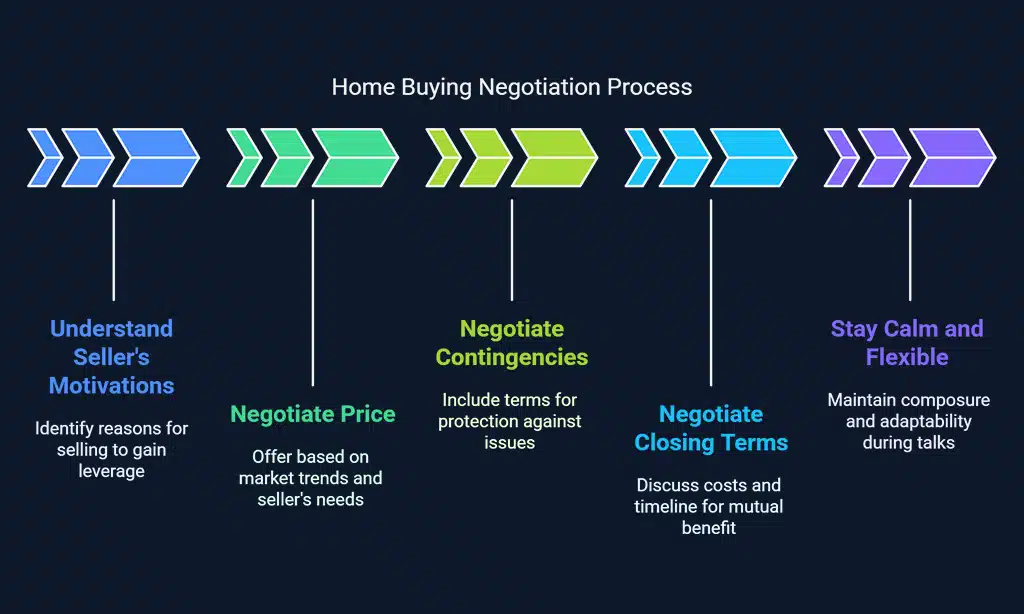
Hey, buying your first home is like playing a high-stakes game of chess, and you’ve gotta know how to make the right moves. Want to snag a sweet deal? Keep reading to learn some handy tricks for talking down the price and winning at the negotiation table!
Understand the seller’s motivations
Figuring out why a seller wants to let go of their home can be a game-changer in the home buying process. Are they in a rush to move for a job, or maybe facing a tight spot like foreclosure? Knowing this helps you craft a smart offer, especially if you use comparable home sales to push for a lower price.
Digging into their reasons gives you an edge during negotiations. If they’re eager to close fast, you might snag a deal by being flexible with timing. Don’t shy away from asking your real estate agent to snoop a bit; their insight on the seller’s mindset can help you save big on that first-time homebuyer dream.
Negotiate on price, contingencies, and closing terms
Let’s chat about making a deal on your first home. Negotiating can feel like a wild ride, but it’s a key step in the home buying process.
- First up, focus on the price of the home. Don’t just accept the listed amount; make an offer based on the local real estate market trends. If homes nearby sold for less, use that info to push for a better deal. Chat with your real estate agent to figure out a fair number that fits your budget for monthly mortgage payments.
- Next, dig into the seller’s reasons for moving. Are they in a hurry to sell? If so, you might snag a lower price or extra perks. Knowing their story helps you play your cards right during talks.
- Also, don’t skip over contingencies in the contract. Make sure to include terms like passing a home inspection or getting mortgage preapproval. These protect you if things go south, like finding big home repairs or facing a loan denial.
- Then, think about closing terms and costs. Ask if the seller can cover part of the closing costs, which can save you a chunk of cash. Push for a timeline that works for you, especially if you’re juggling a lease or job move.
- Finally, stay calm and flexible while you bargain. It’s like a game of tug-of-war; sometimes you give a little to get a lot. Keep your down payment and home affordability in mind, and don’t be afraid to walk away if the deal feels off.
Finalize the Purchase
Hey, ready to seal the deal on your dream house? Team up with a solid real estate agent, and tackle that final paperwork with confidence!
Work with a trusted real estate agent
Finding the right help can make buying your first home a smoother ride. Team up with a trusted real estate agent who knows the ins and outs of the real estate market. Think of them as your guide, someone who’s been down this road many times.
They can spot deals, dodge pitfalls, and save you a heap of stress. I’ve heard folks say it’s like having a wise buddy in your corner, cheering you on.
Michael Soon Lee, Ph.D., a real estate broker since 1980, shows how vital this support can be. His decades of know-how as a business consultant and author prove that pro guidance isn’t just nice, it’s a game-changer.
Your agent will help with home inspections, negotiate tricky terms, and even connect you to first-time homebuyer programs. So, lean on their skills to nail down that dream home without losing sleep over the details.
Review and sign the contract carefully
Hey there, let’s chat about the final step in buying your first home. Going over the contract is a big deal, so take your time with it. Read every line, and make sure you grasp all the terms.
Look for contingencies, like inspection findings or mortgage denial, to protect yourself. If something seems off, ask questions right away.
Got a real estate agent by your side? Lean on them to explain tricky parts. Double-check that everything, from the price to closing costs, matches what you agreed on. Signing this paper locks in your commitment, so be clear on property taxes and any homeowners association rules before you put pen to paper.
Secure adequate home insurance
Securing proper home insurance is a must when buying your first home. Lenders require it, and for good reason, since it covers the cost to rebuild if disaster strikes. Plus, it often includes liability protection to shield you from costs if someone gets hurt on your property.
So, don’t skip this step; it’s your safety net.
Think of home insurance as a trusty umbrella on a rainy day. Shop around for a policy that fits your needs, and make sure it includes flood insurance if you’re in a risky area. Check with your real estate agent for tips on finding solid coverage.
This way, you’re guarding your investment from day one.
Takeaways
Wrapping up, buying your first home is a big step, but you’re not alone in this journey. Think of it as planting roots in a garden you’ve dreamed of tending. Got questions about down payments or mortgage rates? Reach out to a real estate agent or dig into resources like Bankrate for solid advice.
Let’s make that dream home yours, one smart choice at a time!
FAQs on Tips for First-Time Homebuyers
1. What should I know about saving for a down payment when buying my first home?
Hey, saving for that down payment, or downpayment as some call it, can feel like climbing a steep hill. But, with a bit of grit, you can stash away enough for that first-time homebuyer milestone, especially if you look into down payment assistance programs. Keep an eye on every dollar, and soon you’ll be ready to jump into the homebuying process.
2. How does my credit score impact the home buying process?
Listen up, your credit score, pulled from a credit bureau or credit bureaus, is like the key to unlocking a good mortgage rate. A solid score means better deals on conventional mortgages or even VA loans and USDA loans. If it’s shaky, maybe due to student loans or credit cards, start fixing that credit report now before diving into mortgage preapproval.
3. Why are closing costs a big deal in the homebuying journey?
Closing costs sneak up on you like a surprise bill at a diner. They cover stuff like title insurance and fees for real estate agents, and trust me, they add up fast. So, when planning to buy your first home, set aside extra cash beyond the monthly mortgage payments for this hurdle.
4. Should I worry about property taxes and homeowners insurance?
Absolutely, property taxes and home insurance, including extras like flood insurance, aren’t just small fries. They’re ongoing costs tied to home affordability that hit your wallet yearly, so factor them into your budget alongside home maintenance and potential home repairs.
5. How do I pick the right real estate agent for buying my first home?
Finding a trusty real estate agent, or real estate agents if you’re shopping around, is like picking a guide for a wild hike. They’ll navigate the real estate market, point out school district perks or homeowners association (HOA) rules, and help with home inspection details. Chat with a few, ask about their experience with first-time buyers, and go with someone who gets your vibe.
6. What’s the deal with mortgage types like fixed-rate mortgage and discount points?
Alright, let’s break this down quick. A fixed-rate mortgage keeps your monthly mortgage payments steady as a rock, no surprises. Then there’s discount points, a little trick to lower your mortgage rate if you’ve got spare cash, but talk to an investment adviser or check with the Consumer Financial Protection Bureau to see if it fits with other financing like auto loans or a line of credit.