

Tinder, one of the world’s most popular dating apps, has launched a new verification feature called Face Check, which uses biometric facial recognition to confirm that new users are real people and not bots or fake accounts. The feature is currently being rolled out in California and is expected to expand if the results are positive.
How Face Check Works
Instead of just uploading a profile photo, new users will now be prompted to record a short selfie video. Tinder’s technology will analyze this video and compare it with the uploaded profile pictures to verify the user’s identity. If the system determines the user is authentic, they will receive a photo verification badge on their profile.
Once the verification process is complete, the selfie video is deleted, according to Tinder’s official policy. Only two screenshots from the video are saved to maintain the verification status. This step ensures compliance with privacy best practices while maintaining a safe environment for users.
Not a Government ID Check — But Still a Strong Identity Assurance Tool
It’s important to note that Face Check is different from Tinder’s ID verification process. This new method does not require any government-issued ID like a passport or driver’s license. Instead, it relies solely on facial recognition to determine if the user is a living, real human.
Tinder says that Face Check will also help detect whether someone is trying to create multiple accounts, enhancing platform integrity and user safety.
Why California First?
The rollout in California isn’t random. According to Yoel Roth, head of trust and safety at Tinder’s parent company, Match Group, California was chosen due to its large user base, diverse demographics, and strong online privacy and safety laws. These factors make the state an ideal testing ground for this advanced safety measure.
Before launching in the U.S., Tinder tested Face Check in Colombia and Canada, where early results have shown positive outcomes in reducing fake profiles and improving user trust, Roth shared in an interview with Axios.
A Step Toward Safer Online Dating
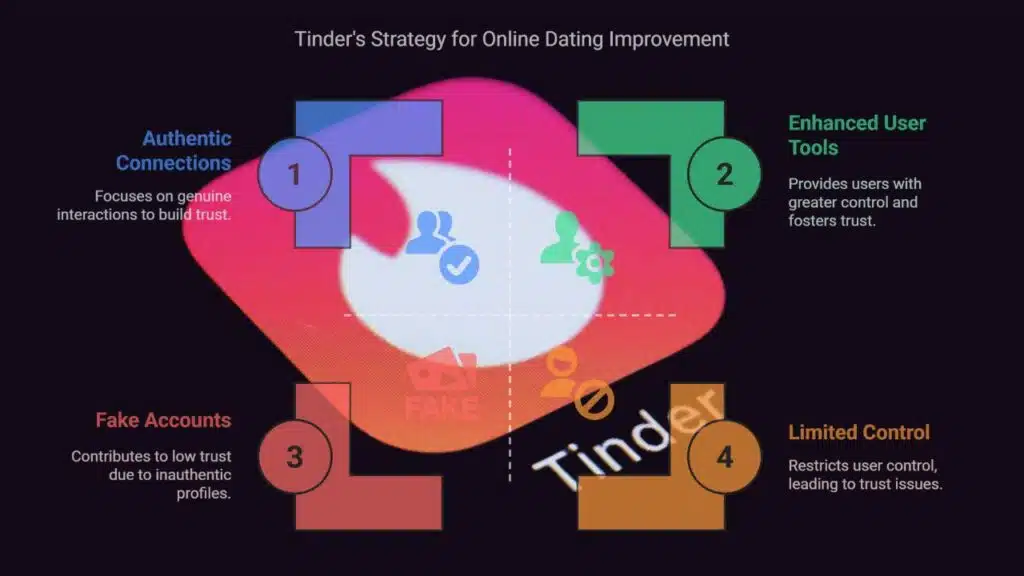
Tinder says the goal behind this move is to build a fun, respectful, and authentic dating environment. According to Philip Price Fry, Vice President of Communications at Tinder, the company is committed to providing tools that give users more control over who they interact with.
“Creating a fun and respectful environment where Tinder users can be their true selves is our priority,” Fry told FOX Business. “We are always testing ways to deliver the best experience for our users to seek authentic connections.”
By tackling concerns over fake accounts and bots, Tinder hopes to improve trust in online dating — a growing concern in today’s digital relationship landscape.
Growing Trend in Online Safety Across Tech Platforms
Tinder’s move aligns with a broader trend in the tech industry to strengthen user identity verification. Platforms like Instagram, X (formerly Twitter), and Airbnb have also introduced various verification methods, especially as generative AI tools make it easier to create fake identities or spoof content.
Moreover, biometric authentication is increasingly seen as a reliable way to reduce catfishing, scams, and other online threats. As of 2025, over 60% of major apps that deal with user-generated content or interpersonal communication are incorporating biometric verification tools (according to a Gartner Research report).
What Comes Next?
If Face Check proves effective in California, Tinder may expand the feature to other U.S. states and global markets. However, the company is expected to tread carefully, especially in regions with stricter data protection laws such as the European Union.