Today is Eid al-Adha. Many people feel lost as Eid al-Adha nears. They see the animal sacrifice but miss the deep meaning. They ask why Muslims mark this day with Qurbani. Did you know the feast falls on the 10th of Dhul Hijjah, the last month of the lunar calendar?
We share The Story Of Eid Al-adha in simple terms. You will learn of Prophet Ibrahim, the act of faith, and the link to the Hajj pilgrimage. You will see how families share meat, gifts, and prayers.
Keep reading.
Key Takeaways
- Eid al-Adha falls on the 10th of Dhul Hijjah and marks Prophet Ibrahim’s test of faith when Allah replaced his son Ismail with a ram.
- Families pick a healthy sheep, goat, cow, or camel for Qurban, follow Zabiha rules to slaughter it, and then split the meat into three equal parts for family, neighbors, and the needy.
- This day coincides with the final rites of Hajj: nearly two million pilgrims circle the Kaʿbah, stand on Mount Arafat, and stone the Jamarat Bridge in Mecca.
- Celebrants wear bright new clothes, give Eidi gifts to children, and share meat parcels with relatives, friends, and homeless shelters from the 10th through 12th of Dhul Hijjah.
- Eid al-Adha teaches submission to Allah, spurs charity, and unites communities as Muslims worldwide recall Ibrahim’s devotion and Allah’s mercy.
The Story of Eid Al-Adha and the Sacrifice

Ibrahim woke before dawn in Dhu al-Hijjah, knife in hand, his faith shining brighter than desert stars as he recited the Qurban verses. An angel brought a gentle animal, sparing his child, and wove the Binding of Isaac into the Sunnah of Eid prayers at every house of worship.
Prophet Ibrahim’s act of obedience to Allah
A dream asked for the ultimate sacrifice. Ibrahim rose at dawn with Ismail. He walked to a flat plain near Mecca. He held a knife and bowed in submission to Allah. His heart pounded like a drum, yet his faith stayed rock solid.
This test fell on the 10th day of Dhul-Hijjah in the Islamic lunar calendar. Muslims mark his devotion each year during Eid al-Adha.
True submission drove his soul. Each step showed devotion above doubt. He laid Ismail on an altar, ready to obey. That moment shaped the Qurban ritual in Islam. Millions honor his Sunnah at Eid al-Adha.
The replacement of his son with a ram
Ibrahim stood on a rocky slope in the month of Dhul Hijjah. He held a knife above his son, Ismail, ready to obey Allah. Gabriel’s angel voice echoed in the wind. It called him to pause.
A sheep burst through the dunes and took Ismail’s place. Allah had sent that ram to spare his child. Muslims honor this moment as the Festival of Sacrifice.
This Qurban event lives in every Eid al-Adha prayer. Families follow dhabihah rules to slaughter a goat or sheep in halal style. They split the meat into three parts, feeding kin, companions, and the needy.
Masjids fill with chants of Eid Mubarak. Believers recall Ibrahim’s faith and Allah’s mercy in each grace.
Traditions of Eid Al-Adha
On the 10th of Dhul Hijjah, families don bright clothes, sharpen a butcher’s knife, and usher a sheep to the local slaughterhouse, marking the qurban ritual. They then dish out juicy meat parcels to relatives, neighbors, and the homeless, handing them out like festive postcards.
Animal sacrifice and its significance
Families pick a healthy ewe, goat kid, young sheep or cattle like bulls or camels for Qurban, all of which must meet age and health rules. Helpers vet each one to fit Udhiya criteria.
They send animals to a halal slaughterhouse that follows Zabiha rules. People carve meat into three parts, one for kin, one for neighbors, one for those in need. Days ten through twelve of Dhul-Hijjah mark this act on the Islamic calendar.
This sacrifice, on Eid ul-Adha, draws communities closer and honors Prophet Ibrahim’s devotion. The next section explores how this rite links to the Hajj.
Sharing meat with family, friends, and the needy
Right after the ritual of Qurban (Islamic ritual sacrifice), people trim cuts of meat in trays for sharing, scooping hope with every slice. The first part stays at home. The second part hops into baskets bound for neighbors or pals.
Donors pack the last share with compassion and deliver it to a charitable organization that feeds the needy.
Faith and obedience guide each gift, and the act echoes Ibrahim’s devotion. Elders smile at the dinner table. Kids cheer as they pass dishes around. This feast brings together family, friends, and the needy under the spirit of Eid-ul-Adha.
Connection Between Eid Al-Adha and Hajj
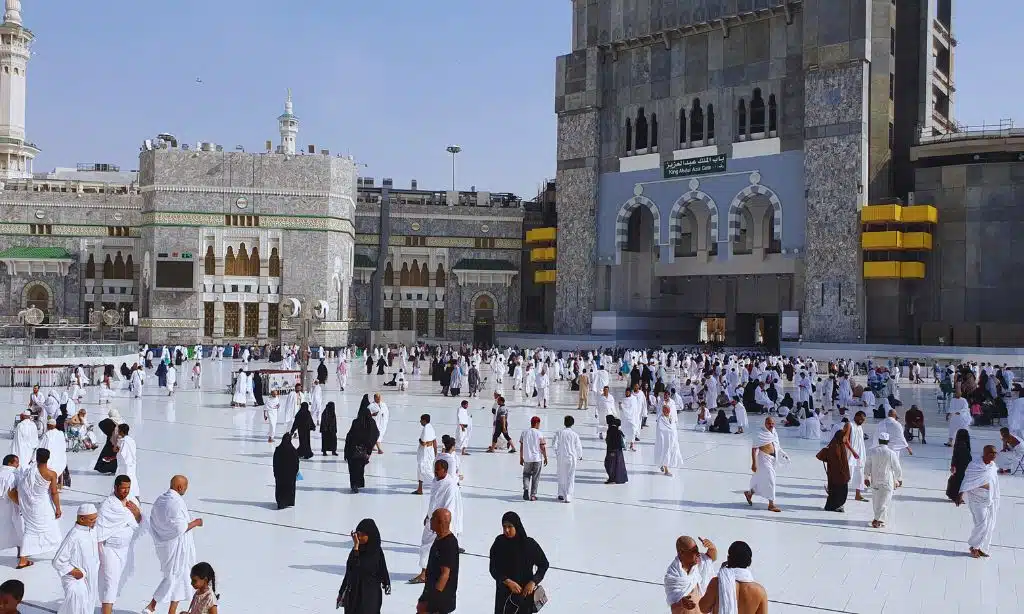
The 10th day of Dhul Hijjah marks Eid al-Adha. It coincides with the final day of the Hajj. Pilgrims fill the Grand Mosque in Mecca, Saudi Arabia. They circle the Kaʿbah. Many recall Abraham in Islam and his willingness to sacrifice his son.
Nearly two million people travel there each year.
Pilgrims then stand on Mount Arafat. They pray for mercy and strength. They walk to the Jamarat Bridge. They toss pebbles to drive away Shaytaan. That ritual honors the sacrifice of Ibrahim and Ismail.
Muslims around the world commemorate this with animal sacrifice. They sacrifice a sheep or goat. They share meat with family, friends, and the needy.
Takeaways
Prophet Ibrahim’s willingness changed history. Each Qurbani gift echoes his devotion. Friends hand out meat to those in need and give Eidi to children. Communities unite under the Five Pillars of Islam during Dhu-al-Hijjah and Hajj.
Faith lights the way for both Salah and Charity.
FAQs on the Story of Eid Al-Adha
1. What is Eid al-Adha?
Eid al-Adha, called the Feast of Sacrifice or Greater Eid, is a major Islamic holiday. It marks Abraham’s devotion to God and links to Eid al-Fitr after the month of Ramadan.
2. Why do Muslims recall Abraham and Ishmael at Eid al-Adha?
They remember Prophet Abraham’s willingness to sacrifice Ishmael, his only son. That faith shows obedience to God, like a sturdy tree standing firm in a storm.
3. When is Eid al-Adha 2025?
It falls on the 10th day of the final month of the Islamic calendar. Muslims watch for the new moon to know when to start.
4. What steps mark the morning of Eid?
They take a bath or shower, don their best clothes, and say takbir aloud. They pray salah with friends, listen to the khutbah, and greet each other with open arms.
5. How is the sacrifice of animals carried out?
Families choose a sheep, go to a zabiha slaughterhouse, and recite a short prayer. They split the meat, give one part to family, one to friends, and one to those in need, sharing joy along the way.
6. How do people celebrate after Eid prayers?
They exchange eidi gifts and share meals with open arms, like a big family reunion. It differs from the Eucharist in Christianity, but it feeds the spirit just the same. In Pakistan, Iran, and the Arabian Peninsula, they thank God, follow the way of the prophet muhammad, and honor the five pillars of Islam.