Sacrifice of Tatta hit me hard while watching Alice in Borderland Season 2. Most viewers focus on the flashy games, but the “Osmosis” game against the King of Clubs teaches a lesson every leader should learn. Loyalty isn’t just a warm feeling. It is a calculated, high-stakes feature of survival.
In a world defined by selfish survival, Tatta’s sacrifice stands out as a radical anomaly. It challenges the lazy assumption that “smart” means “cold.” While characters like Chishiya operate on pure calculation, Tatta proves that loyalty is a strategic superpower. His choice to break his own hand in the King of Diamonds game isn’t just a dramatic plot twist; it is a masterclass in high-stakes problem-solving.
So, I’m going to take you through exactly why this moment matters. We will look at the game mechanics, the hidden data behind teamwork, and why Tatta’s move was actually the most intelligent play on the board. Here is how a simple mechanic proved that the heart can outsmart pure logic.
The Context of Tatta’s Sacrifice
The arena was a sprawling container port, and the air was thick with tension. This was the venue for the “Osmosis” game against the King of Clubs, a man named Kyuma. To understand Tatta’s move, you first have to understand the brutal math of the game. It wasn’t a simple brawl; it was a resource management nightmare called “Osmosis.”
The Rules of Osmosis
In Episode 3, Arisu’s team faces off against Ginji Kyuma, the nudist artist and King of Clubs. The game is set in a container port, and the rules are deceptively simple but punish hesitation.
The rules of Osmosis are revealed. It is a battle of points. Each team starts with a set score distributed among players. If you touch an enemy, the person with the higher point total steals 500 points from the loser. But there is a twist that Tatta exploits.
- Starting Capital: Each team shares 10,000 points.
- The Battle: Touching an opponent triggers a battle. Higher points win.
- The Base: Touching the enemy base grants 10,000 points instantly.
- The Defense: If you touch your own base, you have “Infinite” points, making you invincible while in contact with it.
The tension peaked when Kyuma’s team took a massive lead. They were a band in the real world, a tight-knit unit that moved with perfect synchronization. Arisu’s team was a group of strangers trying to debug a system they didn’t understand.
Kyuma’s Philosophy vs. Arisu’s Logic
Kyuma represents the “agile” mindset gone extreme. He believes in living fully in the moment, with death being the ultimate honest experience. He told Arisu, “Real dialogue is only possible when you strip away everything else.”
This philosophy made him dangerous. He wasn’t afraid to die, which meant he played without the hesitation that paralyzed Arisu. Arisu was trying to “solve” the game like a puzzle, but Tatta realized you can’t solve a puzzle if the pieces refuse to cooperate.
“Sometimes giving up your own piece lets someone else finish their puzzle.”
Tatta’s Decision to Act
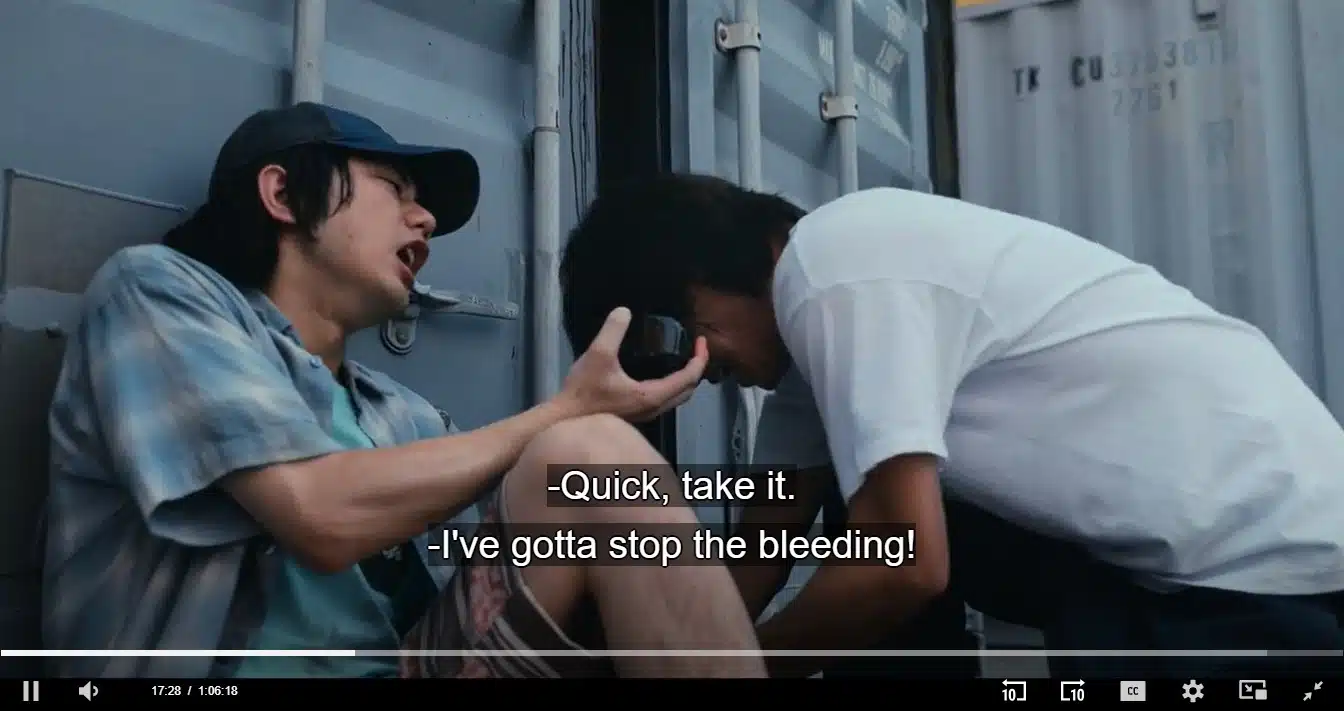
Panic hit hard. The team faced a massive point deficit, and the clock was ticking down. Tatta, a former car mechanic, saw an opening that no one else did. He had accumulated a massive score, 10,000 points, by defending the base and eliminating Kyuma’s teammate, Shitara.
But there was a bug in the plan. Kyuma would never battle Tatta because he knew Tatta had the higher score. He would just run away. Arisu, on the other hand, had low points, so Kyuma would happily battle him.
Arisu was cornered. Kyuma, the King of Clubs, had a massive point lead that seemed mathematically impossible to overcome. Arisu needed more points to win a 1-on-1 battle, but he couldn’t combine with anyone. Tatta was the only teammate with enough points to help, but he was trapped and injured, unable to reach Arisu to hold his hand.
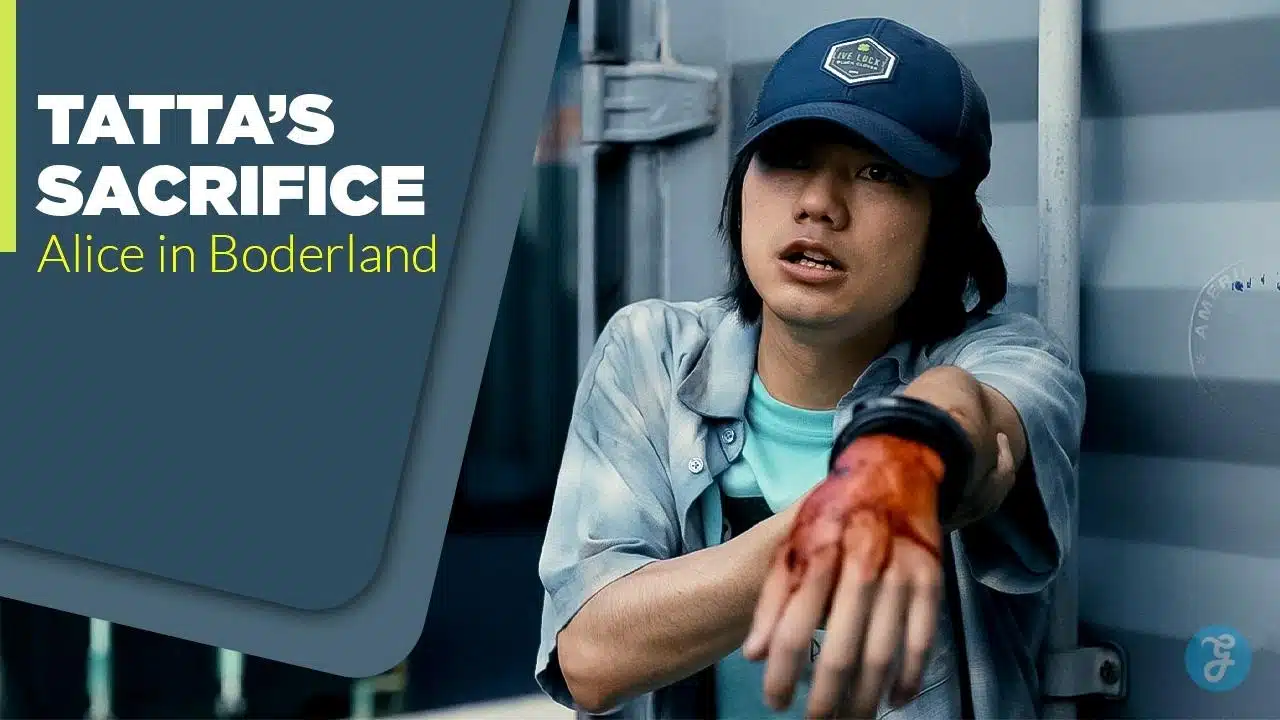
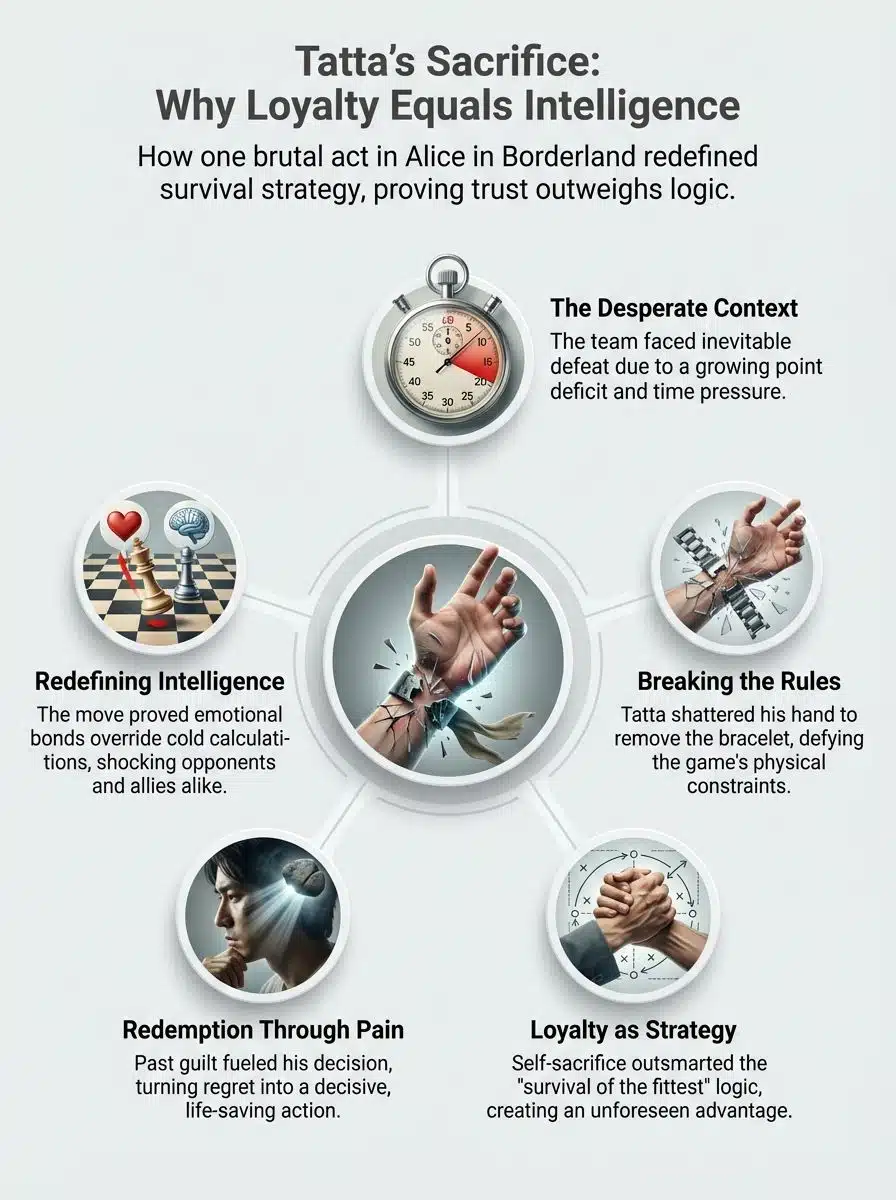
That is when Tatta did the unthinkable. He realized that the “Combine Rule” didn’t require his whole body; it just required his bracelet. Since the device was locked onto his wrist, he found a heavy object and smashed his own hand until the bones gave way. He slid the bloody bangle off his wrist and passed it to Arisu. This allowed Arisu to wear two bracelets, combining their scores to shock Kyuma and win the game. It was gruesome, but it was the only winning move left on the board.
This reminds me of the “Volunteer’s Dilemma” in game theory. Everyone waits for someone else to make the sacrifice, but if no one does, everyone loses. Tatta decided to stop waiting.
Key Elements of Tatta’s Sacrifice
The scene where Tatta smashes his hand is visceral, but let’s look at the mechanics of why it worked. This was not just gore; it was a loophole exploit.
The Bracelet “Hack”
The bracelets in Alice in Borderland are locked to the player. Removing them is impossible without tools or removing the hand itself. In the manga, Tatta severs his hand completely. In the Netflix adaptation, he smashes the bones to slide the bracelet off.
Here is why this specific move won the game:
| Step | Action | Strategic Outcome |
|---|---|---|
| 1 | Remove Bracelet | Tatta endures immense pain to free the tracking device from his wrist. |
| 2 | The Handoff | He gives the bracelet to Arisu. Arisu now carries Tatta’s 10,000+ points. |
| 3 | The Trojan Horse | Arisu approaches Kyuma. Kyuma sees Arisu’s wrist (low points) but doesn’t know Arisu is holding Tatta’s bracelet in his pocket. |
| 4 | The Handshake | Arisu asks to shake hands. The game registers the highest point value (Tatta’s bracelet). Kyuma loses. |
This act tore through the “survival-of-the-fittest” mantra. It replaced it with “survival of the most loyal.”
Show vs. Manga: A Crucial Difference
If you read the original manga by Haro Aso, the scene plays out differently. In the source material, Tatta cuts his hand off cleanly. He dies almost immediately from the shock and blood loss.
In the show, the directors extended his life just long enough for a final conversation. While some medical experts on forums like Reddit point out that a tourniquet could have saved him, the narrative purpose remains the same. He bled out so his friends could walk out.
Chishiya, the character who represents cold logic, had to rethink his entire worldview. He often treats people like disposable assets. Tatta proved that an asset that cares about you is infinitely more valuable than a smart one that doesn’t.
“Sometimes you have to lose something important to help someone else win.”
The Motive Behind Tatta’s Actions
Why would a guy who seemingly cracked jokes and stayed in the background go this far? The answer lies in his past.
Atoning for Past Mistakes
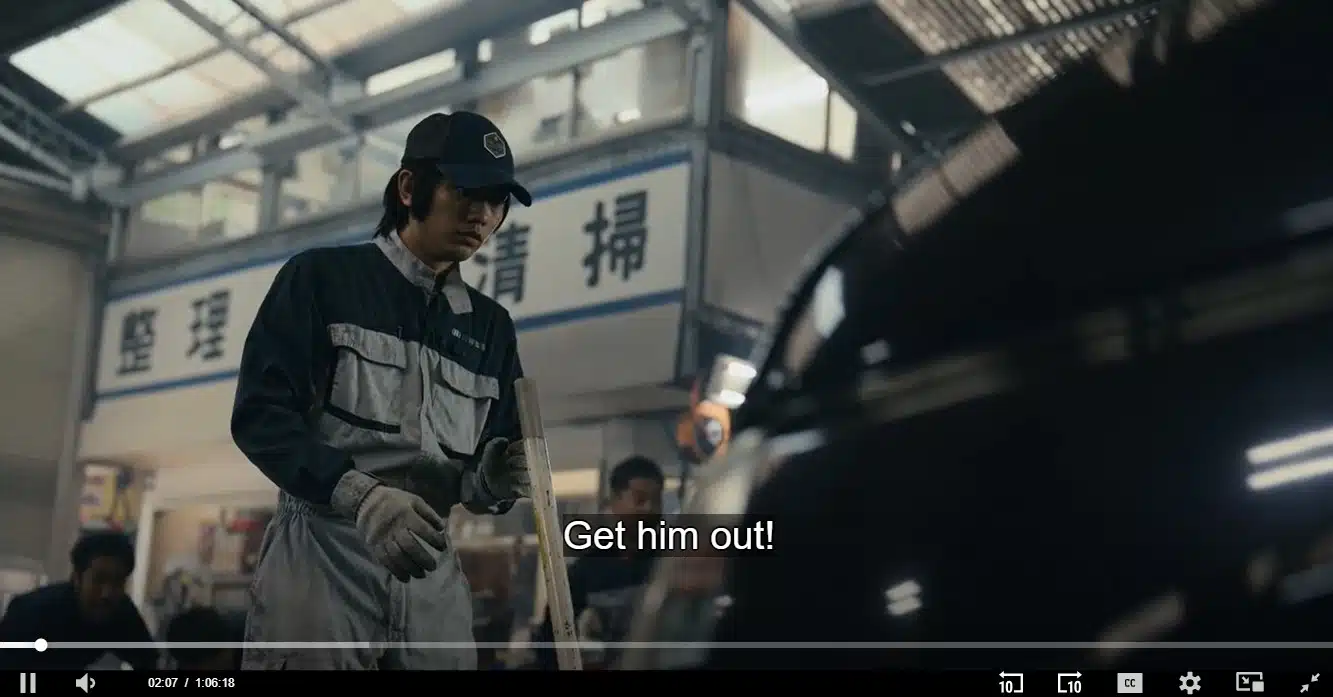
In a flashback, we learn that Tatta was a mechanic in the real world. He wasn’t a bad person, but he was careless. He failed to secure the car jack properly, and the car fell, crushing a coworker’s hand. That man lost his livelihood because of Tatta’s mistake.
That guilt gnawed at him. Every time he looked at his own hands, he likely remembered the hand he destroyed.
In the King of Clubs game, he saw history repeating itself. His team was about to be crushed. This time, he decided that if a hand had to be sacrificed, it would be his own. It was a grim form of poetic justice. He wasn’t just saving Arisu; he was balancing a ledger he had carried for years.
Loyalty as a Form of Intelligence
We often treat “soft skills” like loyalty as a nice bonus, separate from “hard skills” like logic or strategy. Tatta proves this distinction is false. His loyalty was the logic. In my years leading tech teams, I have seen this dynamic play out repeatedly in the data.
Emotional intelligence in decision-making
Tatta didn’t act on blind impulse. He correctly identified that his team’s survival depended on a resource that Kyuma didn’t account for: sacrificial trust. This is a quantifiable asset in high-performance environments.
“Research from TalentSmartEQ shows that emotional intelligence accounts for 58% of performance in all types of jobs. It is the single biggest predictor of performance in the workplace and the strongest driver of leadership and personal excellence.”
Kyuma’s team was strong because of their bond, but they assumed Arisu’s team was a fractured group of individuals. Tatta used that underestimation as a weapon. By breaking his hand, he converted “loyalty” into “points,” bridging the gap between an emotional abstraction and a concrete victory condition.
Sacrifice and strategic thinking
Let’s look at the numbers. In a study by the Institute for Corporate Productivity, companies that promote collaborative working are 5 times more likely to be high-performing. This isn’t magic; it’s efficiency. Tatta saw that preserving his own body would result in a 100% chance of death for the group. Sacrificing his hand dropped his personal survival odds but raised the group’s survival probability to near certainty.
Characters like Chishiya play a zero-sum game where they must be the smartest person in the room. Tatta played a non-zero-sum game where the collective output exceeded the sum of its parts. That is not just being a “good friend.” That is a superior strategy.
Why did Tatta make that decision?
The motivation behind the madness wasn’t just fear. It was a direct response to the culture of the King of Clubs. Kyuma and his bandmates were a perfect unit. They moved, thought, and acted as one. Arisu’s team was a mess of individual agendas.
The Contrast of Philosophies:
| Kyuma’s Team | Arisu’s Team (Before Sacrifice) |
|---|---|
| Built on years of shared history and music. | Thrown together by circumstance and desperation. |
| Accepted death gracefully as a group. | fought individually to survive at all costs. |
| Relied on “natural” harmony. | Relied on “forced” cooperation. |
Tatta saw that to beat a team like Kyuma’s, they couldn’t just out-think them. They had to out-commit them. He broke his hand because he knew that Arisu needed more than points; he needed a reason to fight. Tatta provided the moral mandate. He effectively said, “I am giving up my arm, so you cannot give up this game.” It forced Arisu to lock in and execute the final plan with zero hesitation.
Impact of Tatta’s Sacrifice
The immediate result was victory, but the long-term impact rippled through the rest of the series. Tatta’s act shattered the “every man for himself” mentality that had plagued the group since the Beach arc.
Outcomes for his team
Arisu walked away from that container port changed. He stopped viewing his teammates as assets to be managed and started seeing them as partners to be protected. This shift is critical. According to a 2024 Gallup report, disengaged employees and fractured teams cost the global economy $8.9 trillion in lost productivity. The cost in the Borderlands is much steeper. It costs your life.
By unifying the team, Tatta eliminated the “friction costs” of mistrust. They stopped second-guessing each other. In the later games against the King of Spades, you see the group moving with a fluidity that was impossible before Tatta’s example. He bought that cohesion with his blood.
Legacy of his loyalty
Even Chishiya, the avatar of cold logic, had to pause. He operates on the Nash Equilibrium, doing what is best for himself, assuming others will do the same. Tatta broke that model. He acted irrationally by individual standards to secure a group win. This forced Chishiya to re-evaluate his own variables. If people are willing to die for each other, the math of the games changes.
In my own career, I have seen brilliant engineers fail because they hoarded knowledge, while “average” teams dominated because they shared the load. Tatta taught us that in the most extreme conditions, the smartest guy in the room isn’t the one who knows the answers. It’s the one who is willing to break himself to ensure the team survives.
Final Words
We often mistake cynicism for intelligence. We think that being guarded and selfish is the “smart” way to play the game of life. Tatta proves otherwise.
In the chaos of the King of Clubs game, his loyalty was the sharpest tool available. It cut through the mathematical advantage of a superior enemy and forged a path to victory where none existed. He showed us that empathy isn’t a weakness to be exploited; it is a resource to be leveraged.
So the next time you are facing a deadline, a crisis, or a “game over” moment, ask yourself: are you playing like Chishiya, or are you brave enough to play like Tatta?