You think vaping is safer than smoking, right? Well, recent research from scientists around the world has uncovered the hidden danger of vaping that many people miss. Studies show that e-cigarettes contain harmful chemicals that can damage your lungs and mouth, and this content will break down exactly what those chemicals are and how they hurt your body.
Keep reading to learn what you really need to know.
Vaping and Its Link to Lung Cancer
Scientists discovered something alarming about vaping. Researchers from the University of New South Wales, led by Professor Bernard W. Stewart, reviewed over 100 global studies. They looked at animal tests, human research, and cell experiments.
Mice exposed to e-cigarette aerosol developed lung cancer in the lab. A 2022 study found that e-cigarette users faced a significantly higher risk of developing lung cancer compared to non-users.
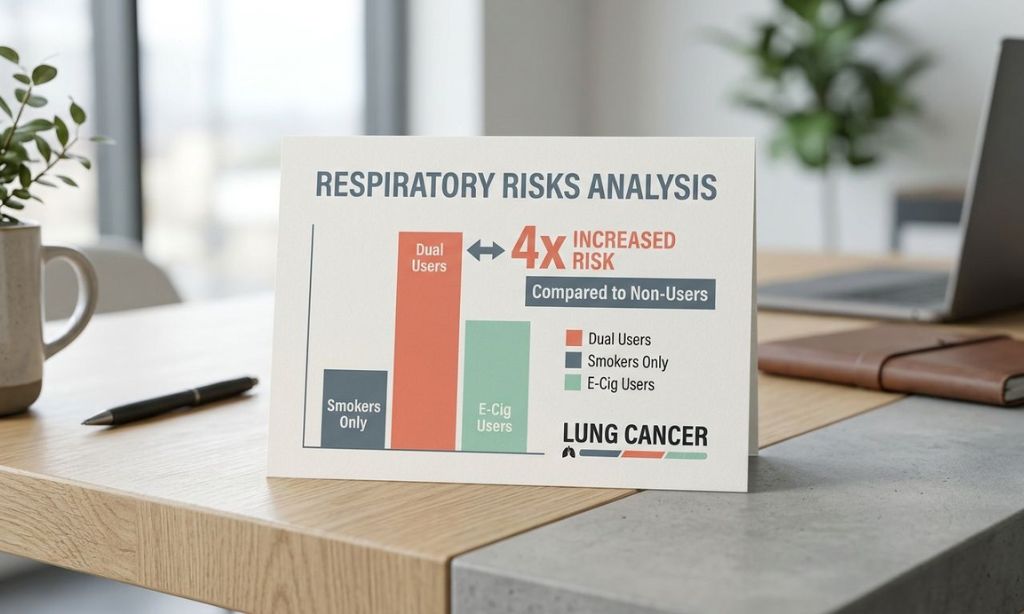
The U.S. Centers for Disease Control and Prevention reported an increase in respiratory illnesses linked to vaping. Dual users, those who vape and smoke tobacco products, face an even scarier reality.
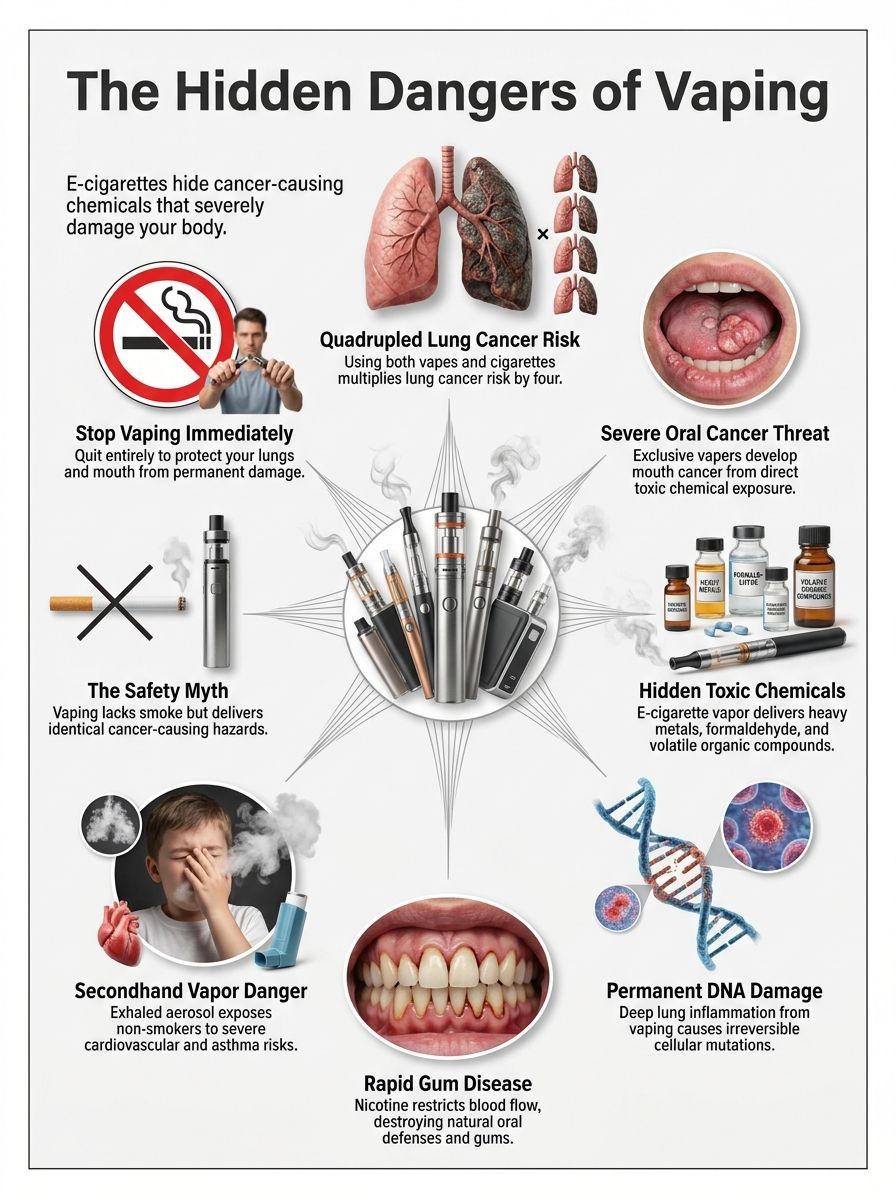
Recent U.S. epidemiological studies show dual users have a fourfold increased risk of developing lung cancer. Professor Stewart calls this review the most definitive assessment linking vaping to health compared to non-vapers.
The aerosol from vaping devices contains cancer-causing chemicals. Formaldehyde and volatile organic compounds hide inside the vapor. These substances damage lung tissue over time.
Your lungs absorb these harmful particles with each puff. The nicotine addiction keeps users coming back for more exposure. Vaping affects the cardiovascular system, and respiratory infections increase.
Young adults and high school students face particular danger since their lung development is still ongoing. The American Lung Association warns that this threat is real and growing.
Your body cannot fight off these chemicals the way it fights off other invaders. The damage builds up slowly, like rust on metal, until serious health problems emerge.
Oral Cancer Risks Associated with E-Cigarettes
Dentists across the country are sounding the alarm about a troubling trend. They are seeing oral cancer cases in patients who have never smoked traditional cigarettes. These individuals vaped exclusively, yet they developed cancerous cells in their mouths.
Case reports from dental professionals highlight instances of oral cancer in people with only vaping history. The evidence emerging from research between 2017 and 2025 shows that vaping products are linked to various cancers, including oral cancer.
Professor Becky Freeman from the University of Sydney stressed the importance of these findings for young people who have never smoked. The chemicals in e-cigarette vapor can trigger changes in oral tissues.
These changes mirror what doctors see in traditional smokers. Nicotine and other harmful substances damage the delicate tissues inside your mouth. The cells begin to transform in dangerous ways.
This transformation can lead to cancer development over time. Vaping independently contributes to cancer risk, not just as a gateway to smoking traditional cigarettes. This fact matters greatly for public health discussions and youth vaping prevention efforts.
Your mouth faces direct exposure to vape emissions every single time you inhale. The vapor travels across your lips, gums, tongue, and throat. Each puff deposits toxic chemicals directly onto sensitive oral tissues.
Diacetyl and vitamin E acetate are just two substances found in vape products. These chemicals damage cell structures and promote cancerous growth. Oral health deteriorates rapidly under this chemical assault.
Gum disease develops alongside the cancer risk. Your teeth and gums suffer from chronic inflammation caused by vaping. The Centers for Disease Control and Prevention continues to investigate these health effects.
Medical experts from Johns Hopkins School of Medicine have documented the dangers. Dentists report seeing gum disease, tissue damage, and pre-cancerous lesions in vapers. The U.S. Surgeon General has warned about these risks.
Young people face the greatest danger because their cells are still developing. Brain development continues into the mid-twenties, and oral tissues are equally vulnerable during youth years.
Smoking cessation programs now include vaping as a serious health threat that requires immediate attention and intervention.
Harmful Chemicals Found in Vape Emissions
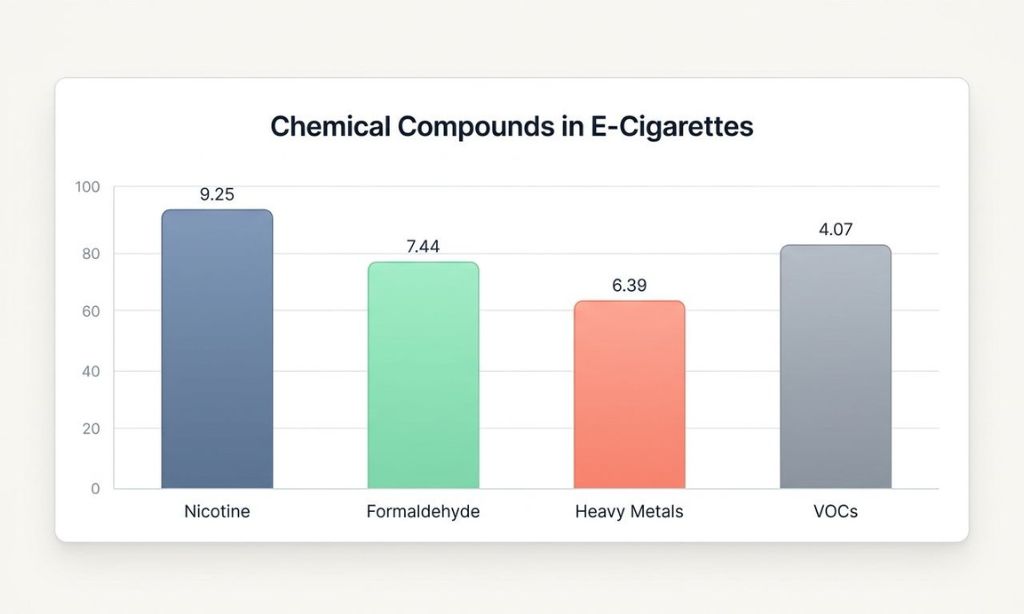
Vape emissions pack a toxic punch that most people never see coming, and the chemicals inside them rival traditional cigarettes in their danger.
| Chemical Compound | Source in E-Cigarettes | Health Impact |
|---|---|---|
| Nicotine | Primary ingredient in vape liquid | Causes addiction, increases heart rate, and damages blood vessels |
| Formaldehyde | Created when propylene glycol heats up | Known carcinogen linked to cancer development |
| Acetaldehyde | Byproduct of heating vape liquid ingredients | Recognized carcinogen that damages DNA |
| Propylene Glycol | Common base ingredient in e-liquids | Produces harmful compounds when heated |
| Volatile Organic Chemicals (VOCs) | Released during the vaping process | Carcinogenic compounds that harm lung tissue |
| Heavy Metals | Leach from heating coils during use | Include tin, lead, and nickel, which can cause serious organ damage |
| Flavoring Agents | Added to create appealing taste profiles | Produce harmful byproducts; linked to inflammation |
Your lungs face real trouble when you inhale these substances. Scientists discovered that e-cigarette aerosols contain multiple carcinogenic compounds that your body cannot easily process. Heavy metals from heating coils contaminate every puff, accumulating in your respiratory system over time. Formaldehyde and acetaldehyde, both recognized carcinogens, form when the device heats vape liquid to high temperatures.
Flavoring agents sound innocent, but they transform into something dangerous when heated. Your mouth tissues absorb these chemicals directly, triggering inflammation that weakens your gum protection. Propylene glycol breaks down into toxic byproducts that damage your cells at the molecular level. Biomarkers found in e-cigarette users show clear signs of DNA damage and tissue inflammation spreading throughout their bodies.
Volatile organic chemicals escape from the vapor into your lungs, where they attack healthy cells. Your body responds with inflammation, trying to fight off the invasion. Over repeated exposure, this constant battle weakens your immune system’s ability to prevent cancer development. The heating coil releases tin, lead, and nickel directly into the aerosol you breathe in.
Nicotine itself restricts blood vessels, reducing oxygen flow to your organs. This stress on your cardiovascular system compounds the damage from other chemicals present in the vapor. Smokers switching to e-cigarettes often think they’ve made a safer choice, but the evidence tells a different story. Your lungs cannot distinguish between traditional cigarette smoke and vape aerosol when both contain carcinogens.
How Vaping Damages Lung Health Over Time
Your lungs take a beating every time you inhale vape smoke. Scientists at Johns Hopkins University discovered that e-cigarette vapor causes inflammation and DNA damage in lung tissue, the exact same problems that lead to cancer.
Think of your lungs like a forest; repeated fires damage the trees and make them sick. E-cigarette users show high levels of oxidative stress in their lungs, which means their cells are under constant attack.
Research shows that lung changes from vaping mirror those caused by traditional smoking. Animal studies proved this point clearly; mice exposed to e-cigarette vapor developed lung tumors at higher rates than mice that were not exposed.
The CDC warns that this damage builds up over time, and many users do not feel sick until serious problems appear. Your lung tissue does not heal fast enough to keep up with the constant assault from vaping chemicals.
Long-term vaping use opens the door to chronic obstructive pulmonary disease (COPD), emphysema, and other serious lung injuries. Biomarkers show that e-cigarette users experience tissue inflammation similar to smokers, yet many people still think vaping is safe.
Cellular mutations linked to cancer appear in lung tissue after repeated exposure to vape emissions. The damage does not stop at your lungs either; your heart disease risk climbs higher with each puff.
Young people face an extra threat because their lungs are still growing and developing. Middle school students and other adolescents who vape today may face lung problems for the rest of their lives.
Popcorn lung, a condition called bronchiolitis obliterans, has struck some vape users and destroyed their ability to breathe normally. Your lungs cannot tell the difference between vaping and smoking; both cause serious, lasting harm that compounds year after year.
The Impact of Vaping on Oral Health and Gum Disease
Your mouth faces serious trouble from vaping. Scientists have documented oral cancers in people who never smoked cigarettes, only vaped. Dentists report tissue inflammation in the oral cavity from e-cigarette use.
These changes mirror what traditional smokers experience. The cells and tissues inside your mouth show significant alterations from vape inhalation. Adjunct Prof. Bernard Stewart noted these biological changes in oral tissues linked to cancer risk.
Vape users display higher levels of a biomarker associated with oral cancer. Your gums and mouth tissues suffer damage that builds up over time.
Gum disease develops faster in people who vape regularly. The chemicals in vape emissions irritate your gums and soft tissues. Your mouth’s natural defenses weaken from repeated exposure to these harmful substances.
Nicotine constricts blood vessels, reducing blood flow to your gums. This poor circulation makes your mouth more vulnerable to infections and disease. Oral health deteriorates as inflammation spreads through your gum tissue.
The Centers for Disease Control and Prevention tracks these health trends closely. Your teeth and gums pay the price for vaping, even if you think it’s safer than smoking traditional cigarettes.
Secondhand Vaping: Risks to Non-Smokers
Secondhand vape exposure affects people who never chose to vape. Vape shops and online retailers have made e-cigarettes easy to find, so more people encounter vapor in shared spaces like offices, schools, and restaurants.
The CDC and FDA are tracking these secondhand effects, especially among young people. Bystanders breathe in chemicals that vapers exhale, and these chemicals can harm their lungs and hearts.
Children face particular danger in homes where adults vape. The vapor contains nicotine, formaldehyde, and other toxic substances that linger in the air. Non-smokers have no control over their exposure, yet they face real health risks from secondhand vaping.
Public health campaigns now focus on protecting people from unwanted vape exposure. Regulations in Australia banned disposable vapes in 2023, yet vapes still reach people outside pharmacies, showing how hard it is to control access.
Health professionals push for stronger rules on e-cigarette marketing and sales to shield minors and non-users from harm. The escalating popularity of vaping among adolescents and young adults means more secondhand exposure in shared environments.
Panagis Galiatsatos and Michael Joseph Blaha, lung specialists, stress that secondhand vapor poses serious cardiovascular disease and asthma risks. The FDA must enforce stricter measures to protect non-smokers who deserve clean air to breathe.
Misconceptions About Vaping Safety
Many people think vaping is safe because it lacks smoke, but this belief misses the real danger. E-cigarettes deliver nicotine through vapor, not fire, so folks assume they pose no serious health risks.
The Food and Drug Administration has raised concerns about this false sense of security. Professor Stewart made it clear: vaping causes cancer, and we cannot claim e-cigarettes are safer than traditional cigarettes.
Dual users who both vape and smoke face a fourfold increased risk of developing lung cancer, according to recent U.S. epidemiological studies. The Centers for Disease Control and Prevention tracks these trends closely.
Marketing campaigns introduced e-cigarettes in the early 2000s as a safer alternative, and that message stuck in people’s minds. However, emerging evidence contradicts this notion completely. Nicotine withdrawal symptoms drive many users back to vaping, creating a cycle that keeps them trapped.
The carcinogenic data merit serious caution, though some experts note vaping lacks combustion products found in traditional smoking. This distinction does not mean vaping is harmless; it simply means the danger takes a different path.
Many individuals who vape also smoke, which complicates our ability to isolate vaping’s true effects from tobacco’s impact. The National Youth Tobacco Survey shows young people fall for these misconceptions regularly.
Mental health concerns and nicotine addiction keep users hooked on devices like Elf Bar products. Live Vape Free campaigns work to educate people, yet misconceptions persist in Miami-Dade County, Ohio, and across the nation. Scientists continue studying long-term effects, and the picture grows darker each year.
The Long-Term Health Consequences of E-Cigarette Use
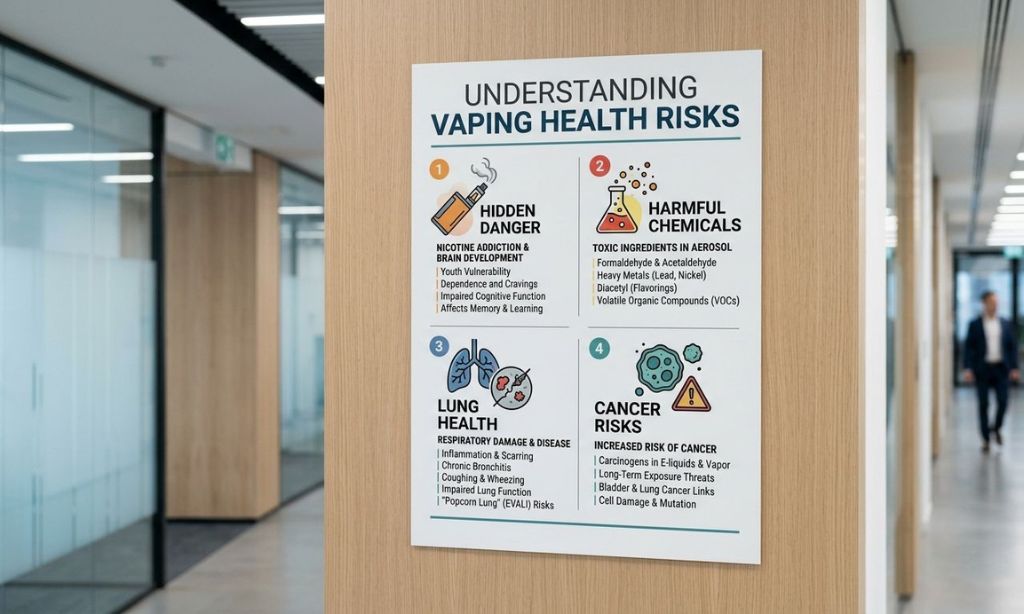
Scientists struggle to paint a complete picture of vaping’s long-term damage because e-cigarettes only hit the market in the early 2000s. This means researchers lack decades of data on how vaping affects people over their lifetimes.
The American Cancer Society has raised serious concerns about this information gap. Early warning signs show DNA damage and inflammation in vapers’ bodies, yet experts cannot pinpoint exact cancer risk numbers right now.
Doctors like Ignacio Tapia, MD, and researchers across the CDC and Jackson Health System continue studying these connections. The truth is, we will not see a definitive moment in the near future when scientists declare the precise cancer risks tied to vaping.
This uncertainty leaves millions of vapers in a fog about what lies ahead for their health. Lung damage stands out as one of the most troubling consequences vapers face over time. Vaping causes inflammation deep inside the lungs, and this inflammation builds up year after year.
Some patients develop pneumothorax, a collapsed lung condition that demands immediate medical attention. Pregnant women face extra worry since vaping during pregnancy may harm developing babies.
The American Neurological Association and other health groups have flagged serious concerns about neurological effects too. Current methods for quitting vaping, such as nicotine gum, simply do not work for people trying to stop.
This leaves vapers stuck in a cycle with no clear exit route. Ongoing research aims to give the public a clearer picture of these health dangers, so communities in South Florida, Holmes County, and across the nation can make smarter choices about their bodies.
Related Health News and Studies
Scientists from the University of New South Wales, the University of Queensland, Flinders University, and the University of Sydney joined forces to examine vaping risks. Led by Adjunct Professor Bernard Stewart AM, this research team pulled data from 2017 to 2025 to build their case.
Their study, titled “The carcinogenicity of e-cigarettes: a qualitative risk assessment,” was published in the journal Carcinogenesis in 2026. Experts in pharmacology, epidemiology, thoracic surgery, and public health all contributed their knowledge.
The CDC and health organizations like the Holmes County General Health District track vaping-related lung injury cases. These agencies collect real-world data that backs up what scientists discover in labs.
Ryan Terrigan and Kelly Dremann represent the growing number of health professionals sounding alarms about e-cigarette dangers.
Major health institutions now recognize that vaping causes serious problems beyond what many people think. Studies show nicotine-based e-cigarettes carry real risks for lung and oral cancers, even if they seem safer than old cigarettes.
The research proves vaping is not a risk-free choice, no matter what marketing claims suggest. Health departments across the country monitor emerging trends and share findings with the public. These studies matter because they shape policies and help doctors talk to patients about the true costs of vaping.
Steps to Reduce Vaping-Related Health Risks
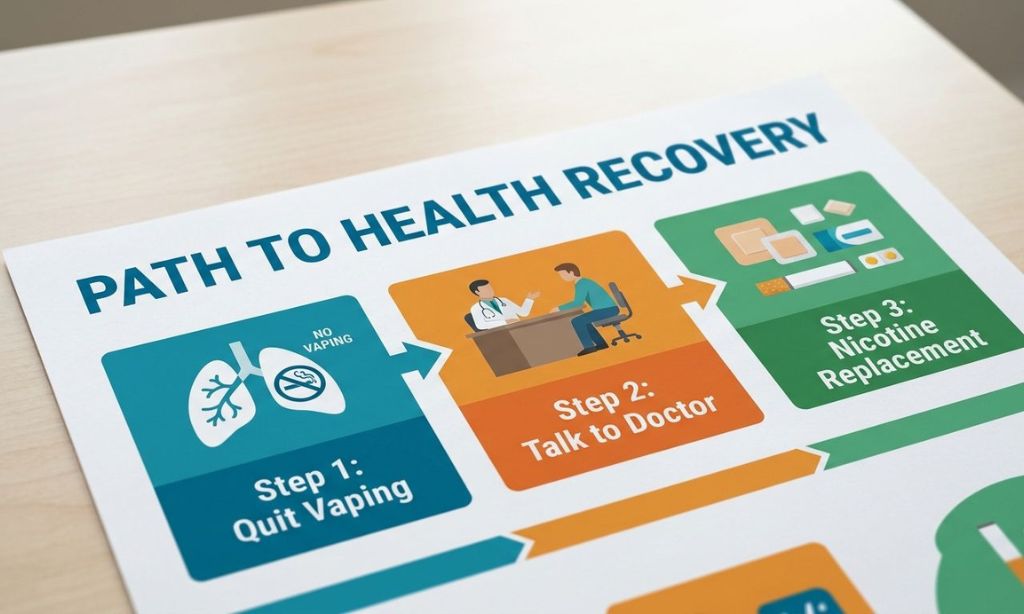
You can cut your vaping health risks right now. These steps work fast and give real results.
- Quit vaping entirely because stopping is the most effective way to protect your lungs and mouth from cancer risks that scientists link to e-cigarettes.
- Talk to your doctor about smoking cessation programs that can help you kick the habit for good, especially if you struggle with nicotine addiction.
- Switch to approved nicotine replacement therapy like patches or gum, which the CDC recognizes as safer options than vaping for people trying to quit.
- Avoid vape shops and corner stores that sell e-cigarettes illegally, since many products contain harmful chemicals that damage your oral health and lungs over time.
- Learn about the toxic chemicals in vape emissions, including formaldehyde and acetaldehyde, so you understand what enters your body with each puff.
- Keep vaping away from children and teens in your home, as young people face greater risks from nicotine and cancer-causing substances in vape products.
- Reduce your daily vaping frequency by cutting back gradually, which lowers your exposure to harmful compounds that trigger lung and oral cancer.
- Check pharmacy regulations in your area, since Australian laws restrict vape sales to pharmacies for smoking cessation purposes only, not recreational use.
- Join a support group with others quitting vaping, because shared experiences and encouragement make staying smoke-free much easier and more achievable.
- Read public health campaigns about vaping dangers so you stay informed about new research linking e-cigarettes to serious health problems.
- Protect non-smokers around you by stopping secondhand vaping exposure, which carries real risks to people who don’t vape themselves.
- Ask your dentist about gum disease prevention since vaping damages oral tissues and increases your risk of infections and tooth loss.
Final Words
Scientists have sounded the alarm, and the evidence speaks for itself. Vaping is not the safe alternative many people thought it was, and research from institutions like the Centers for Disease Control and Prevention confirms this reality.
Carcinogenic chemicals in e-cigarette aerosol damage your lungs and mouth, raising cancer risks that rival traditional smoking in some cases. The time to act is now, not after another century of studies has passed.
Protect yourself and your loved ones by understanding these dangers and making informed choices about your health.
FAQs on the Hidden Danger of Vaping
1. What have scientists found about e-cigarettes and cancer risk?
Scientists now link vaping to both lung and oral cancer. The CDC, or Centers for Disease Control and Prevention, warns that chemicals in e-cigarettes can harm cells in your mouth and lungs.
2. How do the CDC’s findings change what we know about vaping?
The CDC has shared new research showing a stronger connection between e-cigarette use and certain cancers than people once thought. This means vaping is not as safe as many believed.
3. Can using e-cigarettes really damage your health even if you never smoked before?
Yes, according to the Centers for Disease Control and Prevention, even people who never touched regular cigarettes can face risks from vaping. Harmful substances in vape products may trigger changes leading to lung or oral cancer.
4. Should I worry if someone close to me vapes often?
If someone you care about uses e-cigarettes a lot, it’s smart to talk with them about these dangers highlighted by recent studies from the CDC. Even though some folks think of vapes as harmless clouds, science says there are real risks hiding inside that misty puff.