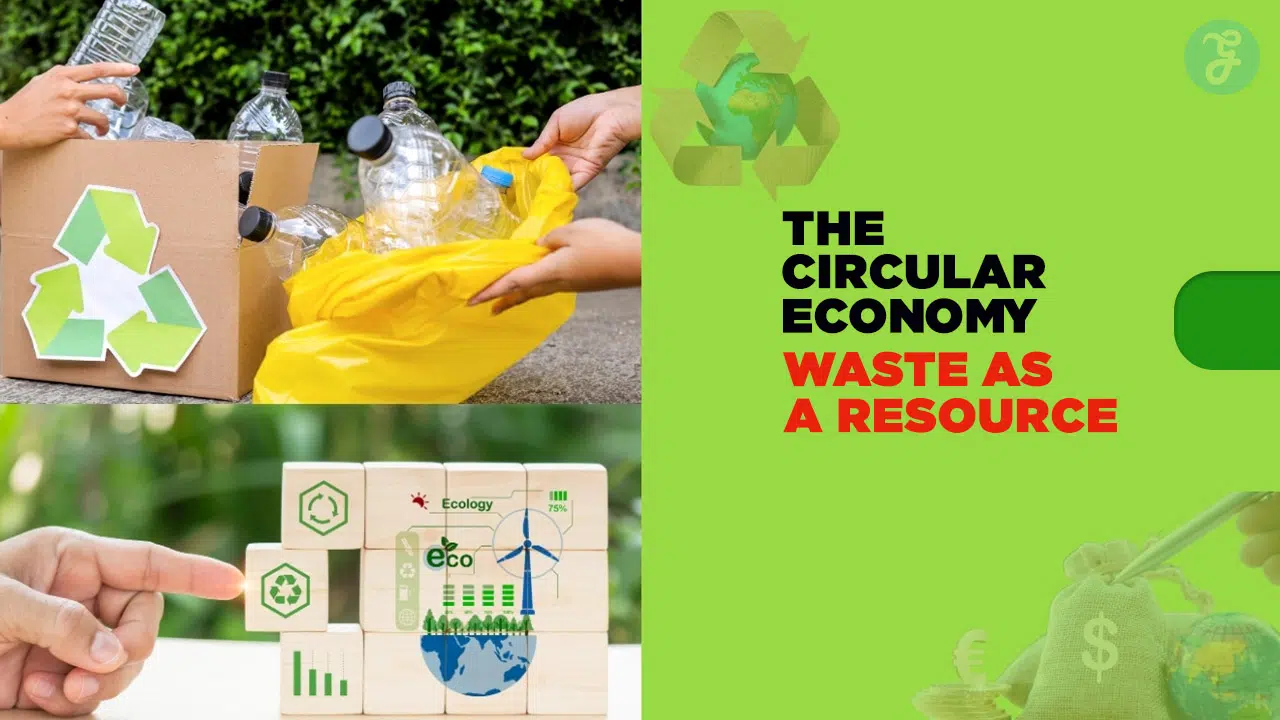
Does your trash can seem to fill up faster than you can empty it? You buy something, use it for a while, and then toss it. Landfills keep growing, and our natural resources are shrinking. It’s a cycle that feels impossible to break.
But here is a different way to look at it. The circular economy changes this old pattern by turning that “waste” back into new materials for making other things.
If you want to make less trash while saving money, stick around. I’ll walk you through exactly how it works.
What is the Circular Economy?
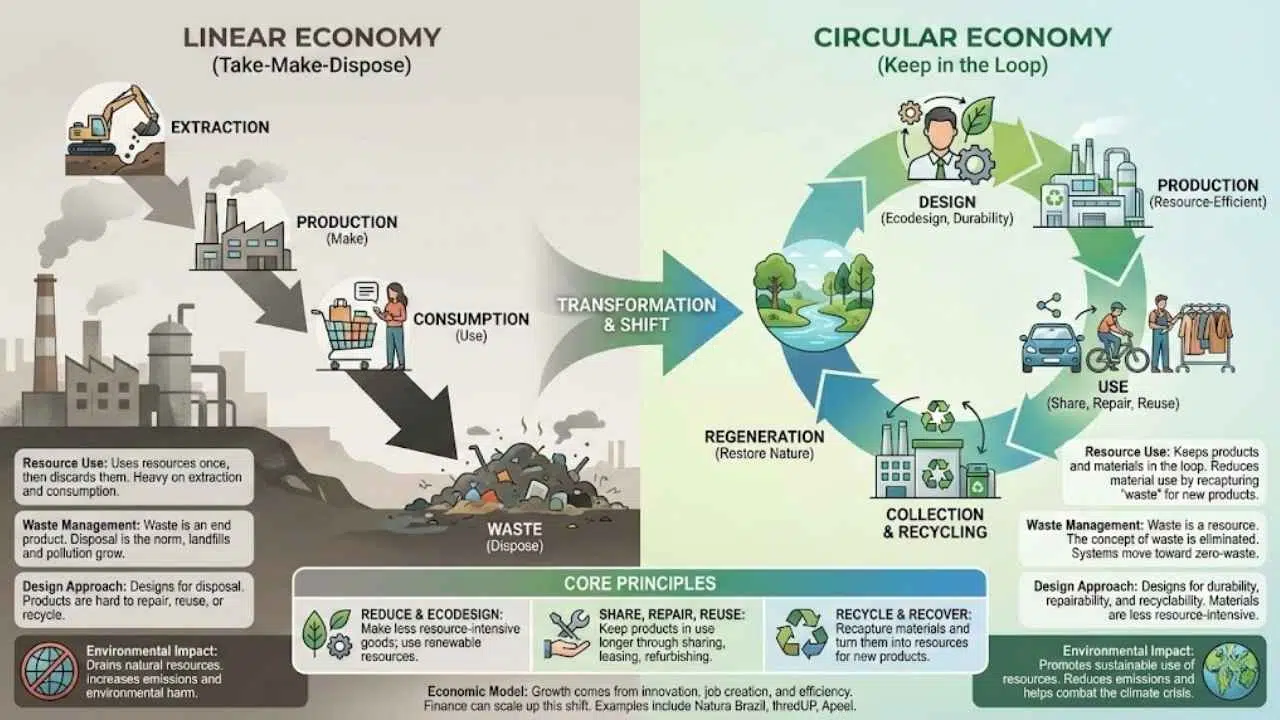
The circular economy flips the script on waste. Instead of the traditional “take-make-waste” model, this system treats every material as a valuable resource to be kept in the loop for as long as possible.
Definition and core principles
A circular economy is a system where materials never become waste and nature is restored. The goal is to keep products in use, sharing, repairing, reusing, and recycling items instead of throwing them away.
This closed-loop system recaptures materials and turns them into resources for new products. This cuts down on the need to extract more raw materials or send garbage to landfills.
Core principles focus on reducing material use and making less resource-intensive goods through ecodesign. For example, Natura Brazil uses renewable resources in their cosmetics, while other companies recycle old clothing or food scraps.
These efforts aim to cut pollution, save energy, recover valuable materials, and protect natural ecosystems. By choosing these ways of managing waste, we move closer to zero-waste living.
Linear economy vs. circular economy
Two different economic models shape how we use resources. The table below breaks down the big differences between the old linear way and the new circular approach.
| Aspect | Linear Economy | Circular Economy |
|---|---|---|
| Definition | Take, make, dispose. Products move in a straight line from raw material to waste. | Materials never become waste. Nature is regenerated. Products stay in use as long as possible. |
| Resource Use | Uses resources once, then discards them. Heavy on extraction and consumption. | Keeps products and materials in the loop. Reduces material use by recapturing “waste” for new products. |
| Waste Management | Waste is an end product. Disposal is the norm, landfills and pollution grow. | Waste is a resource. The concept of waste is eliminated. Systems move toward zero-waste. |
| Design Approach | Designs for disposal. Products are hard to repair, reuse, or recycle. | Designs for durability, repairability, and recyclability. Materials are less resource-intensive. |
| Examples | Single-use plastic bottles, fast fashion, electronics with short lifespans. | Sharing, leasing, reusing, repairing, refurbishing, recycling. thredUP, Apeel, Natura Brazil. |
| Environmental Impact | Drains natural resources. Increases emissions and environmental harm. | Promotes sustainable use of resources. Reduces emissions and helps combat the climate crisis. |
| Economic Model | Profit from selling more new products. Linear growth depends on resource extraction. | Growth comes from innovation, job creation, and efficiency. Finance can scale up this shift. |
Key Principles of the Circular Economy
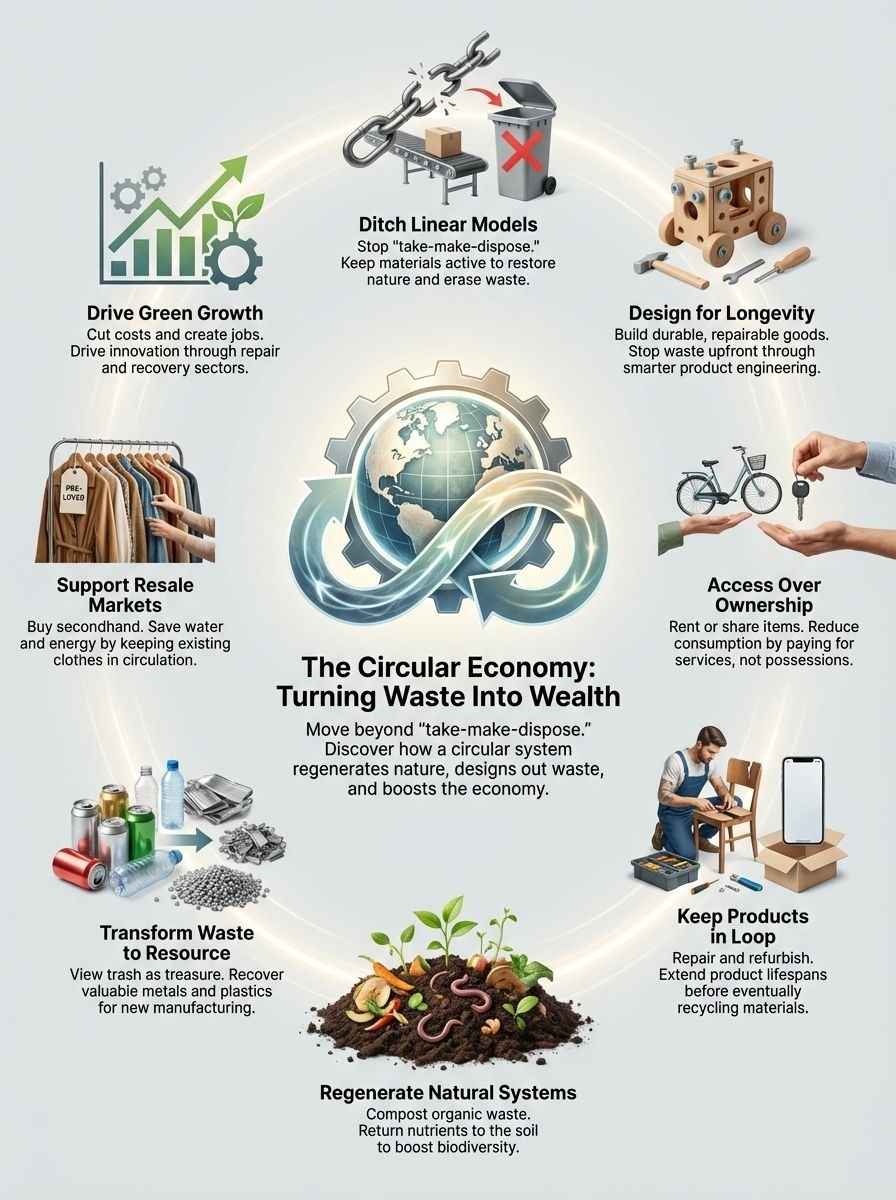
These basic ideas shape a system where old things find new life instead of ending up as trash. They shift how we think about stuff, making waste part of the solution.
Eliminate waste and pollution
Factories and companies are starting to use smarter designs to stop waste before it starts. In a circular economy, products are made to last longer, be fixed easily, or be taken apart for recycling.
Instead of trashing things after one use, people share, repair, or reuse items in everyday life. The goal is simple: Keep materials out of landfills and cut down on pollution.
“According to the Circularity Gap Report 2025, only 6.9% of the global economy is currently circular. This means over 90% of materials are either wasted, lost, or unavailable for reuse, highlighting the massive opportunity for improvement.”
Major brands are rethinking packaging by using renewable resources and less plastic. Cities are testing zero-waste rules to limit single-use plastics and promote composting programs. Each small switch helps shrink pollution in our air, water, and soil.
Circulate products and materials
Products and materials should stay in use for as long as possible. Instead of tossing items after one life, people give them another chance through repair, reuse, or upcycling.
Sharing platforms like thredUP let old fashion find new fans instead of ending up in the landfill. Companies design phones and shoes with parts that can be swapped out or recycled easily.
Reusing saves money and cuts waste at its root. Closed-loop systems turn yesterday’s “waste” into tomorrow’s resource. For example, some factories use scrap metal to make new appliances.
A simple glass bottle could travel a full circle—refilled, cleaned, or melted down to make another bottle—without becoming trash along the way. This approach protects nature and keeps our resources working harder for us all.
Regenerate natural systems
Nature rebuilds faster when people work with it rather than against it. The circular economy breathes new life into soil and forests by giving resources back to nature.
Composting turns food scraps into rich soil instead of sending them to landfills. Cutting waste and reusing materials helps water stay clean and air fresh for everyone.
Farmers use fewer chemicals because compost makes plants strong without harsh inputs. Cities plant more trees to cool down hot places and help wild animals too. Big companies like Natura Brazil champion sustainable farming so they do not drain the Earth dry.
Every small action piles up. Each choice means less harm to rivers, oceans, birds, and bees. By shifting habits even a little bit, people spark large changes in natural systems over time.
How the Circular Economy Works
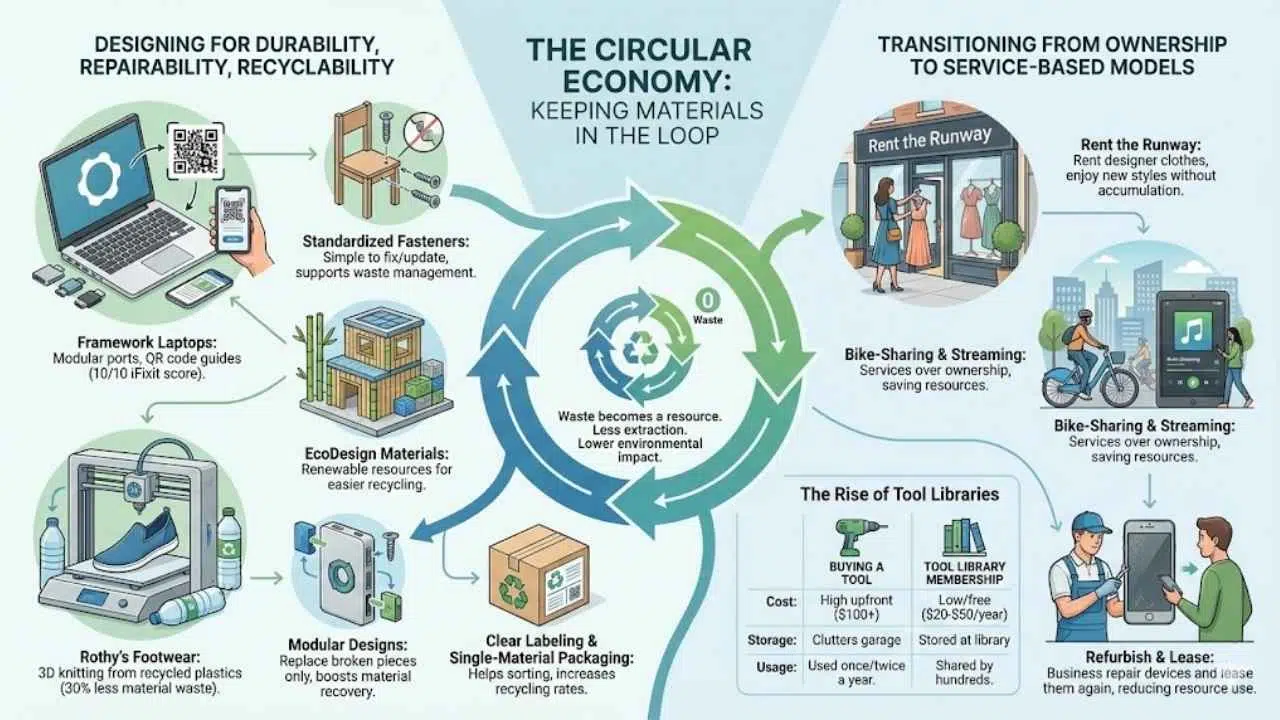
Imagine a world where goods stay useful much longer, saving money and resources. Simple changes in design help keep things working, with less waste piling up everywhere.
Designing for durability, repairability, and recyclability
Products today should last longer, break less, and return to use at the end of life. The circular economy demands smarter design for true resource efficiency.
- Framework Laptops: These computers act as a perfect example of repairability. They received a 10/10 score from iFixit because they use QR codes to guide repairs and feature modular ports you can swap out yourself.
- Rothy’s Footwear: This brand uses 3D knitting technology to create shoes from recycled plastic bottles. This method reduces material waste by 30% compared to traditional cut-and-sew manufacturing.
- Standardized Fasteners: Using screws instead of glue makes furniture or electronics simple to fix or update. This supports waste management goals and saves raw materials.
- EcoDesign Materials: Using renewable materials like recycled plastics or bamboo in construction makes recycling simpler while lowering environmental impact.
- Modular Designs: These allow users to replace only broken pieces rather than tossing the whole item. This closes the loop and boosts material recovery efforts.
- Clear Labeling: Labels on products help recyclers sort items correctly. This increases recycling rates and reduces landfill waste.
- Single-Material Packaging: Packaging made from one material is easier to recycle than mixed-plastic wrappers. Companies switching to one type help reprocessors recover more valuable material every year.
Transitioning from ownership to service-based models
Shops now offer services instead of selling things forever. Think of bike-sharing in cities or streaming music rather than buying CDs.
Companies like Rent the Runway rent out designer clothes, letting people enjoy new styles without filling closets with unused items. This shift keeps materials in use longer and stops so much waste from building up.
The Rise of Tool Libraries:
You don’t always need to own a drill; you just need a hole in the wall. Tool libraries are popping up across the US to solve this exact problem.
| Feature | Buying a Tool | Tool Library Membership |
|---|---|---|
| Cost | High upfront cost ($100+ for a good drill) | Low or free (often $20-$50/year) |
| Storage | Clutters your garage or closet | Stored at the library |
| Usage | Used once or twice a year | Shared by hundreds of neighbors |
Businesses repair or refurbish old devices and then lease them again. The circular economy model cuts down on resource use because less stuff gets tossed away. Waste becomes a source for something new as materials go back into the loop instead of heading to landfills.
Turning Waste into a Resource
Have you ever seen someone turn trash into treasure? With the right ideas, waste can become a valuable tool if you know where to look.
Recycling and reusing materials
Recycling and reusing materials sit at the heart of the circular economy. These steps keep resources in play, cut waste, and help protect nature for future generations.
Recycling breaks down used products into raw materials. Factories then use these to make new items. Aluminum cans are a great example; about 75% of all aluminum ever produced is still in use today because it can be recycled infinitely.
Reusing extends an item’s life by giving it a second chance. ThredUP does this with clothing, letting people buy and sell gently-used fashion instead of sending it to landfills.
Upcycling turns old or unwanted materials into something better or more valuable. Artists often craft furniture from wood pallets, while companies like TerraCycle create park benches from plastic waste.
Material recovery facilities sort, clean, and prepare recyclables for new uses. In the United States alone, these sites handle millions of tons of waste yearly. Recycling electronics captures valuable metals such as gold or copper found inside old phones or computers.
Composting organic waste
Composting gives new life to food scraps and yard clippings. It keeps these materials out of landfills and turns them into rich soil.
- Natural Transformation: Composting transforms organic waste like fruit peels, veggie ends, coffee grounds, and leaves into valuable compost through natural decomposition.
- Soil Health: This process returns nutrients back to the earth. It helps regenerate natural systems and boost healthy plant growth.
- Emissions Reduction: Food scraps make up a significant portion of landfill content. Turning this into compost shrinks greenhouse gas emissions from trash sites.
- Success Story: San Francisco has achieved an 80% diversion rate, largely due to its mandatory composting program started in 2009. It serves as a model for other US cities.
- Fewer Chemicals: Using finished compost reduces the need for chemical fertilizers on farms and gardens. This supports sustainable agriculture with fewer harsh inputs.
- Closed-Loop: Composting supports a system where nothing goes to waste. Every banana peel or apple core becomes part of a cycle that benefits both people and nature.
Waste-to-energy technologies
Waste-to-energy technologies change trash into power or heat. These systems burn waste that cannot be recycled to make steam, which turns turbines and generates electricity.
“Facilities like the Covanta Hempstead plant in New York process over 1 million tons of waste annually. This operation generates enough electricity to power 75,000 local homes, proving that even non-recyclable trash has value.”
Energy from this process reduces landfill usage and cuts greenhouse gas emissions. For every ton of waste used, about 500 kilowatt-hours of electricity can be produced.
These solutions fit the circular economy model by turning material once seen as useless into valuable resources. They help reduce pressure on landfills while providing a steady supply of energy.
Benefits of the Circular Economy
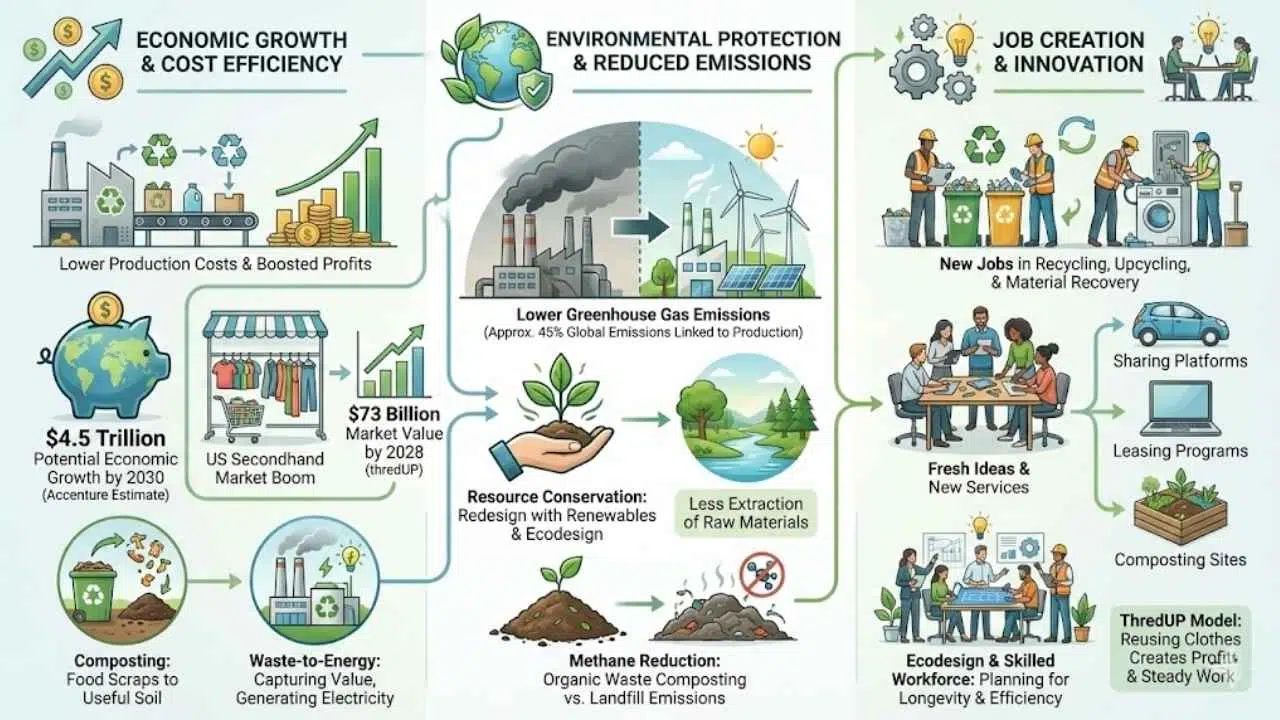
Switching to a circular economy makes wallets happier, air cleaner, and brings fresh ideas and jobs. Curious for more? Keep reading!
Economic growth and cost efficiency
A circular economy gives businesses a boost. By focusing on reuse, repair, and recycling, companies spend less on raw materials. This lowers production costs and helps profits grow.
A report by Accenture estimated that the circular economy could unlock $4.5 trillion in economic growth by 2030. Keeping products in use for longer saves money.
The resale market is booming in the US. ThredUP projects the US secondhand market will reach $73 billion by 2028. This proves that consumers are ready to spend money on used goods if the quality and convenience are there.
Many cities also find savings through waste management changes. Composting turns food scraps into useful soil instead of sending them to landfills. Waste-to-energy plants capture value by making electricity from things people throw away.
Environmental protection and reduced emissions
Switching from a take-make-waste system to the circular economy helps cut pollution and fight climate change. By keeping materials in use for as long as possible, waste management becomes smarter.
- Lower Emissions: Recycling and reusing lower greenhouse gas emissions. This is vital since about 45% of global emissions relate to how we produce products and food.
- Resource Conservation: Companies redesign products with renewable resources and ecodesign. This means less need for new raw materials that can harm nature when gathered or processed.
- Methane Reduction: Composting organic waste turns leftovers into healthy soil instead of methane-emitting landfill trash.
Job creation and innovation
Shifting to a circular economy sparks new jobs and fresh ideas. More recycling, upcycling, and material recovery open doors in waste management. Companies now hire workers to collect, repair, or refurbish products instead of sending them to landfills.
New services pop up every day. Think of sharing platforms, leasing programs, and composting sites. These businesses need skilled people for design, logistics, tech support, and customer service.
Groups like thredUP show how reusing clothes creates not just profit but steady work too. Fresh thinking spills into ecodesign. Engineers plan products that last longer and use fewer resources right from the start.
Real-World Examples of the Circular Economy
People around the world are using smart ways to make old things useful again. Some companies have turned food, clothes, and even beauty items into new products with less waste.
Apeel for food preservation
Apeel uses a plant-based coating to help fruits and vegetables last longer. This layer acts like a second skin, slowing down spoilage and keeping food fresh without plastic wrap or extra packaging.
By using materials made from peels, seeds, and pulp that would usually become waste, Apeel fits right into the circular economy model. Major US retailers like Kroger and Costco now carry Apeel-treated produce.
This innovation helps cut down on resource use by reducing the need for single-use plastics in food preservation. Shoppers enjoy produce that stays fresher for twice as long compared to untreated items. Every piece of fruit saved means less energy used in production, transport, and disposal.
ThredUP for fashion reuse
thredUP takes old clothes and gives them a new life. People send in their used fashion, which thredUP sorts, cleans, and lists on its site for others to buy.
In their 2024 Resale Report, thredUP noted that the US secondhand market is expected to reach $73 billion by 2028. Instead of buying new items, shoppers can choose from these secondhand pieces, saving money and cutting down on resource use.
Fashion is one of the largest polluting industries globally. By reusing clothes through platforms like thredUP, less water and energy are needed for making new clothes. Waste becomes a resource; shirts that might end up as trash get worn again by someone else instead.
Natura Brazil for sustainable cosmetics
Natura Brazil uses a circular economy approach to create sustainable cosmetics. The brand collects plant oils from the Amazon without harming forests, helping regenerate natural systems.
Instead of single-use plastic packaging, Natura designs refillable bottles and promotes recycling. They have reused and recycled thousands of tons of packaging materials through closed-loop systems.
Workers in local communities help harvest ingredients while earning fair wages. This supports both resource efficiency and social responsibility. By keeping products and materials in use as long as possible, Natura Brazil reduces waste and protects the environment.
Challenges and Opportunities in Adopting a Circular Economy
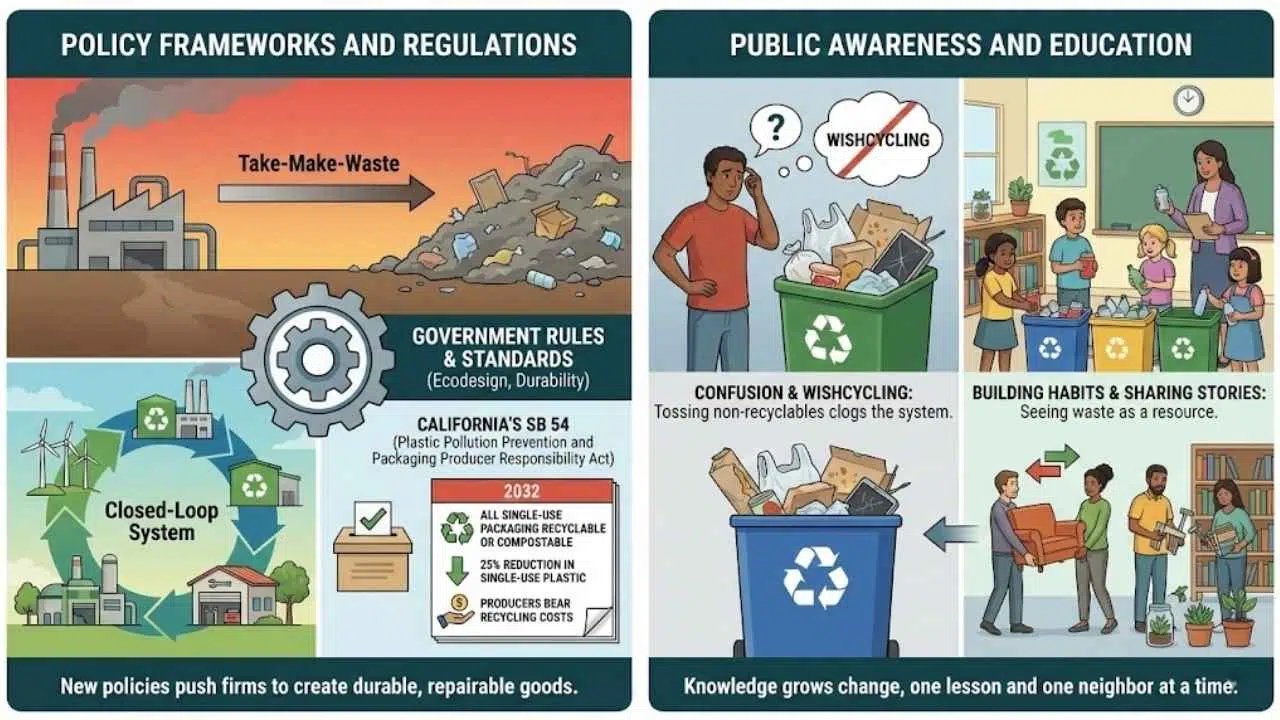
Switching to a closed-loop system takes teamwork, fresh thinking, and strong rules. Still, it opens a door to new jobs and smarter ways of handling our resources.
Policy frameworks and regulations
Government rules shape how the circular economy grows. Some laws require companies to recycle materials or use renewable resources instead of single-use items.
California’s SB 54:
Known as the Plastic Pollution Prevention and Packaging Producer Responsibility Act, this law is a game-changer. It requires that all single-use packaging in the state be recyclable or compostable by 2032. It also mandates a 25% reduction in single-use plastic packaging and shifts the cost of recycling from taxpayers to the producers.
New policies can help switch from a take-make-waste model to one built on sustainability. Setting standards for ecodesign pushes firms to create durable, repairable goods that fit into closed-loop systems.
Public awareness and education
One of the biggest hurdles is simple confusion. Many people want to recycle but end up “wishcycling”—tossing non-recyclable items into the bin and hoping for the best. This actually clogs up the system and makes recycling harder.
Kids sorting cans and bottles in class learn early that every bit counts. Adults swap furniture, borrow tools, or upcycle old jars at home. These simple acts build habits for a circular economy where people see waste as a resource.
Sharing these success stories helps more people join the shift. Knowledge grows change, one lesson and one neighbor at a time.
Final Thoughts
Switching to a circular economy puts waste to work, saves money, and helps our planet breathe easier.
You have learned how keeping products in use longer, recycling smartly, and rethinking design can bring new life to what was once thrown out. Simple changes like fixing instead of tossing or choosing reusable over single-use items are steps anyone can take.
Every small action adds up and fuels bigger wins for the environment. We get healthier air, cleaner water, and fewer landfills bursting at the seams.
If you want more tips on sustainable living, check out local workshops or trusted green sites online. A circular world is within reach, so why not start that change with your next choice?