You face rising energy bills and worry about your home’s impact on the planet. Many people struggle with old buildings that waste power and harm the air we breathe. Think of it like a leaky boat, slowly sinking under the weight of high costs and pollution.
Green building practices can fix this mess. They cut down on energy consumption and boost indoor air quality.
The construction industry changes fast to fight climate change and carbon emissions. One key fact stands out: sustainable buildings use renewable energy sources like solar panels to slash electricity use by up to 50 percent in many cases.
This post explores nine top ways, from passive solar designs to rainwater harvesting systems, that transform projects into net-zero buildings. We share tips on water conservation, sustainable materials, and more to help you build smarter.
Ready to go green?
Key Takeaways
- Sustainable buildings cut electricity use by up to 50 percent with solar panels.
- LED lights use 90 percent less power and last 25 times longer than old bulbs.
- Site maintenance happens on November 27, 2024, from 4:00 PM to 12:00 AM ET.
- LEED certification comes from the U.S. Green Building Council for green projects.
- Passive solar designs reduce energy costs by up to 50 percent in many cases.
Sustainable Design Practices
Imagine turning your home into a cozy fortress that sips sunlight like a morning coffee, cutting down on those hefty energy bills. Folks, let’s chat about how weaving nature right into your walls can boost moods and slash stress, like a breath of fresh air in a stuffy room.
Passive solar building design
Passive solar building design taps into the sun’s power smartly. Builders orient structures to catch sunlight through windows, walls, and floors. This setup heats spaces in winter and cools them in summer.
You feel that cozy warmth without cranking up machines, like nature’s own hug for your home.
Such designs cut down on artificial heating and cooling systems, slashing energy costs big time. Folks inside enjoy better comfort and health from all that natural light and fresh air flow.
Green buildings like these boost energy efficiency and shrink your carbon footprint, making sustainable design a win for everyone.
Biophilic design integration
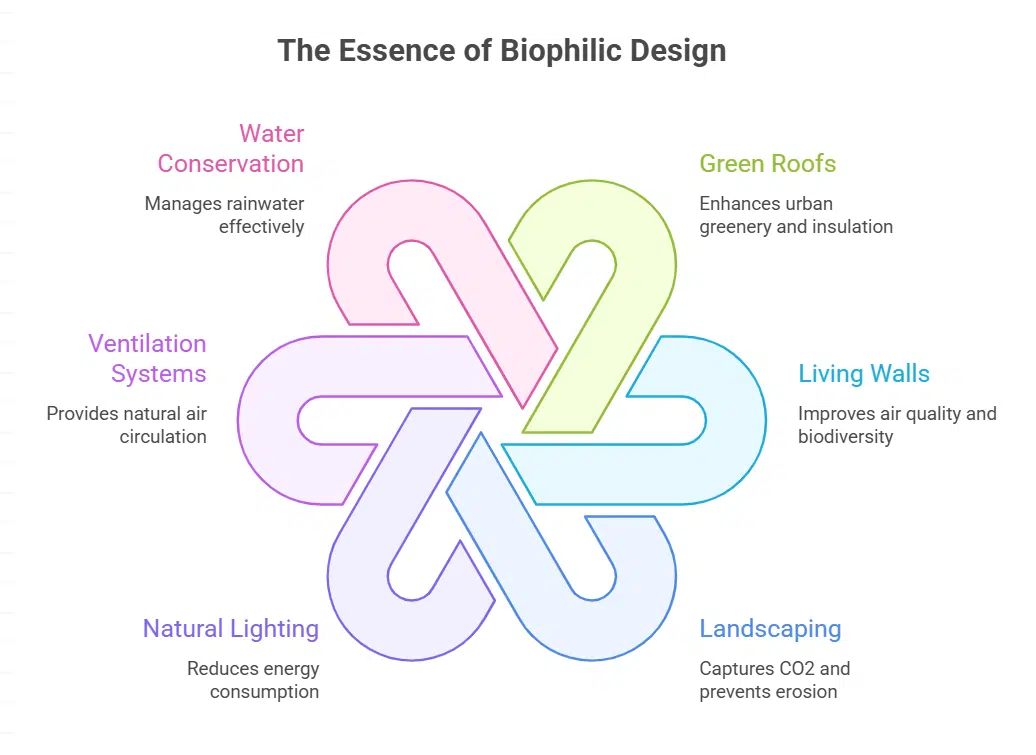
Biophilic design pulls nature right into your buildings, folks. Think green roofs and living walls that boost urban greenery. These features insulate structures, cut down on heating and cooling needs, and improve indoor air quality.
They promote biodiversity too, like a secret garden on your rooftop fighting off city heat. Plants and trees in landscaping capture CO2, prevent erosion, and lift mental health, turning concrete jungles into breathable spaces.
Picture workers chatting near a living wall, feeling that fresh vibe. This sustainable building practice slashes carbon emissions and supports climate action. It uses natural lighting and ventilation systems to reduce energy consumption.
Green roofs even help with water conservation by soaking up rain. In the end, these elements foster sustainable cities, blending green materials with everyday life for better environmental impact.
Energy Efficiency Strategies
Imagine your building sipping energy like a thrifty coffee drinker, not gulping it down. We explore smart choices, like top-notch glass.
High-performance windows and insulation
High-performance windows cut heat loss like a warm blanket on a cold night. Builders use double or triple glazing to trap air and block drafts. Low-emissivity coatings reflect heat back inside, keeping rooms cozy without cranking the thermostat.
These tweaks slash energy demand and trim utility bills, saving you money month after month. Imagine your home staying cool in summer, all while using less power from the grid.
Advanced insulation acts as a shield against wasteful energy leaks. It boosts energy efficiency in walls, roofs, and floors, reducing energy consumption for heating and cooling systems.
Pair it with those smart windows, and you move closer to net zero buildings. Oh, and heads up, our site has scheduled maintenance on November 27, 2024, from 4:00 PM to 12:00 AM ET, which might cause some delays or access issues if you’re checking resources then.
This setup supports environmental sustainability by cutting carbon emissions and promoting resource efficiency in green construction.
LED lighting systems
LED lights cut energy use big time. They sip up to 90% less power than old-school bulbs, like a smart squirrel saving nuts for winter. You get bright rooms without the high bills. These systems boost indoor air quality too, by ditching harsh heat and pollutants from traditional lights.
Builders love them for green building certifications, such as LEED from the U.S. Green Building Council.
Talk about lasting power. LED bulbs hang in there 25 times longer than regular ones, so you swap them out way less. This means fewer trips to the store and less waste in landfills.
Picture your home or office glowing steady, all while slashing carbon emissions and supporting sustainable practices. Energy-efficient lighting like this fits right into net-zero energy buildings, making clean energy a no-brainer for any project.
Renewable Energy Solutions
Imagine flipping a switch and powering your whole home with clean sunshine, that’s the magic of adding solar panels to your roof. Or picture small wind turbines spinning in your backyard, turning breezes into free electricity that cuts your bills and fights climate change—want to learn how to make this real for your project?
Solar power integration
Solar panels change the game in sustainable construction. They produce electricity right on your building, cutting reliance on non-renewable sources. This slashes carbon emissions and boosts energy efficiency.
Picture your roof as a mini power plant, you know, turning sunlight into savings. Costs drop over time, and hey, that’s like money in your pocket while fighting climate change.
These setups lead to self-sustaining buildings with renewable energy sources at the core. They feed into a greener energy grid, reducing the environmental impact of buildings. Builders integrate them with leadership in energy and environmental design standards for top results.
It’s smart, simple, and pushes sustainable development forward.
Wind energy incorporation
Builders incorporate wind energy to harness breezes for power. This approach maximizes natural resources like wind. Picture a turbine spinning on a rooftop, like a faithful fan cooling your home without the electric bill.
Teams install small wind turbines on buildings in windy spots. These systems generate clean electricity right where you need it.
You cut carbon emissions with this renewable energy source. It boosts energy efficiency in sustainable construction. Folks see lower energy costs over time. Enhanced comfort comes from steady power without grid worries.
Improved occupant health follows, thanks to fresher indoor air quality from reduced pollution. Imagine chatting with neighbors about your building’s wind setup, “Hey, our place runs on the breeze, how cool is that?
Rainwater harvesting systems
Rainwater harvesting systems catch rain from roofs and store it in tanks. You know, like a smart way to grab nature’s free gift before it runs off. These setups capture rainwater for irrigation and toilet flushing.
They cut down on water consumption in big ways, especially in dry spots. Picture your building sipping from the sky instead of guzzling from the tap, that’s pure genius for saving bucks and the planet.
Plus, they conserve water and manage stormwater runoff to stop floods in cities. Folks install gutters and filters to keep the water clean for reuse. This boosts resource conservation without much fuss.
Imagine telling your friends how your home recycles rain like a pro athlete reusing energy, it’s that efficient. Such systems fit right into sustainable building practices, slashing your carbon footprint one drop at a time.
Greywater recycling
Greywater recycling turns everyday wastewater from sinks, showers, and laundry into a smart resource for your building. Builders use it to flush toilets or water gardens, cutting down on fresh water needs.
Imagine your morning shower helping grow those backyard veggies; that’s like hitting two birds with one stone in water conservation. Low-flow faucets team up with this system, slashing water use even more.
Drip irrigation gets in on the act too, delivering recycled greywater right to plant roots without waste.
This practice conserves water big time and handles stormwater runoff like a pro, keeping floods at bay. Greywater recycling boosts indoor air quality by reducing dampness issues. Water dispensers fit right in, offering clean sips while the system reuses the rest.
Think of it as a circular economy loop in your home, fighting climate change and carbon emissions one drop at a time.
Use of Sustainable Materials

Locally sourced and renewable materials
Teams pick locally sourced materials to cut down on transport emissions. This choice boosts sustainable construction and lowers your project’s carbon footprint. Imagine hauling wood from far away; that burns fuel and harms the air.
Go local instead, and you support nearby economies too. Bamboo stands out as a star here. It grows fast, making it a renewable champ among building materials. Builders love it for floors and walls because it renews quickly without much fuss.
Reclaimed wood repurposes old lumber, slashing deforestation. This green material keeps trees standing tall in forests. You get that warm, rustic look without chopping down more. Think of it like giving wood a second life, full of character from its past.
Pair it with FSC certified options for extra peace of mind on sustainability. These picks improve indoor air quality and fit right into green building practices. They promote resource efficiency in a big way, helping fight climate change one project at a time.
Recycled and low-VOC materials
Builders pick recycled steel for green projects. This choice cuts raw material demand. Think of it as giving old metal a fresh start, like recycling your grandma’s favorite chair into something new.
Recycled steel fits into sustainable materials trends. It boosts resource efficiency in construction. Projects save big on carbon emissions this way. Teams love how it supports a circular economy.
Low-VOC materials improve indoor air quality. They cut down on air pollution inside buildings. Non-toxic options enhance health for everyone. Imagine breathing easy, no headaches from harsh fumes.
These green materials stay durable and high-quality. They look great too, adding aesthetic appeal. Opt for them in sustainable construction to promote better living spaces.
Circular Construction Practices
Material reuse and recycling
Material reuse and recycling cut carbon emissions and waste, all while they preserve history in your projects. Picture old bricks from a torn-down barn finding new life in a fresh home; that saves resources and adds a touch of story to the walls.
Teams grab reclaimed wood, which repurposes lumber and fights deforestation, making every build part of a circular economy. This approach boosts resource efficiency, turning what was trash into treasure for green building materials like recycled steel.
You see, folks often overlook how these practices slash the carbon footprint. A contractor I know recycled metal scraps into beams; it felt like giving the earth a high-five. Opt for such building materials, and you support sustainable construction without skimping on strength.
Greywater recycling pairs well here, but stick to reuse for that real eco-win.
Takeaway
We covered passive solar designs that grab sunlight for warmth, and biophilic touches that bring nature indoors. Builders now pick high-performance windows to cut energy loss, and LED lights to slash bills.
Solar panels turn roofs into power plants, while rainwater systems save every drop. These green steps feel like a walk in the park, simple to add and quick to pay off in savings. What if you swapped old bulbs for LEDs today, or planted a living wall tomorrow? Jump in, cut your carbon footprint, fight climate change, and watch your projects thrive with leed certification glory.
FAQs on Sustainability Trends in Modern Green Construction
1. Hey, what exactly are these sustainable building practices all about, you know, the ones transforming projects?
Well, think of sustainable construction as a smart way to build that cuts down on waste, like using green materials such as recycled steel to boost resource efficiency. It ties right into fighting climate change by lowering carbon emissions, and hey, it even promotes sustainable economic growth without breaking the bank. Plus, practices like installing solar panels tap into renewable energy sources, making your building a real eco-hero.
2. I’ve heard about green roofs, but how do they fit into green-building tricks?
Green roofs, those lush tops on buildings, improve indoor air quality and help with climate control by keeping things cooler in summer. They also support water conservation through rainwater harvesting systems, turning rain into a reusable buddy.
3. Can you explain LEED certification in simple terms, like chatting over coffee?
LEED certifications reward buildings that nail energy efficiency and use sustainable materials, sort of like a gold star for being kind to the planet. It covers everything from natural lighting to cutting the carbon footprint, guiding folks to meet tough building codes.
4. How does all this sustainability stuff tackle carbon emissions in construction?
By swapping in renewable energy like wind or solar, projects slash those pesky carbon emissions, it’s like giving the earth a high-five. Add in energy-efficient lighting and heating and cooling systems, and you’re on track for real resource conservation.
5. What’s the deal with living walls, are they just pretty or do they actually help?
Living walls aren’t just eye candy; they boost indoor air quality and aid in greywater recycling for better water conservation. They fit into the circular economy by reusing resources, turning your space into a breathing, green machine that fights climate change.
6. Why bother with sustainable architecture in today’s world, with all the building regulations out there?
Sustainable architecture weaves in environmental, social, and governance factors to push sustainable consumption and cut down on waste. Imagine it as building for tomorrow, using things like energy-efficient lighting to save bucks and the planet; it even includes fun bits like living walls for that fresh vibe.