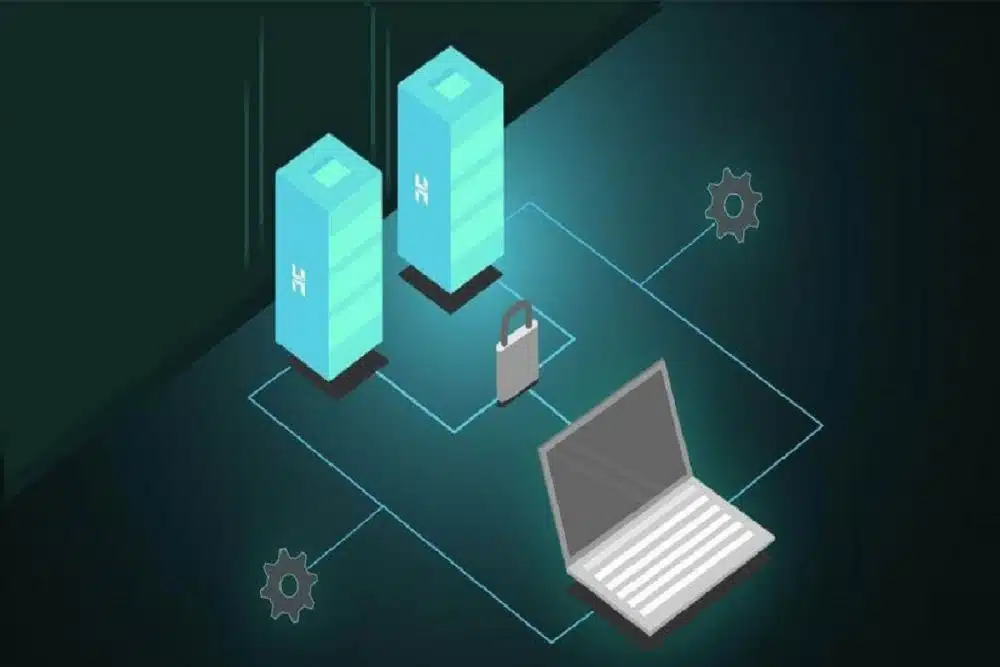
SCADA, or Supervisory Control and Data Acquisition, (learn more about SCADA) systems play a crucial role in industrial and infrastructure applications by enabling remote monitoring and control of equipment and processes. They gather data from various sensors and devices, process it in real time, and use it to control operations.
The core components of a SCADA system include:
- Remote Terminal Units (RTUs) or Programmable Logic Controllers (PLCs), serve as the bridge between the equipment and the SCADA system by collecting data from sensors and transmitting control commands;
- A communication network that connects the RTUs or PLCs to the SCADA host computer and could be wired or wireless with communication protocols such as Modbus, Profibus, or Ethernet;
- A SCADA host computer, which operates the SCADA software and serves as the central point of control and data collection, often featuring a graphical user interface (GUI);
- A Human-Machine Interface (HMI) software that runs on the host computer and provides the operator’s interface.
Applications of SCADA Systems
SCADA systems have a broad range of applications in different industries, such as:
- Electric Power Generation, Transmission, and Distribution: monitoring and controlling power plants, transmission lines, substations, and the flow of electricity on the grid;
- Water and Wastewater Treatment: monitoring and controlling water and wastewater treatment processes, including water flow, pump and valve operation, and water quality;
- Oil and Gas: monitoring and controlling oil and gas production, including wellheads, pipelines, and storage tanks;
- Manufacturing: monitoring and controlling manufacturing processes, including equipment and production line control.
Types of SCADA Software
There are various types of SCADA software, including Distributed Control Systems (DCS), Programmable Logic Controller (PLC) based SCADA, Human Machine Interface (HMI) SCADA, and cloud-based SCADA. Each type has its own features, so it’s crucial to understand an organization’s specific needs before choosing SCADA software.
Features of SCADA Systems
SCADA systems offer several services, such as:
- Remote monitoring and control: allowing operators to monitor and control equipment and processes from a remote location, making it ideal for remote or hazardous locations or central control of multiple processes;
- Real-time data collection and control: providing faster response times and precise control of processes with real-time data collection and control;
- Increased data storage and analysis: offering greater data storage and analysis capabilities than traditional control systems, which is useful for performance analysis and trend identification.
However, when you’re thinking about relying on a SCADA system, you need to consider some aspects:
- Cybersecurity risks: SCADA systems are susceptible to cyber attacks that can compromise system security and allow unauthorized access;
- Complexity: SCADA systems can be complex to set up and maintain, requiring technical expertise from operators and maintenance personnel;
- Cost: SCADA systems can be expensive to purchase and maintain, which can be a challenge for some organizations.
Choosing the Right SCADA Software
When selecting SCADA software, it’s vital to take into account the organization’s specific needs and requirements, such as the size and type of industrial process to be monitored, the level of remote access, the volume of data to be processed, and the budget. Additionally, consider the level of support and training provided, the software vendor’s reputation, and other important factors like scalability, compatibility with existing hardware and software systems, and the level of customization available.
In conclusion, SCADA systems are an essential tool in the industrial world, providing remote monitoring and control capabilities to a wide range of applications. It is important to understand the components of a SCADA system and the different types of SCADA software available, including DCS, PLC-based, HMI, and cloud-based options.