
Trying to get your event or webinar noticed online can feel like shouting into a crowded room. You may post details on your website, but the right people might never see them in search results.
Here’s an important fact: using structured data helps Google and other search engines understand what your event page is about. This makes it easier for future guests to find your events with just one quick search.
This blog will explain what structured data is, why it matters, and how you can use structured data for events and webinars. By the end, you’ll know how to boost attendance and make every click count.
Stay with us—your next big audience could be just around the corner!
What is Structured Data for Events and Webinars?
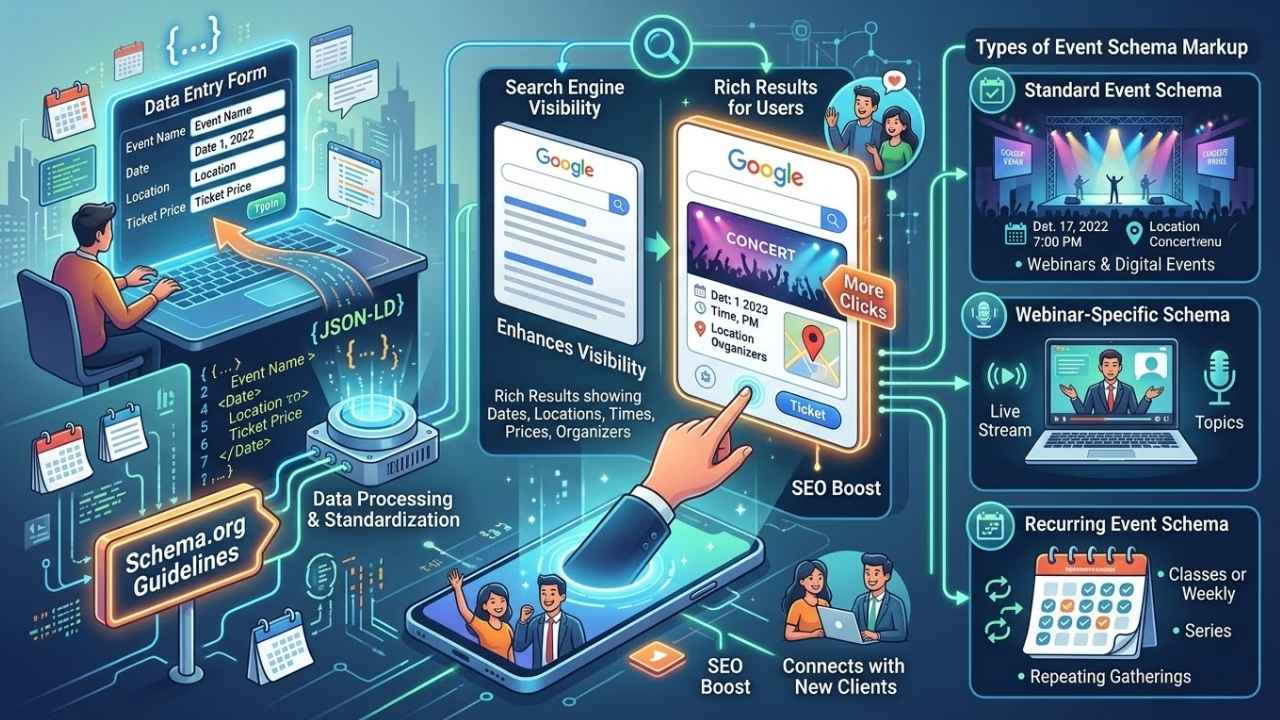
Structured data tells search engines about events and webinars using a standard format. Think of it like filling out a form that helps search engines find event details, such as dates, locations, and ticket prices.
Google uses this information to show richer results in searches. For example, if someone looks up “online seminars near me,” the site’s structured data boosts visibility right away.
Event schema markup makes life easier for both real-world cultural venues and digital marketers. Sites running on platforms like Peppered CMS can add these details automatically with no technical skill needed.
Adding structured data increases your chances of showing up in search results and attracting more visitors or ticket buyers, helping connect organizations with new clients who are ready to sign up for an event or webinar that fits their needs.
Importance of Event Schema Markup
Event schema markup helps people find your events online. It boosts your visibility on search engines and makes your listing stand out in results.
Enhancing search engine visibility
Google and other search engines love clear information. Structured Data for Events and Webinars acts like a bright sign, showing what your page is about. With event schema markup, your events can pop up in special boxes, called rich results.
People might see details like dates, times, places, or even ticket links right on the search page.
Sites using structured data often get more clicks because users spot helpful info at a glance. For example, cultural venues saw better event visibility after adding this to their sites in 2023.
Schema.org offers the guidelines that make it simple for search engines to understand content fast. Peppered CMS now adds this feature automatically for many venues too; no coding needed! Using accurate schema markup boosts SEO by helping people find digital events quickly and easily through regular searches or social media sharing.
Providing rich results for users
Event schema markup helps bring detailed event listings right into search results. You might notice extra details like dates, locations, times, ticket prices, and organizers popping up below a basic link.
This is called a rich result or sometimes a rich snippet.
Structured data makes this magic happen for events and webinars. With JSON-LD, Microdata, or Schema.org guidelines in place, your page can list information about digital events and online seminars directly in search engines.
Sites that use structured data boost their event visibility for users searching on Google as well as social media platforms. Cultural venues found this approach boosted their attendance numbers without needing technical skills or outside help.
Adding clear metadata to pages doesn’t just make them look lively—it gives each visitor quick answers at a glance and makes it easier to plan ahead or buy tickets with fewer clicks.
Types of Event Schema Markup
Event schema markup comes in three main types. Each type serves a specific purpose for your events and webinars. The standard event schema is for regular events, while the webinar-specific schema focuses solely on online seminars.
Lastly, the recurring event schema helps manage series of events that happen more than once. Each type makes it easier for search engines to find and display your event information effectively.
Standard event schema
Standard event schema helps you describe your events to search engines. It gives clear details about what you’re hosting. This can include the date, time, and location of the event.
By using this markup, you improve your chances of being found online.
Events with proper schema often get rich results on search engines. These rich results attract more visitors. They show important information right in the search listings. This makes it easier for users to find your events quickly.
Structured data also improves SEO by helping search engines understand your content better.
Webinar-specific schema
Webinar-specific schema focuses on online seminars. This type of schema markup provides search engines with clear information about digital events. It helps these events stand out in search results.
Users can see details like the date, time, and topic at a glance.
Structured data for webinars enhances visibility in searches. This means more people can find the event easily. The right schema simplifies the process for potential attendees to get information quickly and register with ease.
Marking up your webinar correctly is essential to reaching a wider audience and improving engagement with your digital event.
Recurring event schema
Recurring event schema helps you mark up events that happen more than once. This is great for classes, meetings, or any regular gatherings. It tells search engines when and where the event happens each time.
You can use this schema to include specific details like dates and locations.
By using structured data for recurring events, you boost your chances of appearing in rich results. These are the special search results that stand out on a page. They can draw in more visitors looking for exciting happenings like yours!
How to Add Structured Data for Events
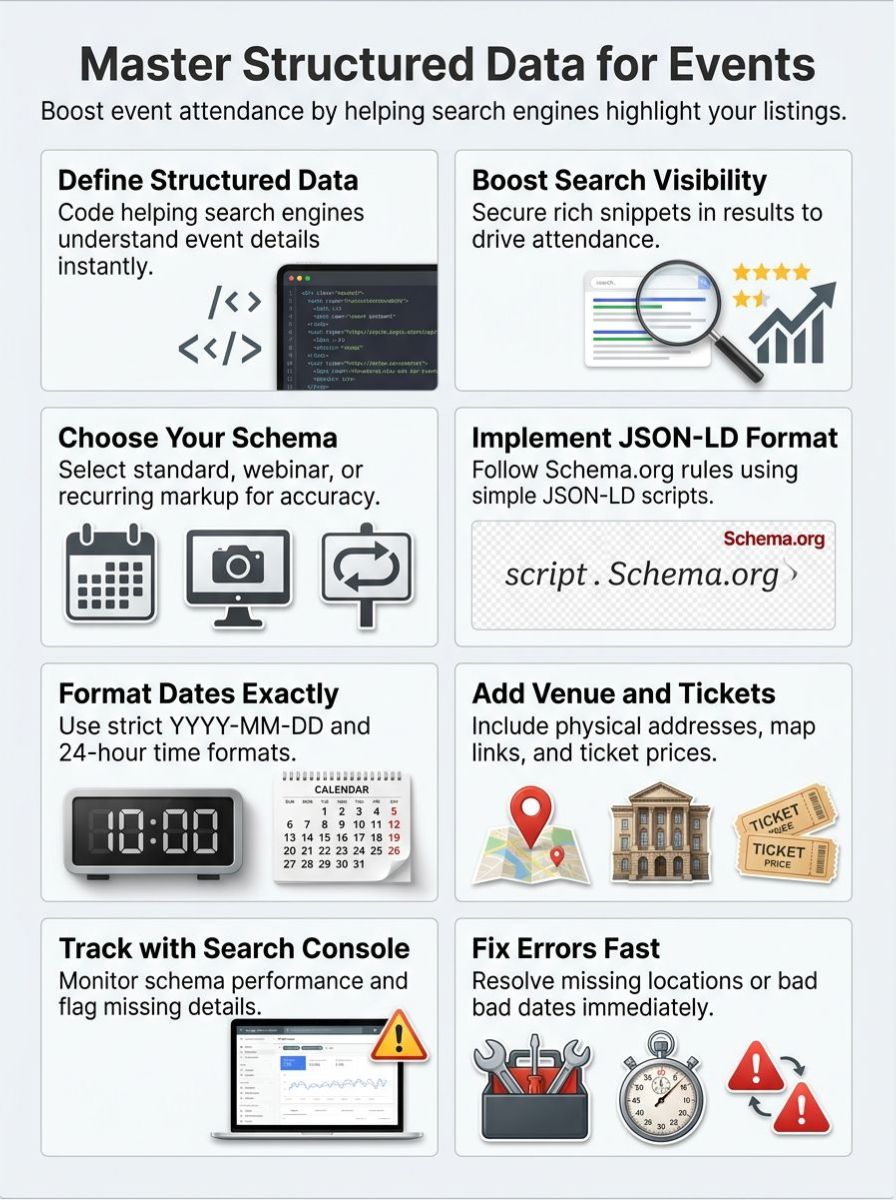
To add structured data for events, follow Schema.org guidelines and use JSON-LD format. This helps search engines understand your event better. Want to learn more?
Using Schema.org guidelines
Schema.org gives clear rules for adding structured data. This helps search engines understand what your event is about. It can boost your event’s visibility online. Use the right type of markup, such as JSON-LD or Microdata, based on your needs.
Adding structured data to event pages makes it easier for users to find information quickly. Well-marked events show up in rich results on search engines like Google. This means more people will see and engage with your events.
Make sure to follow these guidelines closely for the best outcomes.
Implementing JSON-LD format
JSON-LD format is a way to add structured data to your website. It helps search engines understand your events better. This format keeps things simple by using plain text in scripts, which makes it easy for both machines and people to read.
Adding JSON-LD means you can show important details like date, time, location, and ticketing information in a clear way. Google uses this data to improve event search results. With JSON-LD on your site, you increase the chance of getting rich results that stand out in searches.
More visibility leads to more visitors excited about your webinars or events!
Best Practices for Event Schema Markup
When creating event schema markup, check your date and time formats for accuracy, include clear location details, and make sure to provide ticketing information. Want to learn more about making your events shine online?
Accurate date and time formatting
Accurate date and time formatting is key for event schema markup. It helps search engines understand when your event starts and ends. Use the right format to avoid confusion. For example, write dates as “YYYY-MM-DD.” Time should be in 24-hour format or include AM/PM clearly.
Incorrect formats can hurt your visibility online. Search engines may not display your events if they get the date or time wrong. Clear and correct information boosts discoverability and enhances user experience.
This way, users find what they need quickly, leading to better engagement with your content.
Including location and ticketing information
Location and ticketing information are key parts of your event’s schema markup. You need to give clear details about where the event will happen. Include the venue name, address, and even a map link if possible.
This helps search engines find your event easily.
Ticketing information is just as important. Specify how attendees can buy tickets. List prices, links for purchase, and any deadline dates. Including these facts boosts visibility in search results and can lead to more sign-ups for your events or webinars.
Adhering to content guidelines
Follow the content guidelines closely. This helps search engines understand your event pages better. It is vital to format dates and times correctly. Include all necessary details like location and ticketing information.
These practices boost visibility in search results. Structured data for events enhances SEO. Google looks for accurate information, so being precise matters a lot. Avoid errors in your schema markup to ensure rich snippets appear when users search for events or webinars online.
Monitoring and Optimizing Structured Data
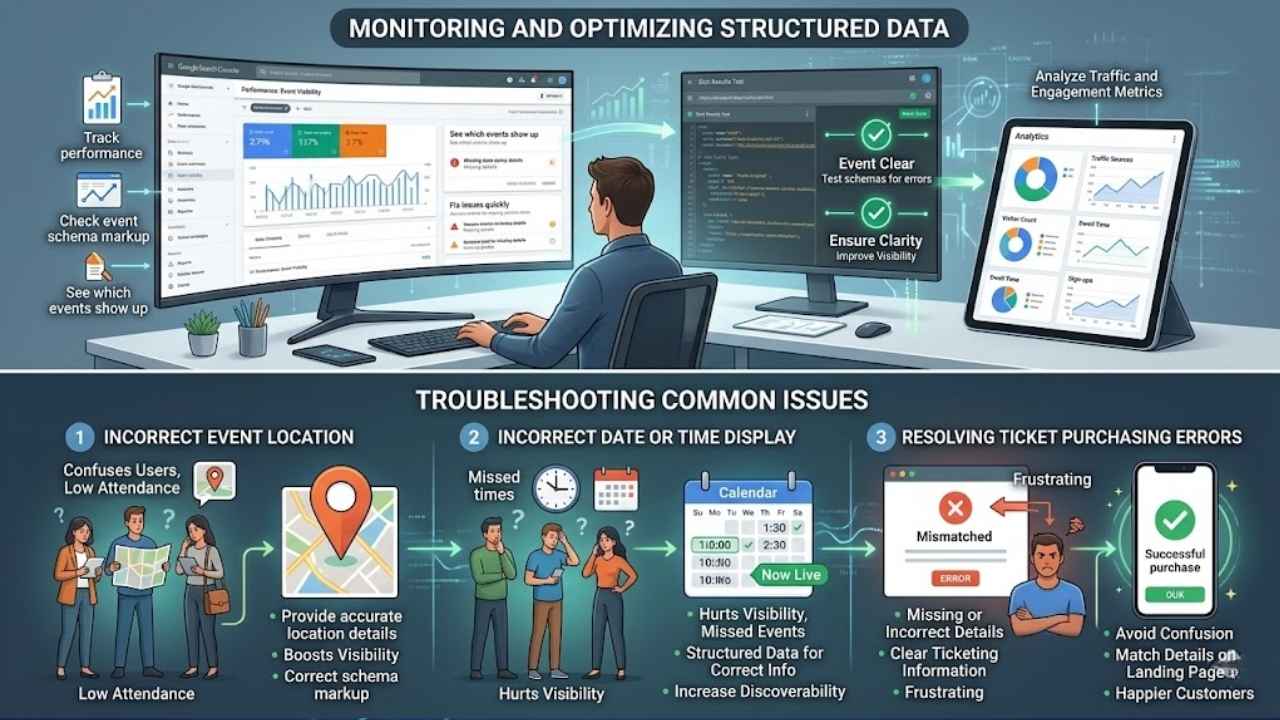
Monitoring and optimizing structured data is key for your events. Use tools like Google Search Console to track how well your data performs, ensuring it’s working hard for you!
Using Google Search Console
Google Search Console helps you track how your structured data is performing. It’s a useful tool for checking if your event schema markup is correct. You can see which events show up in search results.
This makes it easier to find out what works best.
This platform also lets you fix any issues quickly. For example, it will alert you if there are missing details like event location or date. By keeping an eye on these alerts, you can make sure your events get the visibility they need online.
Testing schemas with structured data tools
Testing schemas with structured data tools helps ensure that your event information is clear. These tools check the markup for any errors. They show how well search engines can read your structured data.
Using Google’s Structured Data Testing Tool is a smart choice. It gives instant feedback on what needs fixing. This way, you can improve visibility and get rich results more easily.
Correct schema markup boosts your SEO efforts and makes events easier to find online.
Analyzing traffic and engagement metrics
Analyzing traffic and engagement metrics helps you understand how well your events are doing online. Look at the number of visitors to your event pages. A high visitor count means more people are interested, which is good.
Check where these visitors come from, like search engines or social media platforms. This can tell you what marketing efforts work best.
Engagement metrics matter too. Track how long people stay on your pages and if they sign up for events or webinars. Higher engagement often leads to better visibility in search results, helping potential clients discover your offerings easily.
Using Google Search Console can make this job easier by providing valuable insights about structured data performance.
Troubleshooting Common Issues
Sometimes, your event details might be wrong. Maybe the location is missing or the date looks off. This can confuse people and hurt attendance. Fixing these problems quickly helps keep everything running smoothly for your events.
Missing or incorrect event location
Missing or incorrect event location can confuse users. This mistake may lead to low attendance at your event. If people cannot find the venue, they will not show up. Structured data helps search engines understand where your event is located.
Providing accurate location details boosts visibility on search results.
Use the right schema markup for your events. It allows Google to display correct information in searches. Missing this detail can harm your SEO efforts too. When structured data is clear and correct, it makes finding events much easier for everyone involved.
Incorrect date or time display
Incorrect date or time can confuse your audience. It might lead them to miss events or show up at the wrong time. This issue hurts event visibility online and offline. Structured data helps improve SEO by providing correct date and time details for search engines.
Always double-check the information you provide in your schema markup. If search engines see errors, they may not display your event correctly. Providing accurate date and time information increases discoverability for potential attendees looking for cultural venues online.
Resolving ticket purchasing errors
Ticket purchasing errors can be frustrating. They often happen due to missing or incorrect event location details. If a ticket shows the wrong date or time, fix it right away. Ensure that all information matches what you posted.
Providing clear and accurate ticketing information is key. This helps users avoid confusion. When they follow links, make sure they land on pages with correct details. Better structured data leads to happier customers and more successful events.
Final Thoughts
Structured data helps your events and webinars stand out online. It makes your information clear for search engines. You learned about different types of schema markup, like standard event and recurring event schemas.
Each type serves a unique purpose to increase visibility. Adding structured data is easy with tools like JSON-LD; you don’t need to be an expert! Have you thought about how these strategies can boost your own events? Try them out, watch the impact grow, and connect better with your audience!