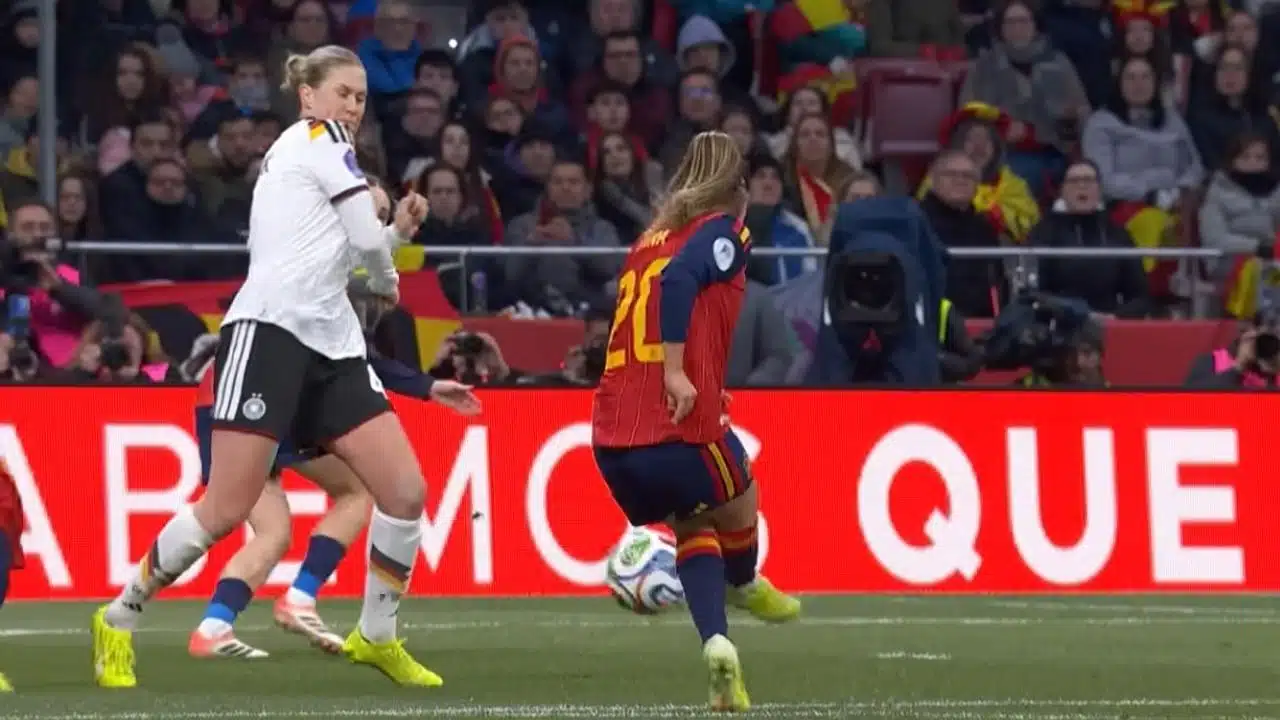
Spain’s women’s national team once again proved why they stand at the top of world football, lifting a second consecutive UEFA Women’s Nations League title and adding yet another major trophy to their historic run since the 2023 World Cup. For Germany, however, the final became another painful reminder of how narrow the margins are at the elite level—especially for a team still rebuilding its identity after years of inconsistency.
Christian Wück’s youthful German squad arrived in the final with confidence after a strong campaign, but Spain’s unmatched cohesion, technical fluidity and clinical finishing were too much across the two-leg series. Still, Germany walked away with plenty of pride, even if the nation’s long wait for another major trophy now stretches beyond a decade.
Wück acknowledged both the disappointment and the promise. According to him, Germany stood “even” with Spain in the first half and had moments of real control. Yet as the game wore on, Spain’s experience and precision allowed them to break the deadlock—and once they did, there was no slowing them down. The coach emphasized that Germany’s growth trajectory remains positive, but also noted that maintaining high intensity and taking chances at key moments remain weaknesses the team must address.
The second leg in Madrid became a spectacle in itself, with the Metropolitano packed to capacity and Spanish royalty watching from the stands. The energy was electric, demonstrating how rapidly women’s football has expanded both in Europe and globally. The quality on display matched the atmosphere: fast, polished, and tactically intelligent football from both sides, although Spain emerged as the more composed and effective team when the pressure spiked.
Missed Chances Once Again Haunt Germany in a Familiar Pattern
For Germany, the story of the final could be summarized in two words: missed chances. The theme that had already cost them opportunities in recent tournaments resurfaced again at the worst possible time. The best opening came late in the first half when Nicole Anyomi found herself alone in front of the keeper, a moment every striker dreams of. But instead of giving Germany the advantage, she pushed her shot wide—an error that immediately shifted momentum.
Wück did not hide his frustration. He pointed out that this wasn’t an isolated mistake. Anyomi had another big chance in the second half, and in the first leg in Germany, the team had created multiple opportunities without converting a single one. Those struggles, he stressed, separate Germany from the “technically gifted” and ruthlessly efficient Spanish players who rarely need more than a few looks at goal to change a match.
Germany’s attack is undergoing a generational shift. With veterans like Alexandra Popp and Svenja Huth no longer in the squad, the offensive responsibilities now fall to the next wave: Klara Bühl, Jule Brand, Sjoeke Nüsken, and Anyomi. These players bring dynamism, speed, and creativity—but they are still developing the kind of clinical instinct needed in major finals. Nüsken captured the sentiment perfectly when speaking after the match: Germany proved they could “live with Spain,” yet failing to score in the first leg changed everything. Had they capitalized at home, the second leg might have taken a very different shape.
Instead, Spain stepped into the opening Germany left. The second half was particularly punishing for the visitors. Claudia Pina’s two goals—smartly taken, instinctive, and delivered under pressure—showcased the attacking sharpness Germany currently lacks. Vicky López’s strike between Pina’s efforts sealed the tie beyond reach, turning a once-balanced contest into a decisive Spanish triumph.
Defeat Without Shame: Germany’s Rebuild Gains Respect Despite the Loss
Even with the disappointment of a three-goal loss in the deciding leg, Germany’s players left the pitch with their heads high. Klara Bühl echoed her coach’s perspective, stating that the pain was real but the achievements were significant. Germany entered this Nations League campaign unsure of how they would match up against Europe’s elite after their shocking group-stage exit at the 2023 World Cup. Yet they defeated top nations like the Netherlands and France on their way to the final, proving that the rebuilding phase is working.
This new-look German team is still learning to stand on its own, and the Nations League offered a clear benchmark. Against Spain—the world champions and the dominant force in women’s football—Germany showed resilience, structure, and improvement. They were not overwhelmed; they were simply outperformed at the most decisive moments. That distinction matters, especially with major tournaments approaching.
Looking ahead, Germany now turns its focus to the 2027 Women’s World Cup in Brazil, where expectations will be high but measured. A qualification group featuring Slovenia, Norway, and Austria awaits next year, giving the squad time to solidify its identity, refine its finishing, and regain the confidence that once made Germany one of the most feared teams in the sport.
Beyond that lies the potential excitement of hosting Euro 2029. With UEFA set to announce the tournament host soon, Germany remains the favorite, competing against Poland and a joint Scandinavian bid from Denmark and Sweden. The 40,000-strong attendance in the first leg in Kaiserslautern served as a near-perfect advertisement for Germany’s growing fanbase and commitment to elevating women’s football. Hosting such a major event could accelerate the momentum the national team is steadily rebuilding.
Hermoso’s Emotional Return and the Growth of the Women’s Game
One of the most uplifting moments in the final came when Jenni Hermoso stepped back onto the pitch for Spain. Her return to the national team carries symbolic weight far beyond football. After being forcibly kissed by former Spanish federation president Luis Rubiales during the 2023 World Cup celebrations—an incident that led to global outrage, legal consequences, and major reforms within Spanish football—Hermoso had become a central figure in the broader movement advocating for protection, respect, and equality in women’s sport.
Her reappearance in front of a roaring home crowd, substituted on with ten minutes remaining, felt like a full-circle moment. She described her joy simply: a happy face, playing in her city, surrounded by family, and being part of another triumphant night. Wearing the Spain jersey again and lifting a title highlighted both her resilience and her continuing importance to the team.
Meanwhile, Spain’s dominance is reshaping women’s football across Europe. Their club-country alignment—Barcelona’s tactical style deeply influencing the national setup—continues to set the gold standard. The sold-out Metropolitano, with over 40,000 fans and dignitaries in attendance, reinforced how far the women’s game has come.
Germany, even in defeat, contributes to that growth. Fans, players, and organizers alike see a team rediscovering enjoyment, identity, and ambition. Though missing a finishing edge once provided by legends like Popp, Germany is steadily building a squad capable of competing for titles again. As the sport expands in visibility, investment, and talent, nights like this—a packed stadium, world-class football, emotional comebacks, and emerging stars—signal a powerful future ahead.