Remember when “going to work” meant sitting at a desk for eight hours straight? Those days are pretty much over. The modern workplace looks completely different now, and honestly, it’s about time.
Businesses are finally waking up to something that should have been obvious years ago: not every job involves staring at a computer screen. Whether you’re running a tech startup that needs a proper prototyping area or managing a retail operation that requires assembly and repairs, having the right physical workspace can make or break your productivity.
The Real Cost of Bad Workspaces
Here’s something that might surprise you. Poor workspace setup doesn’t just slow things down, it actually costs money. Real money.
Think about it this way: when your team is hunched over makeshift surfaces, balancing tools on wobbly tables, or constantly searching for misplaced equipment, you’re bleeding efficiency. Every minute spent looking for a screwdriver or struggling with an unstable work surface is a minute not spent creating value.
The other day, someone mentioned watching their maintenance team spend twenty minutes just clearing space to fix a simple equipment issue. Twenty minutes! That’s the kind of waste that adds up fast, but it’s so common we barely notice it anymore.
What Makes a Workbench “Smart” Anyway?
A smart workbench isn’t about having fancy digital displays or Wi-Fi connectivity (though those can be nice). It’s about intelligent design that actually thinks through how people work.
Good work benches consider things like height adjustability, storage integration, and power access. They account for the fact that different tasks need different setups, and that switching between projects should be smooth, not frustrating.
Ever tried to use a drill on a surface that shakes every time you apply pressure? It’s maddening. Smart workbench design eliminates these daily frustrations that chip away at both productivity and morale.
Storage That Actually Makes Sense
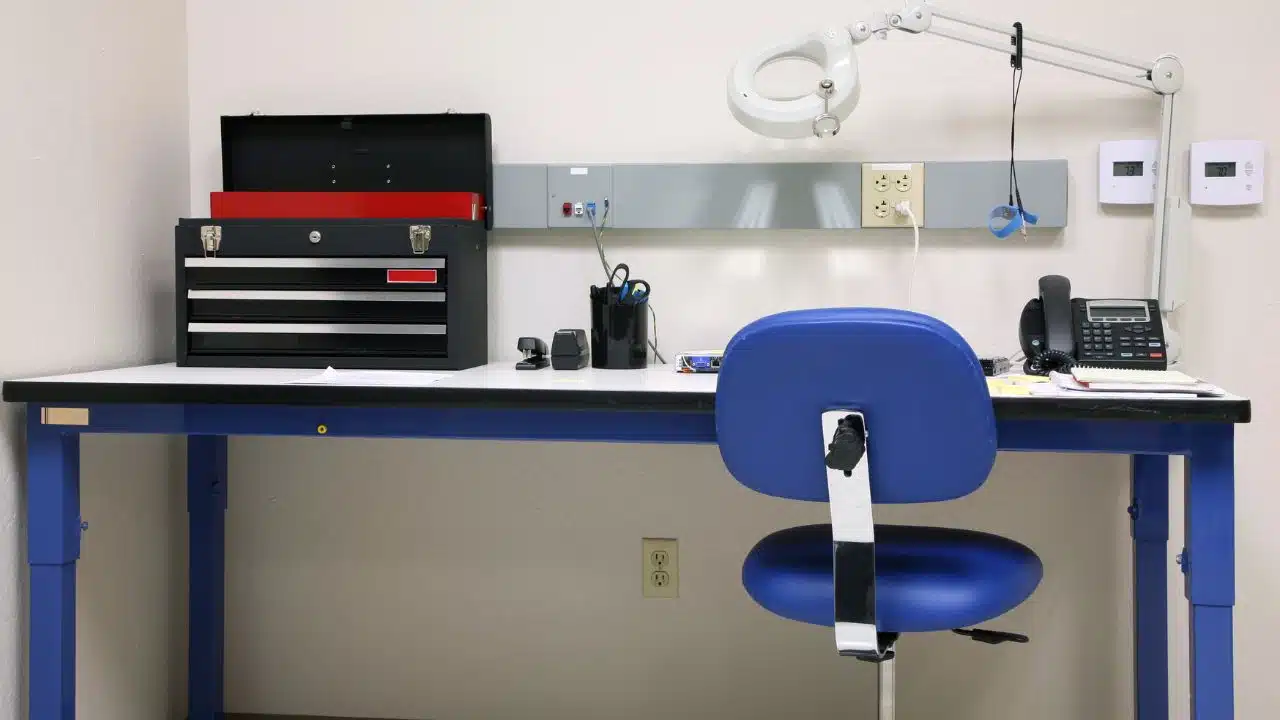
The best workbenches don’t just provide a flat surface. They create an organized ecosystem where tools and materials have logical homes. Built-in drawers, overhead storage, and strategic placement of power outlets turn a simple table into a command center.
This isn’t just about looking tidy. It’s about reducing the mental load on your team. When everything has its place, people can focus on the actual work instead of constantly problem-solving their environment.
Beyond the Workshop Floor
Here’s where things get interesting. Smart workbenches aren’t just for traditional manufacturing or repair work anymore. They’re showing up in unexpected places.
Marketing agencies use them for large-format design work and prototype mockups. Restaurants rely on them for food prep efficiency. Even law firms are discovering that having proper assembly areas for evidence organization and case preparation makes a huge difference.
The truth is, almost every business has tasks that benefit from a dedicated, well-designed work surface. The question is whether you’re providing your team with the tools they need or forcing them to make do with whatever’s available.
The Investment That Pays for Itself
Quality workbenches represent one of those rare business purchases that actually save money over time. Better organization reduces waste. Improved efficiency means faster project completion. Fewer workplace injuries from awkward positions or unstable surfaces means lower insurance costs and less downtime.
But maybe the biggest return comes from something harder to measure: employee satisfaction. Give people proper tools and workspace, and they’ll surprise you with what they can accomplish.
Your business deserves better than makeshift solutions and constant workarounds. Sometimes the smartest investment is the most obvious one.