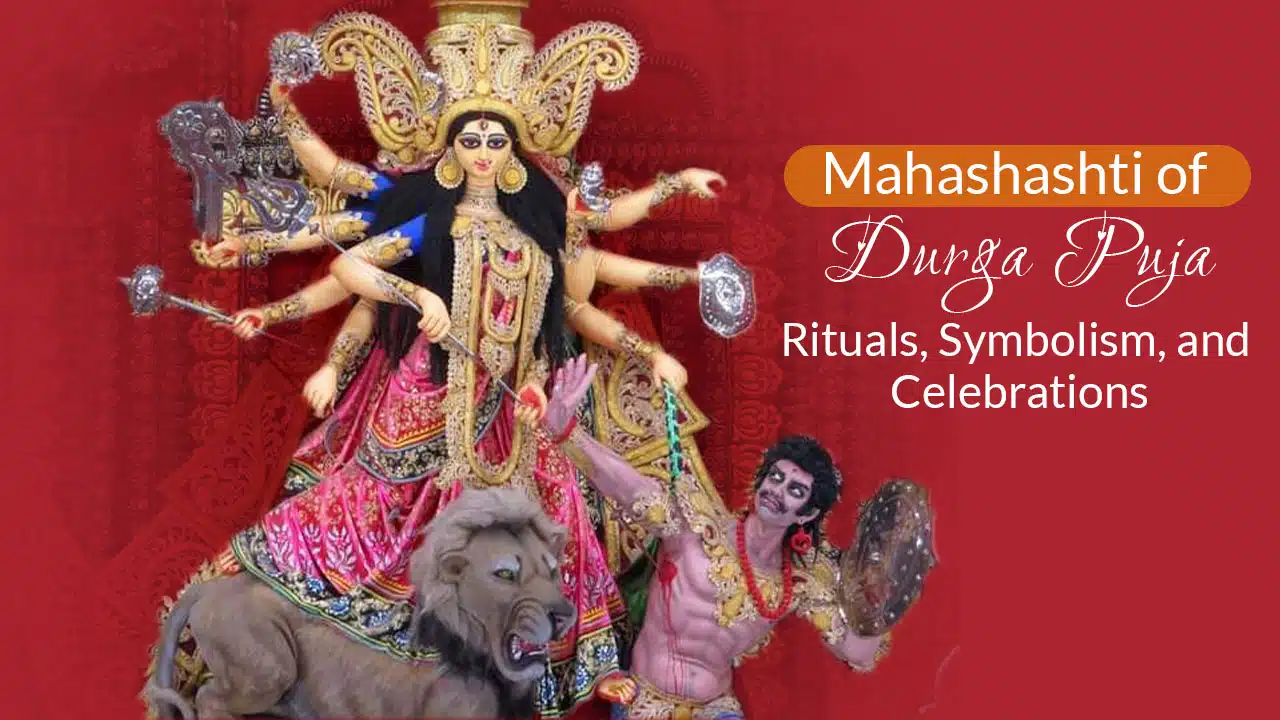
Durga Puja, one of the grandest festivals in Hindu tradition, especially for Bengalis, is not just a religious event but also a cultural extravaganza that unites millions of devotees across the world. Celebrated over ten days, each day holds its own importance, but the Mahashashti of Durga Puja, known as Shashti, is particularly special. It marks the formal arrival of Goddess Durga on Earth along with her four children—Lakshmi, Saraswati, Kartikeya, and Ganesha.
The day is filled with rituals, symbolic traditions, cultural programs, and community bonding. From awakening the Goddess through Bodhon to the unveiling of grandly decorated pandals, Shashti rituals signify the beginning of the main festivities after the preliminary observances of Mahalaya and Panchami.
Mythological Significance of Mahashashti
According to Hindu mythology, the festival of Durga Puja celebrates the victory of Goddess Durga over the demon Mahishasura, symbolizing the triumph of good over evil. Shashti, the Sixth Day, is believed to be the day when the Goddess descends to Earth, welcomed with devotion and grandeur by her devotees.
The Devi Mahatmya and Chandi Path texts narrate that Durga was created by the combined energies of the gods to restore dharma. Her descent on Shashti sets the stage for her ultimate battle and victory, which is celebrated on Dashami. The rituals performed on this day emphasize her presence among her devotees, making it one of the most spiritually significant days of the Puja.
Key Mahashashti of Durga Puja Rituals
The Mahashashti of Durga Puja, Shashti, is deeply rooted in rituals that symbolize the formal welcoming of the Goddess into devotees’ lives. Unlike the earlier days of preparation and anticipation, Shashti rituals mark the moment when the spiritual energy of Durga is invoked and established in the idol.
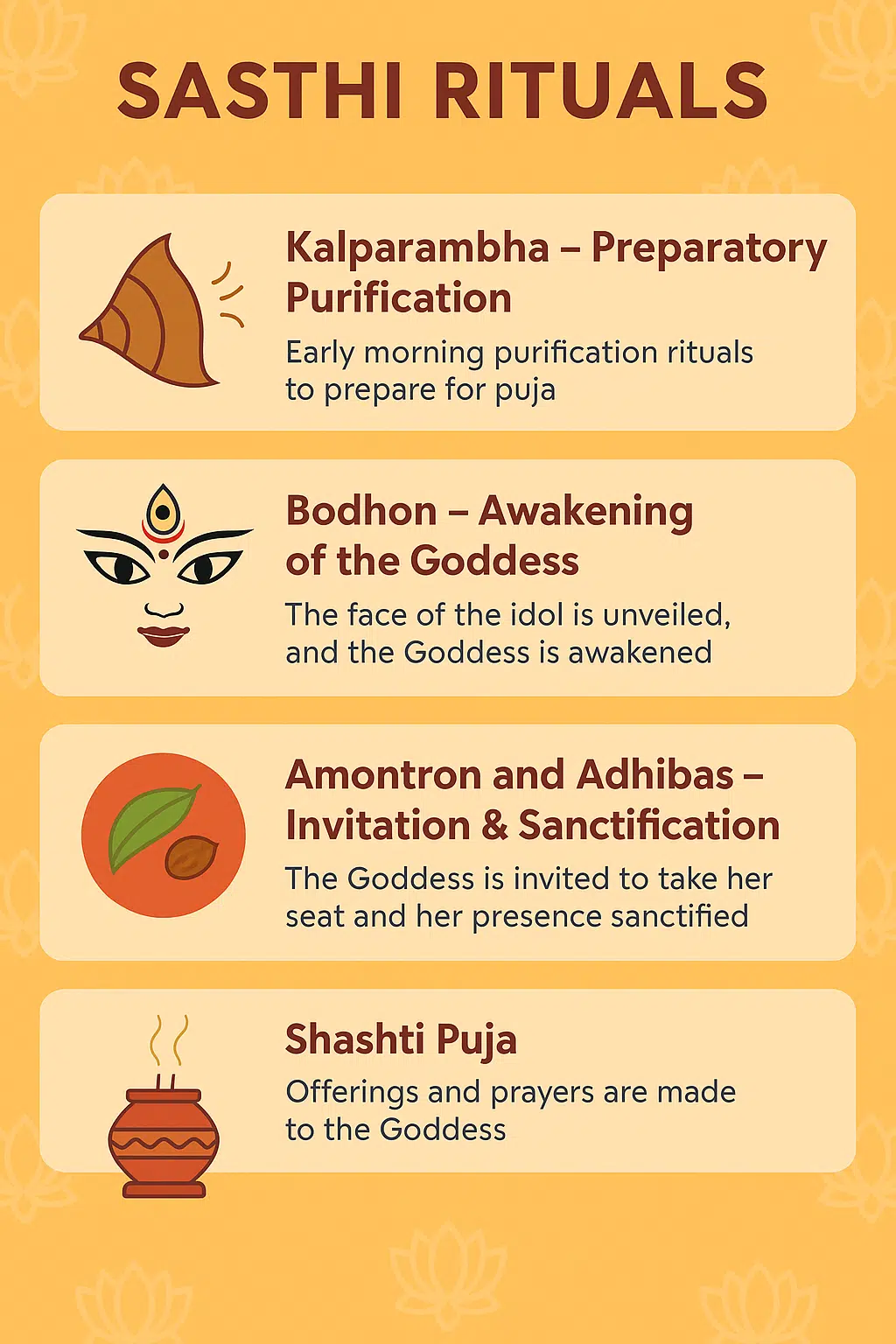
From the purification ceremonies of Kalparambha to the powerful Bodhon (awakening) and the Amontron (invitation) of the Goddess, each ritual carries layers of meaning. These sacred practices not only uphold tradition but also remind devotees of the divine presence that guides and protects them during the days of Puja.
Kalparambha – Preparatory Purification
The morning of Shashti begins with Kalparambha, where priests purify the puja space, idols, and offerings with mantras and sacred water. This ritual prepares the atmosphere for divine presence, ensuring sanctity before the Goddess is invoked. It symbolizes cleansing the material and spiritual environment before welcoming the divine mother.
Bodhon – Awakening of the Goddess
The most important ritual of the Sixth Day is Bodhon, literally meaning “awakening.” During this ceremony, the face of the idol, which has been covered, is unveiled in a sacred ritual. Hymns from the Chandi are recited, and the Goddess is symbolically awakened to begin her earthly stay. This moment is often witnessed with awe, as it represents the divine transition from formless energy to the idol’s physical form.
Amontron and Adhibas – Invitation and Sanctification
After awakening the goddess, the Amontron (invitation) and Adhibas (sanctification) rituals are performed. These symbolize inviting Durga to take her place in the idol and sanctifying her stay on Earth. Flowers, betel leaves, and sacred items are offered, representing hospitality and devotion.
Shashti Puja
The main puja of the day involves offerings of flowers, fruits, sweets, and incense while reciting verses from the Chandi. Devotees pray for prosperity, protection, and well-being. For many households and communities, Shashti also marks the first day of distributing bhog (sacred food offerings), often consisting of khichuri, labra, and sweets.
Cultural and Social Celebrations of Mahashashti of Durga Puja
While the rituals create the spiritual essence of the day, Shashti is also a major cultural milestone in the festival.
-
Unveiling of Pandals: From this day onward, community pandals are open to the public. Crowds flock to see the elaborate artistry, themes, and lighting arrangements.
-
Art and Creativity: Every year, pandals showcase unique themes—from mythology and rural Bengal to replicas of global landmarks. Shashti is when visitors first get to admire them.
-
Traditional Attire: Women often wear bright sarees in shades of yellow or red, while men wear kurta-pajamas, signifying auspiciousness.
-
Festive Food: The aroma of bhog fills the air, and food stalls around pandals serve traditional snacks, sweets, and festive delicacies.
-
Evening Programs: Shashti evenings are marked by cultural performances—Rabindra Sangeet, dance dramas, plays, and even modern concerts—creating a festive carnival-like vibe.
Mahashashti of Durga Puja in Bengal and Beyond
While West Bengal is the epicenter of Durga Puja, Shashti celebrations spread across India and the world.
-
West Bengal: Kolkata comes alive with its dazzling pandals, creative themes, and massive crowds.
-
Other Indian States: Assam, Tripura, Odisha, and Bihar, also celebrate with grandeur, though with regional variations in rituals.
-
Bangladesh: As the biggest Hindu festival in the country, Shashti sees thousands of community pujas across Dhaka, Chittagong, and rural towns.
-
Global Diaspora: From New York and London to Singapore and Toronto, Bengali communities celebrate Shashti, blending tradition with modern practices, often with live streaming for those far from home.
Symbolism and Spiritual Message of Mahashashti
The Mahashashti of Durga Puja is more than a ritual; it’s a spiritual reminder.
-
Divine Feminine Power: Durga embodies Shakti, the universal feminine energy that protects and nurtures.
-
Victory of Good over Evil: Shashti prepares devotees for the symbolic battle of righteousness over evil forces.
-
Unity and Community: The day brings people together, transcending caste, creed, and geography, emphasizing cultural unity.
For modern devotees, Shashti serves as a reminder of resilience, strength, and faith in overcoming life’s struggles.
Modern-Day Observance of MahaShashti of Durga Puja
In contemporary times, Shashti celebrations have evolved while preserving their essence.
-
Eco-Friendly Initiatives: Many communities now use clay idols and biodegradable decorations to reduce pollution.
-
Technology & Social Media: Virtual pujas, live-streamed rituals, and Instagram-ready pandal photography are now integral parts of the celebration.
-
Fusion of Tradition and Modernity: While rituals remain traditional, the cultural evenings often include modern theatre, fashion shows, and celebrity performances.
Takeaways
The Mahashashti of Durga Puja is the moment when the festival truly begins in all its grandeur. From the sacred Bodhon ritual to the opening of pandals and cultural programs, Shashti bridges spirituality with community celebration. It symbolizes the goddess’s descent to Earth, her protective presence, and the anticipation of her ultimate triumph over Mahishasura.
As the day concludes, devotees carry forward the excitement and reverence into the following days of Saptami, Ashtami, and Navami, culminating in the victory celebrated on Vijaya Dashami.