You have a friend who says he is straight, but you feel something is off. He cuts off talk about gay life. You study his body language and voice shifts. You just want clear clues to protect your friendship.
Key Takeaways
- He overdoes macho acts to hide doubts. He packs his days with football, CrossFit, and car work. He bristles at sewing or dance. In one case, Alex named a fake girlfriend but shook when he spoke of cake decorating.
- He snaps at LGBTQ+ talk. He scoffs, cracks jokes, or changes the subject fast. A 2022 identity‐project survey of 500 men found that 6 out of 10 who felt closeted avoid any LGBTQ+ discussions.
- He keeps his social life secret. He skips naming dates, friends, or places. He locks his messaging apps and gives vague calendars. Psychologists call this “splitting” to shield himself from bias.
- He breaks off relationships after two or three dates and favors online chats. He claims a busy schedule or a car problem to dodge real hugs. He texts code words instead of saying “I miss you.”
- He stiffens in LGBTQ+ settings. He avoids pride events, rainbow cafés, and gay house parties. Clinicians cite DSM-5 social‐phobia signs like fidgeting, foot tapping, or sweating in these spaces.
Excessive Masculine Traits

He cranks up football games and weight lifts to mask doubts about his masculinity and gender role. He shrugs off any talk on softness or art, and dreads simple communication drills that ask how he really feels.
Zealous pursuit of traditionally male hobbies
He packs his schedule with football games, CrossFit, and auto work. He buys dumbbells, torque wrenches, and grilling tools. He puts on a macho show with bench press stats and carburetor swaps.
Some men use these moves to hide their true selves.
This pattern of secretive, overly focused behavior suggests he might pretend to be straight. He fears social judgment, so he wears a mask of hypermasculinity. Experts link this zeal to internalized homophobia and pressure to conform.
This trait can hint at a hidden identity.
Discomfort toward feminine-associated activities
He fidgets when someone asks him to try a sewing workshop or a dance class. His voice jumps, his arms go rigid. That shift in tone and gesture feels like a mask he wears against his true self.
A flip in stance tells you he might hide his sexual orientation, pressed by heteronormative ideas.
I saw that in my friend Alex once. He spun a story about a girlfriend, then his hands shook as he talked about cake decorating. This odd mismatch in tale and posture hints at deep conflict.
His stiff posture reveals the psychology behind his act. Therapy notes often record those tone shifts.
Avoiding LGBTQ+ Discussions
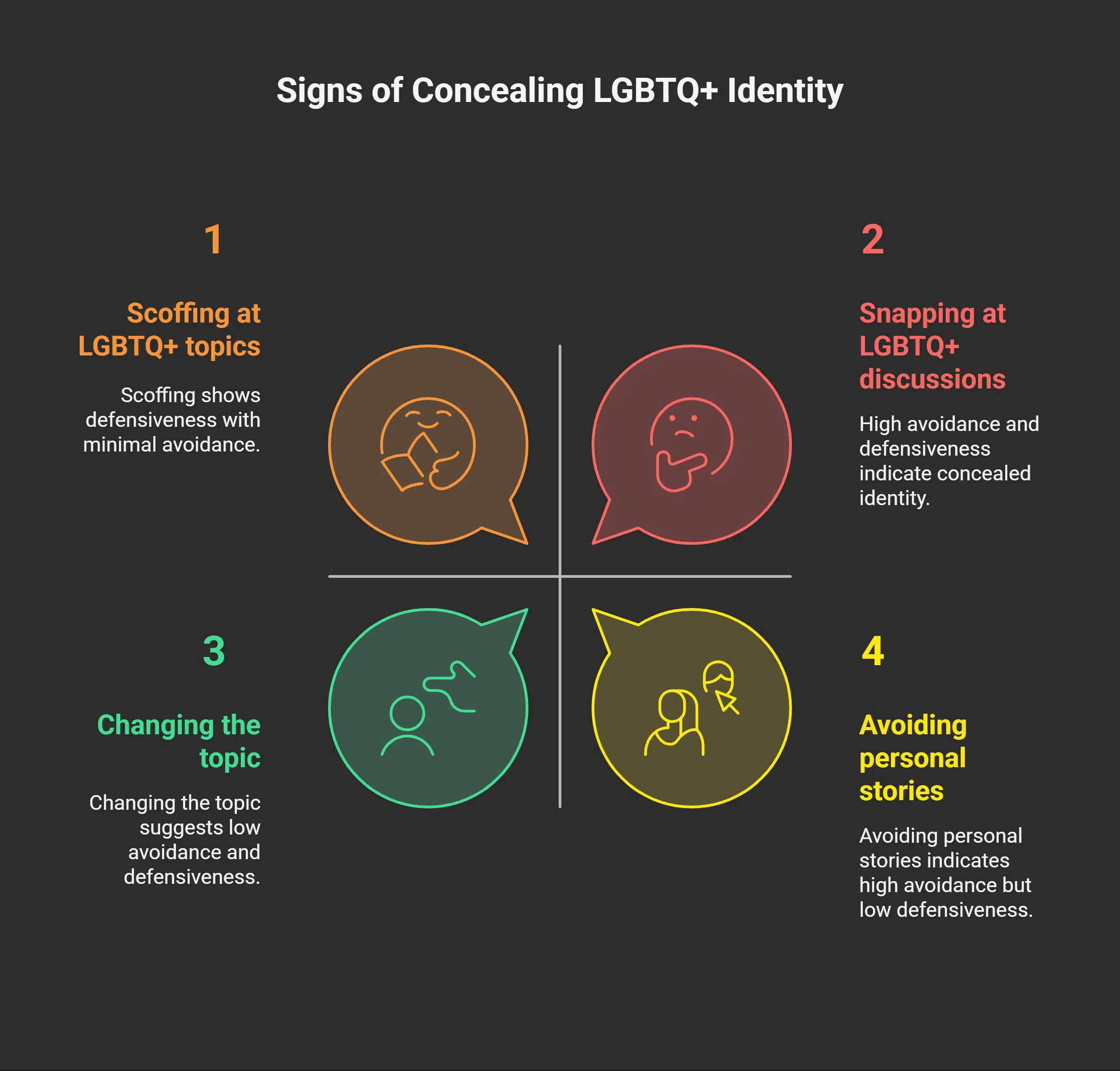
He snaps at any chat about the LGBTQ community, as if someone poked him with a hot rod. He floods the talk with jokes when you touch on identity, he treats “coming out” like a minefield.
Defensive when LGBTQ+ topics come up
He shuts down fast as soon as talk turns to LGBTQ issues. His voice grows sharp. He might scoff or crack a joke to kill the chat. A straight guy hiding his truth uses that defense as a shield.
His face may flush. His tone may turn harsh.
He avoids honest discussion. He changes the topic without warning. He claims to hate labels. He may say he supports same-sex marriage but balks at personal stories. He dreads details about relationships with men.
He might use humor to cut tension. Tools like empathy and active listening can help ease social anxiety. A guy pretend often uses this shield to hide fear of rejection.
Quick to change or dodge deeper conversations on the subject
He shies away from deep talk on LGBTQ+ topics, and shifts focus to sports or work. He might say, “Let’s chat about that later,” then never circles back. This move shows fear of judgment and discrimination, a sign of societal pressures.
It hints at internal conflict over his true sexual orientation.
A 2022 self-report questionnaire by an identity project polled 500 guys. Six out of ten who felt closeted said they avoid any LGBTQ+ discussions. Such a clue tells you if a guy hides his truth.
It ranks as one of the 10 signs a guy might be concealing his real self. Open communication takes a hit, a red flag in intimate relationships.
Mysterious Social Interactions
He never lets slip a dinner invite, and his messaging app settings stay locked behind privacy gates. He stiffs on self-disclosure, and your active listening must dig in to spot hidden meetups.
Limited sharing about personal relationships
A guy might hide details about his dates or group hangouts. He hesitates to discuss past relationships or a first kiss. Psychologists call splitting a secretive social life tactic.
This silence feels like a locked diary and hints at social rejection fears.
Friends notice vague stories and missing names when he talks. He leaves out details to fit a rigid social norm. Some gay men use this tactic to shield true self from possible prejudice.
This pattern shows he might be hiding true feelings.
Real change comes when he starts dodging weekend plans as he dodged talk of exes. He claims a busy schedule but won’t name faces or places. His calendar app shows empty slots or vague labels.
He skips any mention of that movie night or coffee date as if they were secret missions. This odd silence shows behaviors that might point to a hidden life. Such subtle signs tie back to internal struggles and a need to hide a true circle.
He steers clear of LGBTQ+ gatherings and leaves out any meetups with gay friends, due to societal pressures and fear of discrimination.
Fluctuating Relationship Patterns
His romance swings feel wild, and his relationships stall at strange times, leaving him stuck in a loop that messes with his self-view. He taps a self-check instrument, he flips through a mobile tool, but he dodges real meet-ups.
Regular interruptions in relationships
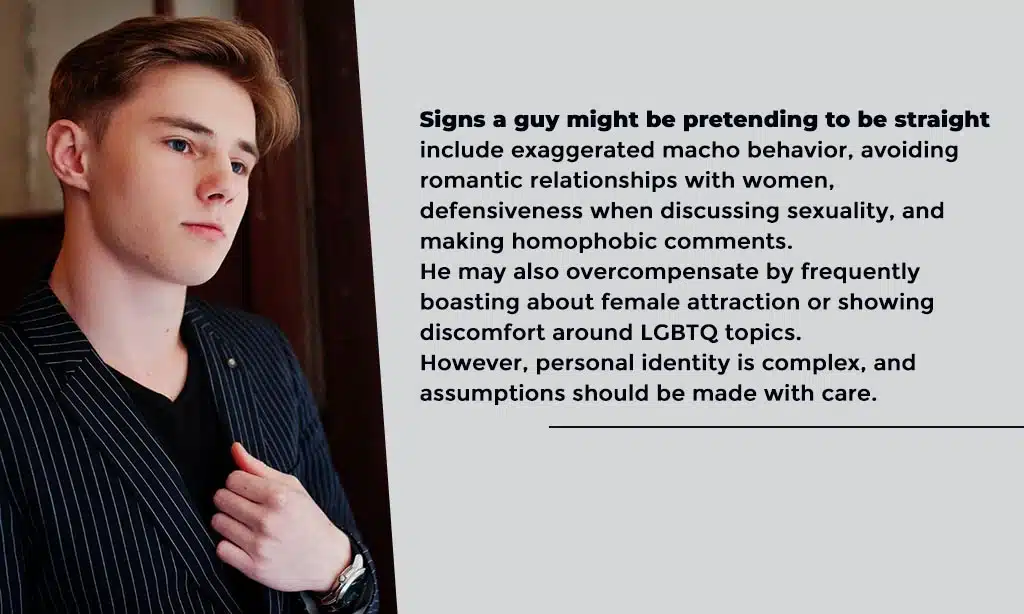
Bill ends dates like a buzzer timer. He ends a romantic relationship after two or three dates. He jumps into casual dating, then he jumps out just as fast. He treats a date as an interpersonal relationship, not a true romance.
He avoids long talks about the future. He hides his true sexual orientation and shies from deep feelings. He needs self-compassion and psychological resilience as he fights fear. He may blame boredom or lack of chemistry, but he hides stress around physical intimacy.
He breaks up to dodge labels. He fears rejection if he shows real desire. Low trust marks his moves, and he hides his true need for closeness. He shows signs a man might pretend to be straight.
Next we look at how he swaps face time for screen time.
Prefers online interactions to physical meetings
Late-night video calls feel safe; real hugs scare him. He loves the glow of his screen more than warm hands. He logs into a private chat and hides his status. He dodges coffee dates or park strolls to avoid physical closeness.
He claims a gas leak or a broken car to skip your living room couch. He blocks his relationship status on that messaging tool. He rejects any in-person affection; he masks a lack of intimacy.
A secret profile on an online network speaks louder than any real kiss. He texts code words instead of saying “I miss you.” He uses those platforms to conceal their true identity issues.
He shifts to digital texts to dodge close encounters with women, to hide that he might be gay. A man is gay in private chats, but he acts heterosexual in public. His self-concept stays locked behind a screen.
He fears judgment from gay people or straight friends. He shuns real-world romance for ease and anonymity.
Discomfort in LGBTQ+ Environments
He may squirm in a crowd of openly gay friends, showing signs of mental tug-of-war and public bias weighing on him. He steers clear of a welcoming hub or peer circle, and avoids a simple counseling session that could lift his mood.
Anxiety in settings associated with LGBTQ+ individuals
A guy might stiffen at a pride event or rainbow-themed cafe. His voice falters when LGBTQ+ topics start, and sweat beads on his forehead. He fidgets, taps his foot, or avoids eye contact with gay individuals, his stress shows.
Clinicians reference DSM-5 criteria to classify such anxiety as social phobia. Publicly, he hides behind a false self, while privately he craves to reveal his true self.
Friends can spot other cues. He skips gay house parties, dodges discussions about romance (love) with men, or claims he has date plans. His absence from LGBTQ+ settings speaks volumes under heteronormativity and social pressure.
Anxiety around gay individuals betrays personal struggles, feelings of isolation, and a need for empathy and understanding. Observing these signs can help you tell if a guy is struggling with his sexual orientation and masking his true feelings.
Shuns events and friendships with openly gay people
He skips pride meetups, film nights, mixers that draw queer men. He claims he feels out of place, blames a tight work week. He rejects invites from openly gay friends, even at small gatherings.
He may fear discrimination or rejection, rooted in homophobic beliefs. He tracks societal expectations, so he hides his true self and his real feelings. He shows stress when talk turns to sexuality or same-sex bonds.
He cuts off close friendships in public to maintain a straight act. Recognizing these signs helps you spot his struggle with identity and emotion. Up next, see the Conclusion.
Takeaways
You spot a man hiding behind manly acts to fit a default gender belief. He splits his world with compartmentalization, never mixing work pals and date nights. He glances away if you steer chat to LGBTQ issues.
His posture may reveal internal conflict despite his bold words. If you spot these signs, offer him a safe space to talk. Use the Flesch-Kincaid reading scale to keep your questions clear.
Honest smiles grow when people drop their masks. That relief lights up real joy.
FAQs
1. What subtle cues suggest a man masks his true orientation?
He avoids hugs or any close touch from a woman. He laughs at straight jokes, to blend in. He watches men more than women. He hides stress about his orientation. He shows a false self to meet social science norms.
2. How does avoiding physical affection show he’s not ready to reveal his true self?
He ducks away from side hugs or hand-holding. He tenses up in a room with a spouse or partner. He skips over talk of intimacy or sex. He keeps a safe space, to guard his real feelings.
3. Why does he exaggerate an interest in women and relationships with women?
He repeats stereotypes about what a man should like. He names a made-up partner to avoid questions. He makes assumptions that people will buy his story. He uses that tale to hide his true self.
4. Can societal pressures or personal fears push him to pretend he is straight?
Yes, he may battle stress from identity issues. He may fear rejection or a loss of trust in social science circles. He may conform to societal expectations to find safety. He may stall in revealing his true self.
5. How do discussions about LGBTQ and mental health fit in?
Open chat lowers stress tied to sexuality. A supportive environment can ease identity struggles. Talking can link to mental health care or a specialist for borderline personality disorder. It can help him explore human sexuality with reason and respect.
6. What should you do when you trust your instincts he is struggling with his orientation?
Offer a safe space, show sensitivity and respect. Let him know you are someone to talk to. Avoid any push; just listen. Build trust, share your own small stories. Stay patient, so he can reveal his true self.