

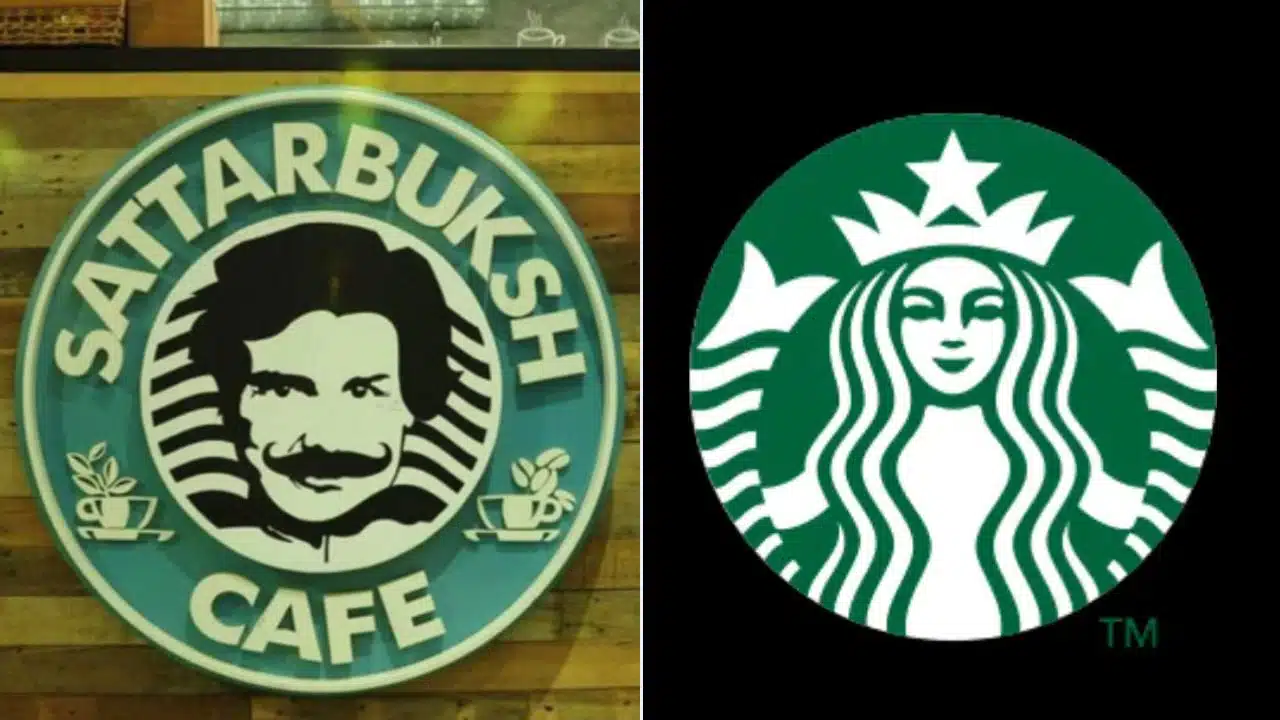
In a case that captured attention across Pakistan and beyond, Sattar Buksh, a quirky café in Karachi, has won a prolonged legal fight against multinational coffee chain Starbucks over claims of trademark infringement. What began as a humorous cultural experiment in 2013 transformed into a years-long David-versus-Goliath battle, with the local café eventually emerging victorious.
The dispute centered on Sattar Buksh’s name and branding. The café was launched by entrepreneurs Rizwan Ahmad and Adnan Yousuf, who aimed to create a space that was both playful and rooted in South Asian identity. Their brand identity included a green circular logo featuring a moustached man, a clear parody of Starbucks’ famous mermaid emblem. While the resemblance was intentional satire, Starbucks argued that the similarities could confuse customers, dilute its brand identity, and infringe on intellectual property rights.
The Cultural Roots of Sattar Buksh
The café’s very name reflects cultural depth. Sattar is a common male name in Pakistan, while Buksh translates to giver or servant in Urdu. The founders even presented references from a centuries-old Arabic text that mentioned the name “Sattar Buksh,” stressing that it was not invented to mimic Starbucks but instead had roots in South Asian naming traditions.
The café was conceived as satire and cultural commentary. Karachi’s youth quickly embraced it, not simply as a place for coffee but as a space where humour, creativity, and social critique were embedded into its brand. This was evident not only in the logo but also in the café’s menu and overall design.
A Menu with Cultural Satire
Sattar Buksh distinguished itself through its unique menu, where food items doubled as social commentary.
-
The Besharam Burger, served without a top bun, became one of its bestsellers. The dish symbolized irreverence and challenged conventional culinary expectations.
-
The LOC Pizza, split into vegetarian and non-vegetarian halves, referenced the Line of Control between India and Pakistan, cleverly using food to make a political and cultural statement.
This approach resonated with Karachi’s residents, who saw the café as more than a coffee spot. It evolved into a local landmark where satire, food, and culture blended together.
Starbucks Takes Legal Action

Starbucks, known globally for defending its trademarks, filed objections under Pakistan’s intellectual property and trademark laws. The multinational argued that Sattar Buksh’s branding created misleading similarities that fell under the category of potential trademark infringement.
Their legal team argued that customers might confuse the two brands because of the green circular logos and the phonetic resemblance between “Starbucks” and “Sattar Buksh.” They also claimed that allowing the Karachi café to continue would set a precedent for weakening the protection of international trademarks in Pakistan.
The Café’s Defense Strategy
The founders of Sattar Buksh defended themselves by emphasizing parody and cultural expression. They clarified that their branding was a deliberate satire and not an attempt to impersonate Starbucks. They highlighted distinctions in font, colour tone, and character design, pointing out that the moustached man could not reasonably be mistaken for Starbucks’ iconic mermaid.
Over the course of the legal battle, the café made some adjustments to reinforce its distinctiveness. They added disclaimers making it clear that they were not associated with Starbucks and slightly tweaked their logo design. These measures demonstrated good faith and reinforced their claim that they had no intention of misleading customers.
The Legal Verdict
After years of hearings, Pakistan’s courts ruled in favour of Sattar Buksh. The decision allowed the café to retain its name and branding, securing its right to continue operations. The verdict recognized the café’s work as satirical parody rather than infringement, marking an important milestone in Pakistan’s legal landscape.
The ruling was significant not only for the café but also for local entrepreneurs. It affirmed that small businesses could protect their creative identity and cultural expression, even when challenged by global corporations with immense legal and financial resources.
Why the Case Matters
The outcome of the case has broader implications:
-
Protection of Local Creativity: The decision recognized the importance of humour, satire, and cultural references in branding, allowing businesses to reflect local identities without being crushed by global corporate power.
-
Trademark Law and Parody: The ruling showed that parody can be protected under trademark law when it is clearly distinct and does not deliberately mislead consumers.
-
Empowerment of Small Businesses: For many Pakistanis, the victory represented a symbolic win for local entrepreneurs against multinational dominance. It reinforced confidence that small ventures can stand their ground in legal disputes if they act in good faith.
Sattar Buksh Today: A Cultural Symbol
More than a decade after its founding, Sattar Buksh is no longer just a café. It has become a cultural landmark in Karachi, symbolizing resilience, creativity, and the power of satire. Its quirky branding and witty menu continue to draw customers, while its legal triumph is remembered as an example of how local culture can resist global corporate homogenization.
The café remains a place where conversations about art, politics, and identity brew as easily as the coffee. For many, visiting Sattar Buksh is not only about enjoying food but also about celebrating Pakistan’s spirit of humour and resistance.
The legal battle between Sattar Buksh and Starbucks demonstrates how cultural identity, satire, and legal resilience can prevail in the face of corporate challenges. What started as a playful nod to Pakistani humour has now evolved into a story of cultural preservation and business survival.
For Karachi residents, the café stands as proof that even small businesses can challenge the might of multinational corporations — and win. In doing so, Sattar Buksh has brewed more than just coffee; it has brewed a symbol of local pride and creative freedom.































