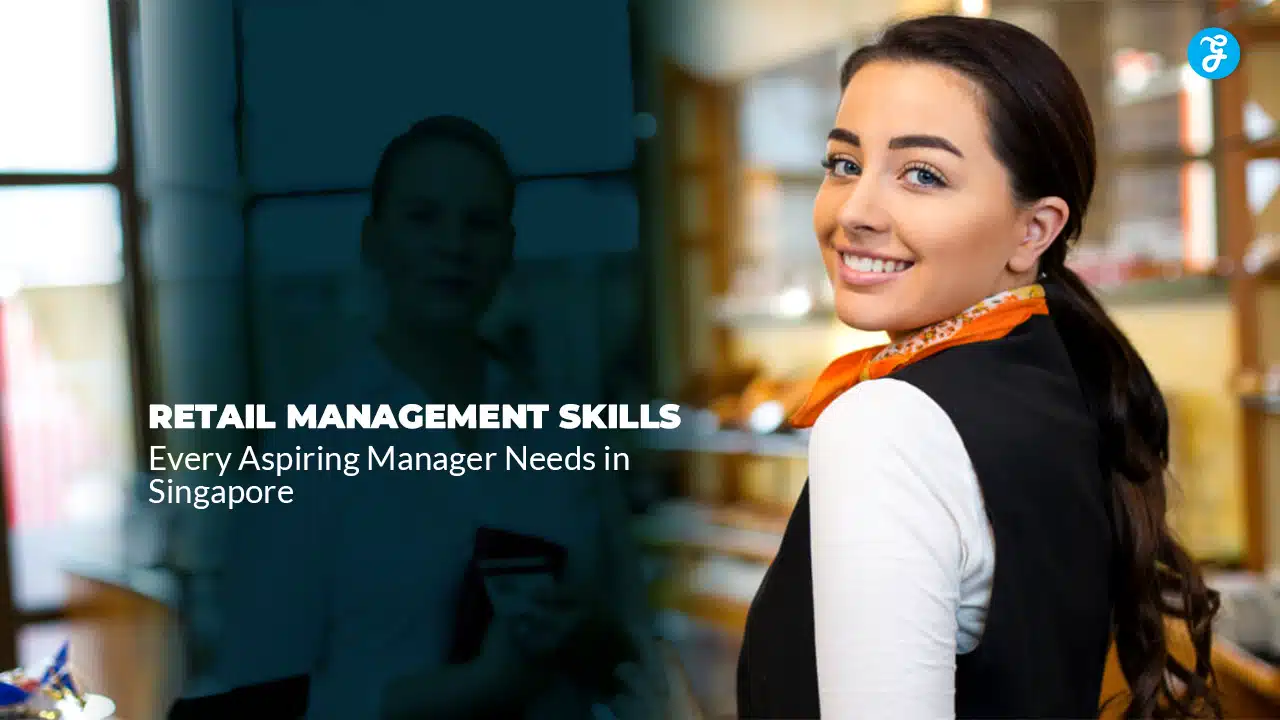
In Singapore’s fast-paced retail industry, aspiring managers must possess a combination of technical, interpersonal, and leadership skills to navigate challenges and drive success.
Whether you’re eyeing a managerial role or aiming to sharpen your expertise, it’s crucial to master certain key competencies.
In this article, we’ll dive into the 5 essential retail management skills that every aspiring manager in Singapore should focus on to stand out and thrive in the competitive retail landscape.
1. Strong Leadership and Team Management

Retail management in Singapore demands effective leadership to guide teams in delivering exceptional customer service, meeting sales targets, and upholding store standards.
As a manager, your ability to inspire, motivate, and lead by example directly influences the performance and morale of your team. In Singapore’s multicultural society, this skill becomes even more crucial as you navigate diverse teams and cater to a wide range of customer demographics.
Key Skills to Develop:
- Communication: A clear and open line of communication is vital for team cohesion and operational efficiency. In Singapore’s multilingual environment, being able to communicate effectively across different languages and cultures is a significant advantage.
- Delegation: Learn to delegate tasks based on team strengths and provide the necessary support for their growth. Effective delegation not only empowers your team members but also allows you to focus on strategic aspects of management.
- Conflict Resolution: Equip yourself with the skills to address workplace conflicts constructively. In Singapore’s diverse workplace, understanding cultural nuances in conflict resolution is particularly important.
- Employee Development: Invest in your team’s growth by identifying potential leaders and providing opportunities for skill enhancement. This not only improves overall team performance but also aids in succession planning.
How to Build It:
- Mentorship and Coaching: Offer regular feedback and career development support to your team members. Implement a structured mentorship program within your retail organization.
- Adaptability: Learn to adjust your leadership style to suit different team dynamics and individual personalities. This flexibility is crucial in managing diverse teams in Singapore’s multicultural retail environment.
- Cultural Intelligence: Develop a deep understanding of different cultural norms and practices prevalent in Singapore. This will help you lead diverse teams more effectively and cater to a multicultural customer base.
- Leadership Workshops: Attend leadership development programs specifically tailored for retail managers in Singapore. These workshops often provide valuable insights into local leadership practices and challenges.
2. Customer-Centric Mindset
In Singapore’s competitive retail environment, customer experience is a key differentiator. As a manager, you must ensure that every interaction with customers is positive and memorable.
This means not just meeting but exceeding customer expectations. Singapore’s reputation as a shopping paradise sets high standards for customer service, making this skill particularly crucial.
Key Skills to Develop:
- Active Listening: Be attentive to customer concerns, complaints, and feedback, ensuring their needs are heard and met. In Singapore’s fast-paced retail environment, the ability to quickly understand and address customer needs is vital.
- Empathy: Understand customer pain points and offer solutions that align with their needs. This includes being sensitive to cultural differences and preferences of Singapore’s diverse customer base.
- Problem-Solving: Quickly address customer issues with a practical, empathetic approach. In Singapore’s efficiency-driven culture, swift and effective problem resolution is highly valued.
- Cultural Sensitivity: Develop an understanding of different cultural norms and preferences to provide personalized service to Singapore’s diverse customer base.
How to Build It:
- Customer Feedback: Regularly seek customer feedback through surveys or face-to-face conversations to refine your strategies. Implement a robust customer feedback system that captures insights across various touchpoints.
- Customer Experience Training: Implement ongoing training to help your team understand how to create excellent experiences. This should include modules on cultural sensitivity and handling diverse customer expectations.
- Mystery Shopping: Conduct regular mystery shopping exercises to evaluate and improve customer service standards in your store.
- Data Analysis: Utilize customer data analytics to gain insights into preferences, buying patterns, and pain points. This data-driven approach is particularly relevant in Singapore’s tech-savvy retail landscape.
3. Operational Efficiency and Organizational Skills

Retail managers are responsible for keeping the store running smoothly. Whether it’s managing inventory, optimizing store layouts, or ensuring timely restocking, operational efficiency is key to maintaining profitability and customer satisfaction.
In Singapore’s competitive retail market, where operating costs are high, maximizing efficiency is crucial for business success.
Key Skills to Develop:
- Time Management: Organize tasks and prioritize effectively to handle the diverse responsibilities of a retail manager. In Singapore’s fast-paced retail environment, the ability to multitask efficiently is crucial.
- Inventory Management: Master the art of stock control, ensuring products are always available without overstocking. This is particularly important in Singapore, where retail space is often at a premium.
- Scheduling: Create optimal schedules to ensure there is adequate staffing during peak hours and off-peak times. Consider Singapore’s unique shopping patterns, including late-night shopping and holiday rushes.
- Visual Merchandising: Develop skills in creating attractive and effective store layouts that maximize sales per square foot, a critical metric in Singapore’s high-rent retail spaces.
How to Build It:
- Retail Management Tools: Leverage tools like POS systems and inventory management software to streamline processes. Stay updated with the latest retail technology trends in Singapore.
- Process Optimization: Regularly review and refine operational processes for maximum efficiency. Implement lean management principles to eliminate waste and improve productivity.
- Benchmarking: Compare your store’s operational metrics with industry standards in Singapore to identify areas for improvement.
- Continuous Learning: Attend workshops and seminars on retail operations management, focusing on strategies relevant to Singapore’s retail landscape.
4. Financial Acumen and Budget Management
A retail manager needs to have a firm grasp on finances to manage budgets, reduce costs, and maximize profits. Understanding sales reports, cost of goods sold (COGS), and margin analysis helps in making informed decisions that impact the bottom line.
In Singapore’s competitive retail market, where operating costs are high, strong financial management skills are essential for sustaining and growing a business.
Key Skills to Develop:
- Budgeting: Create and maintain budgets to ensure the store operates within financial constraints. This includes understanding Singapore’s tax system and its impact on retail operations.
- Sales Analysis: Understand sales trends, profit margins, and how to adjust pricing strategies to boost revenue. This includes being aware of seasonal trends and events that impact retail sales in Singapore, such as the Great Singapore Sale.
- Cost Control: Identify areas where you can reduce unnecessary expenses without sacrificing quality or service. This is particularly important in Singapore, where labor and rental costs are significant.
- Financial Forecasting: Develop skills in predicting future financial performance based on historical data and market trends. This is crucial for planning inventory, staffing, and promotions in Singapore’s dynamic retail environment.
How to Build It:
- Financial Literacy: Take courses or workshops on retail finance and accounting. Look for programs that specifically address financial management in Singapore’s retail context.
- Regular Review: Conduct weekly or monthly reviews of financial reports to track performance and adjust strategies accordingly. Use these reviews to set and monitor Key Performance Indicators (KPIs) relevant to Singapore’s retail industry.
- Collaboration with Finance Teams: Work closely with your company’s finance department to gain deeper insights into financial management strategies specific to retail in Singapore.
- Scenario Planning: Practice creating financial models for different scenarios (e.g., economic downturns, changes in consumer behavior) to prepare for various market conditions in Singapore.
5. Adaptability to Technological Advancements
Retail in Singapore is increasingly becoming tech-driven, with the rise of e-commerce, omnichannel retailing, and advanced point-of-sale (POS) systems. Managers need to stay ahead of the technological curve to improve efficiency and stay competitive.
Singapore’s position as a tech hub in Southeast Asia means that retail managers must be particularly adept at leveraging technology to enhance customer experiences and operational efficiency.
Key Skills to Develop:
- Tech Savvy: Be comfortable using various retail management software, mobile apps, and online platforms. This includes familiarity with popular e-commerce platforms and digital payment systems used in Singapore.
- Data Analysis: Learn to interpret data from sales analytics, customer behavior, and inventory systems to make data-driven decisions. Understanding how to use big data in retail is increasingly important in Singapore’s tech-driven market.
- Omnichannel Strategy: Understand how to integrate online and offline channels to provide a seamless customer experience. This is crucial in Singapore, where consumers expect a high level of integration between digital and physical retail experiences.
- Digital Marketing: Develop skills in online marketing strategies, including social media marketing, search engine optimization (SEO), and email marketing. These skills are essential for reaching Singapore’s highly connected consumer base.
How to Build It:
- Continuous Learning: Keep up-to-date with the latest retail technology trends through webinars, seminars, and industry publications. Attend tech conferences and expos in Singapore to stay informed about emerging retail technologies.
- Embrace Innovation: Experiment with new tools and systems that can enhance store operations and customer interactions. Consider implementing technologies like augmented reality (AR) or artificial intelligence (AI) in your retail operations.
- Cross-functional Collaboration: Work closely with IT and digital teams to understand and implement new technologies effectively in your retail operations.
- Tech-focused Training: Invest in technology training for yourself and your team. Many institutions in Singapore offer courses on retail technology and digital transformation..
Takeaways
The retail landscape in Singapore is highly competitive, and aspiring managers must equip themselves with a diverse skill set to navigate the demands of the industry.
By mastering leadership, customer service, operational management, financial planning, and technology, you’ll position yourself as a highly capable and effective retail manager.
Continuous learning, adaptability, and a commitment to excellence will ensure that you stand out as a leader in the dynamic retail environment.
Are you ready to take your retail management career to the next level? Start building these essential skills today to thrive in Singapore’s ever-evolving retail industry.