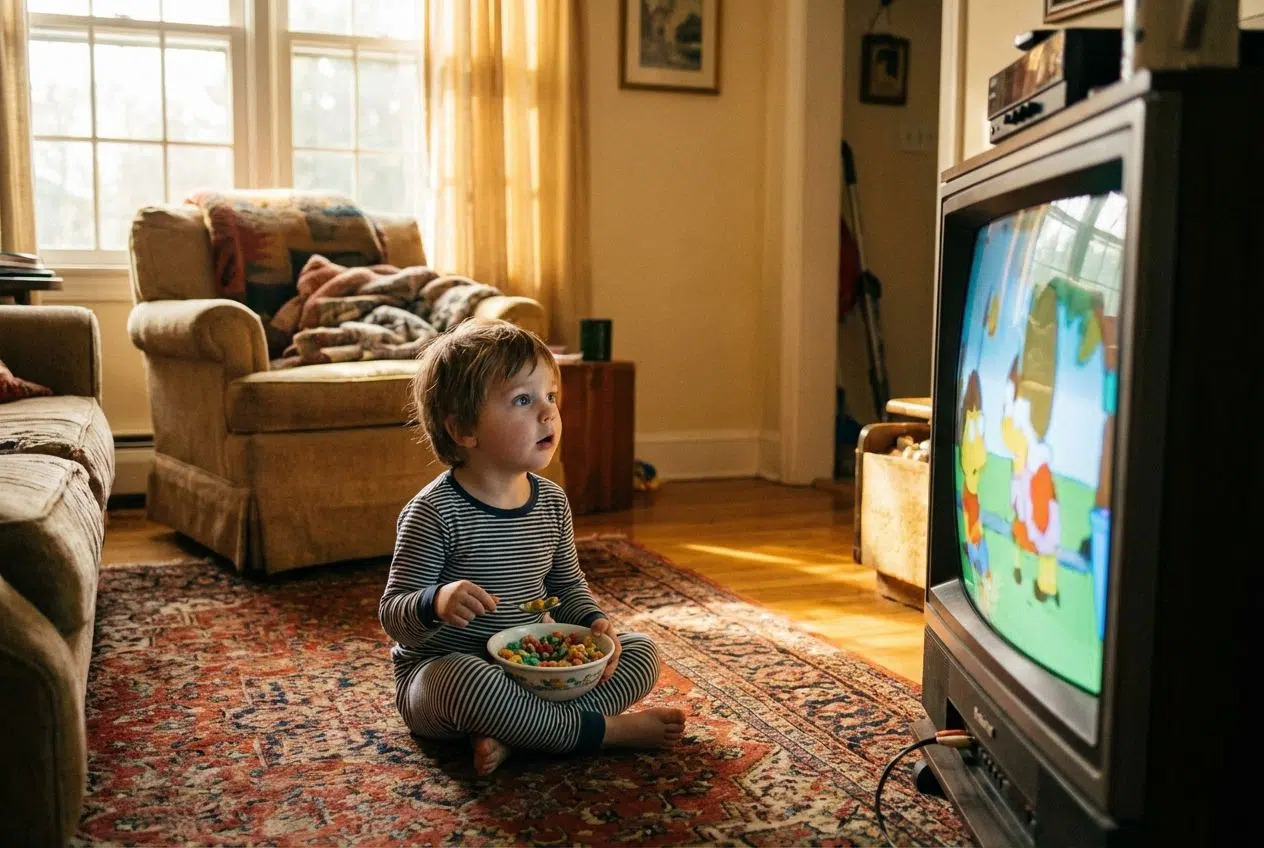
Do you remember waking up early on Saturdays, bowl of cereal in hand, waiting for your favorite cartoons to start? There was something special about those hand-drawn characters, the way they moved, the way they felt human. If you’ve felt like recent movies are just an endless parade of shiny, identical 3D models, you aren’t the only one feeling that fatigue. Here is the good news: that “flat” magic is coming back in a big way.
In early 2024, the 2D animated series Hazbin Hotel set a new global viewership record for a new animated title on Prime Video. It proved that audiences are hungry for the unique style and grit that only hand-drawn animation can deliver.
I’m going to walk you through exactly why this resurgence of 2D animation is happening right now. We’ll look at the new tools making it possible, the shows leading the charge, and why this matters for the future of entertainment. So, grab a coffee (or that bowl of cereal), and let’s see how the old school is becoming the new school.
The History and Decline of 2D Animation
For decades, if you went to the movies, you saw 2D animation. It was the standard. But technology moves fast, and for a while, it looked like traditional drawing was going to disappear completely.
The Golden Era of 2D Animation
From the 1930s through the 1990s, the “Disney Renaissance” defined animation. Movies like The Lion King and Beauty and the Beast weren’t just cartoons; they were massive box office events. Artists drew every frame on paper, creating a warmth and imperfection that computers struggle to replicate. This era established the rules of movement and storytelling that animators still study today.
The Rise of 3D Animation and CGI
Then came 1995. Pixar released Toy Story, and the industry pivoted almost overnight. 3D animation offered something new: realistic lighting, textures you could almost feel, and camera movements that were impossible in 2D. By the early 2000s, traditional studios struggled. The box office failure of 2D films like Treasure Planet contrasted sharply with the billions earned by 3D hits like Shrek and Finding Nemo.
“Animation is not a genre for children. It is a medium.” — Guillermo del Toro
Studios followed the money. They dismantled their hand-drawn departments and went all-in on CGI. But trends are cyclical, and after two decades of 3D dominance, the pendulum is swinging back.
Why 2D Animation is Making a Comeback
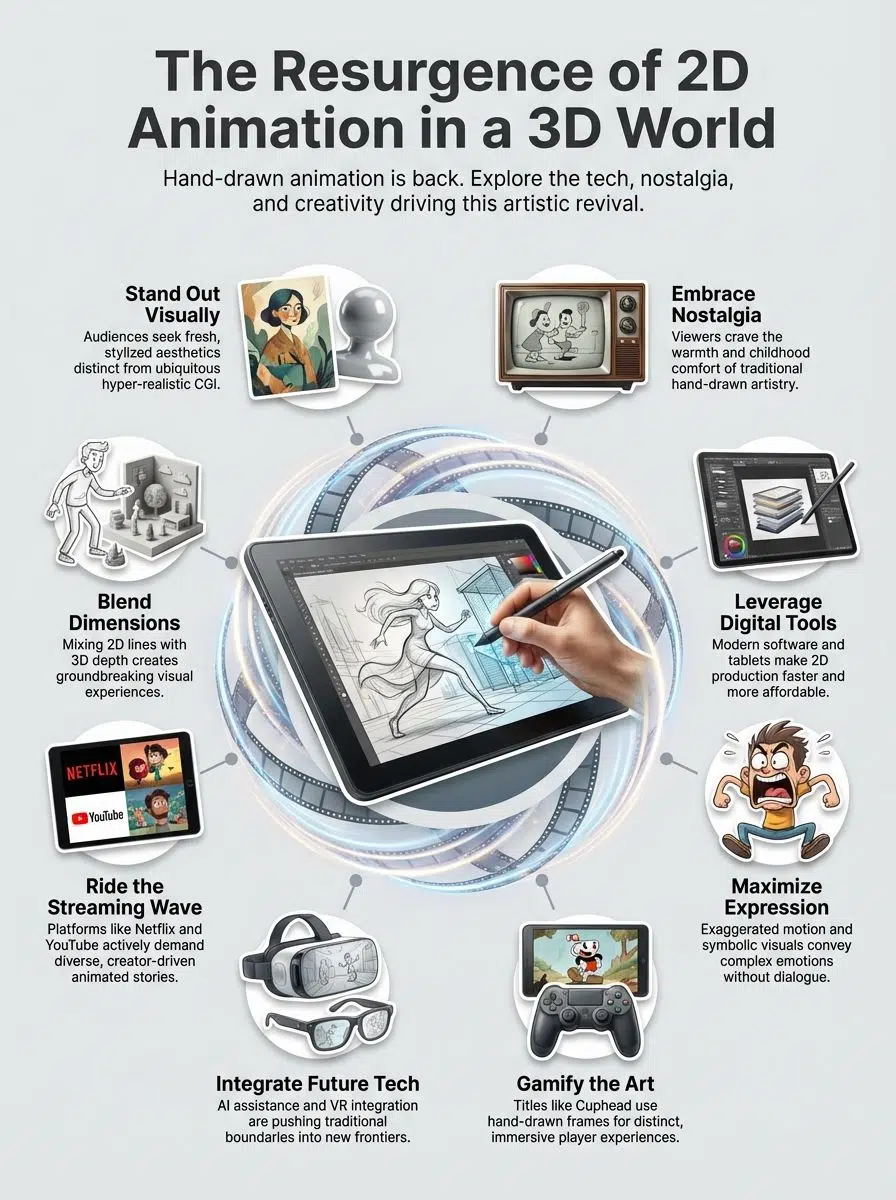
The return of 2D isn’t just about nostalgia; it’s a reaction to the “sameness” of modern CGI. Audiences want visual variety, and creators are finding that 2D offers freedoms that 3D simply cannot.
Nostalgia and Emotional Connection
You can’t underestimate the power of childhood memories. The massive success of X-Men ’97 on Disney+ in 2024 is the perfect example. It didn’t just bring back old characters; it kept the 90s aesthetic while updating the quality. It scored a rare 100% on Rotten Tomatoes, proving that adult audiences crave the specific look of their youth. This style feels handcrafted and personal, creating an immediate emotional bridge that slick, perfect 3D models often miss.
Demand for Unique Visual Styles
We are seeing a rebellion against the “Pixar look.” For a long time, most animated movies looked like they came from the same factory. Now, distinct visual identities are the key to standing out.
- The “Spider-Verse” Effect: While technically 3D, films like Spider-Man: Across the Spider-Verse use 2D techniques (like lower frame rates and hand-drawn line work) to break the mold.
- Anime’s Explosion: The global dominance of Japanese anime has trained a generation to view 2D as cool, mature, and action-packed.
- Indie Variety: Small teams are using 2D to create wild, experimental art styles that big studios wouldn’t risk.
Artistic Freedom and Creativity
In 3D, you are often limited by the “rig”, the digital skeleton of the character. If the rig can’t move a certain way, the character can’t do it. In 2D, if you can draw it, it can happen. This allows for “smear frames” (where a character stretches wildly to show speed) and morphing shapes that defy physics. Creators like Cartoon Saloon (Wolfwalkers) use this freedom to turn characters into flowing lines and abstract shapes, treating every frame like a painting rather than a simulation.
The Role of Technology in Reviving 2D Animation
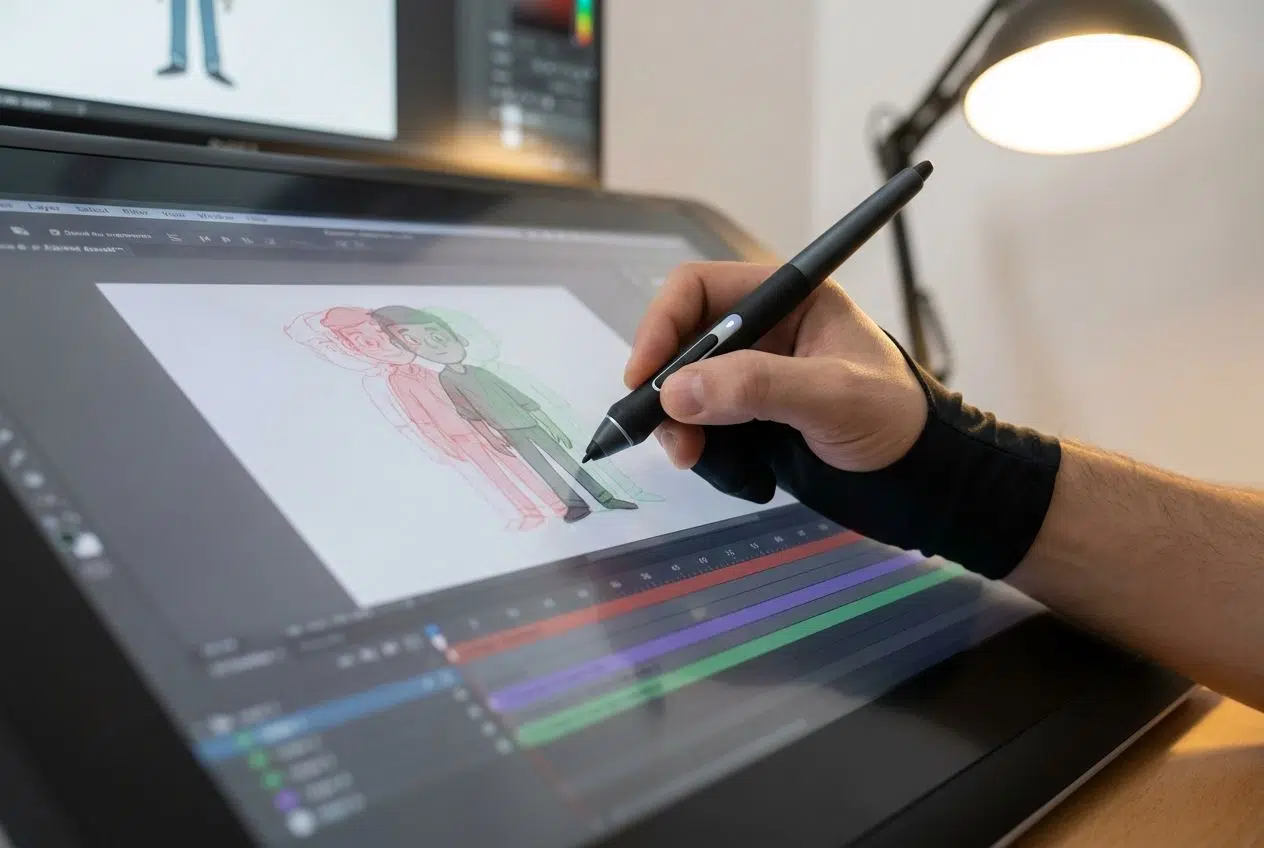
Ironically, it is advanced technology that saved traditional animation. Software has removed the tedious grunt work, like painting cells by hand, allowing artists to focus on the performance.
Digital Tools for 2D Animation
Today’s animators aren’t drowning in erasers and paper shavings. They use powerful software that mimics the feel of a pencil on paper but with the speed of digital processing.
| Software | Best Used For | Key Feature |
|---|---|---|
| Toon Boom Harmony | Professional TV & Film | Master Controllers: Allows 2D rigs to turn and move with near-3D complexity. |
| Blender (Grease Pencil) | Hybrid 2D/3D | 2D in 3D Space: You can draw flat lines that exist in a 3D world, allowing for dynamic camera moves. |
| Adobe Animate | Web & Interactive | Vector Brushes: infinitely scalable lines that keep file sizes small for web use. |
Hybrid Animation Techniques
The most exciting development is the blending of both worlds. Blender’s Grease Pencil tool was a game-changer here. It lets artists draw 2D strokes directly into a 3D scene. This was used effectively in the movie Unicorn Wars, where 2D characters moved through 3D environments with perfect perspective. This hybrid approach gives you the best of both: the depth and camera freedom of 3D with the artistic charm of 2D.
Modern Applications of 2D Animation
It’s not just about movies anymore. 2D animation is dominating sectors you might not expect, from mobile gaming to language learning apps.
Indie and Creator-Driven Projects
The barrier to entry has never been lower. Independent creators are bypassing networks entirely. The pilot for Hazbin Hotel lived on YouTube for years, gathering millions of fans before Prime Video picked it up. Similarly, the show The Amazing Digital Circus exploded in late 2023, racking up over 100 million views on YouTube in weeks. These projects prove you don’t need a massive studio to find a massive audience; you just need a unique voice and a drawing tablet.
Video Games and Interactive Media
The gaming world is a fortress for 2D excellence. While AAA studios chase photorealism, indie developers use 2D to create iconic styles.
- Balatro (2024): This poker roguelike became a surprise hit, using simple, psychedelic 2D effects to keep players hooked for hours.
- Hollow Knight: Fans are still eagerly awaiting its sequel, Silksong, proving that a hand-drawn “Metroidvania” style has massive staying power.
- Animal Well (2024): A critical darling that uses a pixel-art style to create a dense, mysterious atmosphere that realistic graphics couldn’t achieve.
Educational and Instructional Animation
Duolingo is a masterclass in this. They realized that a static app is boring, so they invested heavily in 2D character animation for their mascot, Duo, and his friends. These characters cheer, cry, and get angry when you miss a lesson. This isn’t just decoration; it’s a retention strategy. The animation creates a personality that users want to engage with, turning a chore (learning a language) into a game.
The Appeal of 2D Animation in Storytelling
Why does a drawing make us cry? It’s about abstraction. When you watch a realistic 3D human, your brain critiques the details. When you watch a 2D sketch, your brain fills in the gaps with emotion.
Symbolic Visual Storytelling
2D animation speaks in symbols. A character’s eyes can literally turn into hearts to show love, or giant teardrops can flow like waterfalls. In Studio Ghibli films, weather often mirrors the character’s internal state, rain isn’t just water; it’s sadness. This visual shorthand allows storytellers to communicate complex feelings instantly without a single line of dialogue.
Exaggerated Motion and Metamorphosis
There is a principle in animation called “squash and stretch.” In 2D, you can push this to the extreme. A character running fast can turn into a blur of motion lines. In the 2022 film Puss in Boots: The Last Wish, the creators dropped the frame rate during action scenes to mimic this 2D style. It made the fights feel punchy and rhythmic, unlike the smooth, floaty motion of standard CGI.
Crossing Cultural Barriers
Because 2D art is often stylized rather than realistic, it feels universal. Bluey is an Australian show about dogs, but its simple, flat art style helps it resonate with families in the US, UK, and beyond. The abstraction allows kids everywhere to project themselves onto the characters, regardless of where they live. It removes the specific cultural markers that realistic live-action video often carries.
Examples of 2D Animation Resurgence
If you need proof that 2D is back, just look at the awards and the box office numbers from the last two years.
Disney’s Return to Hand-Drawn Roots
Disney knows they need to tap back into their legacy. Their 2023 film Wish attempted to blend a watercolor 2D look with 3D models. While the critical reception was mixed, the intent was clear: the “Disney magic” is tied to their history of illustration. More successfully, their streaming series projects like X-Men ’97 show that when they fully commit to the 2D aesthetic, the audience response is overwhelmingly positive.
Successful Indie 2D Animated Films
The real innovation is happening outside the big system. The Spanish film Robot Dreams (2023) earned an Oscar nomination for Best Animated Feature without a single word of dialogue. It used simple, clean 2D lines to tell a heartbreaking story about friendship. Another massive hit was The Boy and the Heron (2023). It became the first original anime title to ever top the US box office, opening with $12.8 million. It proved that American audiences will show up in theaters for hand-drawn art.
Challenges Facing 2D Animation Today
Despite the love, it’s not all smooth sailing. Producing high-quality 2D content is labor-intensive and expensive in a different way than 3D.
Competition with 3D Animation
3D animation scales better. Once you build a 3D model of a character, you can use it in a movie, a video game, a TV show, and a toy commercial without redrawing it. In 2D, every new angle often requires a new drawing. This “asset reuse” makes 3D very attractive to studio executives who are looking at the bottom line, even if the artists prefer 2D.
Budget Constraints for Studios
Let’s look at the numbers. While costs vary wildly based on quality:
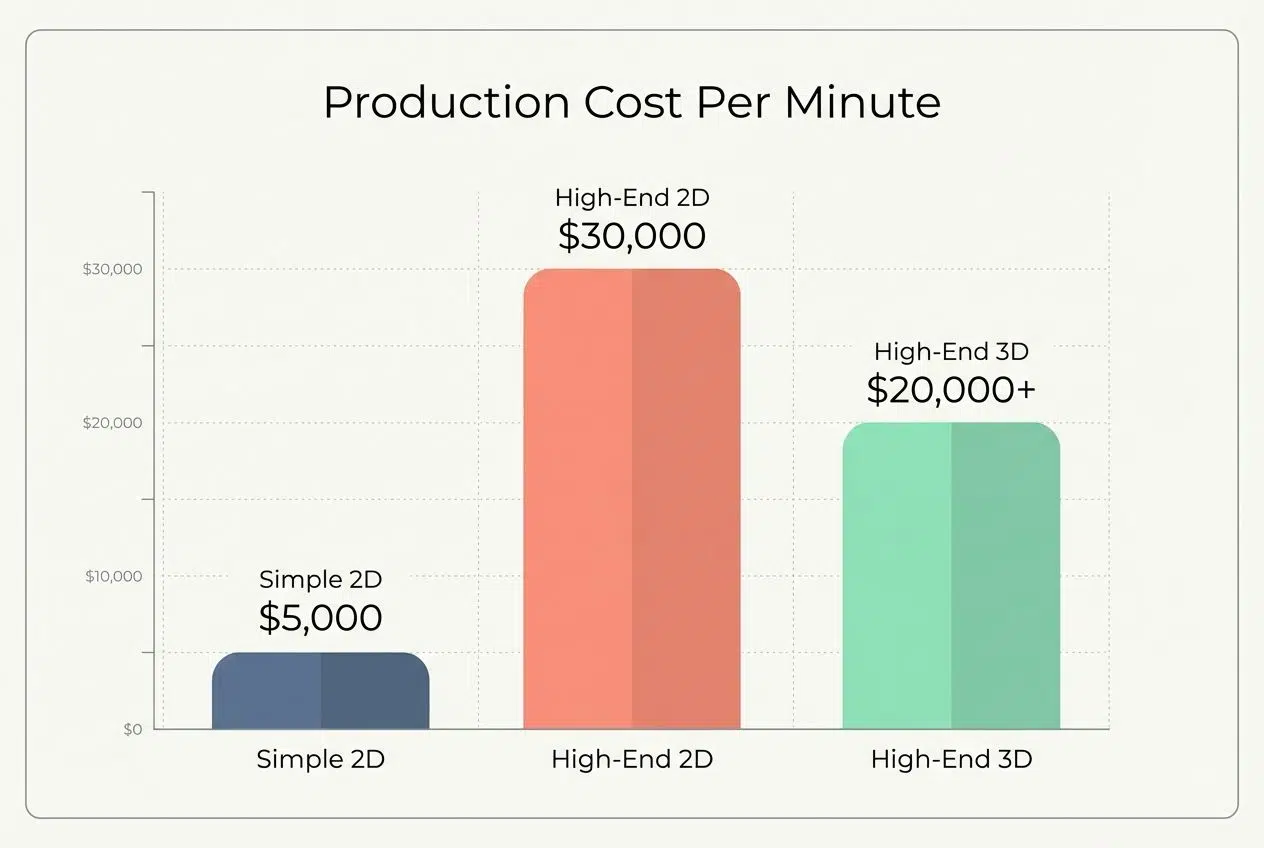
- Simple 2D production (like for a web series) can cost between $1,000 and $5,000 per minute.
- High-end 2D (like Rick and Morty or feature films) jumps to $10,000 – $30,000+ per minute.
- High-end 3D often starts at $20,000 per minute and skyrockets into the millions for movies.
While 2D can be cheaper, the lack of reusable assets means a TV series doesn’t get significantly cheaper to make in Season 5 compared to Season 1. 3D shows often become more profitable over time as their library of digital props grows.
Balancing Tradition with Innovation
The challenge for modern animators is using new tech without losing the “soul.” There is a risk that tools like AI frame interpolation (which automatically draws the frames between key poses) can make animation look too smooth and robotic. The best studios use technology to remove the boring tasks, like coloring in the lines, while keeping the actual character acting firmly in human hands.
The Future of 2D Animation
Where do we go from here? The line between “cartoon” and “reality” is blurring, and the tools are getting smarter.
Expanding Opportunities for Animators
The demand is growing. According to market reports, the US animation market is projected to reach significant growth by 2030, driven largely by streaming demand. Platforms like Netflix and Max need content that stands out from the crowd, and unique 2D art styles are the best way to do that. This means more jobs for artists who can blend traditional drawing skills with modern compositing software.
Integration with Emerging Technologies
Virtual Reality (VR) is the next frontier. Tools like Quill allow artists to draw in 2D, but in a 3D space they can walk around in. We are also seeing “Live 2D” technology, where a VTuber (a virtual YouTuber) can control a 2D avatar with their own facial movements in real-time. This is creating an entirely new category of live performance that looks like a hand-drawn cartoon.
Wrapping Up
The resurgence of 2D animation is real, and it is driven by a simple truth: style matters. We spent twenty years chasing perfect realism, and now we are remembering the joy of artistic interpretation.
From the box office success of The Boy and the Heron to the addictive loop of games like Balatro, the flat world is deeper than ever. Whether you are an aspiring animator or just a fan who misses Saturday mornings, there has never been a better time to watch cartoons.
Animation is still being written, frame by frame, and the next great masterpiece might just be a pencil sketch away.