You buy an outfit for a wedding, wear it once, and then it sits in your closet for years. It is not a bad purchase in the moment. It just becomes pointless over time. You paid full price for something that had a short life in your real routine.
That pattern explains why renting clothes has moved from “special occasion” to a broader lifestyle choice. People want variety without clutter. They want to look sharp without buying more than they need. They also want options that feel less wasteful.
This article breaks down how clothing rental works, where it fits in circular fashion, and what the real pros and cons are. You will also get clear decision rules, simple cost math, and a checklist you can use before you rent.
The Shift From Owning To Access
Fashion used to reward ownership. Now it rewards flexibility. Many purchases happen for one moment: a party, a trip, an interview, a photoshoot, or a trend that fades fast.
Renting fits because it matches short-term needs with short-term commitment. It also matches modern life:
-
Smaller living spaces
-
More events and social pressure to vary outfits
-
Tighter budgets
-
Workwear that changes by day, not by decade
Circular Fashion 101: What “Circular” Actually Means
Circular fashion means keeping garments in use longer and reducing the need to produce new items. It usually involves several strategies:
-
Renting and sharing
-
Resale and secondhand
-
Repair and alteration
-
Swaps and community exchanges
-
Upcycling and redesign
-
Recycling (often the last option)
Here is the truth most people miss: textile-to-textile recycling is still limited at scale. That is one reason rental and resale get attention. They extend use without relying on complex recycling systems.
Why Buying Is Breaking: Underuse, Waste, And Emissions
Buying is not the problem. Underuse is.
Many wardrobes have a pattern: lots of items, few real repeats. That pushes more production, more shipping, more packaging, and more waste.
There are three big drivers behind the “buy less” conversation:
-
Lower average wear per garment
-
Big growth in overall clothing volume
-
High environmental impact from production, materials, and transport
This is where renting clothes fits the circular story. If one garment gets worn by many people, fewer new garments may be needed. That “may” matters. Renting only helps if it replaces buying, not if it sits on top of normal shopping.
Renting Clothes: How Clothing Rental Works
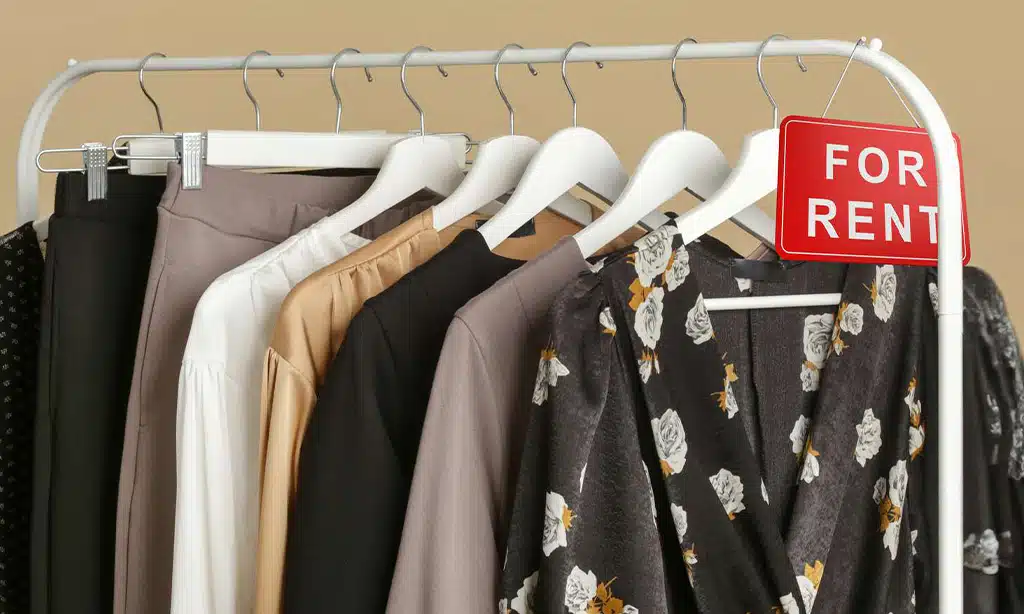
Renting is not one system. It is three main models. Picking the right one decides whether you love it or hate it.
One-Time Rental (Event-Based)
How it usually goes:
-
Choose garment and size
-
Delivery or pickup
-
Wear it
-
Return it
-
The company inspects, cleans, and restocks
This model works best when you need a specific “moment” outfit.
Wardrobe Subscription (Monthly Rotation)
Subscriptions work when you actually rotate items. If you order, forget to return, or repeat the same pieces, it stops being a value win.
Best for:
-
People who need frequent outfit changes
-
Professionals who want variety without buying
-
Temporary size changes or maternity wardrobes
Peer-To-Peer Rental
This can be more unique and sometimes more local. It can also be less predictable.
Check:
-
Real photos and detailed condition notes
-
Clear damage and late-return rules
-
Reviews for both owner and platform
Is Renting Clothes Really More Sustainable? The Honest Answer
Renting can reduce environmental impact. It can also increase it. The difference depends on four things:
-
Shipping distance and speed
-
How the garment is cleaned and how often
-
How long the garment stays durable
-
Whether the rental replaces a new purchase
The simplest way to think about it is “impact per wear.” A garment that replaces ten “one-time buys” can be a win. A garment that gets shipped back and forth for minor use can lose.
Reality check:
-
Renting works best for items people rarely rewear.
-
Renting works best when logistics are efficient.
-
Renting works best when it reduces new production.
The Environmental Math: When Renting Wins And When It Loses
You do not need a calculator to make a smart call. Use a practical rule.
-
If you would wear it 1–5 times, renting usually makes sense.
-
If you would wear it 30+ times, buying quality often makes more sense.
-
If you are unsure, rent once as a test.
Renting often wins for:
-
Wedding guest outfits
-
Formalwear
-
Luxury statement pieces
-
Maternity clothing
-
Seasonal “trend” items
Buying often wins for:
-
T-shirts, jeans, daily basics
-
Comfortable shoes you wear often
-
Core outerwear you keep for years
Money And Psychology: Why Renting Feels Smarter
The best way to compare renting and buying is cost per wear.
Example:
-
Buy a jacket for $240
-
Wear it 40 times
-
Cost per wear = $6
Now compare:
-
Rent a similar jacket for $35 once
-
Cost per wear = $35
Buying wins if you actually wear it often. Renting wins when you do not.
Renting also reduces two hidden costs:
-
Closet clutter and storage stress
-
Regret from “wrong” purchases
Who benefits most from renting clothes:
-
People with frequent events
-
People who need short-term wardrobes
-
People who love variety but hate clutter
-
People testing luxury without full commitment
How Rental Platforms Make It Work
Behind every rental is an operations loop:
-
Inspect returns
-
Clean and care for garments
-
Repair small damage
-
Repackage and restock
-
Ship out again
This reverse logistics engine decides the experience:
-
Good operations = clean items and reliable delivery
-
Weak operations = delays, quality issues, and frustration
Tech Making Rental Fashion Scale
Rental businesses depend on tech to reduce returns and errors.
Common tools:
-
Fit recommendation systems
-
Inventory tracking
-
Demand forecasting
-
Quality grading processes
Good tech shows up as:
-
Better sizing accuracy
-
More styles available in your size
-
Faster turnaround
-
Fewer “surprise” condition issues
The Downsides People Don’t Talk About Enough
Renting clothes has friction. It is not a perfect swap for buying.
Common issues:
-
Fit uncertainty
-
Shipping delays
-
Damage or late fees
-
Sustainability doubts due to transport and cleaning
-
Limited access for some regions or body types
Before you rent, ask:
-
Would I have bought this anyway?
-
How many times would I really wear it?
-
Can I rent without rush shipping?
-
Are the rules clear and fair?
How To Rent Clothes Smartly (A Practical Checklist)
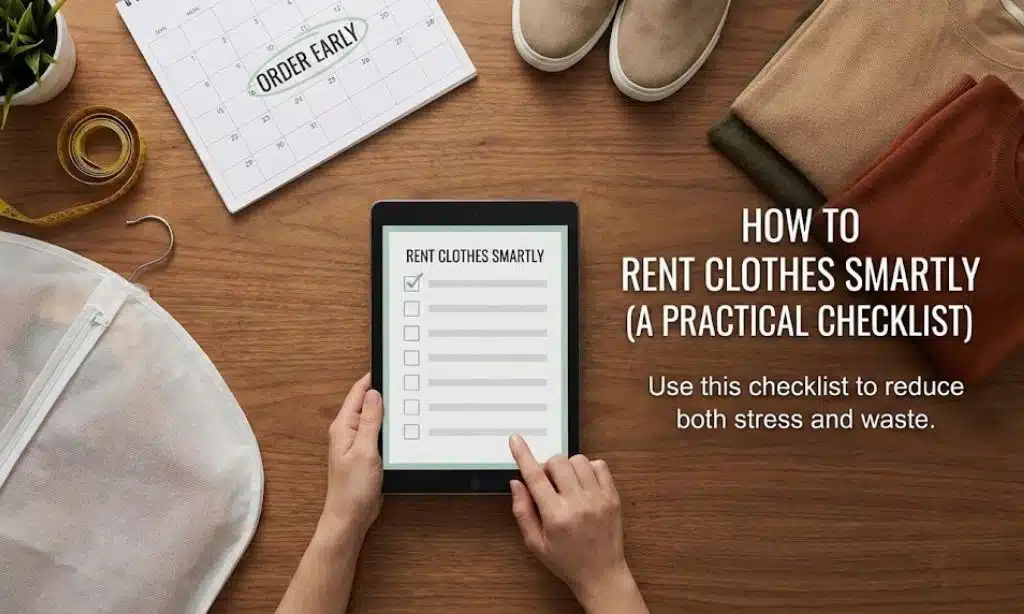
Use this checklist to reduce both stress and waste.
-
Define the goal: event, travel, workwear, or testing style
-
Choose the right model: one-time, subscription, or peer-to-peer
-
Use measurements, not “usual size”
-
Order early and avoid rush shipping
-
Batch rentals when possible
-
Read damage and late rules before paying
-
Plan returns before the event happens
Circular Fashion Beyond Renting: The Best Mix For Most People
For most people, the best plan is not “rent everything.” It is a blended wardrobe system:
-
Buy fewer basics, but buy better
-
Rent for events and statement pieces
-
Use resale for trends
-
Repair before replacing
This mix lowers waste and keeps daily life simple.
What’s Next: The Future Of Rental Fashion
Rental is growing because:
-
Consumers want flexibility
-
Brands want new revenue models
-
Policy pressure is rising in some regions
-
Trust and transparency are becoming more important
What you may see next:
-
More mainstream brands offering rental and resale
-
More “repair-first” services tied to rental inventory
-
More local hubs to cut shipping impact
-
Clearer reporting on environmental claims
Final Thoughts
Renting clothes represents more than just a passing trend—it signals a fundamental shift in how we relate to fashion. As consumers become increasingly aware of the environmental, economic, and ethical costs of fast fashion, circular models like clothing rental offer a smarter, more sustainable alternative. By prioritizing access over ownership, renting reduces textile waste, extends the life cycle of garments, and allows people to enjoy variety without overconsumption.
In a world where style evolves rapidly but resources are finite, circular fashion proves that looking good doesn’t have to come at the planet’s expense. Renting clothes empowers consumers to make conscious choices, supports responsible brands, and redefines fashion as a shared, regenerative system. As this movement continues to grow, it’s clear that the future of fashion isn’t about buying more—it’s about using better.