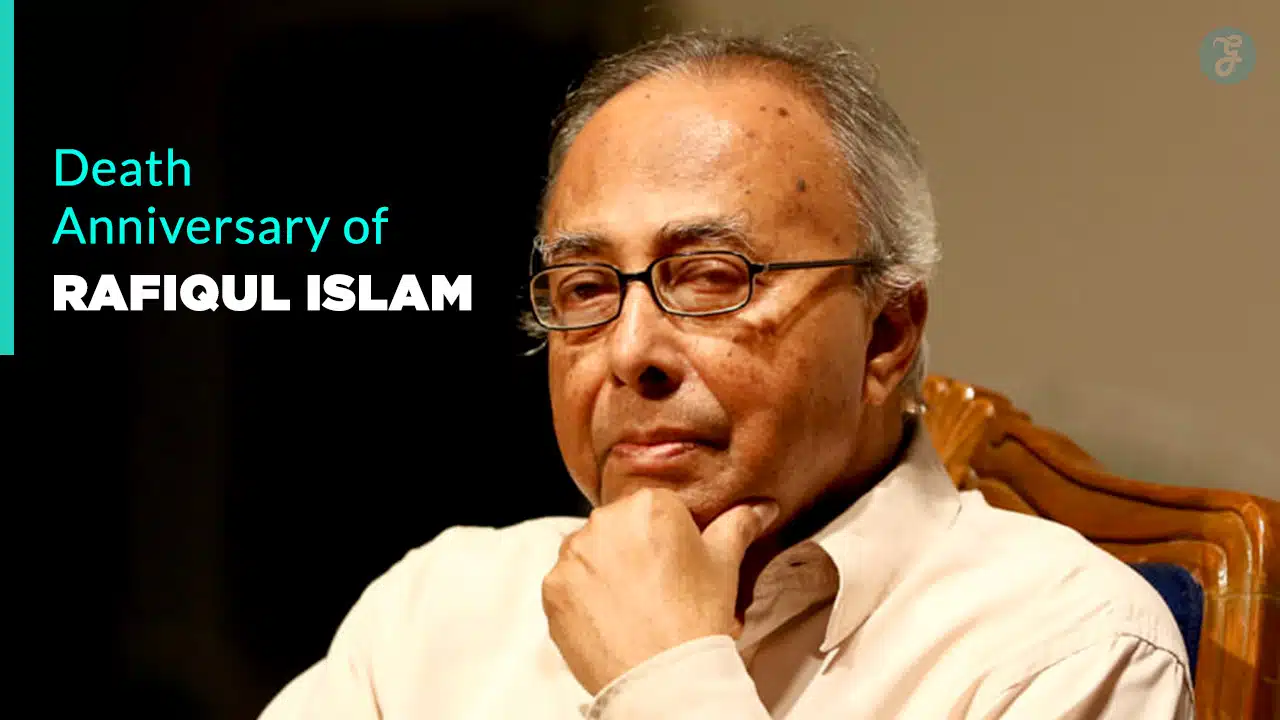
Bangladesh has produced many great scholars, thinkers, and cultural icons, but few have left as profound an imprint as National Professor Rafiqul Islam. Widely celebrated as an educationist, linguist, researcher, writer, and cultural activist, he devoted more than six decades of his life to enriching Bangla language and literature. His journey was not only one of academic brilliance but also of steadfast adherence to the nation’s cultural and intellectual identity.
From his pioneering work in linguistics to his in-depth research on Kazi Nazrul Islam, Rafiqul Islam stood as a guardian of Bengali heritage. He served as both the Director General and President of the Bangla Academy, playing a vital role in strengthening Bangladesh’s premier literary and cultural institution. His contributions extended beyond universities and research centers—they reached the heart of the nation.
In July 2018, the Government of Bangladesh honored him with the prestigious title of National Professor, recognizing his lifelong devotion to learning and culture. This article explores the extraordinary life, intellectual journey, and eternal legacy of one of Bangladesh’s most influential scholars.
Early Life and Education
Rafiqul Islam was born in 1934, during a time when the Indian subcontinent was undergoing immense cultural and political transformation. Growing up amidst the rich linguistic and cultural traditions of Bengal, he developed an early affinity for language, literature, and history. His childhood environment—steeped in a culture of reading, discourse, and intellectual curiosity—played a foundational role in shaping the scholar he would later become.
Throughout his schooling, Rafiqul displayed remarkable academic talent. His teachers and peers recognized him as a bright mind with a passion for Bangla language and arts. As a young student, he became deeply aware of the sociopolitical changes sweeping across Bengal and the emerging emphasis on cultural identity. These influences laid the foundation for his later intellectual commitments.
His university years were transformative. Enrolling in the Department of Bangla at Dhaka University, he came under the tutelage of some of the most prominent academics of the time. He immersed himself in linguistics, literature, history, research methodology, and cultural theory. During this period, he developed a profound interest in Bangladesh’s national poet, Kazi Nazrul Islam, which eventually became one of his lifelong research pursuits.
As the Language Movement of 1952 unfolded—a defining moment in Bangladesh’s history—Rafiqul Islam’s worldview matured. The cultural and political awakening of the era solidified his belief in the importance of preserving the Bangla language and advancing national culture, themes that would define his intellectual journey.
Academic Career and Contributions
Rafiqul Islam’s academic career began with teaching positions in renowned institutions, where he quickly gained recognition for his research-oriented approach and unique teaching style. His early work focused on deep linguistic analysis, exploring the structures, histories, and evolutions of the Bangla language. His clarity, depth, and command over research methodology soon earned him a reputation as one of the most promising scholars of his generation.
He later joined the University of Dhaka, where he emerged as a leading academic figure. As a professor, he shaped the minds of thousands of students who would go on to become writers, researchers, educators, and cultural workers. His teaching emphasized critical thinking, evidence-based research, and respect for cultural heritage.
His academic brilliance later led him to join the University of Liberal Arts Bangladesh (ULAB), where he served in important capacities, including heading academic programs and advancing research initiatives. His mentorship was known for its depth: he not only taught literature and linguistics but also shaped students’ approach to intellectual inquiry.
Rafiqul Islam’s academic contributions include dozens of scholarly books, research papers, and edited volumes. His works addressed complex issues such as:
-
The evolution of Bangla linguistics
-
The cultural and historical foundations of Bengali identity
-
Literary criticism and interpretation
-
Deep analyses of Nazrul’s poetry and philosophy
He earned admiration for his clarity, precision, and academic rigor. His work became essential reading for students, researchers, and academicians in Bangladesh and beyond.
Rafiqul Islam and the Bangla Academy
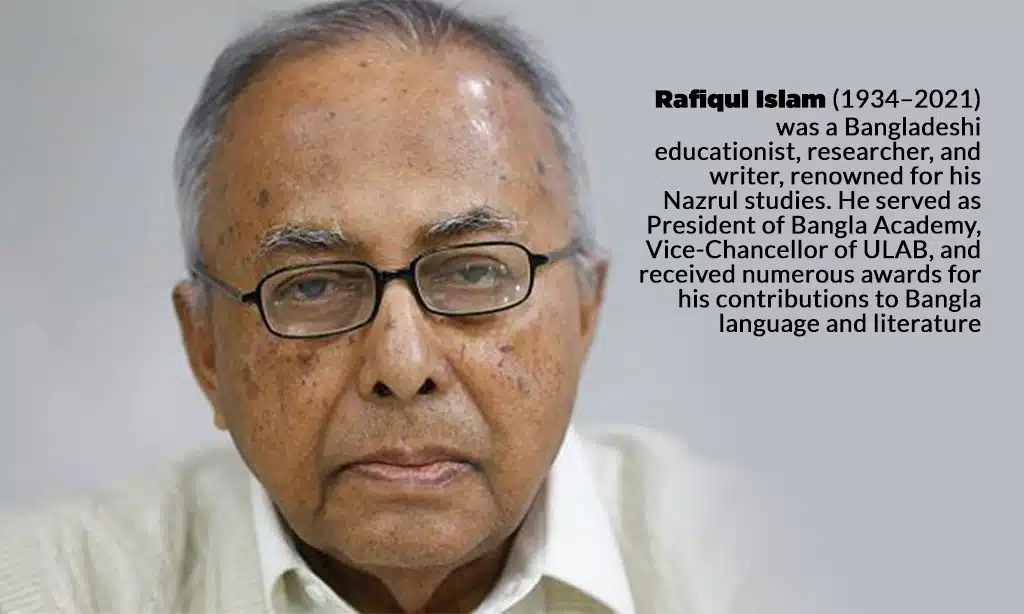
One of the most important chapters of Rafiqul Islam’s life unfolded at the Bangla Academy, the leading institution dedicated to nurturing the Bangla language and literature. He served the Academy in two of its highest positions: Director General and later President.
Director General: Strengthening Foundations
As Director General, he led the Academy into a phase of structural growth and intellectual expansion. He:
-
Strengthened research departments
-
Expanded publication programs
-
Modernized administrative processes
-
Supported new scholars and writers
-
Promoted linguistic research and cultural documentation
He played a key role in enhancing the academy’s reputation as a center for literary excellence and cultural development.
President of Bangla Academy
As president, Rafiqul Islam provided visionary leadership focused on cultural preservation and linguistic innovation. Under his guidance:
-
The Ekushey Book Fair received renewed attention and structure
-
Cultural and linguistic festivals gained more visibility
-
Research projects were expanded to include emerging cultural issues
-
Collaborations with international institutions grew
His leadership was marked by integrity, passion, and a deep commitment to national identity.
Major Works and Publications
Rafiqul Islam authored more than two dozen books and contributed to countless academic and cultural publications. His works span several major domains:
Linguistics
He wrote extensively on the structure, evolution, and history of the Bangla language, providing research frameworks that remain foundational.
Literary Studies
His literary critiques, especially of modern and contemporary Bangla literature, have become essential references for researchers.
Nazrul Studies
His books on Kazi Nazrul Islam are considered some of the most authoritative works in the field.
Cultural History
He explored the cultural heritage of Bangladesh, the Language Movement, and the socio-political development of Bengali identity. His writing style—rigorous yet accessible—made his books popular among academics, students, and general readers alike.
Nazrul Research: A Lifelong Passion
Rafiqul Islam’s most celebrated scholarly pursuit was his lifelong research on Kazi Nazrul Islam, Bangladesh’s national poet. He dedicated decades to understanding Nazrul’s literary genius, musical brilliance, and revolutionary philosophy.
His contributions include:
-
Comprehensive analyses of Nazrul’s poetry
-
Deep studies on Nazrul’s songs (Nazrul Sangeet)
-
Research on the poet’s life, social philosophy, and influence
-
Editing and compiling critical editions of Nazrul’s works
Rafiqul Islam helped establish Nazrul studies as a serious academic field, both in Bangladesh and internationally. His research played a pivotal role in preserving Nazrul’s legacy and ensuring its accessibility for future generations.
Cultural Activism and National Identity
Beyond academia, Rafiqul Islam was an influential cultural activist committed to preserving and promoting Bangladeshi identity. His activism was grounded in his belief that language and culture form the heart of national consciousness.
He frequently highlighted the importance of:
-
The Language Movement of 1952
-
Bengali cultural heritage
-
Literary traditions
-
National unity through linguistic pride
He also participated in cultural policymaking, national committees, literary forums, and educational advisory boards. His voice was respected in debates on cultural development, linguistic policy, and heritage preservation.
Rafiqul Islam believed strongly that culture was not merely an academic subject but a living force that shaped people’s identities and aspirations. He worked tirelessly to strengthen that force within Bangladesh.
National Honors and Recognition
Throughout his illustrious career, Rafiqul Islam received numerous national honors. Among them:
Ekushey Padak
Awarded for his contributions to language and literature, this remains one of Bangladesh’s most prestigious civilian honors.
Independence Award (Shadhinata Padak)
The highest civilian award in Bangladesh, recognizing his immense impact on national culture and education.
National Professor (2018)
In July 2018, he was appointed as a National Professor, the highest academic title in the country. This honor reflected not only his scholarly output but also his integrity, dedication, and national significance.
Leaders, academics, writers, and cultural personalities frequently praised his contributions, describing him as a man of rare intellect and deep humility.
Personal Life and Values
Despite his towering achievements, Rafiqul Islam was known for his modesty and sincerity. Colleagues and students admired his disciplined work ethic, gentle demeanor, and profound respect for knowledge.
His personal life was grounded in simplicity. He valued:
-
Honesty
-
Intellectual integrity
-
Lifelong learning
-
Humility
-
Respect for others
Stories from those who knew him depict a man who was deeply devoted to his work yet always willing to mentor and guide younger generations. His door was always open to students seeking advice, inspiration, or simply a meaningful conversation.
Passing and National Mourning
Rafiqul Islam passed away on November 30, 2021, leaving behind a nation in mourning. His death marked the end of an era for Bangladeshi scholarship and cultural activism.
Leaders, academics, cultural organizations, and ordinary citizens paid tribute to him. The Bangla Academy, universities, cultural bodies, and literary groups organized memorials in his honor.
His passing was widely recognized as a national loss, but his legacy continued to inspire hope, reflection, and appreciation for the intellectual foundations he helped build.
Legacy: Why Rafiqul Islam Still Matters
The legacy of Rafiqul Islam is far-reaching and enduring. His contributions continue to influence:
Bangla Linguistics
His research provides essential frameworks for understanding the structure and evolution of the language.
Nazrul Studies
He remains one of the most authoritative voices on Kazi Nazrul Islam.
Cultural Identity
His advocacy for cultural heritage strengthened national consciousness.
Education
Generations of students continue to carry forward his methodologies, values, and intellectual spirit.
Institutional Development
His leadership at the Bangla Academy helped shape it into a stronger, more dynamic institution. Rafiqul Islam’s legacy lies not only in what he accomplished but also in the way he inspired future generations to pursue truth, knowledge, and cultural pride.
Takeaways
Professor Rafiqul Islam served as a beacon of dedication, scholarship, and cultural devotion. His contributions to linguistics, literature, education, and national identity are deeply embedded in the intellectual fabric of Bangladesh.
As a National Professor, he provided guidance; as a researcher, he preserved heritage; and as a cultural activist, he strengthened the foundations of Bengali pride. His legacy continues to inspire Bangladesh to value knowledge, celebrate cultural heritage, and uphold the beauty and richness of the Bangla language.