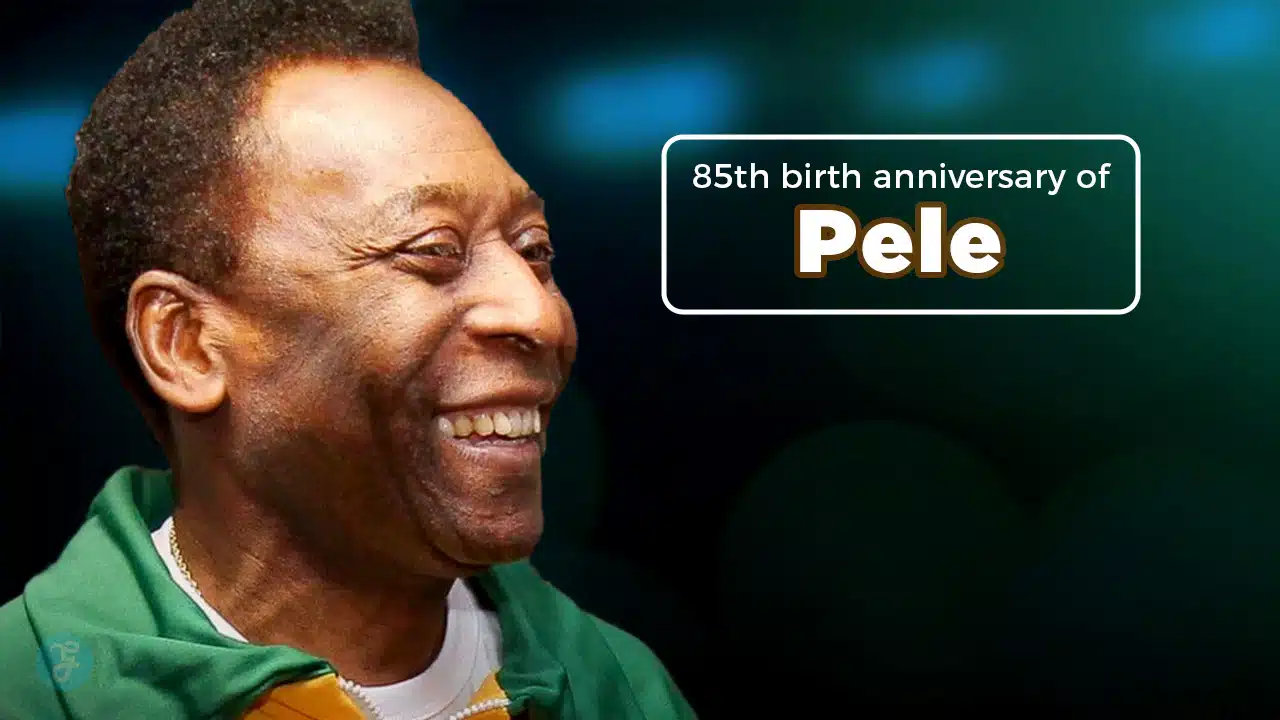
Few names transcend sport. Pelé is one of them. Born Edson Arantes do Nascimento on October 23, 1940, in Três Corações, Brazil, he rose from barefoot beginnings to become football’s first global superstar. To billions, he wasn’t just a player—he was the embodiment of joy itself.
Today, October 23, 2025, is his 85th birth anniversary. Happy birthday to the legend of football, Pele.
In a century defined by war, change, and globalization, Pelé’s genius united nations. From the dusty fields of Brazil to the glittering stadiums of Mexico, he showed that the beautiful game could be both art and hope—a universal language spoken by the human heart.
Key Takeaways
-
Pelé’s impact transcends sport—he shaped culture, politics, and racial consciousness.
-
Three World Cups and 1,281 goals are symbols of endurance and artistry.
-
His smile became football’s greatest ambassador.
-
His legacy still guides modern legends—Messi, Mbappé, and Neymar cite him as a foundational inspiration.
-
He remains football’s moral compass—joy over ego, art over aggression.
Roots of Greatness: From Três Corações to Santos
Pele’s story begins in poverty, but it is shaped by imagination. His father, João Ramos do Nascimento (Dondinho), was a semi-professional footballer whose career ended with a knee injury. Unable to afford a real ball, Pelé made one from stuffed socks and newspaper—a humble start to a monumental journey.
At 15, he joined Santos FC, and by 17, he was a national phenomenon. His debut season announced a prodigy, his composure and power unlike anything the world had seen.
| Season | Club | Matches | Goals | Key Highlight |
|---|---|---|---|---|
| 1956–57 | Santos | 36 | 41 | First senior debut; youngest scorer |
| 1958 | Brazil | 6 | 6 | World Cup debut; champion at 17 |
| 1959 | Santos | 103 | 127 | Scored in nearly every match |
| 1960 | Santos | 65 | 88 | Helped Santos dominate South America |
Table: Pelé’s Early Career Highlights (1956–1960)
At 17, Pele scored a hat-trick in the 1958 semifinal and two goals in the final against Sweden. The world gasped—a teenager from Brazil had conquered the planet.
Global Domination of Pele: The Three World Cups
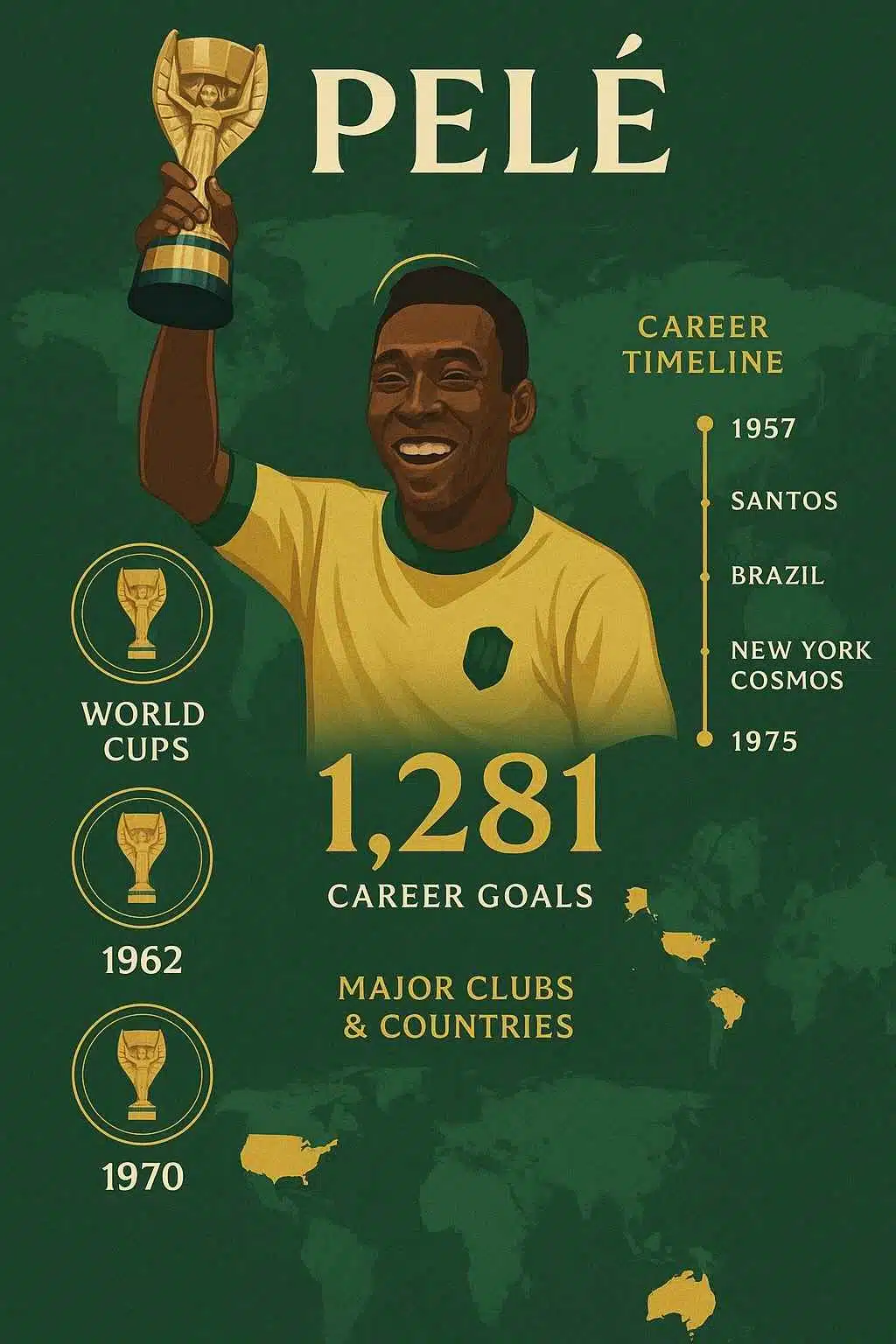
No player in history has shaped three World Cups the way Pelé did. His triumphs in 1958, 1962, and 1970 remain unmatched.
1958 – The Boy Who Became a King
In Sweden, the world met a smiling, fearless teenager. Pele’s combination of aerial control, vision, and agility stunned Europe. His goals in the final—including the iconic volley over a defender’s head—marked the dawn of a new era.
1962 – The Injury and the Dynasty
In Chile, Pele started strong but suffered a groin injury in the second match. Yet Brazil, inspired by his spirit, lifted the trophy again. Pele’s presence, even from the sidelines, symbolized leadership—the mark of a true legend.
1970 – The Golden Team and the Immortal Crown
In Mexico, the 1970 Brazil squad—Pele, Jairzinho, Rivelino, and Tostão—redefined perfection. Pelé scored four goals and orchestrated Brazil’s every move, including the assist for Carlos Alberto’s thunderous strike in the final. That goal is often called “the most beautiful goal ever scored.”
“Pelé was the only player who surpassed the boundaries of logic.” — Johan Cruyff
The Beautiful Game: Style, Substance, and Spirit
Pelé’s genius wasn’t just statistical—it was aesthetic. He danced with the ball, merging power with poetry. His dribbles were effortless, his passes visionary, and his headers defied physics.
He was two-footed, tactically astute, and possessed a striker’s instinct combined with a midfielder’s mind. He scored from every angle—bicycle kicks, volleys, long-range strikes—all delivered with grace.
“Pelé played football with the happiness of a child and the precision of a master.”
| Attribute | Description | Modern Equivalent |
|---|---|---|
| Vision | Anticipated plays before they unfolded | Kevin De Bruyne |
| Finishing | Clinical under pressure | Kylian Mbappé |
| Leadership | Inspired collective brilliance | Lionel Messi |
| Adaptability | Excelled in multiple roles | Cristiano Ronaldo |
| Creativity | Combined flair with control | Neymar |
Table: Pele’s Hallmark Attributes
Pele’s playstyle mirrored Brazil’s soul—spontaneous, rhythmic, and deeply human. He didn’t just win matches; he elevated emotions. Every movement seemed choreographed by joy.
Beyond the Pitch: Ambassador, Activist, and Icon
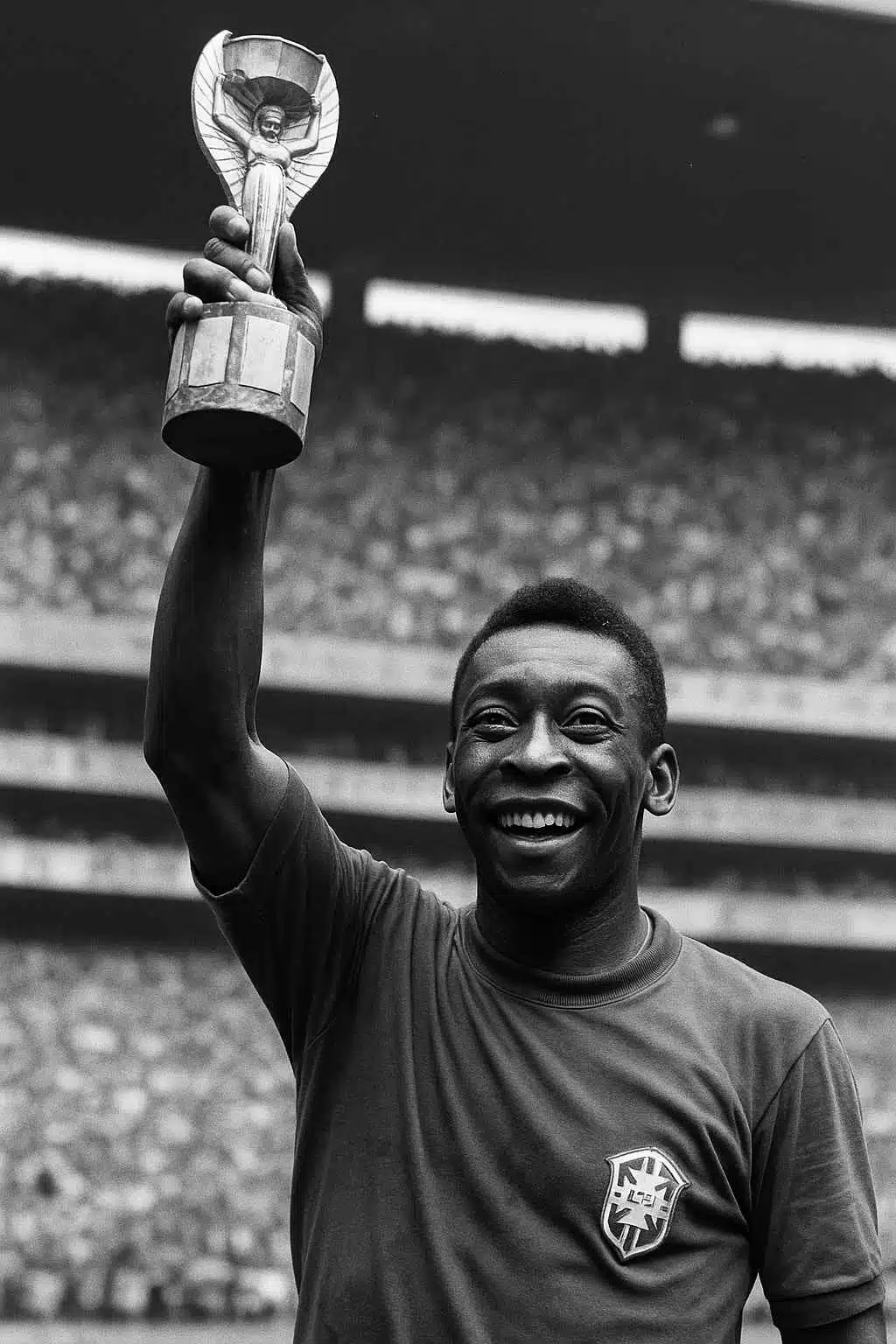
After football, Pele didn’t retreat. He expanded his influence globally—as a UNESCO Goodwill Ambassador, a UN spokesperson for ecology, and a symbol of racial progress in Brazil and abroad.
His transfer to the New York Cosmos (1975–1977) wasn’t merely about money—it was about cultural diplomacy. His arrival tripled attendance figures and inspired a generation of American youth, helping ignite soccer’s long-term growth in the U.S.
“An artist in football, a statesman in life.” — UN Secretary-General Ban Ki-moon
| Metric | Value |
|---|---|
| Career Goals | 1,281 |
| Official Trophies | 37 |
| Total Matches | 1,360+ |
| Countries Played In | 60+ |
| UNESCO & UN Initiatives | 15+ |
| Global Fans by 1980 | Over 1 Billion |
Table: Pele’s Global Legacy in Numbers
He met kings, presidents, and popes—yet always saw himself as “the boy who just wanted to make people smile.” Pele also advocated for education, youth empowerment, and environmental awareness, proving that influence, when grounded in humility, can move civilizations.
The Final Whistle: The King’s Eternal Crown
Pele passed away on December 29, 2022, after a battle with colon cancer, surrounded by family. The world stood still. Brazil declared three days of national mourning, and tributes poured in from every corner of the planet.
“Everything you see in football today, Pelé did first.” — Cristiano Ronaldo
“Pelé made football beautiful and human.” — Barack Obama
His funeral procession in Santos drew millions—a human ocean of gratitude. He was laid to rest overlooking the stadium where he built his empire, Estádio Urbano Caldeira.
The outpouring wasn’t mere nostalgia. It was a collective recognition that Pelé didn’t just represent Brazil—he represented possibility itself.
Why Pele Still Matters: The Eternal Standard of Greatness
Pelé’s relevance didn’t end with his death. In an age obsessed with data, his legacy reminds us that numbers don’t capture soul.
He played in an era without modern media, yet became the most recognized athlete on earth. That’s not branding—that’s timeless charisma.
Pelé’s career also redefined leadership:
-
He inspired teams, not dominated them.
-
He smiled more than he shouted.
-
He competed with grace, not arrogance.
In the algorithmic era of sports analytics, Pelé’s artistry stands as a human counterpoint—a reminder that emotion is still football’s greatest metric.
| Metric | Pelé | Messi | Ronaldo |
|---|---|---|---|
| Career Goals (Total) | 1,281 | 820+ | 870+ |
| World Cup Wins | 3 | 1 | 0 |
| International Caps | 92 | 182+ | 205+ |
| Ballon d’Or (Retroactive for Era) | 7 (FIFA revision) | 8 | 5 |
| Global Recognition Index (FIFA 2023) | 98% | 96% | 94% |
Table: Pele vs. Modern Legends
The Beautiful Legacy: Football’s Eternal Flame
Pele’s name endures not merely because he won, but because he made winning beautiful. His story echoes in every street game, every barefoot child chasing a ball under sunlight. He showed the world that genius is not privilege—it’s imagination disciplined by love.
“Success is no accident. It’s hard work, perseverance, learning, studying, sacrifice, and most of all, love of what you are doing.” — Pelé
That quote remains the most distilled version of his philosophy. Pelé’s greatness wasn’t just athletic—it was spiritual. He believed football could teach integrity, teamwork, and joy—virtues that outlast victory.
Takeaways
Pele’s story began with a rag ball and ended with a golden crown. Between those two moments lies a universe of inspiration. He didn’t merely play the game—he elevated humanity through it.
Every time a child dreams of football glory, Pelé is reborn.
Every time a goal is celebrated with joy, his spirit endures.
He is more than a legend—he is the reason football is called the beautiful game.