
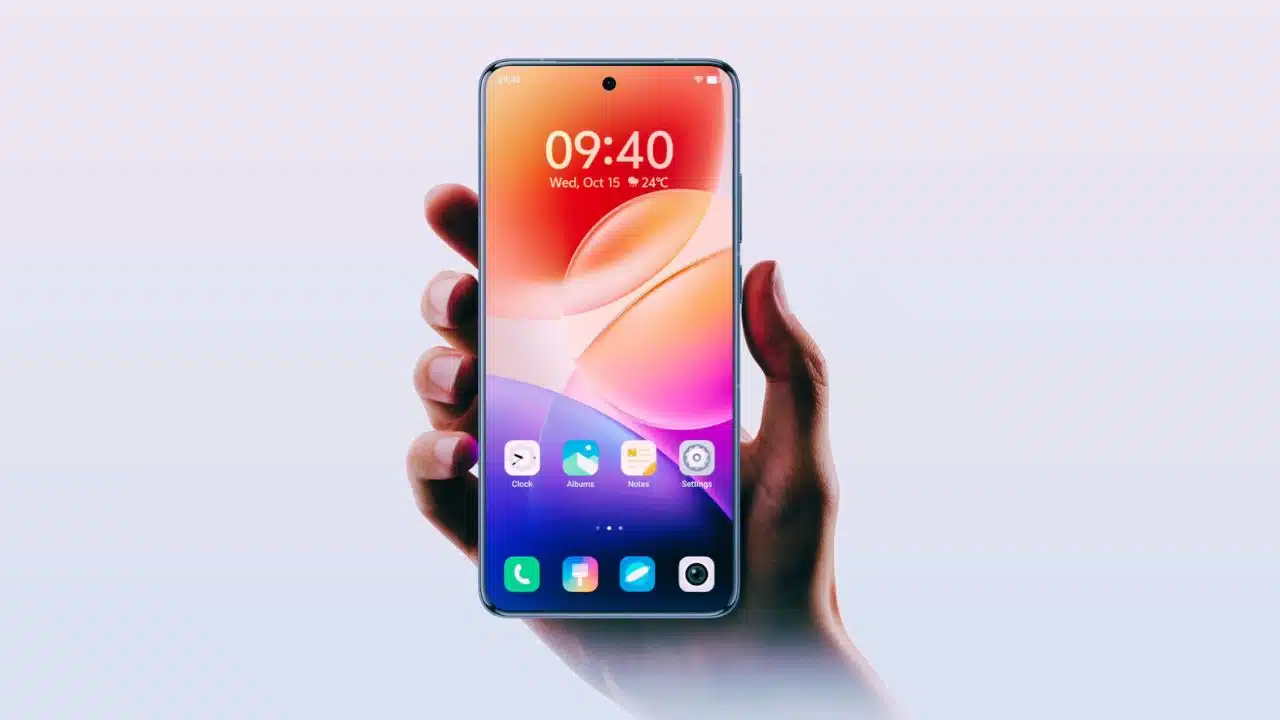
Vivo has officially launched OriginOS 6 in India, marking a significant strategic shift as it sunsets the long-standing Funtouch OS for a unified, global software experience. Unveiled at a global event on October 15, the new Android 16-based operating system promises a radical redesign, substantial performance enhancements driven by the new “Blue River Smooth Engine,” and a deep integration of AI-powered features for Vivo and iQOO smartphone users across the country.
The highly anticipated update brings a host of aesthetic and functional changes, moving away from the familiar feel of Funtouch OS to a more fluid, intuitive interface inspired by natural elements. The phased rollout of the stable version is scheduled to commence in early November 2025, prioritizing the latest flagship models before gradually expanding to a wider range of devices through early 2026. This move is seen as Vivo’s answer to creating a more cohesive and competitive software ecosystem on a global scale.
Key Facts & Quick Take
- Official Launch: OriginOS 6 was launched globally and in India on October 15, 2025, and is based on Android 16.
- End of an Era: The new OS will completely replace Funtouch OS on all upcoming and eligible existing Vivo and iQOO devices, unifying Vivo’s software identity worldwide.
- Performance Boost: The “Origin Smooth Engine” delivers significant gains, with Vivo claiming up to 18.5% faster app cold-start speeds and a 35% improvement in rendering efficiency for smoother animations.
- AI at the Core: Deeply integrated AI tools include advanced image editing like AI object removal from Live Photos, a smarter “Xiao V” assistant, and contextual features like “Origin Island.”
- Rollout Schedule: The stable version will start rolling out in waves from early November 2025, beginning with the Vivo X200 series and iQOO 13.
- Beta Program: A preview program for users of the Vivo X200 Pro and iQOO 13 has been active since late September to gather feedback before the public release.
The What and Why: A New Beginning with OriginOS 6
For years, Vivo users in India and other global markets have been accustomed to Funtouch OS, while the company’s home market of China exclusively used the more feature-rich and visually distinct OriginOS. The global debut of OriginOS 6 ends this software bifurcation.
The new operating system is built on three pillars, as articulated by the company: smoothness, design, and AI. “Guided by our ‘Origin Design’ philosophy and built on three core pillars of smoothness, design and AI, the brand new OriginOS 6 reimagines the way people connect with the digital world,” stated SHI Yujian, Senior Vice President and Chief Technology Officer at vivo, in a global press release.
The core motivation appears to be the creation of a powerful, unified brand identity that can compete more effectively with other major smartphone ecosystems. By offering the same refined experience to all its users, Vivo aims to enhance brand loyalty and streamline its software development efforts.
Latest Data & Statistics: The Performance Leap
Vivo has released specific metrics to quantify the performance improvements in OriginOS 6, primarily attributed to its new system-level architecture.
- System Responsiveness: The “Origin Smooth Engine” is claimed to improve app cold-start speeds by 18.5% and boost frame-rate stability by 10.5% during general use.
- Animation and Rendering: A new “Dual Rendering” technology specifically targets graphical smoothness, increasing the efficiency of dynamic effect rendering by 35%. This results in more fluid animations and transitions, especially under heavy load, where frame-rate steadiness is maintained 11% better than in previous systems.
- Data Handling: Memory Fusion technology has been optimized to accelerate data loading for high-load tasks by an impressive 106%, making multitasking and loading large files, like thousands of photos in an album, significantly faster.
These enhancements have been validated by SGS, a leading inspection and certification company, which awarded the Vivo X300 Pro running OriginOS 6 a certification for sustained smoothness simulating five years of heavy use.
A Closer Look at New Features
Design and UI: “Light and Shadow Space”
OriginOS 6 introduces a complete visual overhaul. The new design language, called “Light and Shadow Space,” uses translucent layers, gradual blurs, and dynamic glow effects to create a sense of depth and realism. The user interface now features stacked notifications for better readability and a new system font, “Vivo Sans,” which supports over 40 languages.
Origin Island and Enhanced Customization
Taking a cue from Apple’s Dynamic Island, Vivo has introduced “Origin Island.” Integrated with Android 16’s Live Updates API, this feature provides persistent, on-screen access to live activities and contextual shortcuts. For example, users can copy a phone number and get an instant option to call or message (“Copy & Go”) or drag a photo directly into a suggested editing app (“Drag & Go”).
Customization extends to a more flexible lock screen and a new 4×7 home screen grid, allowing for more personalized layouts of widgets and adaptive folders.
Smarter AI Integration
AI is no longer just a background process. OriginOS 6 brings a suite of user-facing AI tools:
- AI Photo Editing: Users can now erase unwanted objects or people from photos, including Live Photos, expand image borders, and enhance resolution with AI.
- Productivity Suite: The OS includes an “AI Creation” tool for writing assistance and summarization, a “DocMaster” for intelligent document editing, and an improved AI Search that supports natural language queries.
- Cross-Device Collaboration: The Vivo Office Suite facilitates seamless file sharing and task handoffs between Vivo phones, PCs, and other compatible devices.
OriginOS 6 (Android 16) India Rollout Schedule – 2025/2026
| Rollout Phase | Tentative Timeline | Eligible Devices |
| Wave 1 | Early November 2025 | Vivo: X200 Pro, X200, X200 FE, X Fold 5, V60 iQOO: 13 |
| Wave 2 | Mid November 2025 | Vivo: X100 Pro, X100, X Fold 3 Pro iQOO: 12 |
| Wave 3 | Mid December 2025 | Vivo: V60e, V50, V50e, T4 Ultra, T4 Pro iQOO: Neo 10, Neo 10R, Neo 9 Pro |
| Subsequent Waves | Q1 – Q2 2026 | Additional eligible mid-range and older devices from the Vivo V, T, Y series and iQOO Neo, Z series. (Specific models to be announced later) |
Full Rollout Schedule for India: Vivo and iQOO
The update will be delivered in a phased manner. The beta program, which began on October 15, will conclude in early November, paving the way for the stable release.
Wave 1 (Early November 2025):
- Vivo X200 Pro, X200, X200 FE
- Vivo X Fold 5
- Vivo V60
- iQOO 13
Wave 2 (Mid November 2025):
- Vivo X100 Pro, X100
- Vivo X Fold 3 Pro
- iQOO 12
Wave 3 (Mid December 2025):
- Vivo V60e, V50, V50e
- Vivo T4 Ultra, T4 Pro
- iQOO Neo 10, Neo 10R, Neo 9 Pro
Further rollouts for a wider range of mid-range and older eligible devices from the Vivo V, T, Y series and iQOO Neo, Z series will continue through the first and second quarters of 2026.
Impact on People: A Fresh but Familiar Change
For the millions of Vivo and iQOO users in India, the transition from Funtouch OS will be the most significant software change in years. While the underlying Android architecture remains, the user experience is set to be completely different.
An early beta user, posting on a tech forum, noted, “The new design is a breath of fresh air. It feels much cleaner and the animations are noticeably smoother than Funtouch OS. The AI photo features are genuinely useful.” (Paraphrased from a user comment on Reddit). However, as with any major OS overhaul, there will be a learning curve as users adapt to new layouts and features.
What to Watch Next
The key aspect to monitor will be the stability and performance of OriginOS 6 on older, less powerful devices. While the performance gains are impressive on flagship models, the real test of the “Origin Smooth Engine” will be its ability to optimize the user experience across Vivo’s extensive mid-range and budget portfolio. User feedback from the wider rollout will be critical in determining the success of this ambitious software unification strategy.