

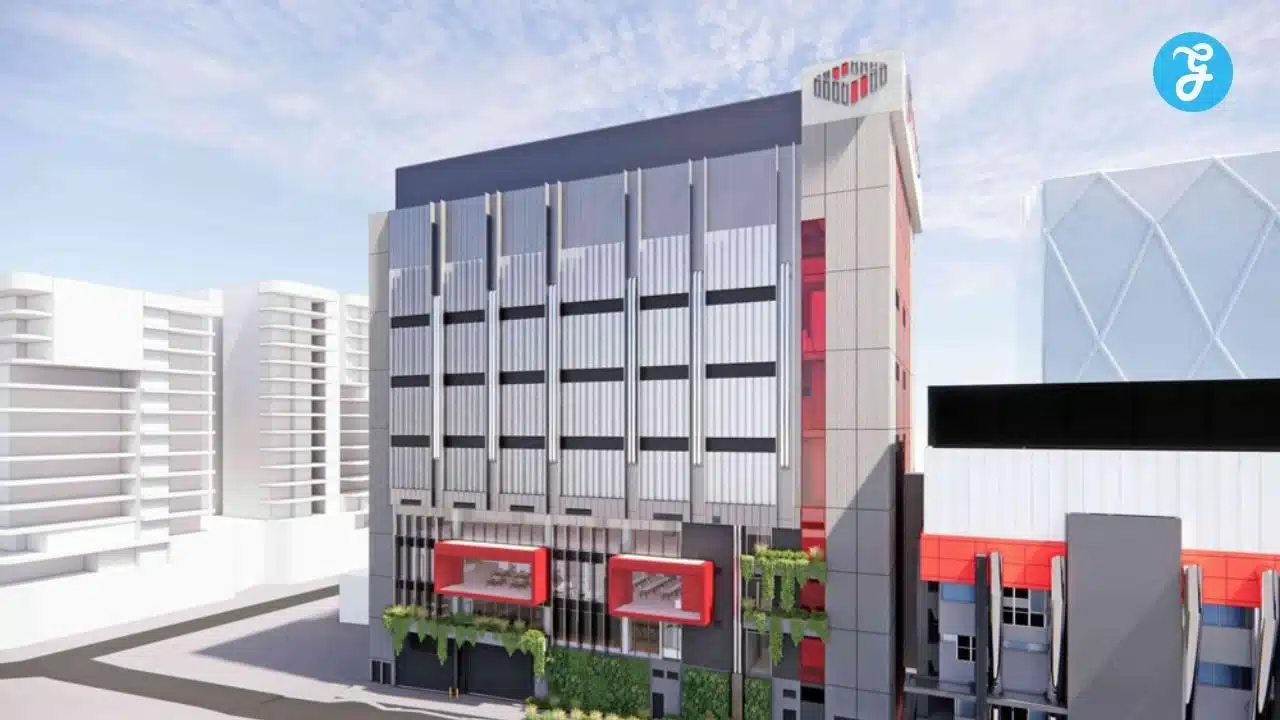
The OpenAI $7B Sydney AI Campus is moving closer to reality after the company signed a memorandum of understanding with NextDC to develop a major hyperscale data centre in Western Sydney. The project aims to support advanced AI workloads for Australia’s largest enterprises and marks one of the most ambitious AI infrastructure investments in the Asia–Pacific region.
It is designed to strengthen Australia’s position as a growing hub for next-generation AI development. The campus will also play a key role in expanding local compute capacity as demand for generative AI technologies accelerates across industries.
What Has Been Announced So Far?
The agreement between OpenAI and NextDC is currently a memorandum of understanding (MoU), not a final construction contract. It sets out how the two companies intend to work together to build a hyperscale AI campus that can host advanced AI models and workloads for Australian customers.
OpenAI is expected to be an anchor tenant, using the campus to support clients such as major banks, retailers, and technology companies that already use its models. NextDC will develop, own, and operate the S7 site, while also seeking external capital partners through a joint-venture structure.
Key Deal Facts
| Item | Detail |
| Agreement type | Memorandum of understanding (MoU) |
| Project value | About A$7 billion (multi-year build-out) |
| Location | S7 data centre campus, Eastern Creek, Western Sydney |
| Main roles | NextDC as developer/operator; OpenAI as anchor customer |
| Project status | Early-stage planning; detailed contracts and JV still to be finalised |
Where Will the OpenAI–NEXTDC Campus Be Built?
The AI campus will sit on NextDC’s S7 site at Eastern Creek, roughly 45 kilometres west of Sydney’s central business district and close to the rapidly growing Western Sydney “data centre belt”. NextDC bought the land in October 2024 for about A$353 million.
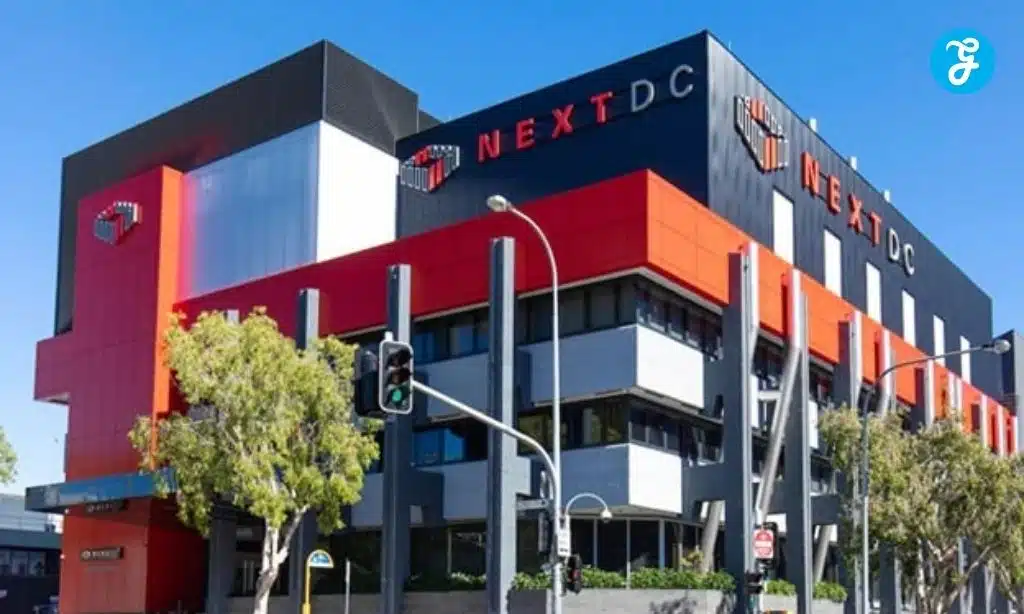
The site covers around 258,000 square metres of developable land. Company filings and earlier announcements describe a potential IT power capacity of up to 550 megawatts at full build-out, while some recent commentary and reporting suggest the final design could approach 650 megawatts. For now, the only confirmed figure from NextDC remains “up to 550MW”, with higher estimates treated as indicative rather than final.
Location and Capacity Snapshot
| Aspect | Detail |
| Site name | NextDC S7 |
| Suburb | Eastern Creek, Western Sydney |
| Distance from CBD | Approx. 45 km west |
| Land cost | Around A$353 million |
| Land area | About 258,000 m² of developable land |
| Planned capacity | Officially up to 550MW; higher figures remain indicative |
How Will the A$7 Billion Project Be Funded?
NextDC has outlined plans for a dedicated joint-venture platform to fund and own both its S4 and S7 hyperscale campuses in Western Sydney. The company is seeking private capital partners who would take a majority equity position, while NextDC retains operational control and a minority stake.
Across S4 and S7 combined, the company has flagged a capital requirement of about A$15 billion over more than a decade to deliver around 850MW of new capacity. The S7 portion alone is expected to represent roughly A$7–7.6 billion in total investment once fully built, although the exact spend will depend on final design, power connection, and customer demand.
A financial close for the S7 joint venture is targeted within the next 12 to 18 months. Analysts currently expect any significant revenue contribution from S7 to appear closer to NextDC’s 2028 financial year, given the multi-year construction and ramp-up cycle typical of hyperscale data centres.
Funding and Timeline Overview
| Element | Detail |
| Funding model | Joint venture (JV) with private capital partners |
| NEXTDC role | Developer, operator, minority equity holder |
| Combined S4 + S7 capex | Approx. A$15 billion over 10+ years |
| S7 share of spend | Roughly A$7–7.6 billion (estimate, not yet final) |
| JV timing | Target financial close in 12–18 months |
| Earnings impact | Analysts see a meaningful uplift from around FY28 |
Why Is OpenAI Building an AI Campus in Sydney?
For OpenAI, the Sydney campus is part of a strategy to distribute compute infrastructure around the world while bringing AI capacity closer to major customers. The company’s “OpenAI for Australia” economic blueprint argues that AI could add more than A$100 billion a year to Australia’s economy by 2030, if supported by modern data infrastructure, high-speed networks, and skills development.
Australia also hosts some of OpenAI’s highest-profile enterprise users, including Atlassian, Canva, and Commonwealth Bank. Locally hosted AI infrastructure can help those customers meet data-residency, security, latency, and regulatory requirements while reducing dependence on offshore data centres.
The Australian government has embraced the project as a flagship example of its national AI strategy. Treasurer Jim Chalmers has described the investment as a “terrific outcome” for the economy and the tech sector, arguing it shows Australia has the skills, clean-energy resources, and policy settings to be a major winner from AI adoption.
Strategic Drivers
| Driver | Explanation |
| Proximity to customers | Serves large Australian enterprises using OpenAI models |
| Economic opportunity | Supports the government’s vision of AI as a major growth engine |
| Data sovereignty | Keeps sensitive workloads inside Australian-owned facilities |
| Latency and reliability | Reduces delays and improves performance for local AI services |
| Competitive landscape | Helps OpenAI compete with rival AI and cloud platforms globally |
How Will the Campus Be Powered — And Can the Grid Cope?
Energy is the most sensitive issue around the project. At full load, a 550MW–650MW data centre would consume as much power as several hundred thousand homes. That has raised questions about whether Australia’s existing grid and planning systems can keep up with AI-driven demand.
The federal government says S7 will be backed by new long-term power purchase agreements for wind, solar, and battery projects. NextDC has also committed to next-generation cooling systems that do not rely on potable drinking water, an important consideration in a country vulnerable to drought.
However, energy experts warn that securing enough low-carbon power and building the transmission lines to deliver it could take years. There are currently no public details of signed renewable supply contracts for S7, and planning approvals for new grid infrastructure in Australia can stretch across a decade.
Energy and Sustainability at a Glance
| Area | Current Position |
| Power source | Planned long-term renewable PPAs (wind, solar, batteries) |
| Cooling | Designed to avoid the use of potable drinking water |
| Emissions target | Aims to support low-carbon AI workloads in line with NextDC goals |
| Grid concerns | Experts warn of long lead times for transmission upgrades |
| Policy context | Aligns with national AI strategy and clean-energy transition |
Market Reaction: NextDC Shares Jump on OpenAI Deal
The ASX reacted quickly to the announcement. NextDC shares climbed as much as 10.9% to about A$14.90 in early trade after the MoU was confirmed, making the stock the top performer on a day when the broader market fell. Traders welcomed the deal as a strong endorsement of NextDC’s Western Sydney expansion plan and its positioning as a sovereign provider of AI-ready infrastructure.
The rally followed earlier upgrades to NextDC’s capital expenditure guidance, with management lifting its FY26 capex forecast by around A$400 million to accelerate capacity builds in response to customer demand. For investors, the OpenAI partnership strengthens confidence that this expanded pipeline of facilities will find long-term, high-value tenants.
Market and Investor Highlights
| Item | Detail |
| Share price move | Up to +10.9% intraday after announcement |
| Index performance | NextDC was the top gainer on the ASX 200 that day |
| Investor view | Deal seen as validation of S4/S7 expansion |
| Capex guidance | FY26 capex lifted by ~A$400 million |
| Key risk flagged | Timing of power, permits, and revenue recognition |
What Does This Mean for Australia’s AI and Data Centre Landscape?
If delivered at the expected scale, the OpenAI–NextDC campus would be one of the most powerful AI-focused data centres in the Southern Hemisphere. It would add to Western Sydney’s growing status as a regional hub for cloud and AI infrastructure, joining major sites from other operators in Eastern Creek, Erskine Park, and surrounding industrial precincts.
The project also signals a shift towards “sovereign” AI infrastructure – large-scale compute facilities that are located, owned, and regulated domestically rather than entirely offshore. Supporters see this as vital for national security, data privacy, and resilience.
However, the project’s huge energy footprint underscores a wider challenge: AI data centres are arriving faster than many power systems can expand. Without faster transmission approvals, new renewable projects, and smarter demand management, grid operators could struggle to balance growth in heavy industry, households, and AI computing at the same time.
For now, the campus remains at the MoU stage. The next 12–18 months will be critical for locking in capital partners, grid connections, environmental approvals, and detailed contracts between OpenAI and NextDC. How quickly those pieces fall into place will determine whether the A$7 billion Sydney AI campus becomes a global flagship for sustainable AI — or a case study in how hard it is to match digital ambition with physical infrastructure.































