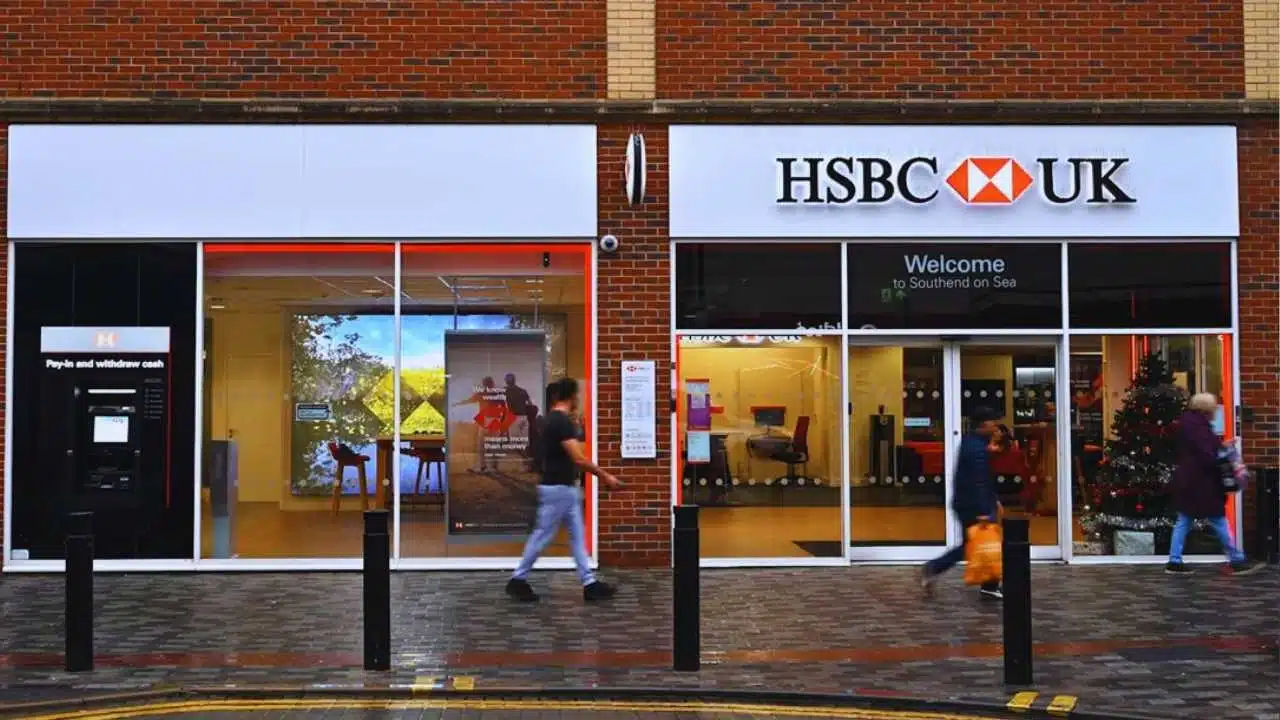
HSBC Global Investment Research has issued a detailed warning that OpenAI could confront a massive $207 billion financing shortfall by 2030, raising questions about the sustainability of the company’s rapid expansion and the wider implications for the tech giants tied to its growth. The bank’s semiconductor and technology analysis team argues that OpenAI’s current financial trajectory—marked by huge cloud-compute commitments and long-term infrastructure spending—will leave the company with deeply negative free cash flow for years unless it secures substantial new capital.
The projected gap stems largely from OpenAI’s extraordinary infrastructure ambitions. In recent years, the company has signed nearly $600 billion in cloud-computing deals, including a landmark $300 billion agreement with Oracle, about $250 billion with Microsoft, and close to $38 billion with Amazon Web Services. These multi-year contracts are tied to OpenAI’s push to expand its global compute footprint, build advanced data centers, and scale access to future frontier models. HSBC estimates that between late 2025 and 2030, OpenAI could incur around $792 billion in cloud and AI infrastructure costs, while cumulative compute commitments could rise to $1.4 trillion by 2033. Data-center rental costs alone may account for roughly $620 billion, reflecting unprecedented capital intensity for an AI company still working toward long-term profitability.
Despite these enormous expenses, HSBC’s report assumes OpenAI will experience aggressive revenue growth. By 2030, the analysts model about $213 billion in annual revenue, based on optimistic assumptions including a global user base of 3 billion regular users—equivalent to 44% of the world’s adult population and a steep rise from the roughly 800 million users today. The bank further raises projected subscription conversion rates from 8% to 10%, anticipating that more individuals and businesses will pay for premium AI access. They also factor in substantial growth in enterprise API usage and new revenue channels, such as digital advertising or AI-integrated commercial tools.
Even with these bullish assumptions, the revenue outlook does not come close to eliminating the projected gap. HSBC concludes that OpenAI will need fresh capital—either through debt issuance, equity investment, or entirely new revenue models—to fill the massive hole between projected spending and income. The analysts highlight that such a large discrepancy cannot be resolved through organic revenue growth alone, and that the long-term financial burden could become a major challenge for OpenAI and its strategic partners.
This situation has already influenced market behavior. Oracle, one of OpenAI’s biggest infrastructure partners, experienced severe volatility after announcing its $300 billion deal. The company’s share price initially surged by almost 30% but eventually surrendered those gains, raising concerns about whether the market sees long-term financial risk in such enormous commitments. Oracle’s five-year credit default swaps have also risen sharply—from around 55 basis points early in the year to nearly 80 basis points—signaling weakening investor confidence and growing caution about debt-financed AI expansion. The turbulence even affected personal wealth trajectories: Oracle co-founder Larry Ellison briefly became the world’s richest person following the OpenAI announcement, only to see his net worth decline as the stock fell.
HSBC’s report further identifies Oracle, Microsoft, Amazon, Nvidia, and AMD as the companies most directly exposed to OpenAI’s long-term performance. These firms are supplying the computing power, semiconductors, and cloud infrastructure essential to OpenAI’s model development. If OpenAI struggles to meet payment commitments or slows its growth plans, the ripple effects could impact earnings and strategic forecasts across the tech sector. SoftBank, holding an estimated 11% stake in OpenAI, is also highlighted as vulnerable. Its share price has dropped around 40% from late-October highs amid broader fears of an AI-driven market bubble.
HSBC notes that OpenAI could theoretically close the funding gap if its user base expands even faster than expected or if subscription conversions rise well above 10%, but the bank acknowledges these scenarios are uncertain and dependent on unpredictable consumer behavior and competitive pressures. As the AI sector grows increasingly crowded, it is unclear whether any single company can achieve such unprecedented global penetration or command premium pricing at scale.
The report paints a stark picture: the future of frontier AI development depends not only on breakthroughs in model capabilities but also on the financial infrastructure necessary to sustain the enormous computing demands behind those models. OpenAI’s ambitions place it at the center of a high-stakes race where compute power, data-center construction, and energy capacity are becoming as important as research innovations. The question now is whether the world’s investors—and the companies that rely on OpenAI—are prepared to support the staggering costs required to push artificial intelligence toward the next generation.