


According to the National Organization for Women statistics, every 1 in 4 women gets harassed online within the United States. The figures have been released for 37% of women of mixed ethnicity and 31% of Latinas or women of Hispanic race who have been victims of the online harassment culture.
The most common forms of harassment faced online by the female population were forms of cyberbullying (10%), sexual harassment (9%), and trolling (8%). Such harassment can include messages that are unwanted, threats, and the distribution of privatized photographs without one’s consent.
Sexual harassment happens on the other side of the workplace. If you have faced any harassment, an Orange County online sexual harassment attorney will tell you that any employee who harasses someone slips from their place of work after trailing in the employer’s advances. Employees can file civil claims for invasion of privacy or emotional distress, as well as federal and state rules that cover things like workplace harassment and cyberstalking.
You can protect your well-being, report inappropriate behavior on a platform, and go to court if you need to if you know your rights when it comes to job safety and harassment. If you are being sexually harassed online, this article will talk about how it can show up at work and what you can do to stop it.
Recognizing Online Sexual Harassment
Online sexual harassment encompasses unwanted sexual messages or comments about your appearance.
- Beware of those who touch you or breach your personal space without your permission.
- There are other forms of harassment, including threats, bribes, dissemination of your private information, and so forth.
- Sexual advancement does not always have to be common knowledge. Their words should still raise an alarm.
Trust your gut. So if you feel something suspicious, take action and immediately report it.
The online allegations of harassment are also supported by the institution of anti-harassment policies within almost all online platforms. The answer to the problem is to be observant of and recognize these signs.
Documenting Evidence of Harassment
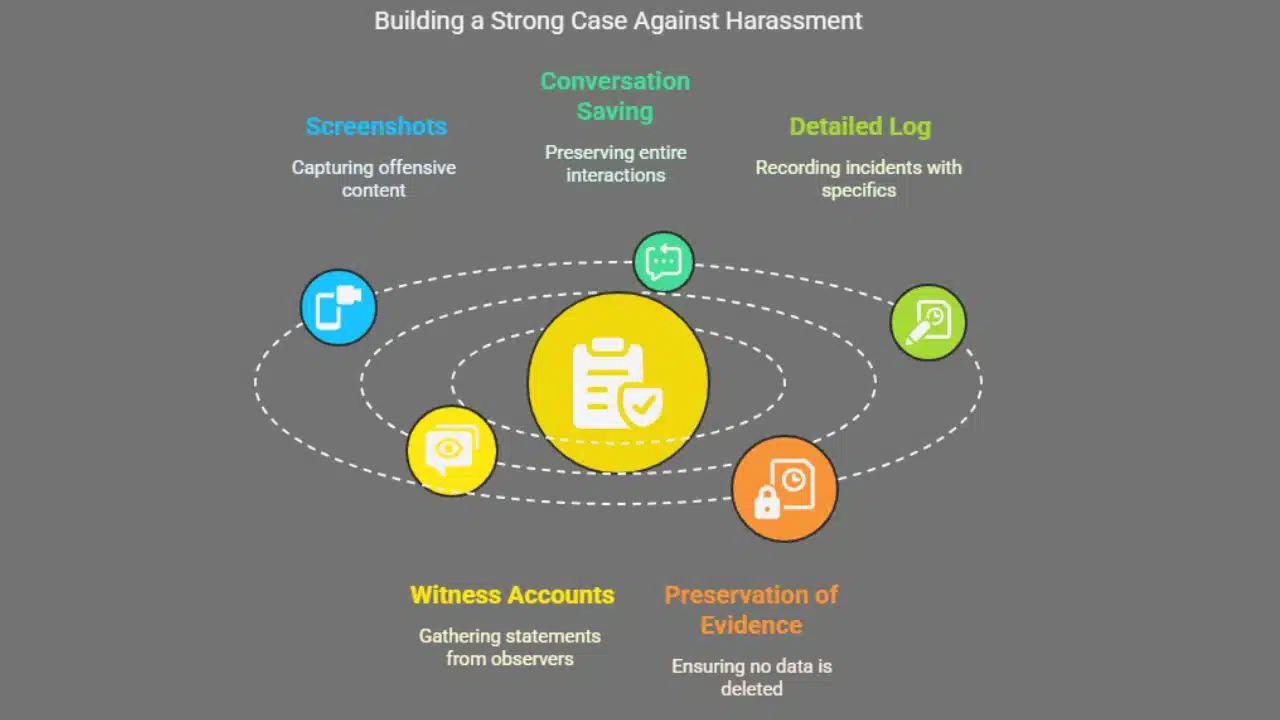
Provide detailed records of any sexual harassment situations to help make these incidents more effectively actionable. Archive the unacceptable text messages, images, or posts. Be sure to always note the username of the person who harassed you, as well as any timestamps and other contextual details.
Another important requirement is to save the screenshot of the entire chat from the moment the harassing incident occurred. This clarity helps create a narrative that your lawyer can use to support your case. Prepare an incident log with times, dates, and acts, or otherwise. If there is a witness, politely encourage them to share their account.
Do not delete anything; it will merely weaken your claims. By meticulously documenting everything, a much more robust case is to be built, which would put an end to harassment and protect your rights.
Reporting to Platform Authorities
Very few sexual assaults among internet activities get resolved, but online reporting to platform authorities should be one of the crucial steps in correcting the wrong. Most social media platforms and online platforms have a report function against internet harassment.
First, search the “Report” or “Help” sections, which will guide you through all the requisite internet harassment cases. Provide all the specifications you have collected: usernames, dates, screenshots, etc. Should action be necessary, these details will be crucial.
Most platforms strictly confine their harassment policy. Whether you report the incident or not, the platform will already take action against the account’s suspension or ban. Follow up if you see they have not yet acted upon your response.
This process helps vindicate your complaint, as the journey towards a safer internet continues for all users online.
Exploring Legal Recourse and Protections
A victim can avail of certain very specific remedies that grant relief and alternatives.
In certain situations, you may be able to recover damages. If there are established state discrimination laws that allow you to do so, you may file a lawsuit under Title VII.
Recording every message, screenshot, and witness statement could potentially strengthen your case. A lawyer who specializes in online abuse may inform you of your rights and the best direction.
It is never too late to stand up for your rights. This may be a fulfilling process and also help prevent further harassment
Seeking Support and Resources
Where can a victim find such support and resources? Seek help from evidence-supporting individuals who will listen to anonymous referrals from either your friends or family.
Another option is to contact survivors’ groups, advocacy organizations, or hotlines. They can provide you with counseling, emotional support, and suggestions for possible help or access to the same.
Psychologists, counselors, or mental health specialists may have extensive knowledge of online harassment and can be very supportive.
There are also support forums where you might encounter other people with the same experience.































